
Fatayer bi sabanekh (spinach triangles)
Vegetarian
فطاير بالسبانخ · fatayer bi sabanekh
Soft yeasted dough pinched into neat triangles around a lemony spinach, onion and sumac filling. Popular Levantine bakery pies, good warm or at room temperature.
Fatayer bi sabanekh (spinach triangles) is a Lebanese pastry from Lebanon, ready in about 2 hours 18 minutes and made with all-purpose flour and spinach. It serves 20 and is rated intermediate to cook.
No licensed photograph of this dish yet.
- Prep
- 1 h
- Cook
- 18 min
- Rest
- 1 h
- Total
- 2 h 18 min
- Serves
- 20
- Level
- Intermediate
- Calories
- 125
Ingredients
For the filling
Method
Step 1
Mix the flour, yeast, sugar (opens in a new tab), salt, water and oil and knead 6–8 minutes to a smooth, soft dough. Cover and leave until doubled, about 1 hour.
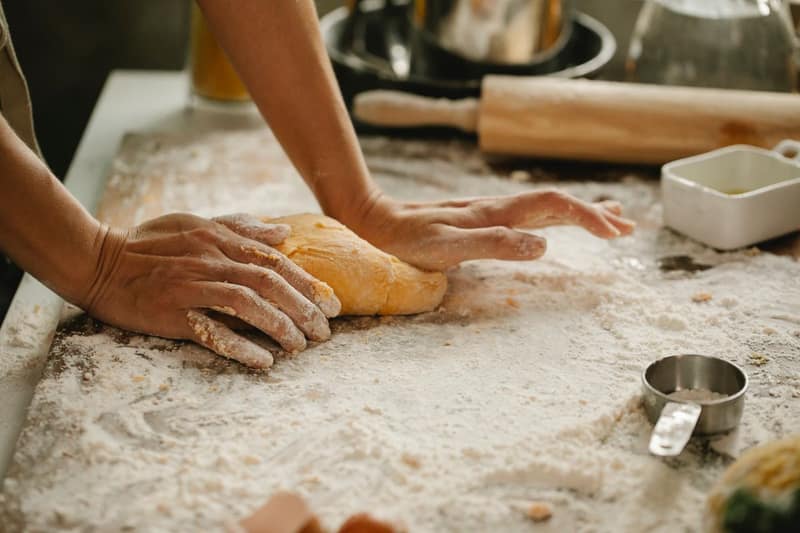
How it looks · Photo: Klaus Nielsen on Pexels Step 2
Meanwhile rub the chopped spinach (opens in a new tab) with 1 tsp salt and leave 15 minutes, then squeeze it hard by handfuls until very dry. Mix with the onion (opens in a new tab), sumac (opens in a new tab), lemon juice (opens in a new tab), oil, pepper (opens in a new tab) and pine nuts (opens in a new tab).
- 20 min
Wet filling is the main reason fatayer open in the oven.
Step 3
Heat the oven (opens in a new tab) to 200 °C. Roll the dough 3 mm thick and cut 9–10 cm rounds (re-roll scraps once).
- 10 min
- 200°C
- Rolling pin (opens in a new tab)
Step 4
Put a heaped tablespoon of filling in the centre of each round. Lift the edges at three points and pinch the seams firmly together to form a triangle with a small vent in the centre.
- 20 min
Step 5
Bake on an oiled tray 15–18 minutes until pale golden underneath. Brush with a little olive oil (opens in a new tab) as they come out.
About this dish
- Origin
- Lebanon · Commonly attributedMade throughout the Levant; most strongly associated with Lebanese bakeries.Also popular in Syria, Palestine, JordanMore food from Lebanon
- Dish
- Lunch · Snack · Pastries · Appetizers & starters · Finger food
- Cooking method
- Oven-baked, Fermented
- Taste
- sour, savoury, fresh
- Diet
- Vegan · Dairy-free · Low-carbWithout the optional extras: No nut ingredientsWorked out from the ingredients. How labels work
All labels
Vegan · Plant-based · Vegetarian (lacto-ovo) · Eggetarian · Lacto-vegetarian · Ovo-vegetarian · Pescatarian · Flexitarian-friendly · Dairy-free · Egg-free · Alcohol-free · Pork-free · Beef-free · Low-carb · DASH-style - Good for
- Freezer-friendly · Portable / lunchbox · Make-ahead
- Cook more with
- All-purpose flour · Spinach · Instant yeast · Sugar · Onion · Sumac
- Techniques
- Baking · Kneading · Fermentation
Allergens
- Contains, can be adapted: Tree nutsfrom pine nuts
- Contains: Wheatfrom all-purpose flour
- Contains: Glutenfrom all-purpose flour
Based on typical versions of these ingredients and not verified allergen-free. Brands differ and cross-contact happens, so always check labels. For severe allergies, follow your clinician’s advice.
Nutrition
125 kcal per serving
Estimated1 serving ≈ 55 g · recipe makes 20
Where the energy comes from
- Protein 9%
- Carbohydrate 54%
- Fat 36%
| Nutrient | Per serving | Per 100 g |
|---|---|---|
| Energy | 125 kcal | 228 kcal |
| Protein | 3 g | 5.4 g |
| Carbohydrate | 17.3 g | 31.4 g |
| Net carbohydrate | 15.9 g | 29 g |
| Sugars | 0.7 g | 1.2 g |
| Added sugars | 0.2 g | 0.4 g |
| Fibre | 1.3 g | 2.4 g |
| Fat | 5.1 g | 9.3 g |
| Saturated fat | 0.7 g | 1.3 g |
| Trans fat | — | — |
| Cholesterol | 0 mg | 0 mg |
| Sodium | 254 mg | 462 mg |
| Salt equivalent | 0.6 g | 1.2 g |
Vitamins & minerals per serving
- Potassium
- 178 mg
- Calcium
- 31 mg
- Iron
- 1.7 mg
- Magnesium
- 26 mg
- Vitamin A (RAE)
- 122 µg
- Vitamin C
- 8 mg
- Vitamin D
- 0 µg
- Vitamin B12
- 0 µg
- Folate (DFE)
- 114 µg
How these numbers were made
- Calculated from USDA FoodData Central (SR Legacy) per-100 g values and the listed quantities.
- Optional ingredients are not included: pine nuts.
- Sumac: Paprika (FDC 171329) as a stand-in dried ground red spice; values are approximate.
- “—” means the value isn’t known for enough of the ingredients; it is never zero by default.
- Values are estimates for guidance, not for medical dosing. U.S. Department of Agriculture, Agricultural Research Service. FoodData Central, 2019. fdc.nal.usda.gov.
Good to know
Tips
- Dust your fingers with flour if the seams won't stick; a touch of water helps seal stubborn edges.
Common mistakes
- Not squeezing the spinach enough, which makes soggy pies that burst open.
Serve with
- Serve as part of a mezze spread with yoghurt or a tomato-cucumber salad.
Storage
- Refrigerate up to 3 days; freeze baked up to 2 months.
Reheating
- Warm at 180 °C for 8 minutes.
Variations
- Cheese fatayer: Fill with crumbled white cheese and nigella seeds, shaped as open boats.
Original editorial recipe · FriendsPantry editorial · Not yet independently reviewed · Added · Updated
Recipe DNA
How this dish is built
Built from the recipe’s own sections. Each band’s width is its share of the dish by weight. Choose a component to see what it does.
Baker’s notes
Customise in Bread & BakeryTimeline and readiness cues
Mix and knead · about 1 h
Weigh everything. Knead until smooth and elastic: a small piece stretches thin enough to see light through (the windowpane test).
First rise (bulk) · about 1 h
About doubled, domed, jiggly, with bubbles on the sides. A floured finger poked in leaves a dent that fills slowly.
Bake · about 18 min at 200 °C
Deep golden; bread sounds hollow when tapped underneath, or reads 93–96 °C inside (enriched breads 88–90 °C).
- Start to finish: about 2 h 18 min. Times are a guide — warmth changes everything; follow the cues.
The dough
| Ingredient | Role | Weight | Baker’s % |
|---|---|---|---|
| All-purpose flour | Flour | 400 g | 100% |
| Water | Water | 200 g | 50% |
| Olive oil | Fat | 55 g | 13.7% |
| Salt | Salt | 6 g | 1.5% |
| Instant yeast | Yeast | 5 g | 1.3% |
| Sugar | Sugar | 4 g | 1.1% |
- Total flour
- 400 g
- Hydration
- 50%
- With milk, eggs…
- 50%
- Wholegrain
- 0%
Hydration = water ÷ flour × 100. Milk is about 87% water and eggs about 75%, so they’re shown separately as “with milk, eggs…”.
- Stiff dough (under 55% hydration) — firm, easy to roll; typical of bagels, pretzels and many flatbreads.
- Salt 1.5% — normal for bread.
- Fat 13.7% — a rich, tender dough.
If something goes wrong
Spreads flat / no oven spring
Likely causes
- Over-proofed
- Weak shaping (no surface tension)
- Oven not hot enough
- Too much water for the flour
What to do
- Shorten the proof; bake when the poke springs back slowly
- Shape tightly so the skin is taut
- Preheat fully (30+ minutes; with a stone or Dutch oven, 45)
- Lower hydration or use bread flour
Pale crust
Likely causes
- Oven too cool
- Too little sugar or no milk/egg for browning
- Over-fermented (yeast ate the sugars)
What to do
- Check the oven with a thermometer
- Brush with egg wash or milk
- Shorten the fermentation
Burnt bottom
Likely causes
- Tray too close to the heat
- Dark tray absorbs more heat
- Too much sugar in the dough
What to do
- Bake on the middle shelf
- Double up trays or use a light-coloured one
- Lower the temperature 10–15 °C and bake a little longer
Crust too hard or thick
Likely causes
- Baked too long at too low a temperature
- No steam at the start
What to do
- Bake hotter for a shorter time
- Add steam for the first 15 minutes (tray of boiling water, or a covered Dutch oven)
- Cool under a tea towel for a softer crust
Reviews & corrections
Reviews come from signed-in cooks and appear after a moderator checks them. We never show made-up ratings.
You might also like
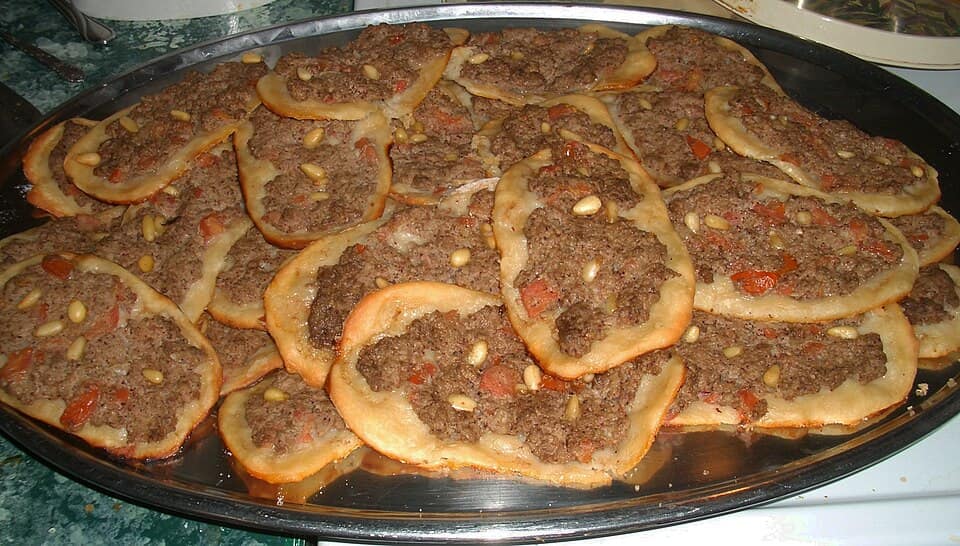
Sfeeha
 Lebanese · 1 h 50 min · 626 kcal
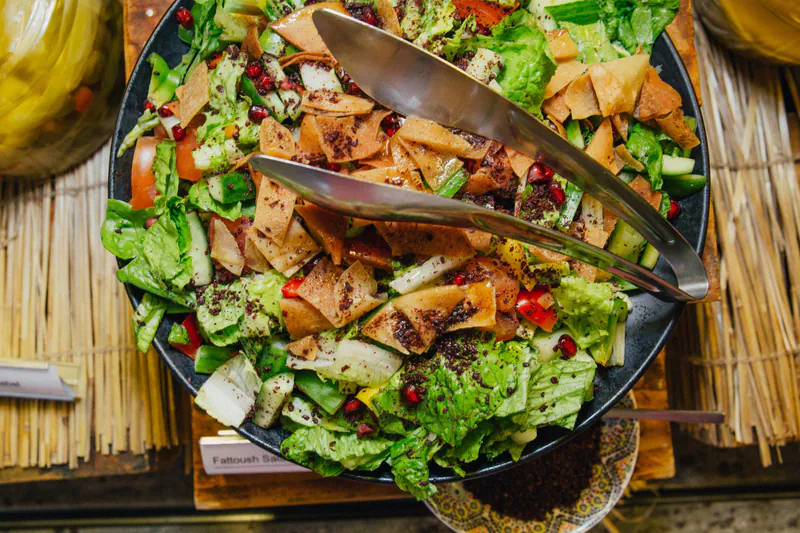
Fattoush
Lebanese · 30 min · 293 kcal · Vegan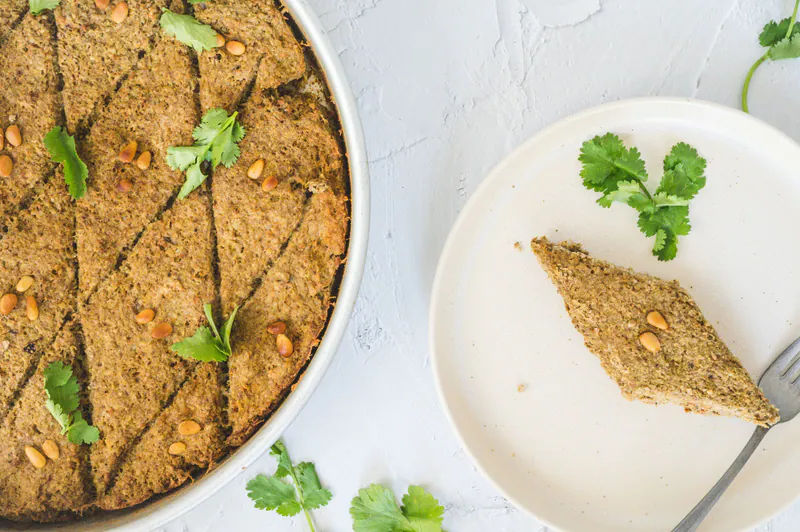
Kibbeh bil sanieh
Lebanese · 1 h 40 min · 491 kcal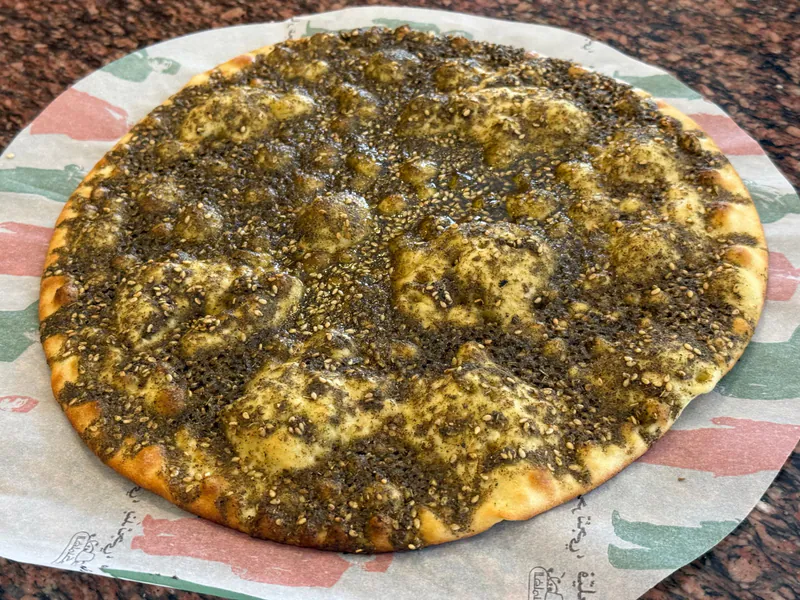
Manakish za'atar
Lebanese · 1 h 41 min · 424 kcal · Vegetarian