
Taiwanese pineapple cakes
Contains egg (no meat or fish)
鳳梨酥 · fènglísū
Small, buttery shortbread cases wrapped around a chewy, jammy pineapple filling. Taiwan's signature gift pastry.
Taiwanese pineapple cakes is a Taiwanese pastry, ready in about 2 hours 20 minutes and made with pineapple and unsalted butter. It serves 16 and is rated intermediate to cook.
No licensed photograph of this dish yet.
- Prep
- 40 min
- Cook
- 1 h 10 min
- Rest
- 30 min
- Total
- 2 h 20 min
- Serves
- 16
- Level
- Intermediate
- Calories
- 178
Ingredients
Filling
Pastry
Method
Step 1
Squeeze some juice from the pineapple (opens in a new tab), then cook the flesh with the sugar (opens in a new tab) and syrup in a wide pan, stirring often, until it is a thick, sticky golden paste that holds its shape. Cool completely.
- 50 min
- medium heat
- Saucepan (opens in a new tab)
Stir constantly towards the end so it doesn't catch.
Step 2
Beat the butter, icing sugar (opens in a new tab) and salt until creamy, beat in the egg (opens in a new tab), then mix in the flour and milk powder (opens in a new tab) to a soft dough. Chill 30 minutes.
- 8 min
Step 3
Heat the oven (opens in a new tab) to 170 °C. Divide the dough into 16 balls (about 25 g) and the filling into 16 (about 18 g).
- 8 min
- 170°C
Step 4
Flatten each piece of dough, wrap around a ball of filling and seal. Press into a small square mould or shape into neat rectangles by hand and place on a lined tray.
Step 5
Bake for 10 minutes, flip the cakes over and bake another 8–10 minutes until pale gold on both sides. Cool, then store airtight overnight to soften slightly.
- 20 min
- 170°C
- Oven (opens in a new tab)
About this dish
- Origin
- Taiwan · Well documentedMore food from Taiwan
- Dish
- Snack · Pastries · Sweets & confectionery
- Cooking method
- Oven-baked, Simmered
- Taste
- sweet, fruity, buttery
- Diet
- Vegetarian (lacto-ovo) · No nut ingredientsWorked out from the ingredients. How labels work
All labels
Vegetarian (lacto-ovo) · Eggetarian · Pescatarian · Flexitarian-friendly · No nut ingredients · Alcohol-free · Pork-free · Beef-free · Low-sodium - Good for
- Make-ahead · Festive & celebration · Portable / lunchbox
- Cook more with
- Pineapple · Unsalted butter · Sugar · Golden syrup · Icing sugar · Egg
Allergens
- Contains: Milkfrom unsalted butter, milk powder
- Contains: Eggsfrom egg
- Contains: Wheatfrom all-purpose flour
- Contains: Glutenfrom all-purpose flour
Based on typical versions of these ingredients and not verified allergen-free. Brands differ and cross-contact happens, so always check labels. For severe allergies, follow your clinician’s advice.
Nutrition
178 kcal per serving
Estimated1 serving ≈ 92 g · recipe makes 16
Where the energy comes from
- Protein 5%
- Carbohydrate 60%
- Fat 34%
| Nutrient | Per serving | Per 100 g* |
|---|---|---|
| Energy | 178 kcal | 194 kcal |
| Protein | 2.5 g | 2.7 g |
| Carbohydrate | 27.6 g | 30 g |
| Net carbohydrate | 26.4 g | 28.8 g |
| Sugars | 16.2 g | 17.6 g |
| Added sugars | 10.2 g | 11.1 g |
| Fibre | 1.1 g | 1.2 g |
| Fat | 7 g | 7.6 g |
| Saturated fat | 4.2 g | 4.5 g |
| Trans fat | — | — |
| Cholesterol | 29 mg | 32 mg |
| Sodium | 50 mg | 54 mg |
| Salt equivalent | 0.1 g | 0.1 g |
Vitamins & minerals per serving
- Potassium
- 103 mg
- Calcium
- 27 mg
- Iron
- 0.9 mg
- Magnesium
- 12 mg
- Vitamin A (RAE)
- 62 µg
- Vitamin C
- 27 mg
- Vitamin D
- 0.2 µg
- Vitamin B12
- 0.1 µg
- Folate (DFE)
- 49 µg
How these numbers were made
- Calculated from USDA FoodData Central (SR Legacy) per-100 g values and the listed quantities.
- *Per 100 g of combined raw ingredients; the cooked dish may weigh more or less.
- Golden syrup: Cane syrup (FDC 167743) used as a stand-in for golden syrup (partially inverted refined cane-sugar syrup).
- “—” means the value isn’t known for enough of the ingredients; it is never zero by default.
- Values are estimates for guidance, not for medical dosing. U.S. Department of Agriculture, Agricultural Research Service. FoodData Central, 2019. fdc.nal.usda.gov.
Good to know
Tips
- Cook the filling until a spoon drawn through it leaves a clear trail — wet filling bursts through the pastry.
- Rest the baked cakes airtight overnight: the pastry softens and the flavour deepens.
Common mistakes
- Overworking the dough so it turns tough; mix just until it comes together.
Storage
- Airtight at room temperature up to 1 week.
Original editorial recipe · FriendsPantry editorial · Not yet independently reviewed · Added · Updated
Recipe DNA
How this dish is built
Built from the recipe’s own sections. Each band’s width is its share of the dish by weight. Choose a component to see what it does.
Structure
Pastry
- Unsalted butter, softened120 g
- Icing sugar30 g
- Salt0.25 tsp · 1.5 g
- Egg, beaten1 piece · 50 g
- All-purpose flour200 g
- Milk powder25 g
Baker’s notes
Customise in Bread & BakeryTimeline and readiness cues
Mix and knead · about 1 h 15 min
Knead until smooth and soft; it should feel like an earlobe.
Rest · about 30 min
Covered so it doesn't dry out; relaxed dough rolls and shapes without springing back.
Bake · about 20 min at 170 °C
Puffed with golden-brown spots on both sides.
- Start to finish: about 2 h 5 min. Times are a guide — warmth changes everything; follow the cues.
If something goes wrong
Pale crust
Likely causes
- Oven too cool
- Too little sugar or no milk/egg for browning
- Over-fermented (yeast ate the sugars)
What to do
- Check the oven with a thermometer
- Brush with egg wash or milk
- Shorten the fermentation
Burnt bottom
Likely causes
- Tray too close to the heat
- Dark tray absorbs more heat
- Too much sugar in the dough
What to do
- Bake on the middle shelf
- Double up trays or use a light-coloured one
- Lower the temperature 10–15 °C and bake a little longer
Reviews & corrections
Reviews come from signed-in cooks and appear after a moderator checks them. We never show made-up ratings.
You might also like
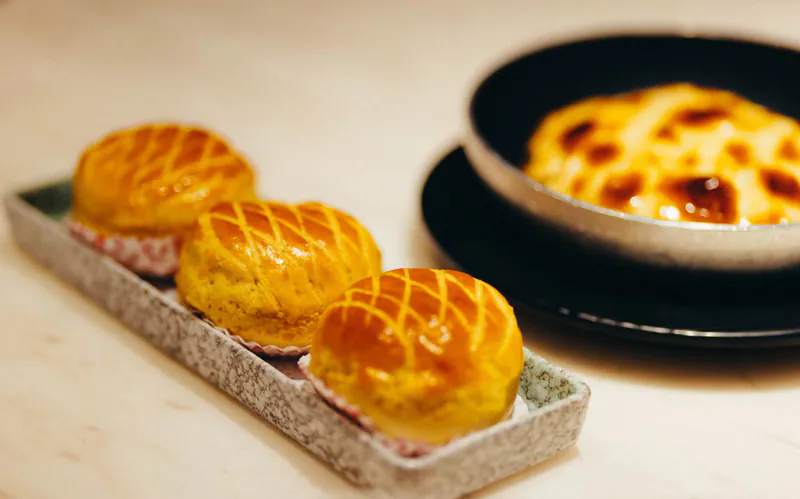
Pineapple bun (bo lo bao)
 Hong Kong · 2 h 36 min · 346 kcal · Contains egg
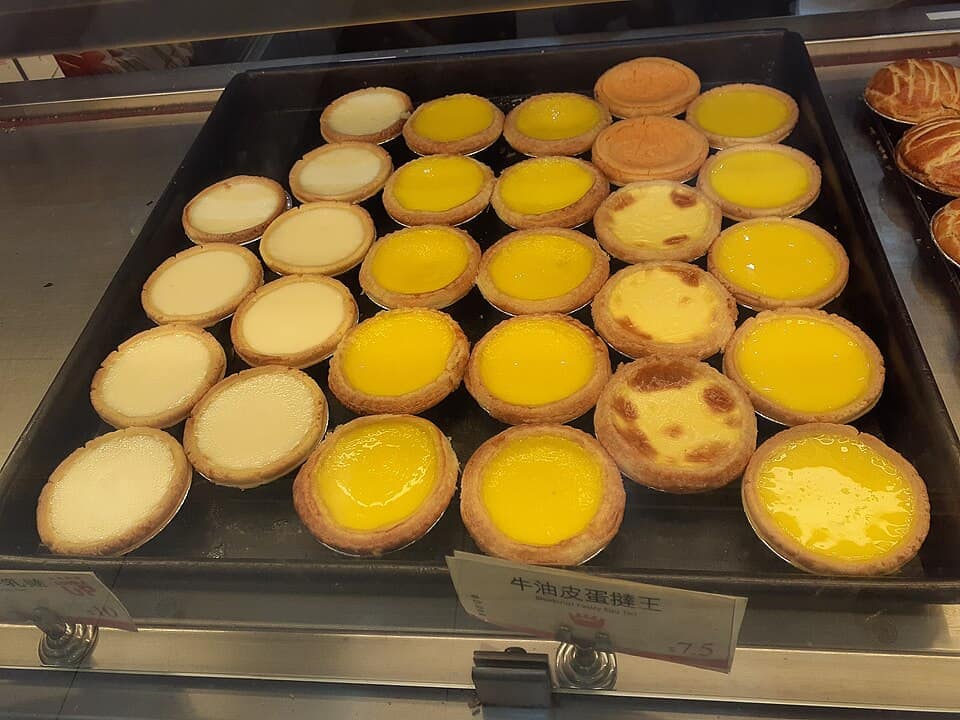
Cantonese egg tarts
 Cantonese · 1 h 27 min · 193 kcal · Contains egg
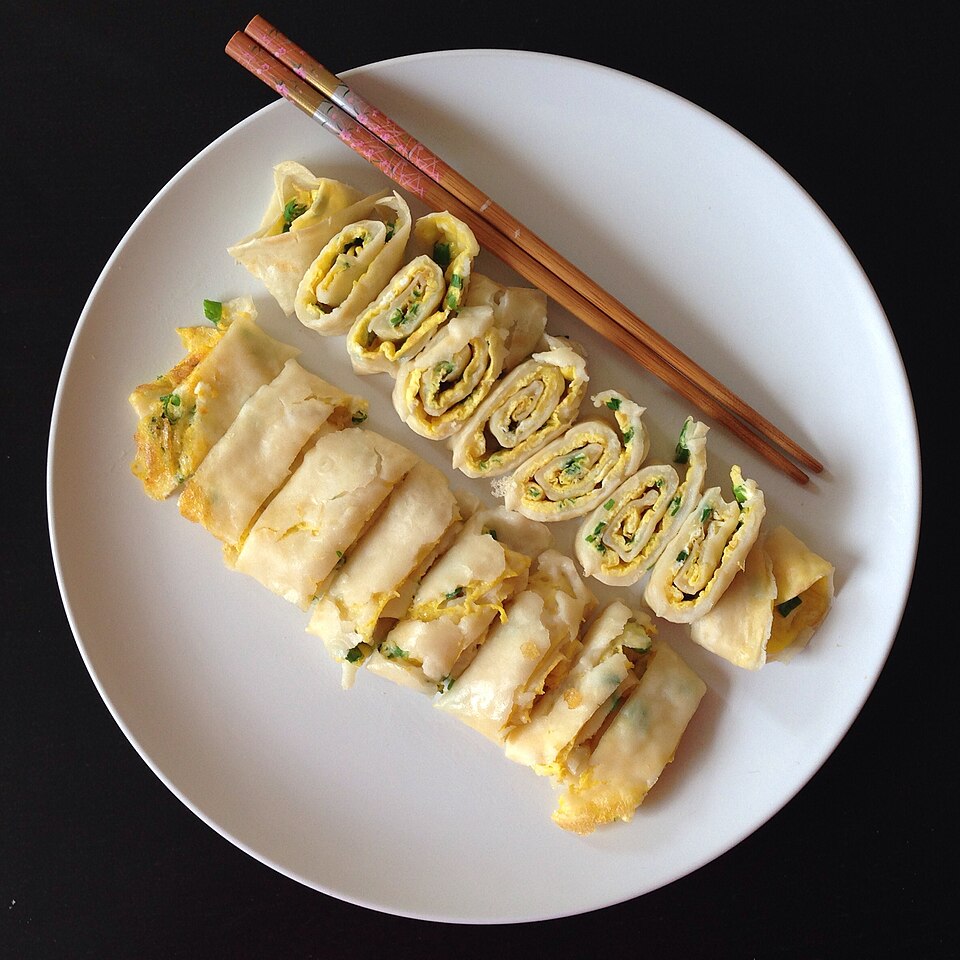
Dan bing (Taiwanese egg crepe)
 Taiwanese · 15 min · 265 kcal · Contains egg
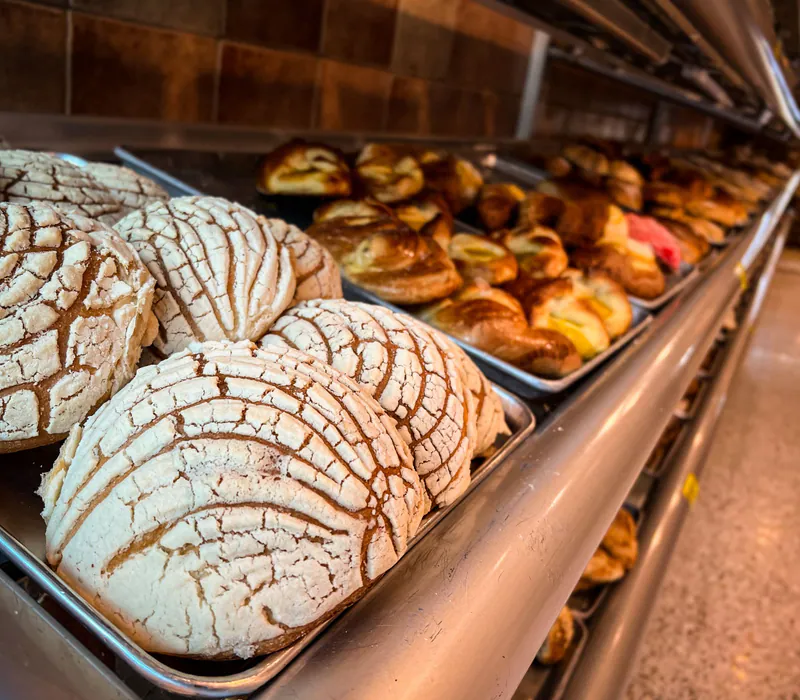
Conchas (Mexican sweet bread)
 Mexican · 3 h 40 min · 316 kcal · Contains egg