
Halwa puri
Vegetarian
حلوہ پوری · halwa puri
Pakistan's favourite weekend breakfast: puffed fried puris served with sweet, ghee-rich semolina halwa, usually alongside spicy chickpeas.
Halwa puri is a Pakistani bread, ready in about 1 hour 10 minutes and made with all-purpose flour and semolina. It serves 4 and is rated intermediate to cook.
No licensed photograph of this dish yet.
- Prep
- 15 min
- Cook
- 35 min
- Rest
- 20 min
- Total
- 1 h 10 min
- Serves
- 4
- Level
- Intermediate
- Calories
- 721
Method
Step 1
Mix the flour, semolina (opens in a new tab), salt and 1 tbsp oil, then add the water gradually and knead to a stiff, smooth dough. Cover and rest.
- 5 min
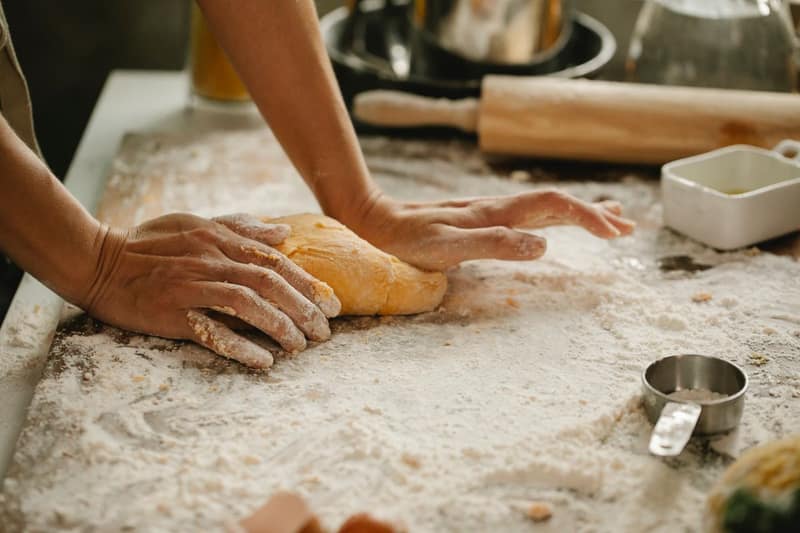
How it looks · Photo: Klaus Nielsen on Pexels Step 2
For the halwa, heat the ghee (opens in a new tab) in a saucepan (opens in a new tab) and roast the semolina (opens in a new tab) with the cardamom (opens in a new tab), stirring constantly, until golden and fragrant. Meanwhile warm the water with the sugar (opens in a new tab) until dissolved.
- 10 min
- medium-low heat
- Saucepan (opens in a new tab)
Step 3
Pour the hot syrup into the semolina (opens in a new tab), standing back as it splutters. Stir until it thickens and leaves the sides of the pan, then cover and keep warm. Garnish with almonds (opens in a new tab).
- 5 min
- low heat
Food safety: The mixture spits violently when the syrup goes in — use a long spoon.
Step 4
Divide the dough into 8 balls and roll each into a 12 cm round. Heat the frying oil to 190 °C.
Step 5
Fry the puris one at a time, pressing gently with a slotted spoon so they puff, turning once, until golden. Drain and serve hot with the halwa.
- 10 min
Food safety: Slide each puri into the oil away from you and never leave hot oil unattended.

How it looks · Photo: Willians Huerta on Pexels
About this dish
- Origin
- Not attributed to one place · Origin uncertainA breakfast combination eaten across Pakistan and North India; especially associated with Lahore's weekend breakfast culture.Also popular in Pakistan, India
- Dish
- Breakfast · Brunch · Breads & flatbreads · Desserts
- Cooking method
- Deep-fried, Pan-fried
- Taste
- sweet, buttery, aromatic / warmly spiced, mild
- Diet
- Vegetarian (lacto-ovo)Without the optional extras: No nut ingredientsWith the listed swaps: Vegan, Plant-based, Ovo-vegetarian, Dairy-freeWorked out from the ingredients. How labels work
All labels
Vegetarian (lacto-ovo) · Eggetarian · Lacto-vegetarian · Pescatarian · Flexitarian-friendly · Egg-free · Alcohol-free · Pork-free · Beef-free · Low-sodium - Good for
- Festive & celebration
- Cook more with
- All-purpose flour · Semolina · Ghee · Sugar · Cardamom
- Techniques
- Pan-frying · Deep-frying · Kneading
Allergens
- Contains, can be adapted: Milkfrom ghee
- Contains, can be adapted: Tree nutsfrom almonds
- Contains: Wheatfrom all-purpose flour, semolina
- Contains: Glutenfrom all-purpose flour, semolina
Based on typical versions of these ingredients and not verified allergen-free. Brands differ and cross-contact happens, so always check labels. For severe allergies, follow your clinician’s advice.
Nutrition
721 kcal per serving
Calculated1 serving ≈ 266 g · recipe makes 4
Where the energy comes from
- Protein 5%
- Carbohydrate 51%
- Fat 44%
| Nutrient | Per serving | Per 100 g* |
|---|---|---|
| Energy | 721 kcal | 271 kcal |
| Protein | 9.4 g | 3.5 g |
| Carbohydrate | 92 g | 34.6 g |
| Net carbohydrate | 89.4 g | 33.6 g |
| Sugars | — | — |
| Added sugars | 30 g | 11.3 g |
| Fibre | 2.7 g | 1 g |
| Fat | 35.4 g | 13.3 g |
| Saturated fat | 13.6 g | 5.1 g |
| Trans fat | — | — |
| Cholesterol | 51 mg | 19 mg |
| Sodium | 296 mg | 111 mg |
| Salt equivalent | 0.7 g | 0.3 g |
Vitamins & minerals per serving
- Potassium
- 118 mg
- Calcium
- 27 mg
- Iron
- 3.8 mg
- Magnesium
- 29 mg
- Vitamin A (RAE)
- 168 µg
- Vitamin C
- 0 mg
- Vitamin D
- 0 µg
- Vitamin B12
- 0 µg
- Folate (DFE)
- 231 µg
How these numbers were made
- Calculated from USDA FoodData Central (SR Legacy) per-100 g values and the listed quantities.
- *Per 100 g of combined raw ingredients; the cooked dish may weigh more or less.
- Optional ingredients are not included: almonds.
- “—” means the value isn’t known for enough of the ingredients; it is never zero by default.
- Values are estimates for guidance, not for medical dosing. U.S. Department of Agriculture, Agricultural Research Service. FoodData Central, 2019. fdc.nal.usda.gov.
Good to know
Tips
- If the puris don't puff, the oil isn't hot enough or the dough is too soft.
Common mistakes
- Under-roasting the semolina gives a pasty, raw-tasting halwa.
Serve with
- Serve with chana masala or aloo tarkari, pickle and a cup of chai.
Storage
- Halwa keeps refrigerated for 3 days; puris are best fresh.
Reheating
- Warm halwa with a splash of water, stirring.
Original editorial recipe · FriendsPantry editorial · Not yet independently reviewed · Added · Updated
Recipe DNA
How this dish is built
Baker’s notes
Customise in Bread & BakeryTimeline and readiness cues
Mix and knead · about 35 min
Weigh everything. Knead until smooth and elastic: a small piece stretches thin enough to see light through (the windowpane test).
Rest · about 20 min
Covered so it doesn't dry out; relaxed dough rolls and shapes without springing back.
Bake · about 10 min
Deep golden; bread sounds hollow when tapped underneath, or reads 93–96 °C inside (enriched breads 88–90 °C).
- Start to finish: about 1 h 5 min. Times are a guide — warmth changes everything; follow the cues.
The dough
| Ingredient | Role | Weight | Baker’s % |
|---|---|---|---|
| All-purpose flour | Flour | 200 g | 60.5% |
| Semolina | Flour | 131 g | 39.5% |
| Water | Water | 470 g | 142.2% |
| Sugar | Sugar | 120 g | 36.3% |
| Ghee | Fat | 80 g | 24.2% |
| Neutral vegetable oil | Fat | 14 g | 4.1% |
| Salt | Salt | 3 g | 0.9% |
| Cardamom | Other | 1 g | 0.2% |
- Total flour
- 330 g
- Hydration
- 142.2%
- With milk, eggs…
- 142.2%
- Wholegrain
- 0%
Hydration = water ÷ flour × 100. Milk is about 87% water and eggs about 75%, so they’re shown separately as “with milk, eggs…”.
- Wet dough (over 75%) — sticky; use wet hands and folds instead of kneading. Ciabatta, focaccia and open sourdough.
- Salt 0.9% — on the low side (1.8–2.2% is typical for bread).
- Sugar 36.3% — an enriched, sweet dough; rises more slowly and browns quickly.
- Fat 28.3% — a rich, tender dough.
If something goes wrong
Pale crust
Likely causes
- Oven too cool
- Too little sugar or no milk/egg for browning
- Over-fermented (yeast ate the sugars)
What to do
- Check the oven with a thermometer
- Brush with egg wash or milk
- Shorten the fermentation
Burnt bottom
Likely causes
- Tray too close to the heat
- Dark tray absorbs more heat
- Too much sugar in the dough
What to do
- Bake on the middle shelf
- Double up trays or use a light-coloured one
- Lower the temperature 10–15 °C and bake a little longer
Tough or chewy flatbread
Likely causes
- Dough too stiff
- Not rested
- Cooked too slowly on too cool a pan
What to do
- Add water until the dough is soft and slightly tacky
- Rest 20–30 minutes covered so the gluten relaxes
- Cook on a very hot tawa or pan — quickly
Reviews & corrections
Reviews come from signed-in cooks and appear after a moderator checks them. We never show made-up ratings.
You might also like
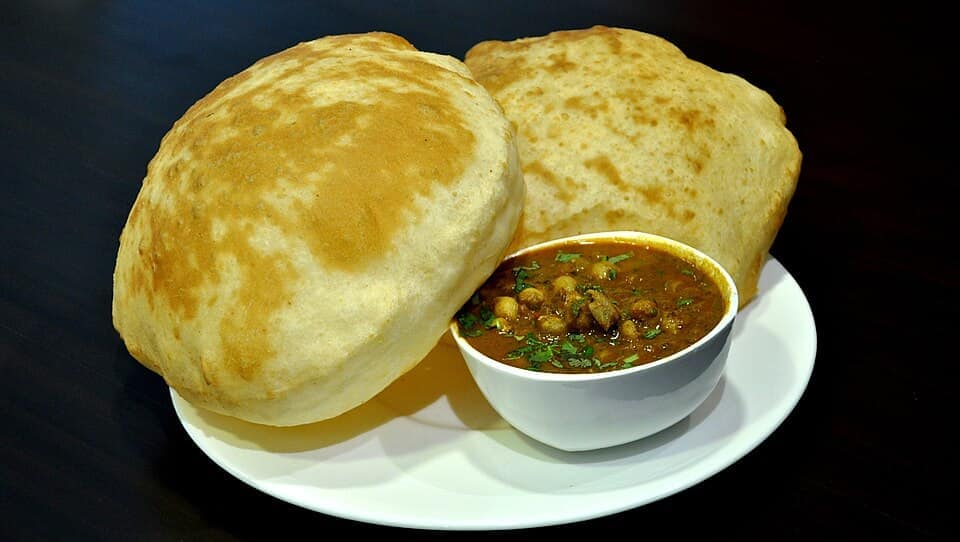
Chole bhature
 Punjabi · 3 h 35 min · 727 kcal · Vegetarian
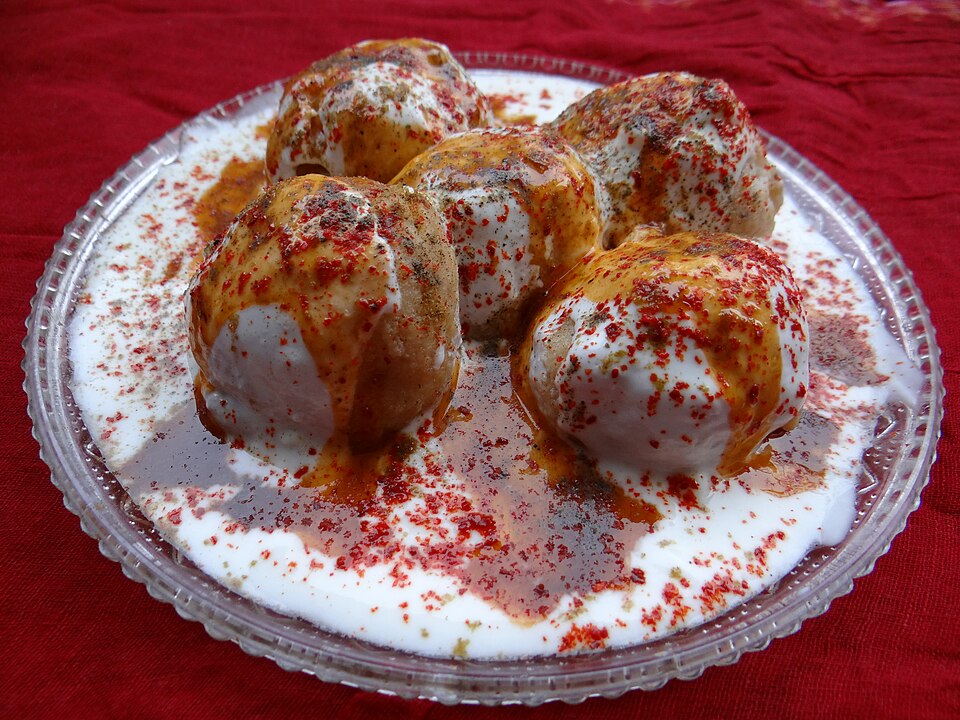
Dahi baray
 Pakistani · 1 h 45 min · 213 kcal · Vegetarian
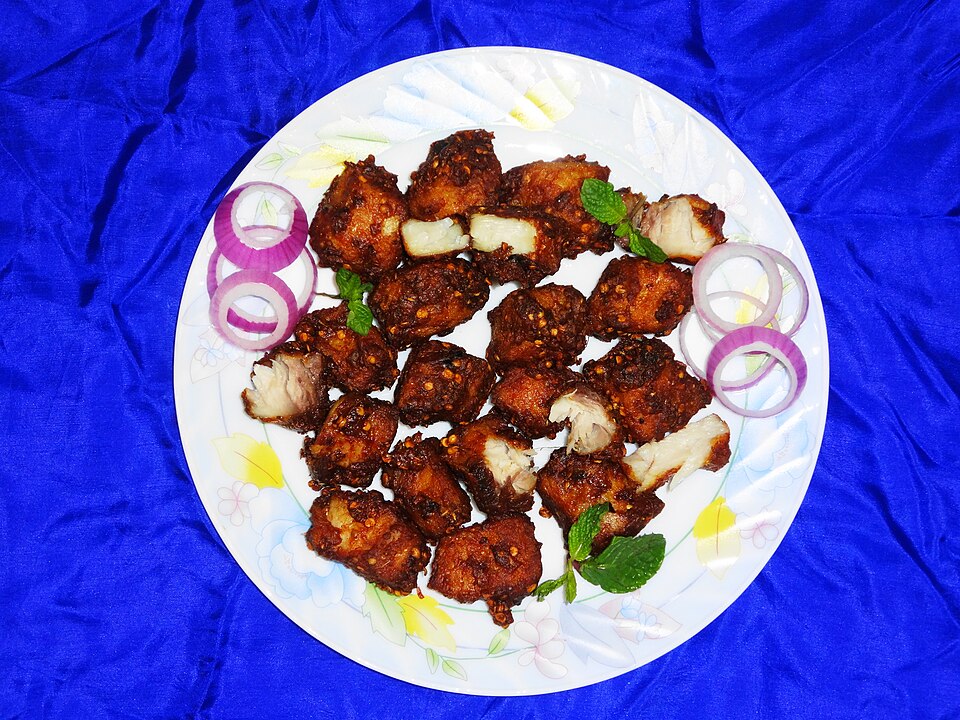
Lahori fish fry
Pakistani · 1 h 5 min · 386 kcalAmritsari kulcha
Punjabi · 3 h 10 min · 358 kcal · Vegetarian