
Eromba (Manipuri fermented fish and vegetable mash)
Non-vegetarian
Boiled vegetables mashed with roasted ngari (fermented fish), roasted dried chillies or king chilli and salt, then scattered with herbs. Pungent, fiery and savoury, it is Manipur's most loved everyday dish, eaten with rice.
Eromba (Manipuri fermented fish and vegetable mash) is an Indian condiment, ready in about 28 minutes and made with potato, ngari (manipuri fermented fish) and dried whole chillies. It serves 4 and is rated easy to cook.
No licensed photograph of this dish yet.
- Prep
- 10 min
- Cook
- 18 min
- Total
- 28 min
- Serves
- 4
- Level
- Easy
- Calories
- 62
Method
Step 1
Peel and chunk the potato (opens in a new tab); trim and cut the beans. Boil them in the water with a pinch of salt over medium-high heat for 12–15 minutes until the potato is completely soft. Drain, keeping a few spoonfuls of the cooking water.
- 15 min
- medium-high heat
- Saucepan (opens in a new tab)
- Chopping board (opens in a new tab)
- Chef's knife (opens in a new tab)
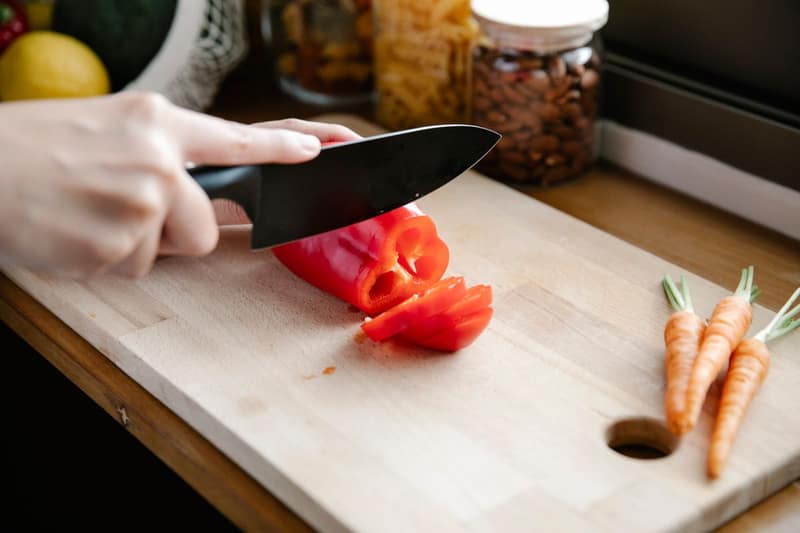
How it looks · Photo: Sarah Chai on Pexels Step 2
Meanwhile, roast the ngari (opens in a new tab) in a dry frying pan over medium heat (or wrapped in foil or banana leaf over a flame) for 1–2 minutes per side until fragrant and lightly charred at the edges. Roast the dried chillies for about 1 minute until crisp and spotted black.
- 3 min
- medium heat
- Frying pan / skillet (opens in a new tab)
Food safety: Roasting ngari and chillies is strongly smoky and pungent; open the windows.
Step 3
Pound the roasted chillies and ngari (opens in a new tab) in a mortar to a coarse paste.
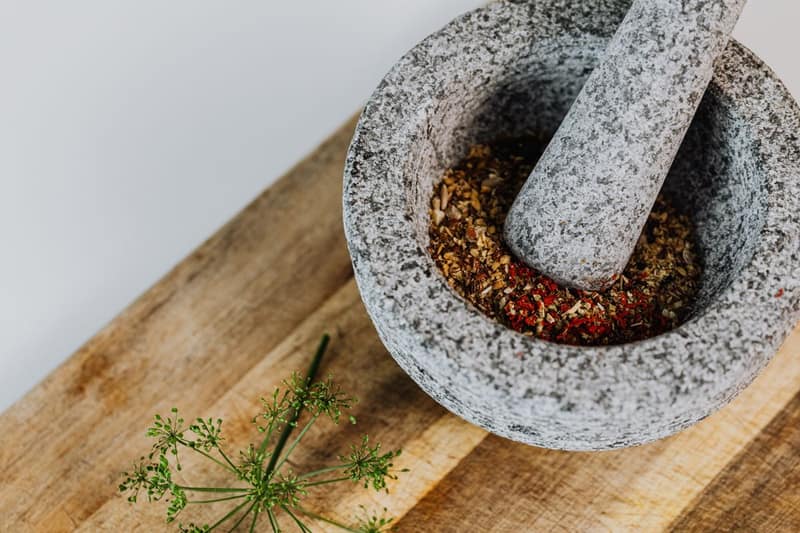
How it looks · Photo: https://kaboompics.com/ on Pexels Step 4
Add the hot vegetables and mash everything together, adding a spoonful or two of the cooking water if needed, to a rough, moist mash. Taste and add salt only if needed.
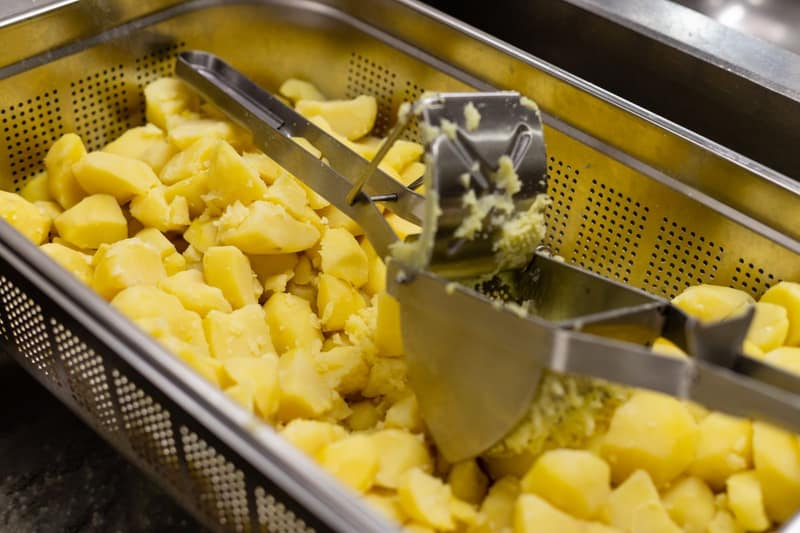
How it looks · Photo: Mateusz Feliksik on Pexels Step 5
Fold in the spring onion (opens in a new tab) and coriander and serve warm or at room temperature.
- 1 min

How it looks · Photo: Willians Huerta on Pexels
About this dish
- Origin
- Manipur, India · Well documentedEromba is a signature Meitei dish. The vegetables vary with the season (potato, yongchak/stink bean, bamboo shoot, pumpkin, beans); ngari and chilli are constant.More food from India
- Dish
- Lunch · Dinner · Condiments, chutneys & relishes · Side dishes
- Cooking method
- Boiled, Toasted
- Taste
- umami, spicy (chilli heat), salty, smoky
- Diet
- Pescatarian · No gluten ingredients · Dairy-free · No nut ingredients · Low-carbWorked out from the ingredients. How labels work
All labels
Pescatarian · Non-vegetarian · Flexitarian-friendly · No gluten ingredients · Dairy-free · Egg-free · No nut ingredients · No added sugar · Alcohol-free · Pork-free · Beef-free · Low-carb · Low-fat · DASH-style - Good for
- Everyday
- Cook more with
- Potato · Ngari (Manipuri fermented fish) · Dried whole chillies · Green beans · Spring onion · Coriander leaves
- Techniques
- Toasting · Boiling · Spice roasting (dry-roasting)
Allergens
- Contains: Fishfrom ngari (manipuri fermented fish)
Based on typical versions of these ingredients and not verified allergen-free. Brands differ and cross-contact happens, so always check labels. For severe allergies, follow your clinician’s advice.
Nutrition
62 kcal per serving
Estimated1 serving ≈ 83 g · recipe makes 4
Where the energy comes from
- Protein 25%
- Carbohydrate 70%
- Fat 4%
| Nutrient | Per serving | Per 100 g |
|---|---|---|
| Energy | 62 kcal | 75 kcal |
| Protein | 4.1 g | 4.9 g |
| Carbohydrate | 11.4 g | 13.8 g |
| Net carbohydrate | 9.3 g | 11.2 g |
| Sugars | 1.3 g | 1.6 g |
| Added sugars | 0 g | 0 g |
| Fibre | 2.1 g | 2.6 g |
| Fat | 0.3 g | 0.4 g |
| Saturated fat | 0.1 g | 0.1 g |
| Trans fat | 0 g | 0 g |
| Cholesterol | 6 mg | 7 mg |
| Sodium | 467 mg | 566 mg |
| Salt equivalent | 1.2 g | 1.4 g |
Vitamins & minerals per serving
- Potassium
- 367 mg
- Calcium
- 41 mg
- Iron
- 1 mg
- Magnesium
- 28 mg
- Vitamin A (RAE)
- 31 µg
- Vitamin C
- 14 mg
- Vitamin D
- 0.2 µg
- Vitamin B12
- 0.4 µg
- Folate (DFE)
- 21 µg
How these numbers were made
- Calculated from USDA FoodData Central (SR Legacy) per-100 g values and the listed quantities.
- Ngari (Manipuri fermented fish): Dried salted cod (FDC 174190) used as a stand-in for ngari, a dried, fermented small-fish product used in small amounts.
- “—” means the value isn’t known for enough of the ingredients; it is never zero by default.
- Values are estimates for guidance, not for medical dosing. U.S. Department of Agriculture, Agricultural Research Service. FoodData Central, 2019. fdc.nal.usda.gov.
Good to know
Tips
- Mash while the vegetables are hot so they absorb the ngari and chilli.
- In Manipur, the chillies are often boiled with the vegetables and then mashed in; roasting gives a smokier result.
Common mistakes
- Over-salting: ngari already carries plenty of salt.
- Blending it smooth — eromba is rough and chunky.
Serve with
- Serve with plain rice and a Manipuri kangshoi (vegetable stew) or singju.
- Eat as a side with fish curry and rice.
Food safety
- Contains fermented fish; buy ngari from a trusted source, keep it sealed and refrigerated, and roast it thoroughly.
- Refrigerate leftovers promptly.
Storage
- Best the same day; keeps 1 day in the fridge.
Variations
- Yongchak eromba: Made with stink beans (Parkia), the most prized version in season.
- Soibum eromba: With fermented bamboo shoot and potato.
- Ooti eromba: With boiled pumpkin or pumpkin leaves.
Original editorial recipe · FriendsPantry editorial · Not yet independently reviewed · Added · Updated
Goes with
Recipe DNA
How this dish is built
Grouped by each ingredient’s role in the dish. Each band’s width is its share of the dish by weight. Choose a component to see what it does.
What the dish is built around
Main ingredient
- Potato, peeled and cut into large chunks; 1 medium200 g
- Green beans, trimmed and cut into 4 cm lengths100 g
- Ngari (Manipuri fermented fish), 3 pieces, rinsed briefly15 g
Make it milder, swap ingredients for your diet, change the batch size or thickness — the original stays as it is.
Customise in Sauce & DrizzleReviews & corrections
Reviews come from signed-in cooks and appear after a moderator checks them. We never show made-up ratings.
You might also like
Fermented bamboo shoot chutney
 Indian · 25 min · 13 kcal · Vegan
Roasted tomato and king chilli chutney (Naga style)
Indian · 22 min · 19 kcal · Vegan
Kangshoi
Indian · 40 min · 101 kcal
Boondi raita
Indian · 20 min · 81 kcal · Vegetarian