
Misal pav
Vegetarian
मिसळ पाव · misaḷ pāv
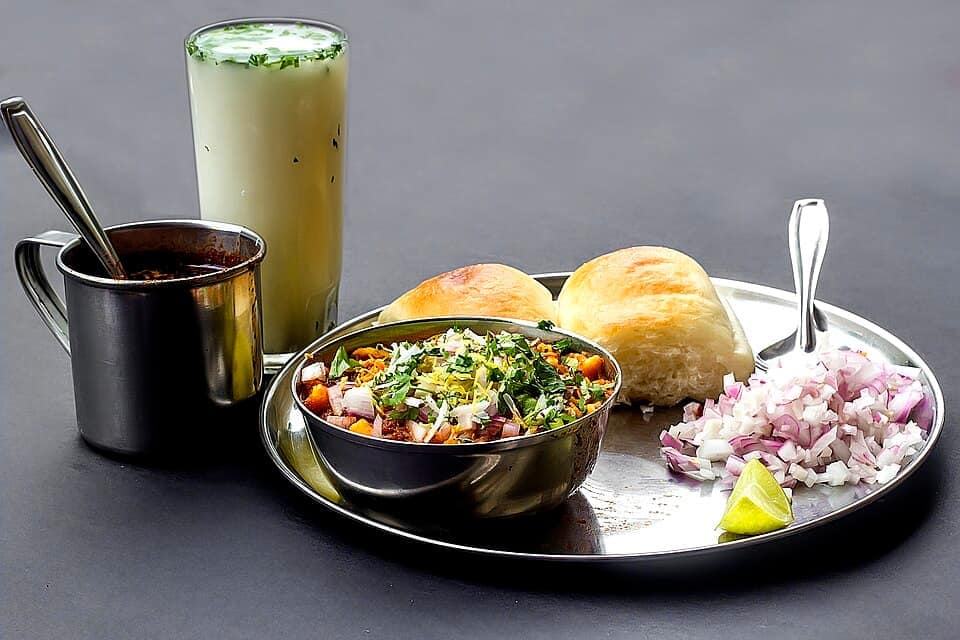
A fiery Maharashtrian curry of sprouted beans in a spicy coconut-onion broth, topped with crunchy farsan, onion and coriander and eaten with soft bread rolls.
Misal pav is an Indian curry, ready in about 1 hour and made with moth beans (matki) and desiccated coconut. It serves 4 and is rated intermediate to cook.
- Prep
- 20 min
- Cook
- 40 min
- Total
- 1 h
- Serves
- 4
- Level
- Intermediate
- Calories
- 608
Plus 1–2 days to soak and sprout the beans.
Ingredients
For cooking the sprouts
For the masala
For the curry (kat)
To serve
Method
Step 1
Soak the beans 8 hours, drain and leave covered in a warm place for 1–2 days until short sprouts appear. Cook the sprouts with 300 ml water, turmeric (opens in a new tab) and salt until just tender but whole, about 10 minutes.
- 12 min
- medium heat
- Saucepan (opens in a new tab)
Food safety: Always cook sprouts thoroughly; raw sprouts can carry harmful bacteria.
Step 2
Fry the onion (opens in a new tab) in 2 tbsp oil until browned, add the coconut, garlic (opens in a new tab) and ginger and roast until the coconut is deep golden. Add the tomato (opens in a new tab), cook 2 minutes, then blend to a smooth paste with a little water.
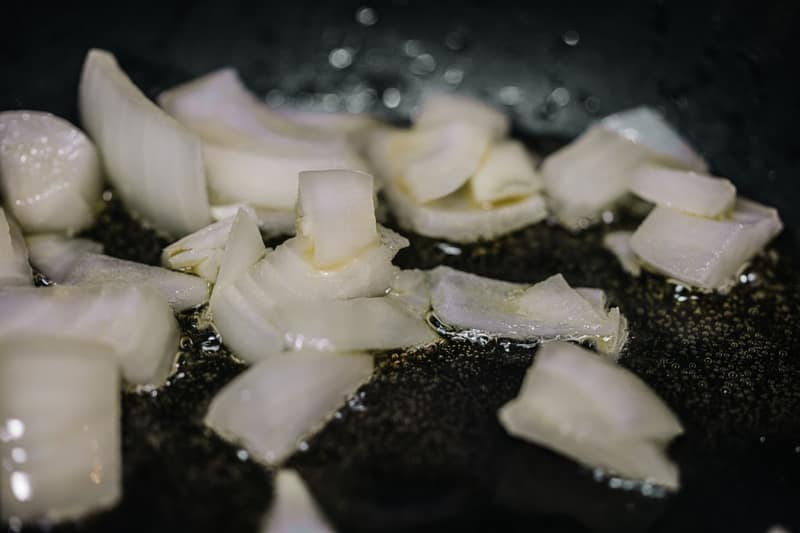
How it looks · Photo: Magda Ehlers on Pexels Step 3
Heat the remaining oil, pop the mustard seeds (opens in a new tab) and cumin (opens in a new tab), add curry leaves (opens in a new tab), then the paste, chilli powder and garam masala (opens in a new tab). Fry until oil rises to the surface.
- 5 min
- medium heat
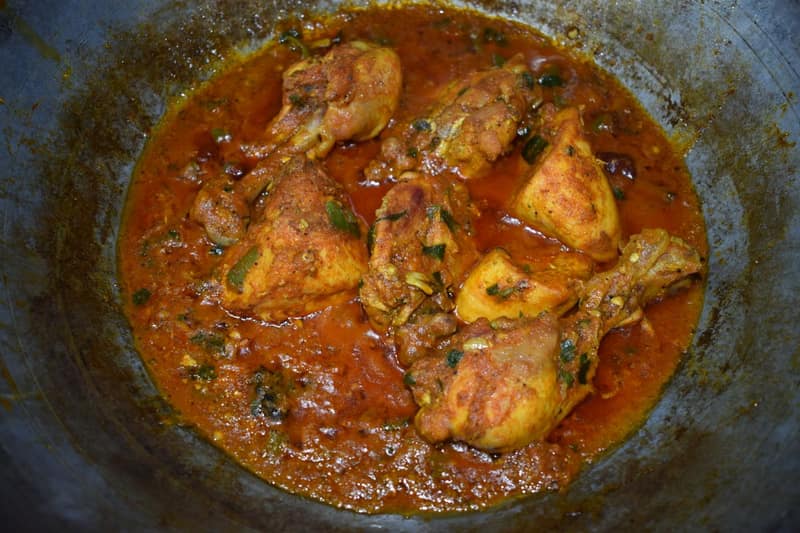
How it looks · Photo: Bachir Mamud on Pexels Step 4
Add the water, tamarind, jaggery and salt and simmer 10 minutes into a thin, red, oily broth (the 'kat'). Stir a ladle of it into the sprouts.
- 10 min
- medium-low heat
Step 5
To serve, spoon sprouts into bowls, ladle over the kat and top with chopped onion (opens in a new tab), coriander and crunchy farsan. Serve with pav and lemon (opens in a new tab).
- 2 min
How it looks · Photo: Willians Huerta on Pexels
About this dish
- Origin
- Maharashtra (Pune, Kolhapur, Nashik), Maharashtra, India · Well documentedMore food from India
- Dish
- Breakfast · Brunch · Snack · Curries · Street food · Main courses
- Cooking method
- Simmered, Boiled, Blended
- Taste
- spicy (chilli heat), tangy, savoury, earthy
- Diet
- Vegan · Dairy-free · No nut ingredients · High-proteinWorked out from the ingredients. How labels work
All labels
Vegan · Plant-based · Vegetarian (lacto-ovo) · Eggetarian · Lacto-vegetarian · Ovo-vegetarian · Pescatarian · Flexitarian-friendly · Dairy-free · Egg-free · No nut ingredients · Alcohol-free · Pork-free · Beef-free · High-protein - Good for
- Street food · Budget-friendly
- Cook more with
- Desiccated coconut · Turmeric · Onion · Garlic · Fresh ginger · Tomato
- Techniques
- Roasting · Boiling · Simmering · Bhunao · Wet grinding
Allergens
- May contain: Milkfrom white bread
- May contain: Eggsfrom white bread
- Contains: Wheatfrom white bread
- Contains: Glutenfrom white bread
- May contain: Soyfrom white bread
- May contain: Sesamefrom white bread
- Contains: Mustardfrom mustard seeds
Based on typical versions of these ingredients and not verified allergen-free. Brands differ and cross-contact happens, so always check labels. For severe allergies, follow your clinician’s advice.
Nutrition
608 kcal per serving
Estimated1 serving ≈ 502 g · recipe makes 4
Where the energy comes from
- Protein 13%
- Carbohydrate 54%
- Fat 33%
| Nutrient | Per serving | Per 100 g* |
|---|---|---|
| Energy | 608 kcal | 121 kcal |
| Protein | 20.8 g | 4.1 g |
| Carbohydrate | 83.4 g | 16.6 g |
| Net carbohydrate | — | — |
| Sugars | — | — |
| Added sugars | 1.1 g | 0.2 g |
| Fibre | — | — |
| Fat | 22.7 g | 4.5 g |
| Saturated fat | — | — |
| Trans fat | 0.1 g | 0 g |
| Cholesterol | 0 mg | 0 mg |
| Sodium | 1151 mg | 229 mg |
| Salt equivalent | 2.9 g | 0.6 g |
Vitamins & minerals per serving
- Potassium
- 969 mg
- Calcium
- 255 mg
- Iron
- 9.5 mg
- Magnesium
- 241 mg
- Vitamin A (RAE)
- 36 µg
- Vitamin C
- 12 mg
- Vitamin D
- 0 µg
- Vitamin B12
- —
- Folate (DFE)
- —
How these numbers were made
- Calculated from USDA FoodData Central (SR Legacy) per-100 g values and the listed quantities.
- *Per 100 g of combined raw ingredients; the cooked dish may weigh more or less.
- Optional ingredients are not included: lemon.
- Not counted (tiny amounts or “to taste”): curry leaves.
- Garam masala: Curry powder (FDC 170924) used as a stand-in; both are ground blends of similar dried spices used in teaspoon amounts.
- Tamarind paste: Raw tamarind pulp (FDC 167763). Commercial concentrates vary in water content.
- Jaggery / palm sugar: Brown sugar (FDC 168833) used as a stand-in for unrefined cane jaggery and palm sugar.
- “—” means the value isn’t known for enough of the ingredients; it is never zero by default.
- Values are estimates for guidance, not for medical dosing. U.S. Department of Agriculture, Agricultural Research Service. FoodData Central, 2019. fdc.nal.usda.gov.
Good to know
Tips
- Serve the kat separately so everyone can make theirs as hot as they like.
Common mistakes
- Overcooking the sprouts to mush — they should stay whole with a little bite.
Serve with
- Top with store-bought farsan or sev for crunch and serve with buttermilk to cool things down.
Storage
- Keep sprouts and kat separately, up to 3 days refrigerated.
Reheating
- Reheat until steaming hot.
Original editorial recipe · FriendsPantry editorial · Not yet independently reviewed · Added · Updated
Sauces, chutneys & dips for this dish
Recipe DNA
How this dish is built
Built from the recipe’s own sections. Each band’s width is its share of the dish by weight. Choose a component to see what it does.
What the dish is built around
Main ingredient
- Moth beans (matki), whole, sprouted (about 400 g sprouts)200 g
Masalas in this recipe
Make the masala first, then come back to finish the dish.
Dry spice blend
Punjabi garam masala
This recipe uses 1½ tsp (3.1 g for 4 servings).
Also: Bengali garam masala, Kerala (Malabar) garam masala, Mughlai (shahi) garam masala
Reviews & corrections
Reviews come from signed-in cooks and appear after a moderator checks them. We never show made-up ratings.
You might also like
Masala chaas
 Gujarati · 5 min · 42 kcal · Vegetarian
Bagara baingan
Indian · 55 min · 314 kcal · Vegan
Hyderabadi dalcha
Indian · 1 h 30 min · 397 kcal
Mirchi ka salan
Indian · 45 min · 209 kcal · Vegan