
Egusi soup
Non-vegetarian
Ọbẹ̀ ẹ̀gúsí
Ground melon seeds simmered in a palm-oil and pepper base until they form soft, nutty curds, then finished with greens, beef and smoked fish. One of Nigeria's best-loved soups, eaten with pounded yam or eba.
Egusi soup is a Nigerian soup, ready in about 1 hour 40 minutes and made with beef chuck, egusi (ground melon seeds) and red palm oil. It serves 5 and is rated intermediate to cook.

- Prep
- 20 min
- Cook
- 1 h 20 min
- Total
- 1 h 40 min
- Serves
- 5
- Level
- Intermediate
- Calories
- 577
Ingredients
For the meat
For the soup
Method
Step 1
Simmer the beef with the sliced onion (opens in a new tab), 1 tsp salt and the water, covered, until tender. Keep the stock.
- 45 min
- medium-low heat
- Stockpot / large pot (opens in a new tab)
Step 3
Heat the palm oil (opens in a new tab) in a wide pot, fry the chopped onion (opens in a new tab) for 2 minutes, then add the blended peppers and fry until thickened and the oil rises.
- 10 min
- medium heat
Food safety: Palm oil smokes easily — keep the heat moderate.
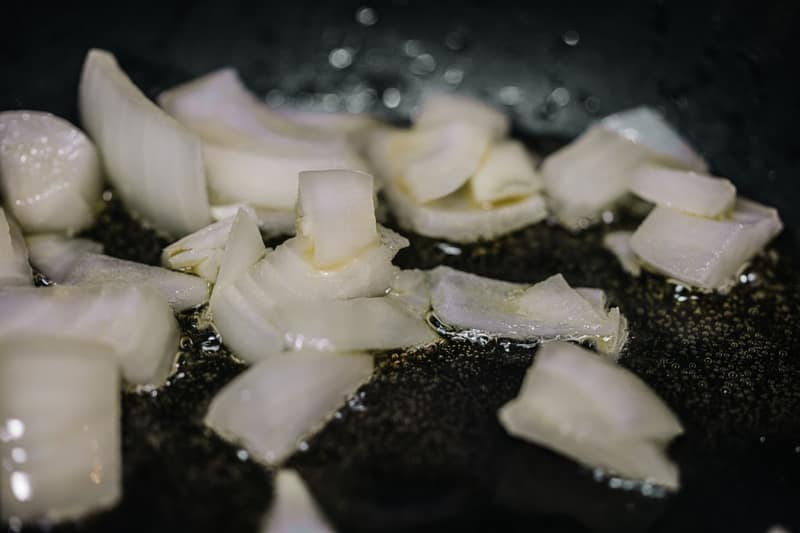
How it looks · Photo: Magda Ehlers on Pexels Step 4
Drop in the egusi (opens in a new tab) paste in spoonfuls. Leave it undisturbed for 5 minutes so it sets into curds, then stir gently and fry 5 minutes more.
- 10 min
- medium-low heat
Not stirring at first gives the classic lumpy texture; stir straight away for a smoother soup.
Step 5
Add the beef with about 300 ml of its stock (top up with water if there is less), the smoked fish, crayfish and iru. Simmer, stirring occasionally, until the oil pools on top.
- 15 min
- low heat
Step 6
Stir in the greens and the remaining salt and cook just until wilted. Taste and adjust.
- 4 min
- low heat
About this dish
- Origin
- Nigeria · Commonly attributedEaten across Nigeria (Yoruba, Igbo and other versions) and also in Ghana, Cameroon and neighbouring countries.Also popular in Ghana, CameroonMore food from Nigeria
- Dish
- Lunch · Dinner · Soups · Stews & braises · Main courses
- Cooking method
- Simmered, Stewed, Boiled
- Taste
- nutty, savoury, spicy (chilli heat), rich
- Diet
- No gluten ingredients · Dairy-free · No nut ingredients · High-proteinWithout the optional extras: Whole-food focused, Paleo-styleWith the listed swaps: Beef-freeWorked out from the ingredients. How labels work
All labels
Non-vegetarian · No gluten ingredients · Dairy-free · Egg-free · No nut ingredients · No added sugar · Alcohol-free · Pork-free · High-protein - Good for
- Freezer-friendly · Make-ahead
- Cook more with
- Beef chuck · Egusi (ground melon seeds) · Red palm oil · Onion · Red bell pepper · Fresh red chilli
Allergens
- Contains: Fishfrom mackerel
- Contains, can be adapted: Crustaceansfrom ground dried crayfish
Based on typical versions of these ingredients and not verified allergen-free. Brands differ and cross-contact happens, so always check labels. For severe allergies, follow your clinician’s advice.
Nutrition
577 kcal per serving
Estimated1 serving ≈ 439 g · recipe makes 5
Where the energy comes from
- Protein 27%
- Carbohydrate 9%
- Fat 64%
| Nutrient | Per serving | Per 100 g* |
|---|---|---|
| Energy | 577 kcal | 132 kcal |
| Protein | 41.1 g | 9.4 g |
| Carbohydrate | 13.6 g | 3.1 g |
| Net carbohydrate | — | — |
| Sugars | — | — |
| Added sugars | 0 g | 0 g |
| Fibre | — | — |
| Fat | 42.6 g | 9.7 g |
| Saturated fat | 14 g | 3.2 g |
| Trans fat | — | — |
| Cholesterol | 85 mg | 19 mg |
| Sodium | 899 mg | 205 mg |
| Salt equivalent | 2.2 g | 0.5 g |
Vitamins & minerals per serving
- Potassium
- 1196 mg
- Calcium
- 119 mg
- Iron
- 7.4 mg
- Magnesium
- 308 mg
- Vitamin A (RAE)
- 375 µg
- Vitamin C
- 83 mg
- Vitamin D
- 4.9 µg
- Vitamin B12
- 4.9 µg
- Folate (DFE)
- 170 µg
How these numbers were made
- Calculated from USDA FoodData Central (SR Legacy) per-100 g values and the listed quantities.
- *Per 100 g of combined raw ingredients; the cooked dish may weigh more or less.
- Optional ingredients are not included: ground dried crayfish, fermented locust beans.
- Egusi (ground melon seeds): Dried watermelon seed kernels (FDC 169407) used as a stand-in; egusi comes from closely related Citrullus melons and has a similar oil- and protein-rich composition.
- “—” means the value isn’t known for enough of the ingredients; it is never zero by default.
- Values are estimates for guidance, not for medical dosing. U.S. Department of Agriculture, Agricultural Research Service. FoodData Central, 2019. fdc.nal.usda.gov.
Good to know
Tips
- Add more stock if the soup is thicker than you like — it should coat a spoon heavily but still move.
Common mistakes
- Burning the egusi: it catches quickly once it has absorbed the oil, so keep the heat low.
Serve with
- Serve with pounded yam, eba, amala or fufu.
Food safety
- Simmer the beef until fork-tender before it goes into the soup; cool leftovers quickly and refrigerate within 2 hours.
- Reheat only the portion you need, bringing it back to a full simmer.
Storage
- Refrigerate up to 3 days or freeze up to 3 months.
Reheating
- Reheat gently with a splash of water, stirring often.
Variations
- Egusi with bitter leaf: Washed bitter leaf replaces the spinach for a pleasantly bitter Igbo-style soup.
Original editorial recipe · FriendsPantry editorial · Not yet independently reviewed · Added · Updated
Recipe DNA
How this dish is built
Built from the recipe’s own sections. Each band’s width is its share of the dish by weight. Choose a component to see what it does.
Reviews & corrections
Reviews come from signed-in cooks and appear after a moderator checks them. We never show made-up ratings.
You might also like
Pounded yam
 Nigerian · 40 min · 295 kcal · Vegan
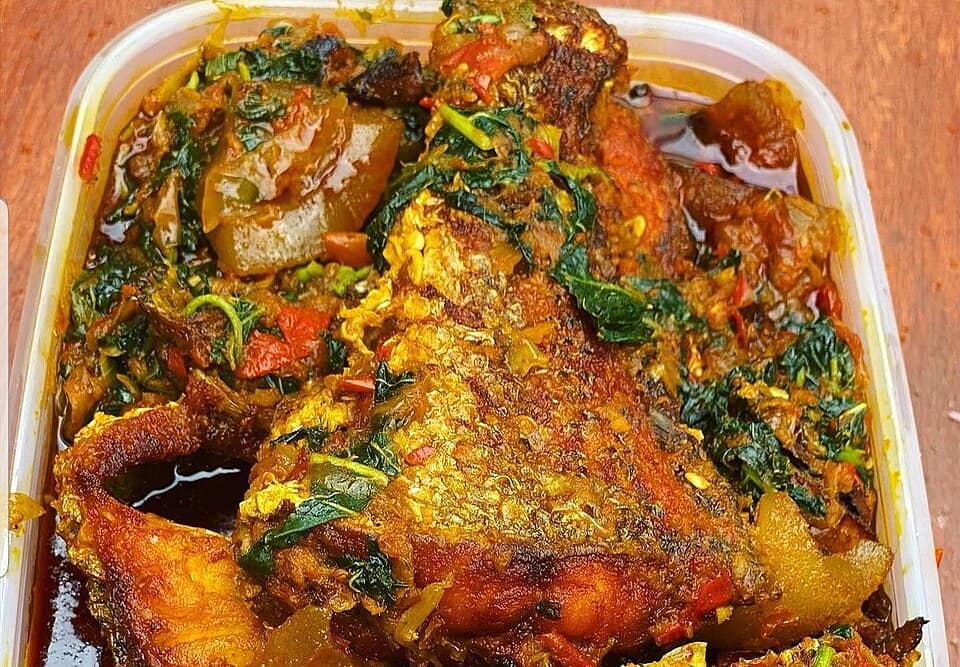
Efo riro
Nigerian · 1 h 35 min · 402 kcal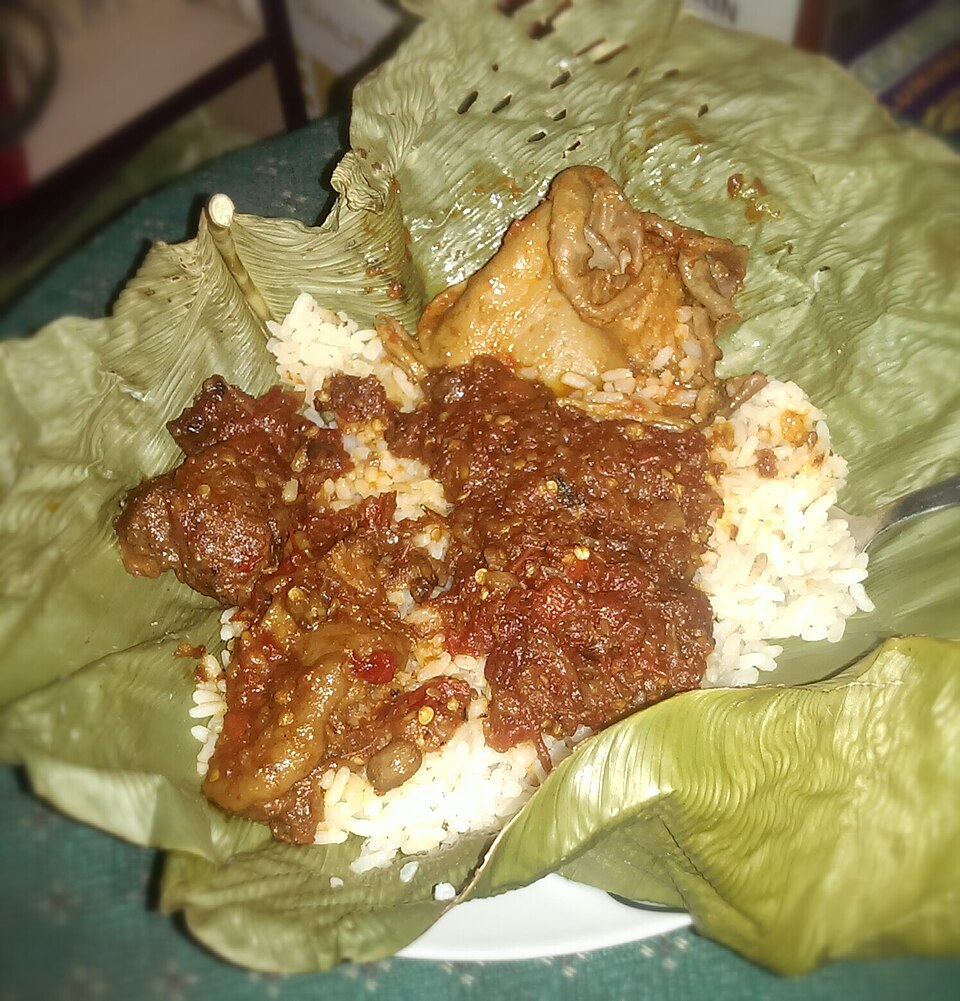
Ofada stew with ofada rice
Nigerian · 1 h 35 min · 715 kcalGboma dessi
 Togolese · 1 h 35 min · 490 kcal