
Kwati
Vegetarian
क्वाँटी · kwati
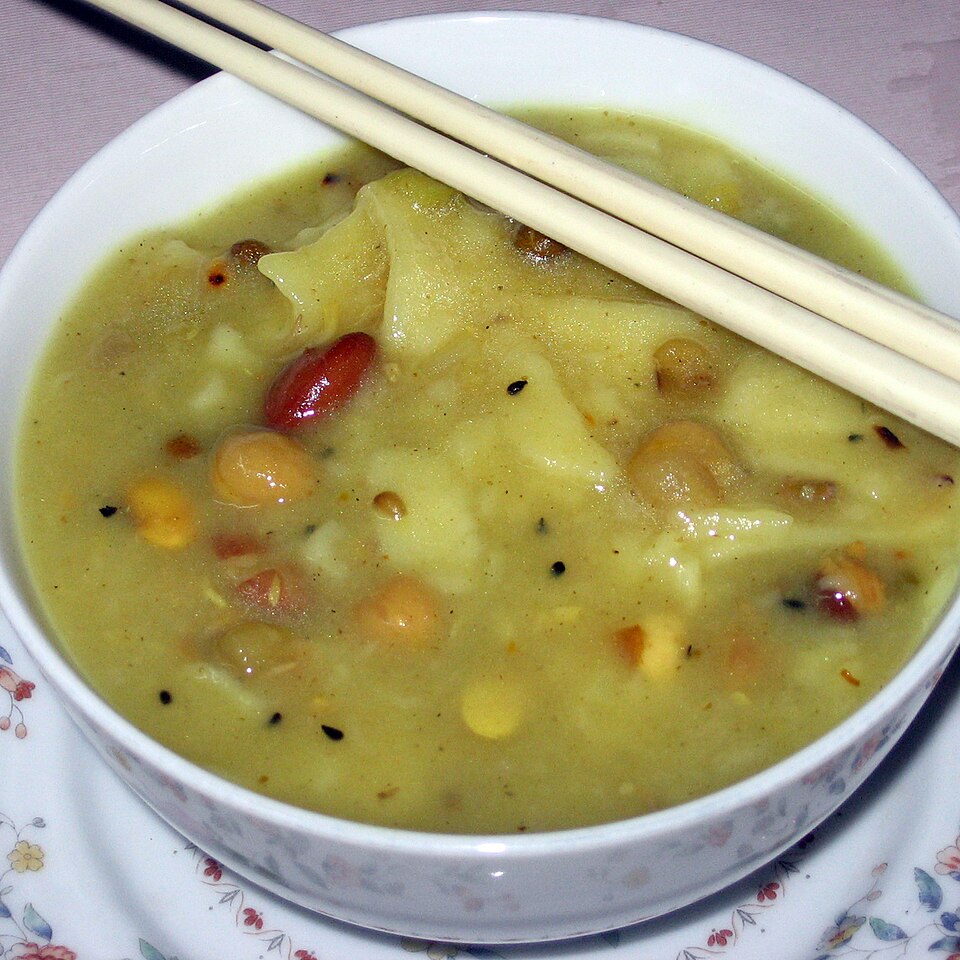
A hearty Nepali soup of several sprouted beans and lentils, tempered with ajwain and cooked with tomato, ginger and garlic. Traditionally eaten at Janai Purnima.
Kwati is a Nepalese soup, ready in about 1 hour 5 minutes and made with mung beans and ajwain. It serves 6 and is rated easy to cook.
- Prep
- 15 min
- Cook
- 50 min
- Total
- 1 h 5 min
- Serves
- 6
- Level
- Easy
- Calories
- 200
Plus 1 day soaking and 2–3 days sprouting the beans.
Method
Step 1
Soak the beans together overnight, drain, then keep them covered in a damp cloth in a warm place, rinsing daily, until short sprouts appear (2–3 days).
- 5 min
Step 2
Heat the ghee (opens in a new tab) in a pressure cooker (opens in a new tab) and fry the ajwain (opens in a new tab) and bay leaves (opens in a new tab) until they crackle. Add the onion (opens in a new tab) and cook until golden, then the garlic (opens in a new tab), ginger, tomatoes (opens in a new tab) and ground spices, and cook to a paste.
- 10 min
- medium heat
- Pressure cooker (opens in a new tab)
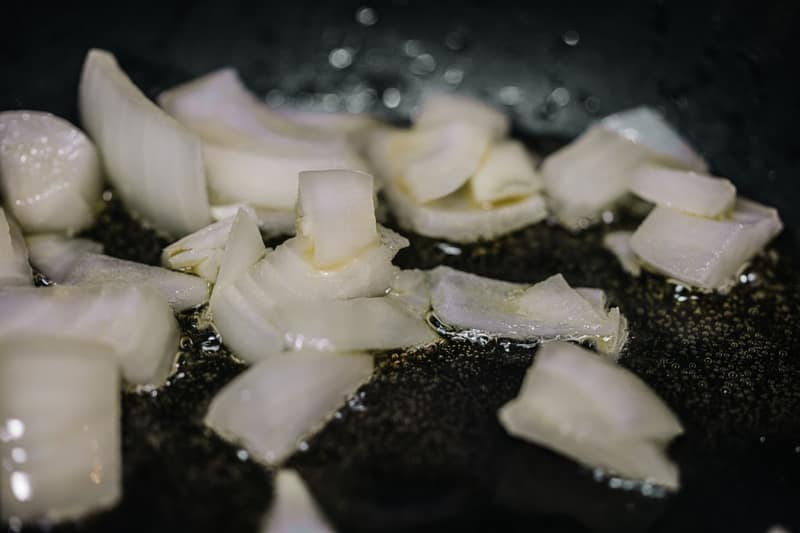
How it looks · Photo: Magda Ehlers on Pexels Step 3
Add the sprouted beans and fry for a few minutes, then pour in the water and salt. Pressure-cook until all the beans are soft.
- 30 min
- medium-low heat
In a normal pot this takes about 1½ hours.
Step 4
Simmer uncovered for a few minutes to thicken slightly, mashing a few beans. Stir in the timur (opens in a new tab) and cilantro (opens in a new tab).
- 8 min
- low heat
Food safety: Always boil kidney-type beans and chickpeas until fully soft.
About this dish
- Origin
- Nepal · Commonly attributedOf Newar origin and now made across Nepal for Janai Purnima (Kwati Purnima).More food from Nepal
- Dish
- Lunch · Dinner · Soups · Main courses
- Cooking method
- Pressure-cooked, Simmered
- Taste
- earthy, savoury, aromatic / warmly spiced, spicy (chilli heat)
- Diet
- Vegetarian (lacto-ovo) · No gluten ingredients · No nut ingredients · High-fibreWith the listed swaps: Vegan, Plant-based, Ovo-vegetarian, Dairy-freeWorked out from the ingredients. How labels work
All labels
Vegetarian (lacto-ovo) · Eggetarian · Lacto-vegetarian · Pescatarian · Flexitarian-friendly · Whole-food focused · No gluten ingredients · Egg-free · No nut ingredients · No added sugar · Alcohol-free · Pork-free · Beef-free · High-fibre · Low-fat · Carb-conscious - Good for
- One-pot · Budget-friendly · Freezer-friendly · Make-ahead
- Cook more with
- Mung beans · Ajwain · Dried chickpeas · Black-eyed peas (dried) · Black gram (urad dal) · Ghee
- Techniques
- Simmering · Pressure cooking · Tadka (tempering)
Allergens
- Contains, can be adapted: Milkfrom ghee
Based on typical versions of these ingredients and not verified allergen-free. Brands differ and cross-contact happens, so always check labels. For severe allergies, follow your clinician’s advice.
Nutrition
200 kcal per serving
Estimated1 serving ≈ 361 g · recipe makes 6
Where the energy comes from
- Protein 19%
- Carbohydrate 56%
- Fat 25%
| Nutrient | Per serving | Per 100 g* |
|---|---|---|
| Energy | 200 kcal | 55 kcal |
| Protein | 9.9 g | 2.7 g |
| Carbohydrate | 29.1 g | 8 g |
| Net carbohydrate | 22.4 g | 6.2 g |
| Sugars | 4.5 g | 1.2 g |
| Added sugars | 0 g | 0 g |
| Fibre | 6.6 g | 1.8 g |
| Fat | 5.8 g | 1.6 g |
| Saturated fat | 3 g | 0.8 g |
| Trans fat | 0 g | 0 g |
| Cholesterol | 11 mg | 3 mg |
| Sodium | 601 mg | 166 mg |
| Salt equivalent | 1.5 g | 0.4 g |
Vitamins & minerals per serving
- Potassium
- 567 mg
- Calcium
- 89 mg
- Iron
- 3.3 mg
- Magnesium
- 83 mg
- Vitamin A (RAE)
- 65 µg
- Vitamin C
- 10 mg
- Vitamin D
- 0 µg
- Vitamin B12
- 0 µg
- Folate (DFE)
- 218 µg
How these numbers were made
- Calculated from USDA FoodData Central (SR Legacy) per-100 g values and the listed quantities.
- *Per 100 g of combined raw ingredients; the cooked dish may weigh more or less.
- Optional ingredients are not included: sichuan peppercorns.
- Not counted (tiny amounts or “to taste”): ajwain.
- “—” means the value isn’t known for enough of the ingredients; it is never zero by default.
- Values are estimates for guidance, not for medical dosing. U.S. Department of Agriculture, Agricultural Research Service. FoodData Central, 2019. fdc.nal.usda.gov.
Good to know
Tips
- Any mix of beans works — field peas, kidney beans, soybeans and fava beans are all traditional.
Common mistakes
- Letting the sprouts grow too long — short sprouts (about 0.5 cm) taste best.
Serve with
- Serve as a soup, or ladled over rice with a pickle.
Food safety
- Rinse sprouting beans twice a day and discard any that smell sour or slimy; always cook sprouts thoroughly.
- Boil chickpeas and other large beans until fully soft before serving.
Storage
- Refrigerate for 4 days or freeze for 3 months.
Reheating
- Reheat with a splash of water until boiling.
Original editorial recipe · FriendsPantry editorial · Not yet independently reviewed · Added · Updated
Recipe DNA
How this dish is built
Reviews & corrections
Reviews come from signed-in cooks and appear after a moderator checks them. We never show made-up ratings.
You might also like
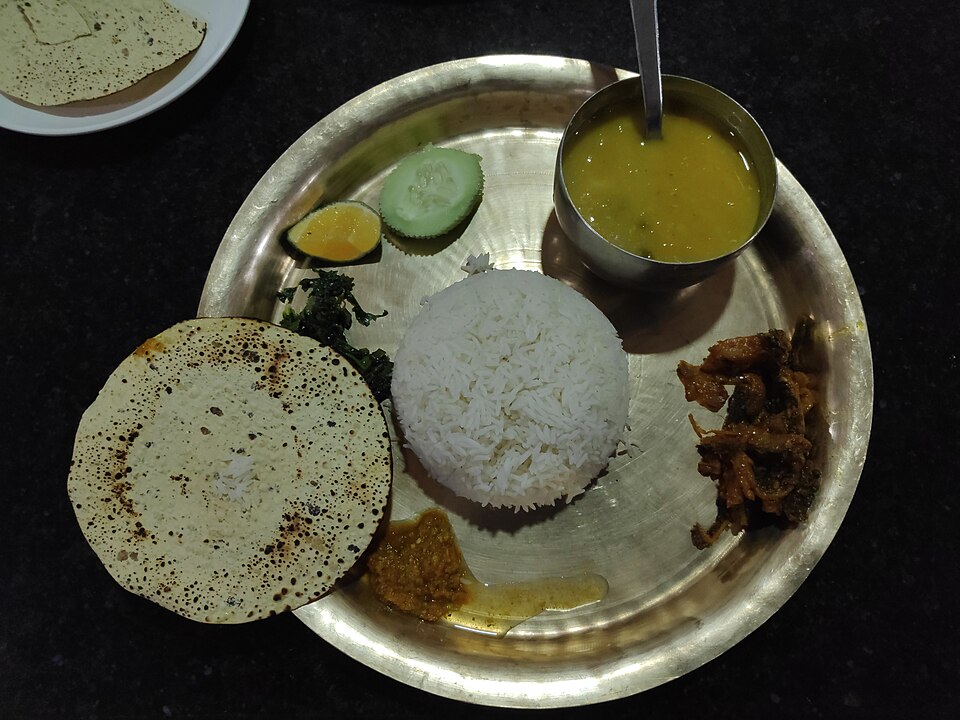
Dal bhat tarkari
 Nepalese · 55 min · 631 kcal · Vegetarian
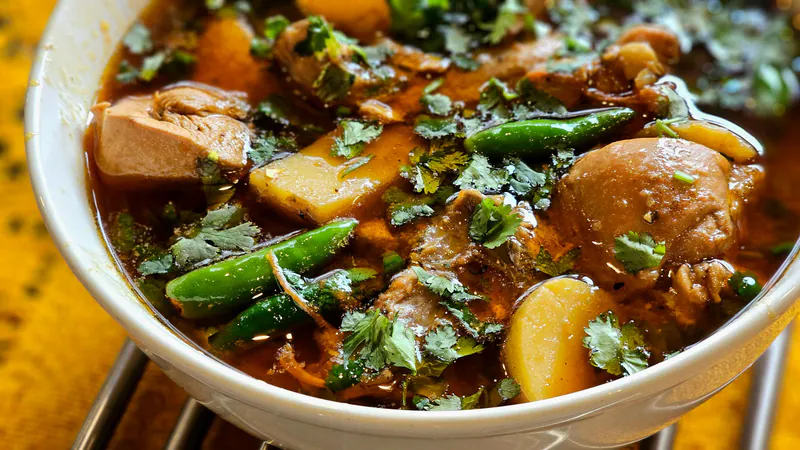
Kukhura ko masu
Nepalese · 1 h 5 min · 574 kcalAloo tama
Nepalese · 1 h 15 min · 223 kcal · Vegan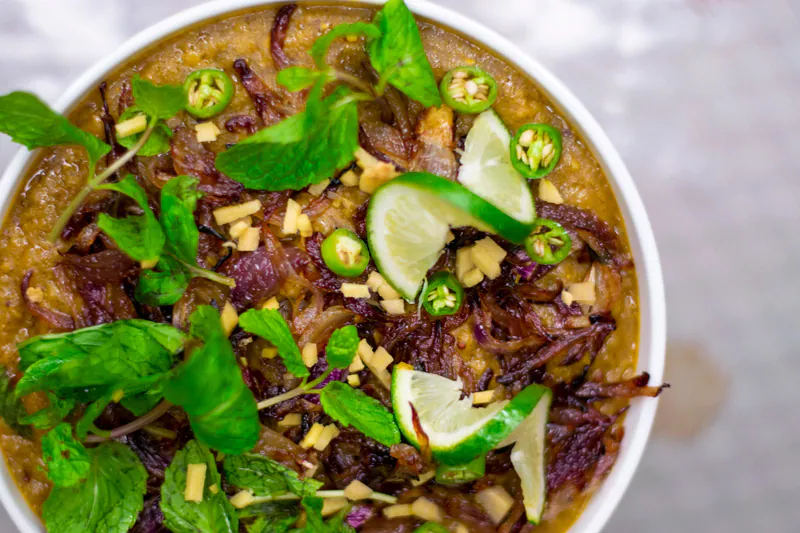
Haleem
 Pakistani · 4 h · 364 kcal