

Acarajé
Non-vegetarian
Crisp fritters of whipped black-eyed pea batter fried in dendê palm oil, split and filled with spiced shrimp and a fresh tomato salad. The iconic street food of Salvador da Bahia.
Acarajé is a Brazilian street food, ready in about 1 hour 20 minutes and made with black-eyed peas (dried) and red palm oil. It serves 6 and is rated intermediate to cook.
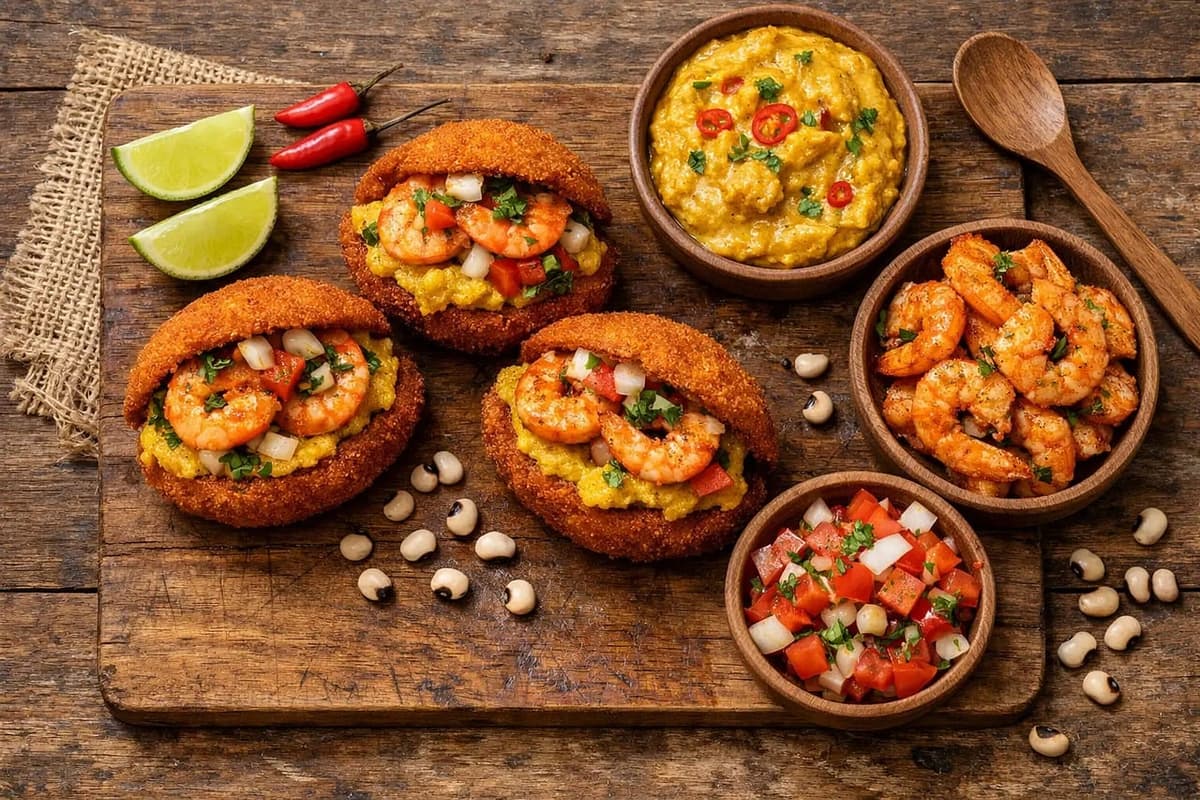
- Prep
- 45 min
- Cook
- 35 min
- Total
- 1 h 20 min
- Serves
- 6
- Level
- Intermediate
- Calories
- 534
Plus at least 8 hours soaking the peas.
Ingredients
For the fritters
For frying
For the filling
For the salad
Method
Step 1
Soak the peas in plenty of water overnight. Rub handfuls between your palms under water so the skins float off; skim them away and repeat until most peas are skinned. Drain well.
- 25 min
A few pulses in a food processor with water loosen the skins faster.
Step 2
Blend the peas with the chopped onion (opens in a new tab) and salt to a thick, smooth paste, adding only a spoonful of water if needed. Beat the paste hard with a wooden spoon for 5 minutes until lighter and fluffy.
Step 3
For the filling, warm 2 tbsp dendê, soften the onion (opens in a new tab), garlic (opens in a new tab) and chilli, then add the shrimp (opens in a new tab) and cook just until pink.
- 6 min
- medium heat
- Frying pan / skillet (opens in a new tab)
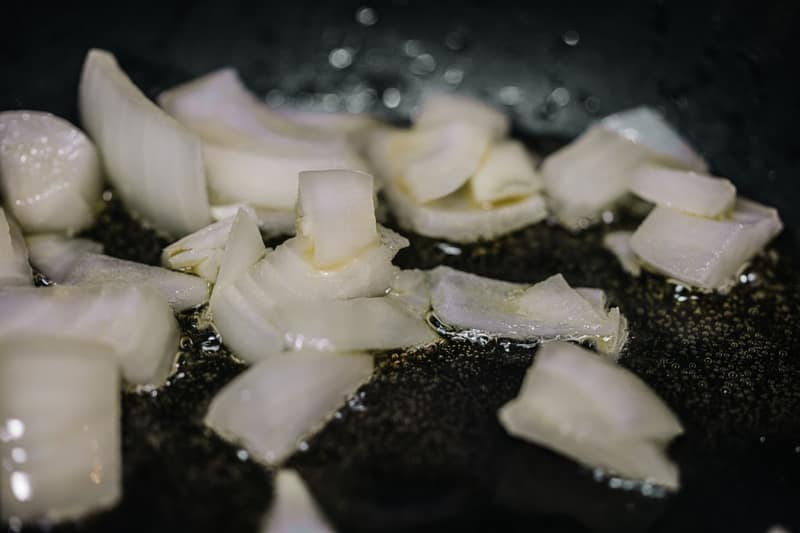
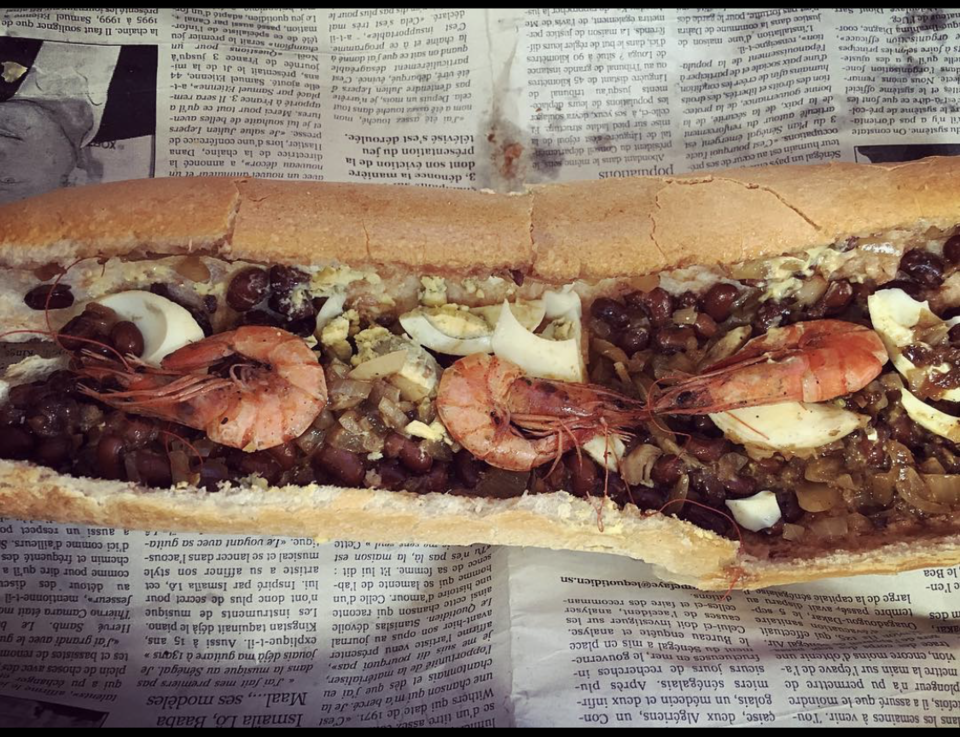
How it looks · Photo: Magda Ehlers on Pexels Step 4
Mix the tomato (opens in a new tab), red onion (opens in a new tab), cilantro (opens in a new tab) and lime juice (opens in a new tab) with a pinch of salt for the salad.
- 5 min
Step 5
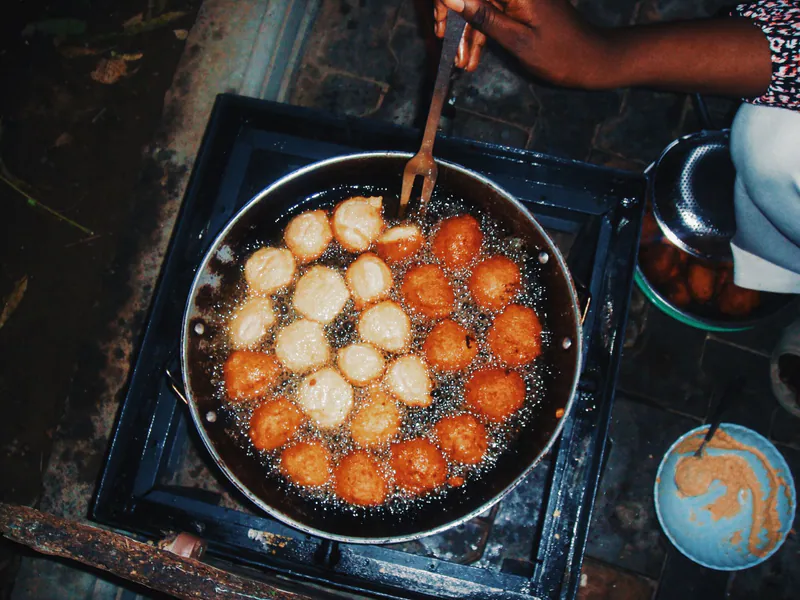
Heat the frying oil to 175 °C. Shape large quenelles of batter with two spoons and fry a few at a time, turning, until deep orange-brown and crisp, 5–6 minutes. Drain.
Food safety: Deep-fry in a heavy pan no more than a third full and keep children away from the hot oil.
Step 6
Split each fritter like a bun and fill with shrimp (opens in a new tab) and salad (and vatapá, if you have it). Serve hot.
- 5 min
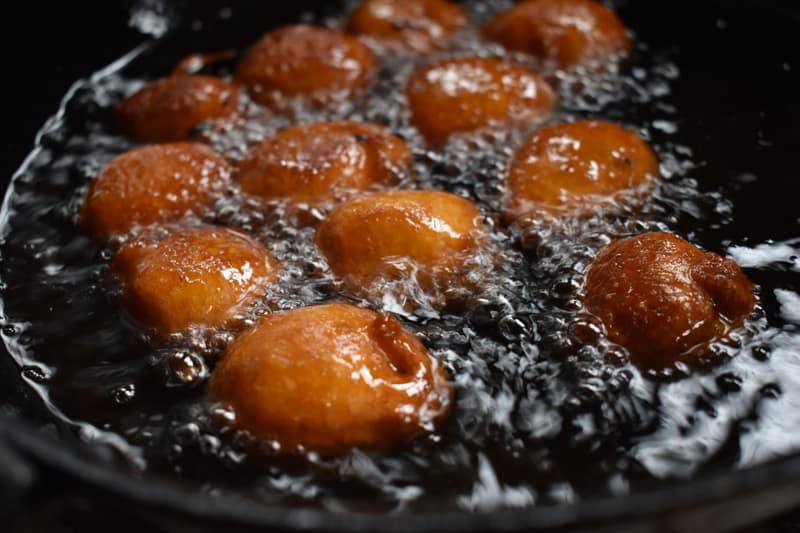
How it looks · Photo: Riya Roy on Pexels
About this dish
- Origin
- Bahia, Brazil · Well documentedAn Afro-Brazilian dish descended from West African bean fritters such as akara; closely tied to Candomblé tradition in Bahia.More food from Brazil
- Dish
- Snack · Lunch · Street food · Finger food
- Cooking method
- Deep-fried, Sautéed, Blended
- Taste
- savoury, spicy (chilli heat), earthy
- Diet
- Pescatarian · No gluten ingredients · Dairy-free · No nut ingredients · High-proteinWorked out from the ingredients. How labels work
All labels
Pescatarian · Non-vegetarian · Flexitarian-friendly · Whole-food focused · No gluten ingredients · Dairy-free · Egg-free · No nut ingredients · No added sugar · Alcohol-free · Pork-free · Beef-free · High-protein - Good for
- Street food · Festive & celebration
- Cook more with
- Black-eyed peas (dried) · Red palm oil · Onion · Prawns / shrimp · Garlic · Fresh red chilli
- Techniques
- Deep-frying · Sautéing · Wet grinding · Emulsification · Plating
Allergens
- Contains: Crustaceansfrom prawns / shrimp
Based on typical versions of these ingredients and not verified allergen-free. Brands differ and cross-contact happens, so always check labels. For severe allergies, follow your clinician’s advice.
Nutrition
534 kcal per serving
Calculated1 serving ≈ 239 g · recipe makes 6
Where the energy comes from
- Protein 22%
- Carbohydrate 41%
- Fat 37%
| Nutrient | Per serving | Per 100 g* |
|---|---|---|
| Energy | 534 kcal | 224 kcal |
| Protein | 30.5 g | 12.8 g |
| Carbohydrate | 55.7 g | 23.3 g |
| Net carbohydrate | — | — |
| Sugars | — | — |
| Added sugars | 0 g | 0 g |
| Fibre | — | — |
| Fat | 22.6 g | 9.5 g |
| Saturated fat | 10.8 g | 4.5 g |
| Trans fat | — | — |
| Cholesterol | 81 mg | 34 mg |
| Sodium | 660 mg | 276 mg |
| Salt equivalent | 1.6 g | 0.7 g |
Vitamins & minerals per serving
- Potassium
- 1221 mg
- Calcium
- 139 mg
- Iron
- 7.4 mg
- Magnesium
- 180 mg
- Vitamin A (RAE)
- —
- Vitamin C
- —
- Vitamin D
- —
- Vitamin B12
- —
- Folate (DFE)
- —
How these numbers were made
- Calculated from USDA FoodData Central (SR Legacy) per-100 g values and the listed quantities.
- *Per 100 g of combined raw ingredients; the cooked dish may weigh more or less.
- “—” means the value isn’t known for enough of the ingredients; it is never zero by default.
- Values are estimates for guidance, not for medical dosing. U.S. Department of Agriculture, Agricultural Research Service. FoodData Central, 2019. fdc.nal.usda.gov.
Good to know
Tips
- Beating air into the batter is what makes acarajé light inside — do not skip it.
Common mistakes
- A runny batter spreads in the oil; keep it thick enough to hold a shape on a spoon.
Serve with
- Fill with vatapá and caruru (okra stew) as in Salvador, with hot malagueta sauce.
Food safety
- Cook the shrimp until pink and opaque throughout.
- Keep the shrimp filling and salad chilled if not serving at once.
Storage
- Best eaten freshly fried. The batter can be refrigerated for a few hours; beat again before frying.
Variations
- Abará (Brazil): The same batter wrapped in banana leaves and steamed instead of fried.
History
The craft of the baianas de acarajé — the women who make and sell the fritters in Salvador — is registered as part of Brazil's intangible cultural heritage.
Confidence: Well documented
Original editorial recipe · FriendsPantry editorial · Not yet independently reviewed · Added · Updated
Recipe DNA
How this dish is built
Reviews & corrections
Reviews come from signed-in cooks and appear after a moderator checks them. We never show made-up ratings.
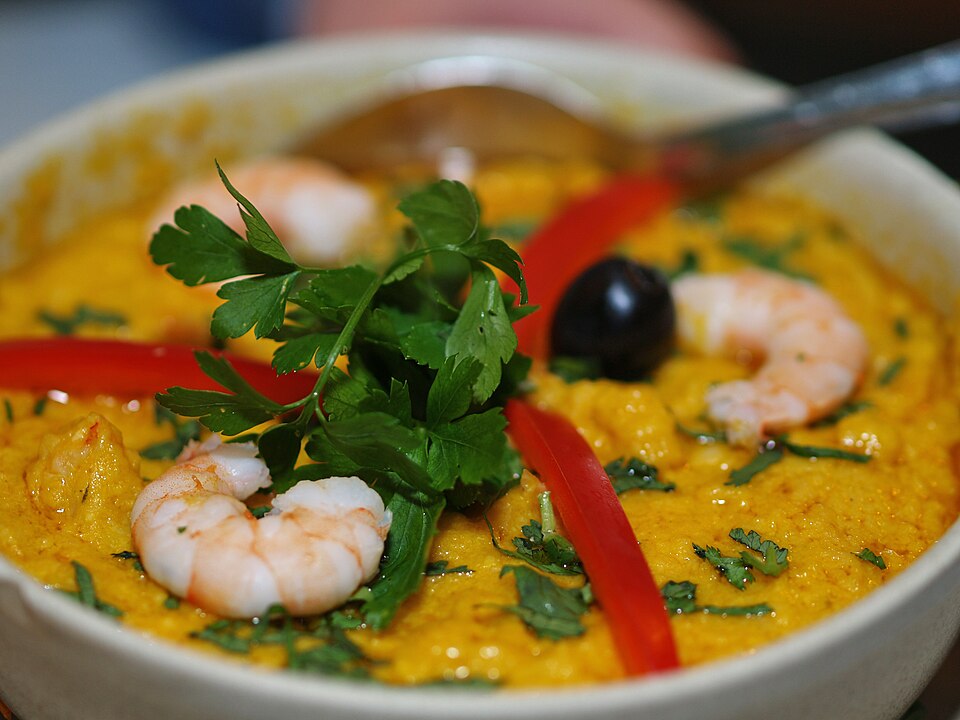
 Senegalese · 1 h 20 min · 391 kcal ·
 Nigerian · 55 min · 338 kcal ·
 Ghanaian · 1 h 35 min · 723 kcal ·