
Char siu (Cantonese barbecue pork)
Non-vegetarian
叉燒 · chā shāo
Strips of pork shoulder marinated in hoisin, honey, soy and five-spice, then roasted and basted until lacquered, sticky and charred at the edges.
Char siu (Cantonese barbecue pork) is a Cantonese main course from China, ready in about 1 hour 10 minutes and made with pork shoulder, hoisin sauce and honey. It serves 6 and is rated easy to cook.
No licensed photograph of this dish yet.
- Prep
- 15 min
- Cook
- 45 min
- Rest
- 10 min
- Total
- 1 h 10 min
- Serves
- 6
- Level
- Easy
- Calories
- 392
Plus at least 4 hours (ideally overnight) marinating.
Method
Step 1
Mix the hoisin (opens in a new tab), soy sauce (opens in a new tab), wine, sugar (opens in a new tab), garlic (opens in a new tab), five-spice, salt and 2 tbsp of the honey (opens in a new tab). Coat the pork strips well, cover and refrigerate for at least 4 hours or overnight.
- 10 min
Food safety: Keep raw pork marinating in the fridge, covered and away from ready-to-eat food.
Step 2
Heat the oven (opens in a new tab) to 200 °C. Line a tray with foil, fill with 1 cm of water and set a rack over it. Lay the pork on the rack, keeping the leftover marinade.
Water in the tray stops the dripping sugars from burning and smoking.
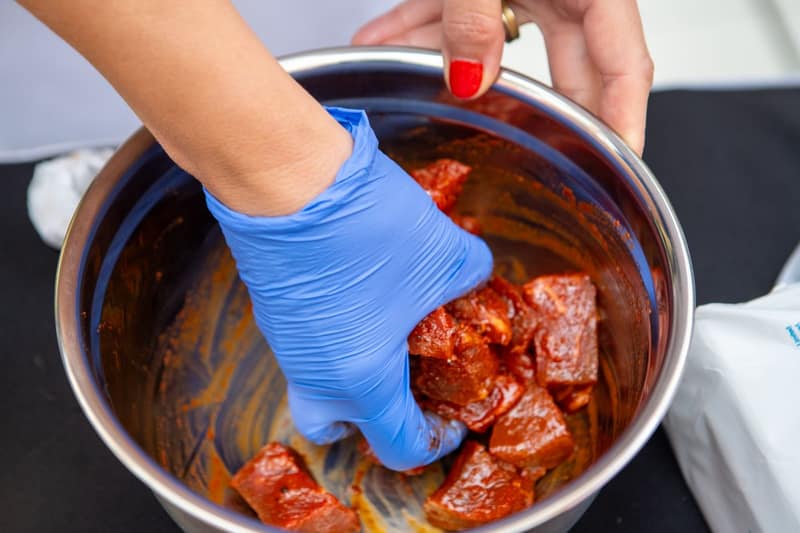
How it looks · Photo: Ip Photographer on Pexels Step 3
Roast for 25 minutes, turning once and basting with the leftover marinade.
- 25 min
- 200°C
Step 4
Mix the remaining honey (opens in a new tab) with 1 tbsp hot water and brush over the pork. Roast 15–20 minutes more, basting again halfway, until sticky and charred at the edges.
- 18 min
- 200°C
Food safety: Pork should reach at least 63 °C in the centre (71 °C if you prefer it fully firm).
Step 5
Rest for 10 minutes, then slice across the grain.
- 10 min
About this dish
- Origin
- Guangdong, China · Well documentedAlso popular in Malaysia, SingaporeMore food from China
- Dish
- Lunch · Dinner · Main courses · Grills & kebabs
- Cooking method
- Roasted, Marinated / cured
- Taste
- sweet & savoury, smoky, aromatic / warmly spiced, umami
- Diet
- Dairy-free · No nut ingredients · Low-carb · High-proteinWorked out from the ingredients. How labels work
All labels
Non-vegetarian · Dairy-free · Egg-free · No nut ingredients · Beef-free · Low-carb · High-protein · Calorie-conscious - Good for
- Make-ahead · Freezer-friendly · Uses leftovers
- Cook more with
- Pork shoulder · Hoisin sauce · Honey · Soy sauce · Shaoxing wine · Sugar
- Techniques
- Roasting · Marinating · Curing
Allergens
- Contains, can be adapted: Wheatfrom hoisin sauce, soy sauce, shaoxing wine
- Contains, can be adapted: Glutenfrom hoisin sauce, soy sauce, shaoxing wine
- Contains: Soyfrom hoisin sauce, soy sauce
- May contain: Sesamefrom hoisin sauce
Based on typical versions of these ingredients and not verified allergen-free. Brands differ and cross-contact happens, so always check labels. For severe allergies, follow your clinician’s advice.
Nutrition
392 kcal per serving
Estimated1 serving ≈ 168 g · recipe makes 6
Where the energy comes from
- Protein 25%
- Carbohydrate 18%
- Fat 57%
| Nutrient | Per serving | Per 100 g* |
|---|---|---|
| Energy | 392 kcal | 234 kcal |
| Protein | 23.8 g | 14.2 g |
| Carbohydrate | 17.8 g | 10.6 g |
| Net carbohydrate | 17.5 g | 10.4 g |
| Sugars | 15.3 g | 9.1 g |
| Added sugars | — | — |
| Fibre | 0.4 g | 0.2 g |
| Fat | 24.3 g | 14.5 g |
| Saturated fat | 8.4 g | 5 g |
| Trans fat | — | — |
| Cholesterol | 95 mg | 57 mg |
| Sodium | 736 mg | 440 mg |
| Salt equivalent | 1.8 g | 1.1 g |
Vitamins & minerals per serving
- Potassium
- 452 mg
- Calcium
- 29 mg
- Iron
- 1.7 mg
- Magnesium
- 31 mg
- Vitamin A (RAE)
- 3 µg
- Vitamin C
- 2 mg
- Vitamin D
- 2.3 µg
- Vitamin B12
- 1 µg
- Folate (DFE)
- 10 µg
How these numbers were made
- Calculated from USDA FoodData Central (SR Legacy) per-100 g values and the listed quantities.
- *Per 100 g of combined raw ingredients; the cooked dish may weigh more or less.
- Not counted (tiny amounts or “to taste”): five-spice powder.
- Shaoxing wine: Sake (FDC 167723) used as a stand-in for Chinese rice cooking wine.
- “—” means the value isn’t known for enough of the ingredients; it is never zero by default.
- Values are estimates for guidance, not for medical dosing. U.S. Department of Agriculture, Agricultural Research Service. FoodData Central, 2019. fdc.nal.usda.gov.
Good to know
Tips
- A few minutes under a hot grill at the end deepens the char — watch closely.
Common mistakes
- Using lean loin, which dries out; shoulder stays juicy.
Serve with
- Serve over rice with blanched greens, or use in fried rice, noodle soup or buns.
Storage
- Refrigerate for up to 4 days or freeze, sliced, for up to 2 months.
Reheating
- Steam briefly or warm in a covered pan with a splash of water.
Variations
- Red-coloured char siu: Restaurants often add red fermented bean curd or a little red colouring for the classic red edge.
Original editorial recipe · FriendsPantry editorial · Not yet independently reviewed · Added · Updated
Sauces, chutneys & dips for this dish
Recipe DNA
How this dish is built
Grouped by each ingredient’s role in the dish. Each band’s width is its share of the dish by weight. Choose a component to see what it does.
What the dish is built around
Main ingredient
- Pork shoulder, cut lengthways into strips about 4 cm thick800 g
Masalas in this recipe
Make the masala first, then come back to finish the dish.
Dry spice blend
Chinese five-spice powder
This recipe uses ½ tsp (1.1 g for 6 servings).
Reviews & corrections
Reviews come from signed-in cooks and appear after a moderator checks them. We never show made-up ratings.
You might also like
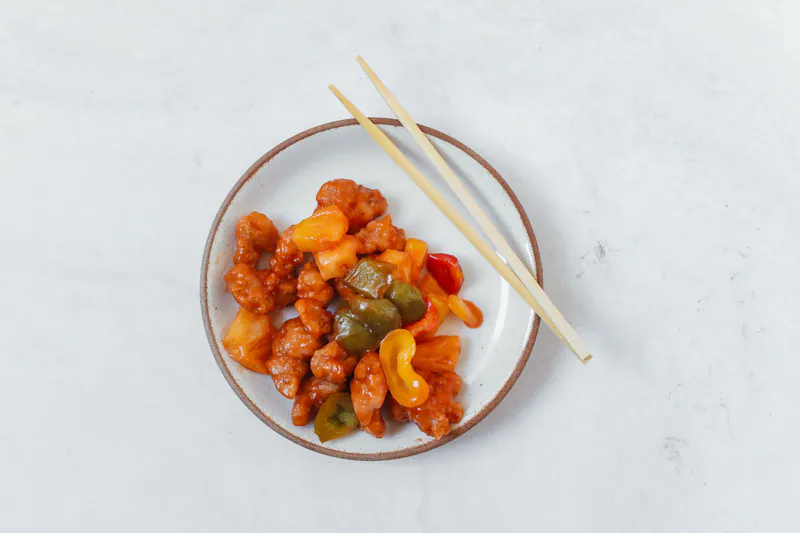
Sweet and sour pork
 Cantonese · 55 min · 576 kcal
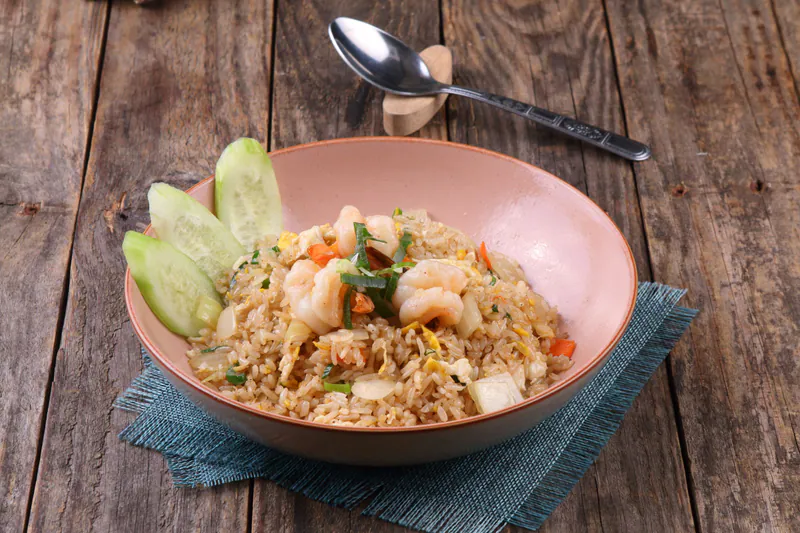
Yangzhou fried rice
Chinese · 27 min · 464 kcal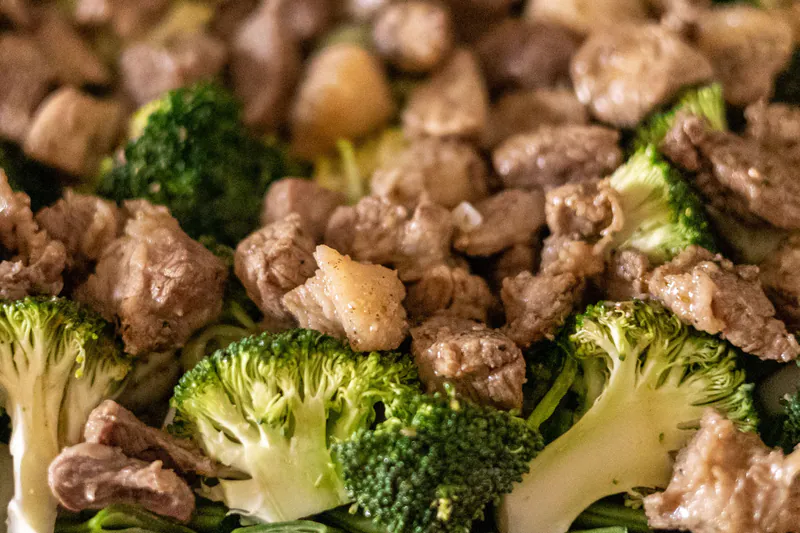
Beef and broccoli stir-fry
Cantonese · 30 min · 309 kcal
Salt and pepper tofu
Cantonese · 35 min · 399 kcal · Vegan