
Kothamalli thogayal (coriander chutney)
Vegetarian
கொத்தமல்லித் துவையல் · kottamallit tuvaiyal
A whole bunch of coriander wilted with fried urad dal, dried chillies, tamarind and asafoetida, then ground thick. Tangy, herby and hot, it is mixed into rice or served with curd rice and dosa.
Kothamalli thogayal (coriander chutney) is a South Indian condiment, ready in about 26 minutes and made with coriander leaves, black gram (urad dal) and tamarind. It serves 6 and is rated easy to cook.
No licensed photograph of this dish yet.
- Prep
- 10 min
- Cook
- 6 min
- Rest
- 10 min
- Total
- 26 min
- Serves
- 6
- Level
- Easy
- Calories
- 30
Method
Step 1
Wash the coriander in several changes of water to remove grit, shake dry and chop roughly, keeping the tender stems and discarding roots and tough stalks.
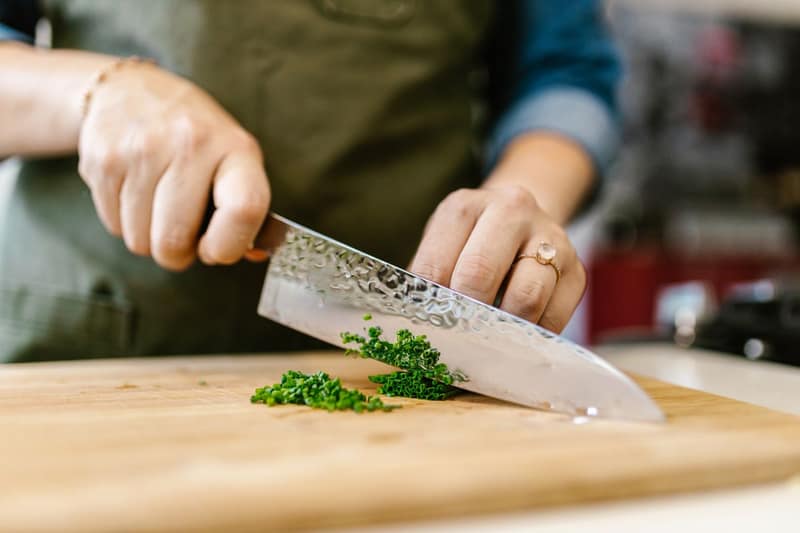
How it looks · Photo: RDNE Stock project on Pexels Step 2
Heat the oil over medium-low heat. Fry the urad (opens in a new tab) dal and chana dal (opens in a new tab) for 2–3 minutes until golden, then the dried chillies until they darken a shade, about 30 seconds. Add the asafoetida (opens in a new tab), tamarind (opens in a new tab) and ginger and stir for a few seconds.
- 4 min
- medium-low heat
- Frying pan / skillet (opens in a new tab)
Step 3
Add the coriander and stir for about 1 minute, just until it wilts and turns bright green. Turn off the heat and stir in the coconut (opens in a new tab), if using. Cool for 10 minutes.
- 2 min
- medium-low heat
- Frying pan / skillet (opens in a new tab)
Step 4
Grind the dal and chilli mixture with the salt to a coarse powder first, then add the coriander and grind in short bursts, adding water a spoonful at a time, to a thick, slightly coarse paste.
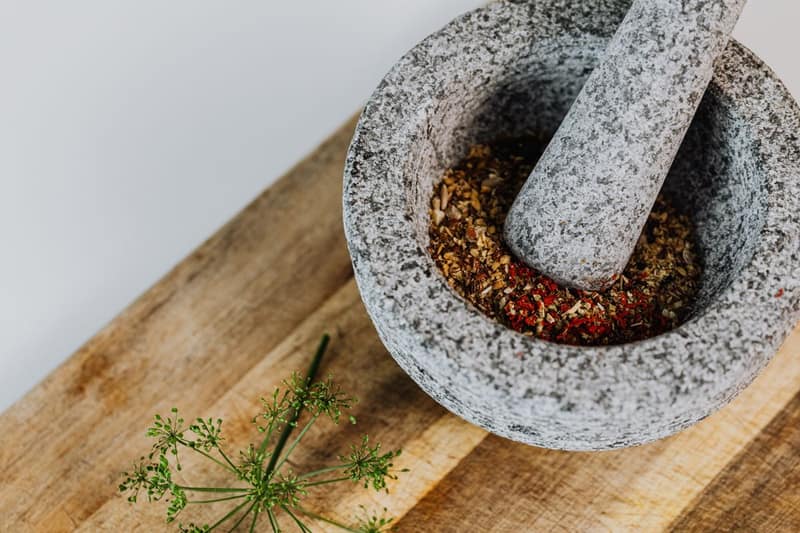
How it looks · Photo: https://kaboompics.com/ on Pexels Step 5
Taste and adjust salt and tamarind (opens in a new tab). Serve mixed into hot rice with gingelly oil (opens in a new tab) or ghee.
- 1 min
About this dish
- Origin
- Tamil Nadu, India · Commonly attributedA standard Tamil home thogayal; some families grind the coriander raw instead of wilting it.More food from India
- Dish
- Lunch · Dinner · Condiments, chutneys & relishes
- Cooking method
- Sautéed, Blended
- Taste
- herby, tangy, spicy (chilli heat), nutty
- Diet
- Vegan · Dairy-free · No nut ingredients · Low-carbWorked out from the ingredients. How labels work
All labels
Vegan · Plant-based · Vegetarian (lacto-ovo) · Eggetarian · Lacto-vegetarian · Ovo-vegetarian · Pescatarian · Flexitarian-friendly · Whole-food focused · Dairy-free · Egg-free · No nut ingredients · No added sugar · Alcohol-free · Pork-free · Beef-free · Low-carb · DASH-style - Good for
- Everyday · Budget-friendly
- Cook more with
- Coriander leaves · Black gram (urad dal) · Tamarind · Gingelly oil (untoasted sesame oil) · Dried whole chillies · Asafoetida
- Techniques
- Sautéing · Wet grinding · Emulsification
Allergens
- May contain: Wheatfrom asafoetida
- May contain: Glutenfrom asafoetida
- Contains, can be adapted: Sesamefrom gingelly oil (untoasted sesame oil)
Based on typical versions of these ingredients and not verified allergen-free. Brands differ and cross-contact happens, so always check labels. For severe allergies, follow your clinician’s advice.
Nutrition
30 kcal per serving
Estimated1 serving ≈ 28 g · recipe makes 6
Where the energy comes from
- Protein 14%
- Carbohydrate 39%
- Fat 48%
| Nutrient | Per serving | Per 100 g |
|---|---|---|
| Energy | 30 kcal | 107 kcal |
| Protein | 1.1 g | 3.9 g |
| Carbohydrate | 3.1 g | 10.8 g |
| Net carbohydrate | 1.9 g | 6.8 g |
| Sugars | — | — |
| Added sugars | 0 g | 0 g |
| Fibre | 1.1 g | 4 g |
| Fat | 1.7 g | 6.1 g |
| Saturated fat | 0.2 g | 0.8 g |
| Trans fat | — | — |
| Cholesterol | 0 mg | 0 mg |
| Sodium | 203 mg | 717 mg |
| Salt equivalent | 0.5 g | 1.8 g |
Vitamins & minerals per serving
- Potassium
- 134 mg
- Calcium
- 16 mg
- Iron
- 0.6 mg
- Magnesium
- 13 mg
- Vitamin A (RAE)
- 63 µg
- Vitamin C
- 5 mg
- Vitamin D
- 0 µg
- Vitamin B12
- 0 µg
- Folate (DFE)
- 16 µg
How these numbers were made
- Calculated from USDA FoodData Central (SR Legacy) per-100 g values and the listed quantities.
- Optional ingredients are not included: chana dal (split bengal gram), fresh ginger, coconut.
- Not counted (tiny amounts or “to taste”): asafoetida.
- “—” means the value isn’t known for enough of the ingredients; it is never zero by default.
- Values are estimates for guidance, not for medical dosing. U.S. Department of Agriculture, Agricultural Research Service. FoodData Central, 2019. fdc.nal.usda.gov.
Good to know
Tips
- Wilting the coriander takes the raw edge off and helps the thogayal keep an extra day.
- If the bunch is small, add a handful of mint rather than more water.
Common mistakes
- Cooking the coriander for long, which turns it olive-brown and flat.
- Grinding everything together at once — the dals stay in hard pieces.
Serve with
- Mix into rice with sesame oil, with rasam or papad.
- Serve with curd rice, dosa, adai or pongal.
Food safety
- Herbs carry soil; wash them in several changes of water, especially for chutneys that are not cooked.
- Store in a scrupulously clean, completely dry jar (sterilise it in boiling water or a low oven and let it dry fully) and always use a dry spoon; moisture is what spoils chutneys, podis and pickles.
Storage
- Keeps 3 days in the fridge in a clean jar (2 days with coconut).
Variations
- Raw kothamalli chutney: Grind the coriander raw with the fried dals and chillies and a little more water for a brighter, thinner idli chutney.
- Kothamalli thokku: Cook the ground paste in 3 tbsp oil until it darkens and the oil separates; keeps for 2 weeks.
Original editorial recipe · FriendsPantry editorial · Not yet independently reviewed · Added · Updated
Goes with
Recipe DNA
How this dish is built
Grouped by each ingredient’s role in the dish. Each band’s width is its share of the dish by weight. Choose a component to see what it does.
What the dish is built around
Main ingredient
- Black gram (urad dal), split and skinned (white)15 g
- Chana dal (split bengal gram) (optional)10 g
- Tamarind, seedless; a gooseberry-sized piece, fibres removed6 g
- Coconut, freshly grated (optional)20 g
Make it milder, swap ingredients for your diet, change the batch size or thickness — the original stays as it is.
Customise in Sauce & DrizzleReviews & corrections
Reviews come from signed-in cooks and appear after a moderator checks them. We never show made-up ratings.
You might also like
Pudina thogayal (Tamil mint chutney)
 South Indian · 28 min · 33 kcal · Vegan
Karuveppilai thogayal (curry leaf chutney)
South Indian · 33 min · VeganGreen coconut chutney
South Indian · 12 min · 82 kcal · VeganBeerakaya pachadi (ridge gourd chutney)
South Indian · 41 min · 69 kcal · Vegan