
Fettuccine al burro (the original fettuccine Alfredo)
Vegetarian
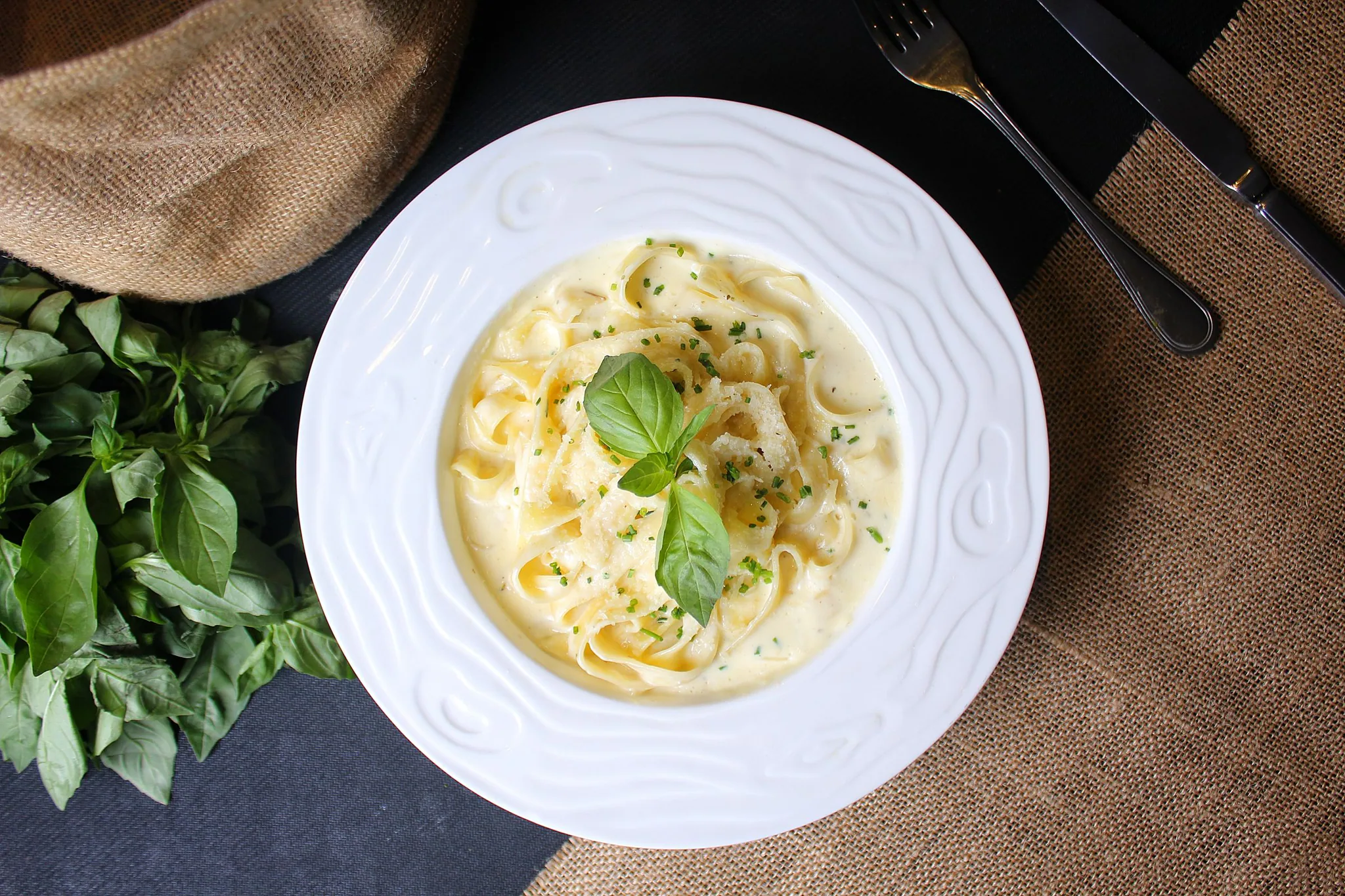
Fettuccine al burro
Egg fettuccine tossed with butter, a generous amount of finely grated Parmigiano and starchy cooking water until they turn into a glossy, creamy coating — no cream needed.
Fettuccine al burro (the original fettuccine Alfredo) is an Italian pasta dish from Italy, ready in about 15 minutes and made with dried pasta, unsalted butter and parmesan. It serves 4 and is rated easy to cook.
- Prep
- 5 min
- Cook
- 10 min
- Total
- 15 min
- Serves
- 4
- Level
- Easy
- Calories
- 546
Method
Step 1
Put the butter in a large warm serving bowl (rinse it with hot water and dry it) so it starts to soften.
Step 2
Cook the fettuccine in well-salted boiling water until al dente — 2–3 minutes for fresh, or 1 minute less than the packet for dried.
- 8 min
- high heat
- Stockpot / large pot (opens in a new tab)
Food safety: Drain boiling pasta water away from you and keep children clear of the stove.
Salt the pasta water at about 10 g per litre — it should taste pleasantly seasoned, not like the sea.
Step 3
Lift the pasta (opens in a new tab) into the bowl with tongs (opens in a new tab), along with about 100 ml of the cooking water. Toss vigorously until the butter melts into the water.
Step 4
Add the Parmesan (opens in a new tab) a handful at a time, tossing and lifting constantly. The cheese, butter and starchy water emulsify into a smooth, clinging sauce. Add more cooking water a spoonful at a time if it looks thick or clumpy.
- 2 min
Grate the cheese as finely as possible so it melts instantly instead of forming strings.
Step 5
Serve at once on warm plates, with black pepper (opens in a new tab) if you like.
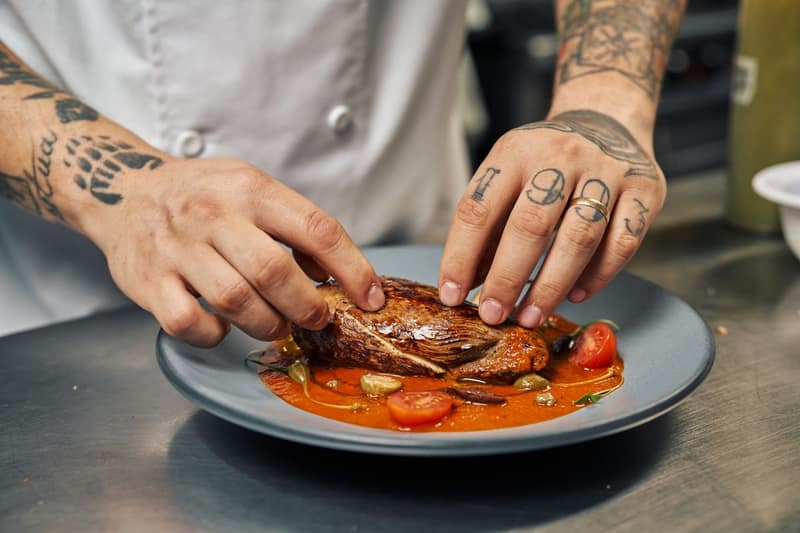
How it looks · Photo: Willians Huerta on Pexels
About this dish
- Origin
- Rome, Italy · Commonly attributedButtered pasta with Parmesan is an old Italian home dish; the restaurant version made famous as 'fettuccine Alfredo' is credited to Alfredo di Lelio in Rome in the early 20th century.Also popular in United StatesMore food from Italy
- Dish
- Lunch · Dinner · Pasta · Main courses
- Cooking method
- Boiled
- Taste
- buttery, rich, savoury
- Diet
- Vegetarian (lacto-ovo) · No nut ingredientsWorked out from the ingredients. How labels work
All labels
Vegetarian (lacto-ovo) · Eggetarian · Lacto-vegetarian · Pescatarian · Flexitarian-friendly · Egg-free · No nut ingredients · No added sugar · Alcohol-free · Pork-free · Beef-free - Good for
- Everyday · Child-friendly
- Cook more with
- Dried pasta · Unsalted butter · Parmesan
- Techniques
- Boiling · Emulsification · Plating
Allergens
- Contains: Milkfrom unsalted butter, parmesan
- May contain: Eggsfrom dried pasta
- Contains: Wheatfrom dried pasta
- Contains: Glutenfrom dried pasta
Based on typical versions of these ingredients and not verified allergen-free. Brands differ and cross-contact happens, so always check labels. For severe allergies, follow your clinician’s advice.
Nutrition
546 kcal per serving
Estimated1 serving ≈ 125 g · recipe makes 4
Where the energy comes from
- Protein 14%
- Carbohydrate 45%
- Fat 42%
| Nutrient | Per serving | Per 100 g* |
|---|---|---|
| Energy | 546 kcal | 437 kcal |
| Protein | 18.7 g | 14.9 g |
| Carbohydrate | 60.5 g | 48.4 g |
| Net carbohydrate | 57.9 g | 46.3 g |
| Sugars | 2.2 g | 1.7 g |
| Added sugars | 0 g | 0 g |
| Fibre | 2.6 g | 2 g |
| Fat | 25.1 g | 20.1 g |
| Saturated fat | 14.9 g | 11.9 g |
| Trans fat | — | — |
| Cholesterol | 64 mg | 51 mg |
| Sodium | — | — |
| Salt equivalent | — | — |
Vitamins & minerals per serving
- Potassium
- 205 mg
- Calcium
- 289 mg
- Iron
- 2.8 mg
- Magnesium
- 53 mg
- Vitamin A (RAE)
- 200 µg
- Vitamin C
- 0 mg
- Vitamin D
- 0.1 µg
- Vitamin B12
- 0.3 µg
- Folate (DFE)
- 315 µg
How these numbers were made
- Calculated from USDA FoodData Central (SR Legacy) per-100 g values and the listed quantities.
- *Per 100 g of combined raw ingredients; the cooked dish may weigh more or less.
- Optional ingredients are not included: black pepper.
- Not counted (tiny amounts or “to taste”): salt — so sodium is shown as unknown.
- “—” means the value isn’t known for enough of the ingredients; it is never zero by default.
- Values are estimates for guidance, not for medical dosing. U.S. Department of Agriculture, Agricultural Research Service. FoodData Central, 2019. fdc.nal.usda.gov.
Good to know
Tips
- The sauce is an emulsion: work quickly while the pasta is hot, and toss rather than stir.
Common mistakes
- Adding cream — it isn't part of the Roman dish and dulls the cheese.
- Using pre-grated cheese, which clumps.
Serve with
- A simple green salad afterwards, Italian-style.
Storage
- Best eaten immediately; the sauce turns stiff as it cools.
History
Restaurant lore credits Alfredo di Lelio, who served an extra-rich version at his Rome restaurant in the early 1900s; American visitors popularised it as 'fettuccine Alfredo', and cream-based versions developed later outside Italy.
Confidence: Commonly attributed
Original editorial recipe · FriendsPantry editorial · Not yet independently reviewed · Added · Updated
Recipe DNA
How this dish is built
Grouped by each ingredient’s role in the dish. Each band’s width is its share of the dish by weight. Choose a component to see what it does.
Reviews & corrections
Reviews come from signed-in cooks and appear after a moderator checks them. We never show made-up ratings.
You might also like
Fresh egg pasta (pasta all'uovo)
 Italian · 1 h 13 min · 436 kcal · Contains egg
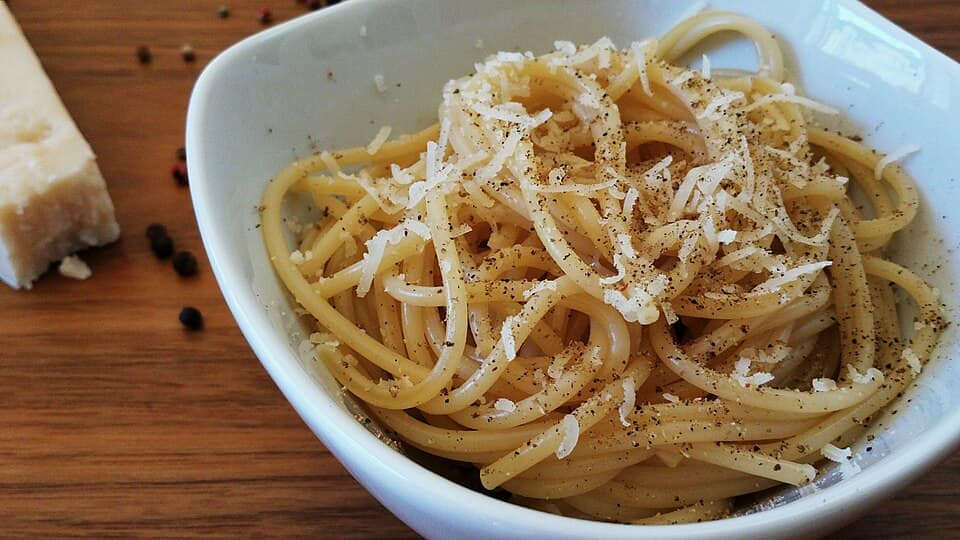
Cacio e pepe
Italian · 20 min · 529 kcal · Vegetarian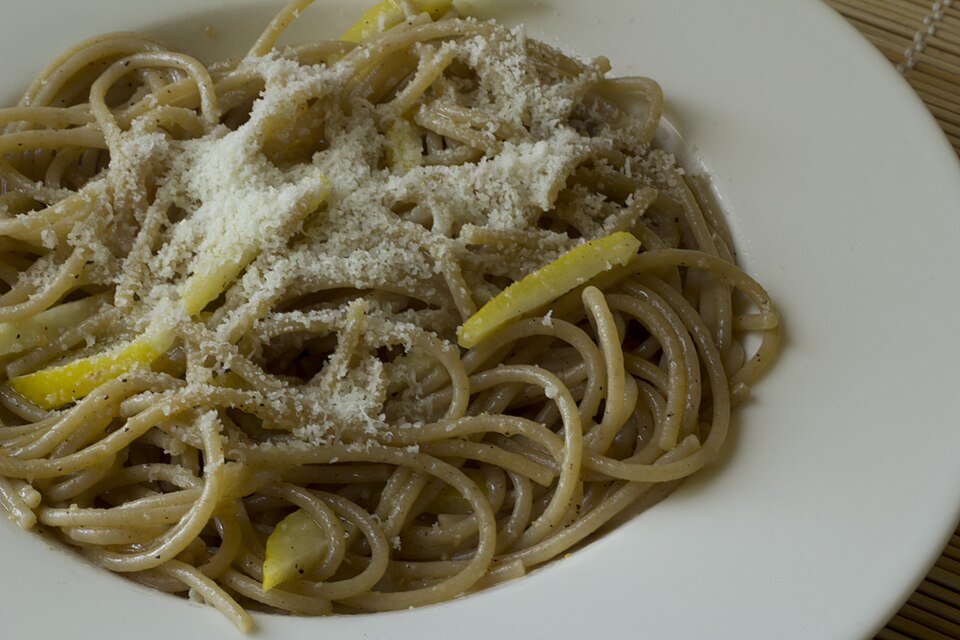
Spaghetti al limone
Italian · 17 min · 559 kcal · Vegetarian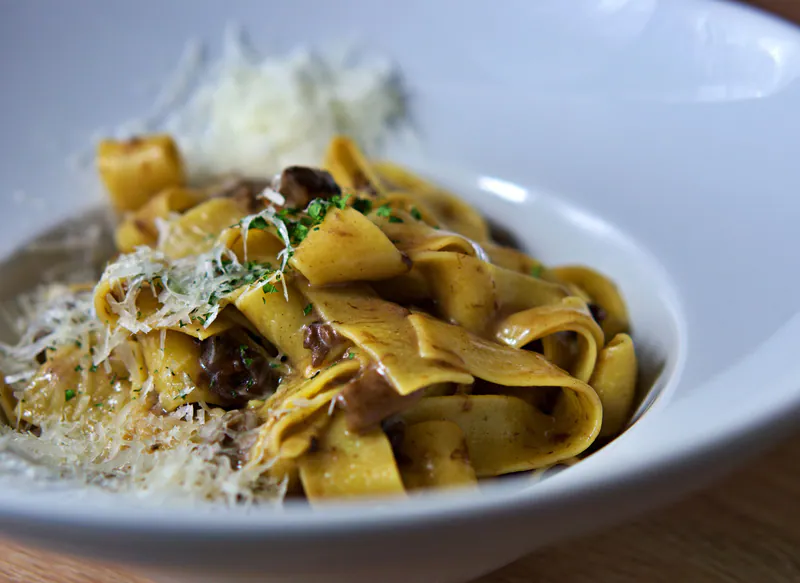
Pappardelle ai funghi (pappardelle with mushrooms)
Italian · 45 min · 600 kcal · Vegetarian