
Gujarati lili chutney (coriander-peanut chutney)
Vegetarian
લીલી ચટણી · līlī caṭṇī
A thick, bright-green chutney of coriander, green chilli and ginger, given body by roasted peanuts and a sweet-sour finish from lemon and sugar. The chutney that comes with dhokla, khandvi and every Gujarati farsan.
Gujarati lili chutney (coriander-peanut chutney) is a Gujarati condiment from India, ready in about 12 minutes and made with coriander leaves and roasted peanuts. It serves 8 and is rated beginner to cook.
No licensed photograph of this dish yet.
- Prep
- 12 min
- Cook
- 0 min
- Total
- 12 min
- Serves
- 8
- Level
- Beginner
- Calories
- 33
Method
Step 1
Wash the coriander in several changes of water until no grit settles at the bottom of the bowl. Shake dry and chop roughly, keeping the tender stems.
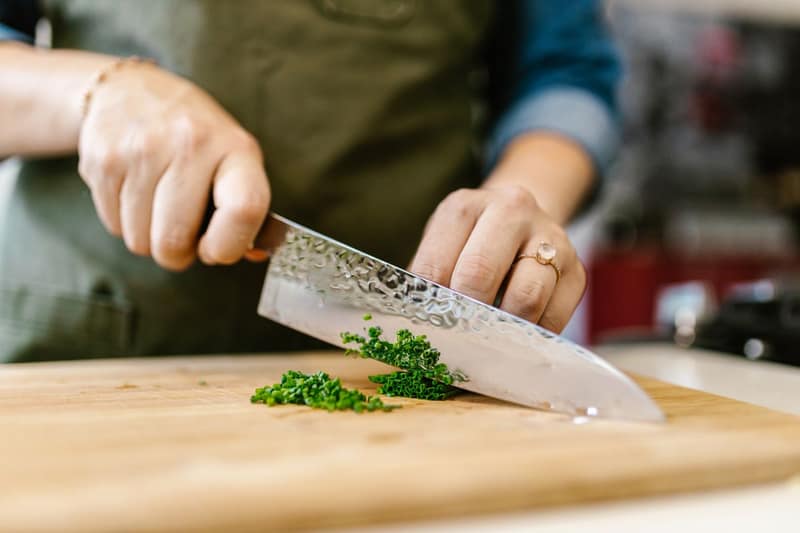
How it looks · Photo: RDNE Stock project on Pexels Step 2
Put the peanuts, green chilli (opens in a new tab), ginger, cumin seeds (opens in a new tab), sugar (opens in a new tab) and salt into the blender (opens in a new tab) and pulse to a coarse powder first; this keeps the peanuts from staying in lumps.
Step 3
Add the coriander, lemon juice (opens in a new tab) and half the cold water. Blend in short bursts, scraping down, adding the rest of the water a spoonful at a time, until thick and smooth: it should hold its shape on a spoon, not run.
Step 4
Taste: it should be hot, sour and slightly sweet all at once. Adjust with lemon, sugar (opens in a new tab) or salt and spoon into a jar.
About this dish
- Origin
- Gujarat, India · Commonly attributedThe sweet-sour balance (lemon and sugar) and the use of peanuts, sev or gathiya as a thickener are typical of Gujarati home and farsan-shop green chutneys. There are many family variations.More food from India
- Dish
- Breakfast · Snack · Lunch · Condiments, chutneys & relishes · Dips & spreads
- Cooking method
- Blended, No-cook
- Taste
- herby, sweet & sour, nutty, spicy (chilli heat)
- Diet
- Vegan · No gluten ingredients · Dairy-free · Low-carbWorked out from the ingredients. How labels work
All labels
Vegan · Plant-based · Vegetarian (lacto-ovo) · Eggetarian · Lacto-vegetarian · Ovo-vegetarian · Pescatarian · Flexitarian-friendly · No gluten ingredients · Dairy-free · Egg-free · Alcohol-free · Pork-free · Beef-free · Low-carb · DASH-style - Good for
- Everyday · Budget-friendly · Make-ahead
- Cook more with
- Coriander leaves · Roasted peanuts · Green chilli · Fresh ginger · Cumin seeds · Lemon juice
- Techniques
- Wet grinding · Emulsification
Allergens
- Contains: Peanutsfrom roasted peanuts
Based on typical versions of these ingredients and not verified allergen-free. Brands differ and cross-contact happens, so always check labels. For severe allergies, follow your clinician’s advice.
Nutrition
33 kcal per serving
Calculated1 serving ≈ 29 g · recipe makes 8
Where the energy comes from
- Protein 14%
- Carbohydrate 36%
- Fat 50%
| Nutrient | Per serving | Per 100 g |
|---|---|---|
| Energy | 33 kcal | 114 kcal |
| Protein | 1.3 g | 4.4 g |
| Carbohydrate | 3.2 g | 11.1 g |
| Net carbohydrate | 2.4 g | 8.5 g |
| Sugars | 1.7 g | 6.1 g |
| Added sugars | 1.3 g | 4.3 g |
| Fibre | 0.7 g | 2.6 g |
| Fat | 2 g | 6.9 g |
| Saturated fat | 0.3 g | 1 g |
| Trans fat | 0 g | 0 g |
| Cholesterol | 0 mg | 0 mg |
| Sodium | 200 mg | 697 mg |
| Salt equivalent | 0.5 g | 1.7 g |
Vitamins & minerals per serving
- Potassium
- 106 mg
- Calcium
- 13 mg
- Iron
- 0.4 mg
- Magnesium
- 12 mg
- Vitamin A (RAE)
- 43 µg
- Vitamin C
- 9 mg
- Vitamin D
- 0 µg
- Vitamin B12
- 0 µg
- Folate (DFE)
- 13 µg
How these numbers were made
- Calculated from USDA FoodData Central (SR Legacy) per-100 g values and the listed quantities.
- “—” means the value isn’t known for enough of the ingredients; it is never zero by default.
- Values are estimates for guidance, not for medical dosing. U.S. Department of Agriculture, Agricultural Research Service. FoodData Central, 2019. fdc.nal.usda.gov.
Good to know
Tips
- Ice-cold water and short bursts keep the colour bright green.
- The peanuts stop the chutney separating, so it stays green and thick for sandwiches.
Common mistakes
- Making it thin like a dipping sauce: lili chutney is thick.
- Leaving out the sugar, which makes it taste like a North Indian hari chutney rather than a Gujarati one.
Serve with
- Serve with khaman dhokla, khandvi, patra, methi thepla, handvo, fafda or samosas.
- Spread on bread with butter for a Gujarati chutney sandwich or Bombay sandwich.
Food safety
- Herbs and greens carry soil; wash them in several changes of water because this chutney is not cooked.
- Contains peanuts; use sev or chana dal for a peanut-free version.
Storage
- Refrigerate in a covered jar for up to 3 days, or freeze in portions for a month.
Variations
- Sev or gathiya chutney: Blend in 30 g nylon sev or gathiya instead of peanuts, as Surat and Ahmedabad farsan shops do.
- Kathiyawadi lasaniya lili chutney: Add 4–5 garlic cloves and more chilli for a hotter Saurashtra-style chutney.
- Pudina lili chutney: Replace a third of the coriander with mint.
Original editorial recipe · FriendsPantry editorial · Not yet independently reviewed · Added · Updated
Goes with
Recipe DNA
How this dish is built
Grouped by each ingredient’s role in the dish. Each band’s width is its share of the dish by weight. Choose a component to see what it does.
What the dish is built around
Main ingredient
- Roasted peanuts, skins rubbed off30 g
- Lemon juice25 ml · 26 g
Make it milder, swap ingredients for your diet, change the batch size or thickness — the original stays as it is.
Customise in Sauce & DrizzleReviews & corrections
Reviews come from signed-in cooks and appear after a moderator checks them. We never show made-up ratings.
You might also like
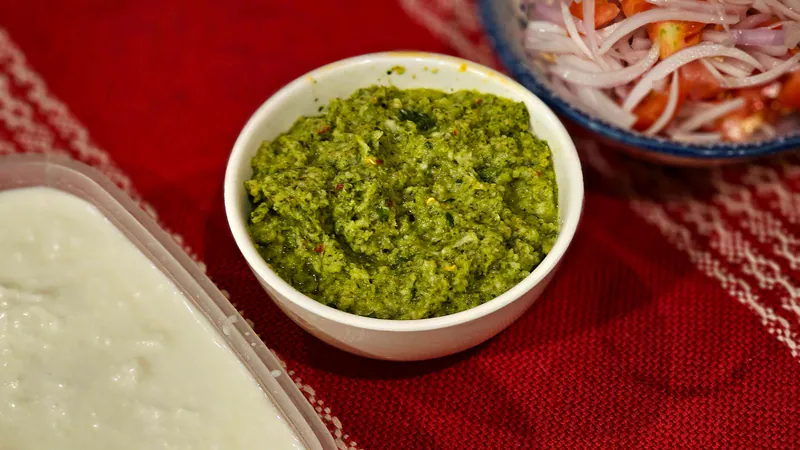
Green chutney (coriander-mint)
 Indian · 10 min · 8 kcal · Vegan
Khajur ambli chutney (Gujarati date-tamarind chutney)
Gujarati · 1 h · 54 kcal · VeganChhundo (Gujarati grated mango preserve)
Gujarati · 1 h 45 min · 53 kcal · Vegan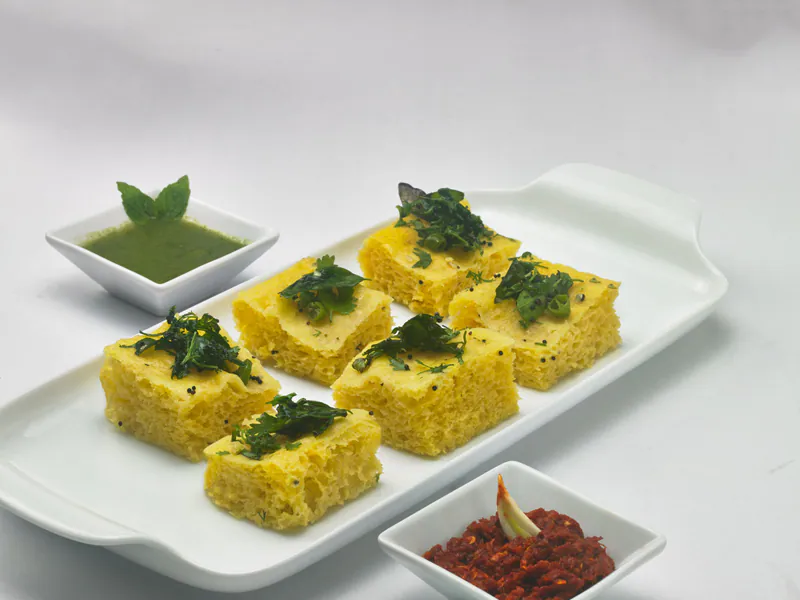
Khaman dhokla
Gujarati · 45 min · 284 kcal · Vegan