
Urap sayur
Non-vegetarian
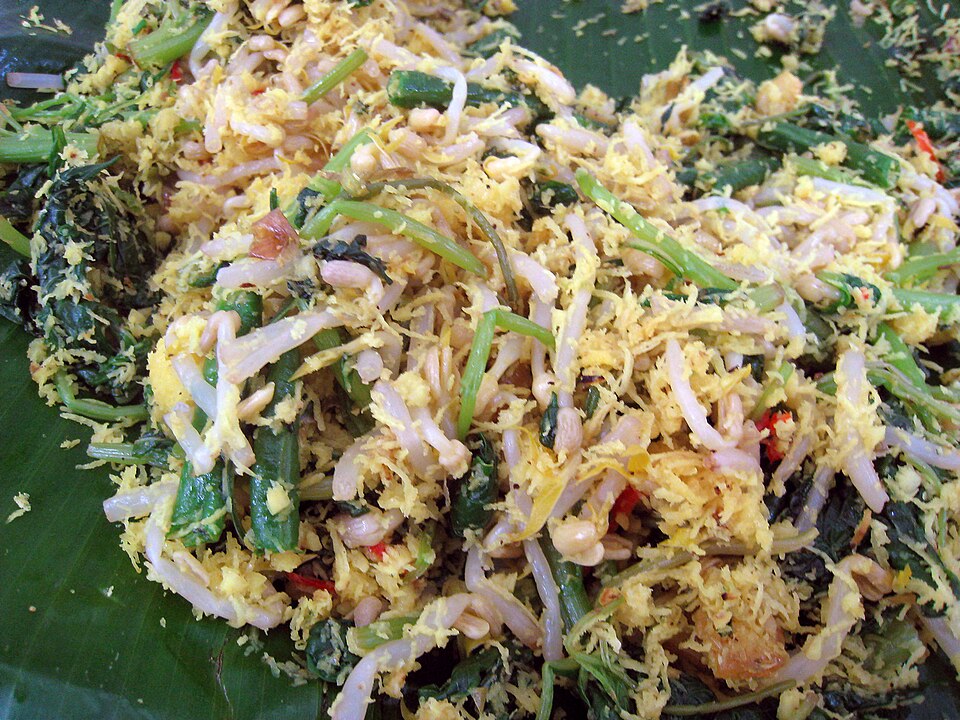
Blanched green beans, spinach, bean sprouts and cabbage tossed with freshly grated coconut that has been steamed with chilli, garlic, shallot, galangal, lime leaf and palm sugar — a Javanese vegetable salad.
Urap sayur is an Indonesian salad, ready in about 40 minutes and made with coconut and green beans. It serves 4 and is rated easy to cook.
- Prep
- 25 min
- Cook
- 15 min
- Total
- 40 min
- Serves
- 4
- Level
- Easy
- Calories
- 211
Ingredients
For the spice paste
Method
Step 1
Pound or blend the shallots (opens in a new tab), garlic (opens in a new tab), chillies, galangal (opens in a new tab), palm sugar (opens in a new tab), salt and shrimp paste (opens in a new tab) (if using) to a paste.
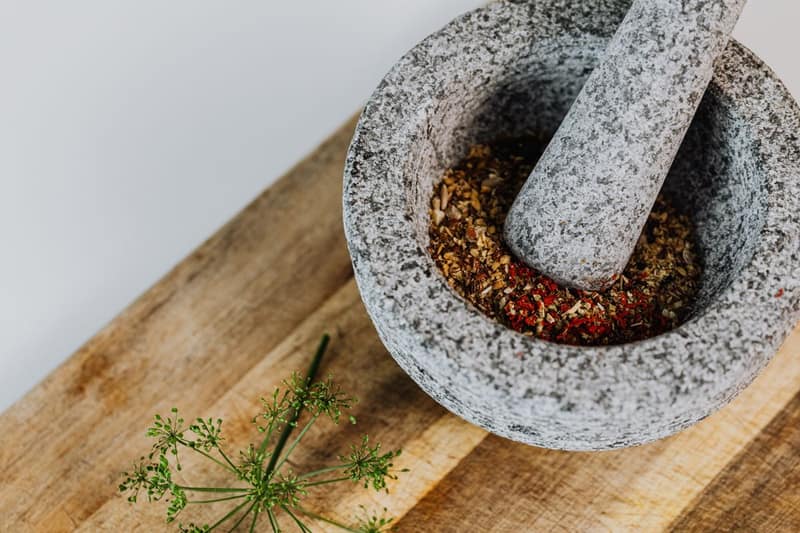
How it looks · Photo: https://kaboompics.com/ on Pexels Step 2
Mix the paste and lime leaves thoroughly into the grated coconut (opens in a new tab), wrap in a banana leaf or put in a heatproof bowl and steam over boiling water for 10 minutes, until the raw smell of the shallot (opens in a new tab) and garlic (opens in a new tab) has gone. Stir in the lime juice (opens in a new tab) and cool.
- 12 min
- high heat
- Steamer (opens in a new tab)
Steaming cooks the raw spices and helps the coconut keep longer.
Step 3
Blanch each vegetable separately in boiling salted water until just tender — green beans (opens in a new tab) 3 minutes, carrot (opens in a new tab) and cabbage (opens in a new tab) 1–2 minutes, spinach (opens in a new tab) and bean sprouts (opens in a new tab) 20–30 seconds. Drain, refresh in cold water and squeeze dry.
- 8 min
- high heat
- Saucepan (opens in a new tab)
Step 4
Just before serving, toss the vegetables with the spiced coconut (opens in a new tab) until evenly coated.
- 2 min
About this dish
- Origin
- Java, Indonesia · Well documentedAlso popular in MalaysiaMore food from Indonesia
- Dish
- Lunch · Dinner · Salads · Side dishes
- Cooking method
- Steamed, Blanched
- Taste
- spicy (chilli heat), aromatic / warmly spiced, sweet & savoury, fresh
- Diet
- Pescatarian · No gluten ingredients · Dairy-free · No nut ingredients · Low-carb · High-fibreWithout the optional extras: Vegan, Plant-based, Vegetarian (lacto-ovo), Eggetarian, Lacto-vegetarian, Ovo-vegetarian, Whole-food focusedWorked out from the ingredients. How labels work
All labels
Pescatarian · Non-vegetarian · Flexitarian-friendly · No gluten ingredients · Dairy-free · Egg-free · No nut ingredients · Alcohol-free · Pork-free · Beef-free · Low-carb · High-fibre · Carb-conscious - Good for
- Everyday
- Cook more with
- Coconut · Green beans · Shallot · Garlic · Fresh red chilli · Galangal
Allergens
- Contains, can be adapted: Crustaceansfrom shrimp paste
Based on typical versions of these ingredients and not verified allergen-free. Brands differ and cross-contact happens, so always check labels. For severe allergies, follow your clinician’s advice.
Nutrition
211 kcal per serving
Estimated1 serving ≈ 227 g · recipe makes 4
Where the energy comes from
- Protein 9%
- Carbohydrate 40%
- Fat 51%
| Nutrient | Per serving | Per 100 g* |
|---|---|---|
| Energy | 211 kcal | 93 kcal |
| Protein | 5.2 g | 2.3 g |
| Carbohydrate | 23.3 g | 10.3 g |
| Net carbohydrate | 15.4 g | 6.8 g |
| Sugars | 11.9 g | 5.3 g |
| Added sugars | 3.2 g | 1.4 g |
| Fibre | 7.9 g | 3.5 g |
| Fat | 13 g | 5.7 g |
| Saturated fat | 11.2 g | 4.9 g |
| Trans fat | — | — |
| Cholesterol | 0 mg | 0 mg |
| Sodium | 499 mg | 220 mg |
| Salt equivalent | 1.2 g | 0.6 g |
Vitamins & minerals per serving
- Potassium
- 677 mg
- Calcium
- 96 mg
- Iron
- 3.1 mg
- Magnesium
- 70 mg
- Vitamin A (RAE)
- 318 µg
- Vitamin C
- 42 mg
- Vitamin D
- 0 µg
- Vitamin B12
- 0 µg
- Folate (DFE)
- 138 µg
How these numbers were made
- Calculated from USDA FoodData Central (SR Legacy) per-100 g values and the listed quantities.
- *Per 100 g of combined raw ingredients; the cooked dish may weigh more or less.
- Optional ingredients are not included: shrimp paste.
- Not counted (tiny amounts or “to taste”): makrut lime leaves.
- Galangal: Fresh ginger used as a stand-in: no galangal entry in FDC SR Legacy, and galangal is a closely related rhizome used in similar small amounts.
- Jaggery / palm sugar: Brown sugar (FDC 168833) used as a stand-in for unrefined cane jaggery and palm sugar.
- “—” means the value isn’t known for enough of the ingredients; it is never zero by default.
- Values are estimates for guidance, not for medical dosing. U.S. Department of Agriculture, Agricultural Research Service. FoodData Central, 2019. fdc.nal.usda.gov.
Good to know
Tips
- Squeeze the blanched greens well, or the coconut turns soggy.
Common mistakes
- Mixing coconut and vegetables hours ahead — fresh coconut sours quickly once mixed with wet vegetables.
Serve with
- With rice, fried tempeh and fried chicken, or as part of a nasi tumpeng spread.
Food safety
- Fresh grated coconut spoils quickly: steam it as directed, keep it chilled and use within 1 day.
Storage
- Keep the spiced coconut and vegetables separate; both keep 1 day in the fridge.
Original editorial recipe · FriendsPantry editorial · Not yet independently reviewed · Added · Updated
Recipe DNA
How this dish is built
Built from the recipe’s own sections. Each band’s width is its share of the dish by weight. Choose a component to see what it does.
What the dish is built around
Main ingredient
- Coconut, freshly grated (or frozen grated coconut, thawed)150 g
- Lime juice1 tbsp · 15 g
- Green beans, cut into 3 cm lengths150 g
- Spinach, thick stems removed150 g
- Bean sprouts, rinsed, straggly tails trimmed100 g
- Cabbage, shredded150 g
- Carrot, julienned1 piece · 60 g
Reviews & corrections
Reviews come from signed-in cooks and appear after a moderator checks them. We never show made-up ratings.
You might also like
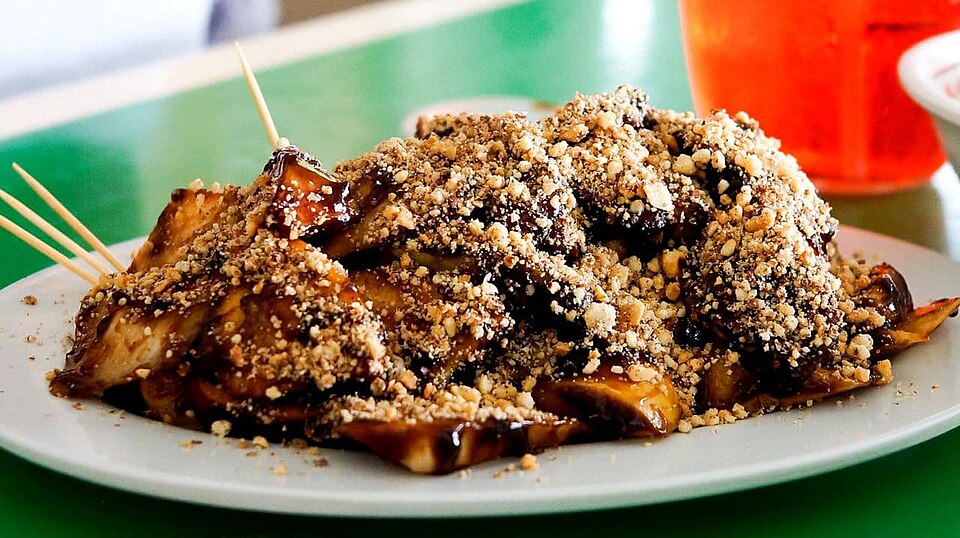
Rojak buah
 Malaysian · 25 min · 193 kcal
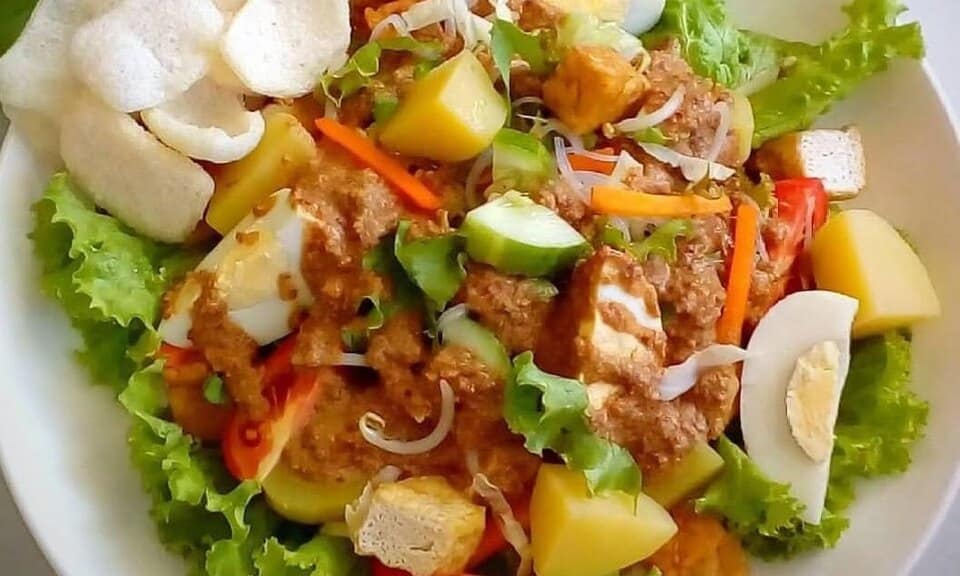
Gado-gado
 Indonesian · 55 min · 682 kcal · Contains egg
Beef rendang
Indonesian · 4 h · 672 kcal
Soto ayam
Indonesian · 1 h 25 min · 582 kcal