
Guo bao rou (Dongbei sweet and sour crispy pork)
Non-vegetarian
锅包肉 · guōbāoròu
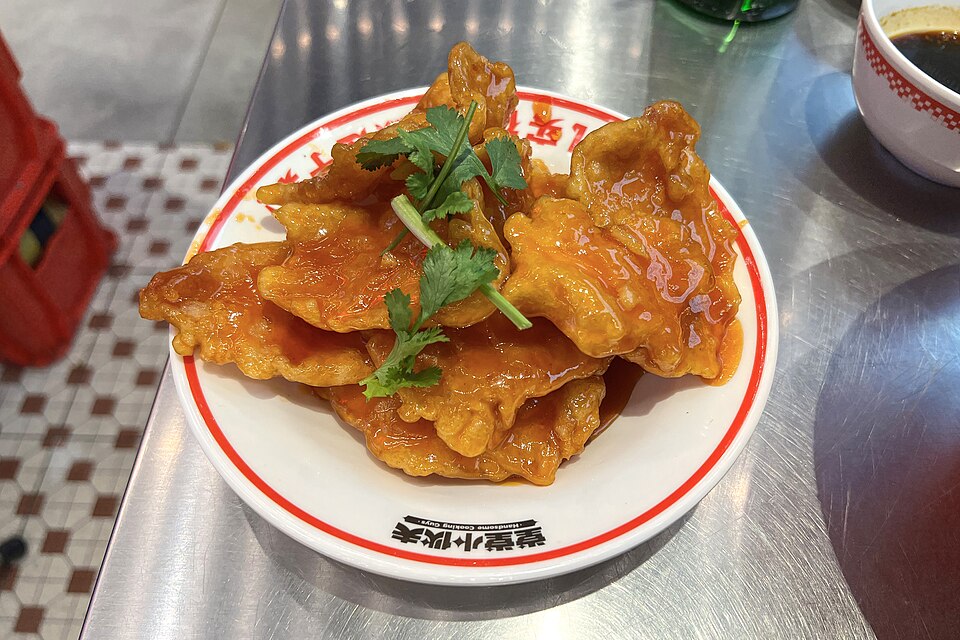
Thin slices of pork in a potato-starch batter, double-fried until shatteringly crisp and tossed in a light, sharp sweet-and-sour glaze with ginger and carrot shreds.
Guo bao rou (Dongbei sweet and sour crispy pork) is a Chinese main course from China, ready in about 40 minutes and made with pork tenderloin and tapioca starch. It serves 3 and is rated intermediate to cook.
- Prep
- 20 min
- Cook
- 20 min
- Total
- 40 min
- Serves
- 3
- Level
- Intermediate
- Calories
- 512
Method
Step 1
Season the pork with salt. Stir the starch with the water into a thick batter (it should coat a spoon heavily), then coat the slices.
- 8 min
Step 2
Mix the sugar (opens in a new tab), vinegar, soy sauce (opens in a new tab) and salt until the sugar dissolves.
- 2 min
Step 3
Heat the oil to 170 °C and fry the slices one at a time so they don't stick, until pale and set. Drain.
Food safety: Deep-frying: never fill the wok more than a third full and keep a lid nearby.
Step 4
Raise the oil to 190 °C and fry the pork again briefly until deep golden and very crisp. Drain.
- 2 min
- 190°C
Food safety: Pork must be cooked through — no pink in the thickest slice.
Step 5
Pour off all but 1 tbsp oil. Stir-fry the ginger, carrot (opens in a new tab) and spring onion (opens in a new tab) for a few seconds, pour in the sauce and let it bubble until slightly syrupy.
- 1 min
- high heat
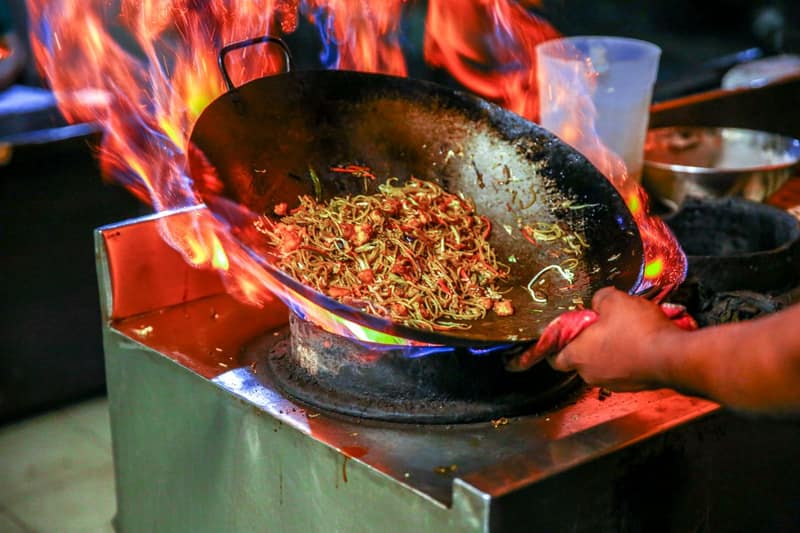
How it looks · Photo: Aesthos AR. Photography on Pexels Step 6
Add the pork, toss quickly to glaze and serve at once with coriander.
- 1 min
- high heat

How it looks · Photo: Willians Huerta on Pexels
About this dish
- Origin
- Heilongjiang (Harbin), China · Commonly attributedGenerally credited to Harbin cooks of the early 20th century.More food from China
- Dish
- Dinner · Main courses
- Cooking method
- Deep-fried
- Taste
- sweet & sour, tangy
- Diet
- Dairy-free · No nut ingredients · High-proteinWorked out from the ingredients. How labels work
All labels
Non-vegetarian · Dairy-free · Egg-free · No nut ingredients · Alcohol-free · Beef-free · High-protein - Good for
- Festive & celebration · Child-friendly
- Cook more with
- Pork tenderloin · Tapioca starch · Sugar · White vinegar · Soy sauce · Fresh ginger
- Techniques
- Deep-frying · Stir-frying · Reduction
Allergens
- Contains: Wheatfrom soy sauce
- Contains: Glutenfrom soy sauce
- Contains: Soyfrom soy sauce
Based on typical versions of these ingredients and not verified allergen-free. Brands differ and cross-contact happens, so always check labels. For severe allergies, follow your clinician’s advice.
Nutrition
512 kcal per serving
Estimated1 serving ≈ 282 g · recipe makes 3
Where the energy comes from
- Protein 22%
- Carbohydrate 46%
- Fat 32%
| Nutrient | Per serving | Per 100 g* |
|---|---|---|
| Energy | 512 kcal | 182 kcal |
| Protein | 28.4 g | 10.1 g |
| Carbohydrate | 57.8 g | 20.5 g |
| Net carbohydrate | 56.9 g | 20.2 g |
| Sugars | 22 g | 7.8 g |
| Added sugars | 20 g | 7.1 g |
| Fibre | 0.9 g | 0.3 g |
| Fat | 18 g | 6.4 g |
| Saturated fat | 2.1 g | 0.7 g |
| Trans fat | — | — |
| Cholesterol | 87 mg | 31 mg |
| Sodium | 767 mg | 272 mg |
| Salt equivalent | 1.9 g | 0.7 g |
Vitamins & minerals per serving
- Potassium
- 612 mg
- Calcium
- 28 mg
- Iron
- 2.1 mg
- Magnesium
- 43 mg
- Vitamin A (RAE)
- 86 µg
- Vitamin C
- 2 mg
- Vitamin D
- 0.3 µg
- Vitamin B12
- 0.7 µg
- Folate (DFE)
- 8 µg
How these numbers were made
- Calculated from USDA FoodData Central (SR Legacy) per-100 g values and the listed quantities.
- *Per 100 g of combined raw ingredients; the cooked dish may weigh more or less.
- Optional ingredients are not included: coriander leaves.
- Tapioca starch: Dry pearl tapioca (FDC 169717) used as a stand-in; both are almost pure cassava starch.
- “—” means the value isn’t known for enough of the ingredients; it is never zero by default.
- Values are estimates for guidance, not for medical dosing. U.S. Department of Agriculture, Agricultural Research Service. FoodData Central, 2019. fdc.nal.usda.gov.
Good to know
Tips
- Toss and serve fast — the crisp coating softens within minutes.
Common mistakes
- A thin batter: it should be thick enough to cling like a heavy paste.
Storage
- Best eaten immediately.
Original editorial recipe · FriendsPantry editorial · Not yet independently reviewed · Added · Updated
Recipe DNA
How this dish is built
Built from the recipe’s own sections. Each band’s width is its share of the dish by weight. Choose a component to see what it does.
What the dish is built around
Main ingredient
- Pork tenderloin, sliced 5 mm thick400 g
- Carrot, fine shreds0.5 piece · 30 g
Reviews & corrections
Reviews come from signed-in cooks and appear after a moderator checks them. We never show made-up ratings.
You might also like
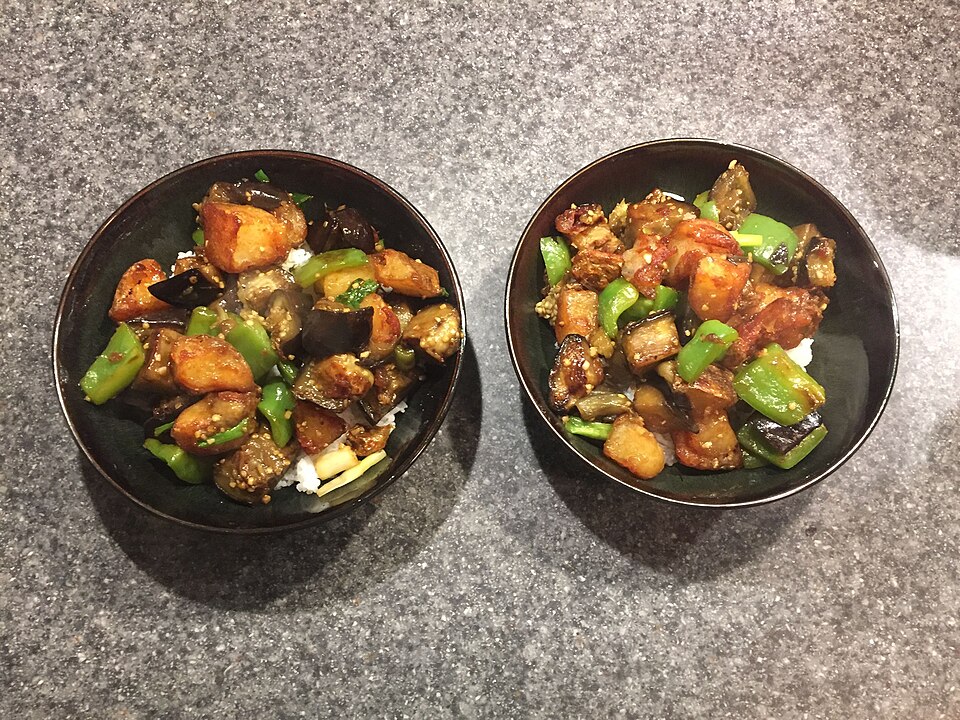
Di san xian (Dongbei eggplant, potato and pepper)
 Chinese · 35 min · 312 kcal · Vegan
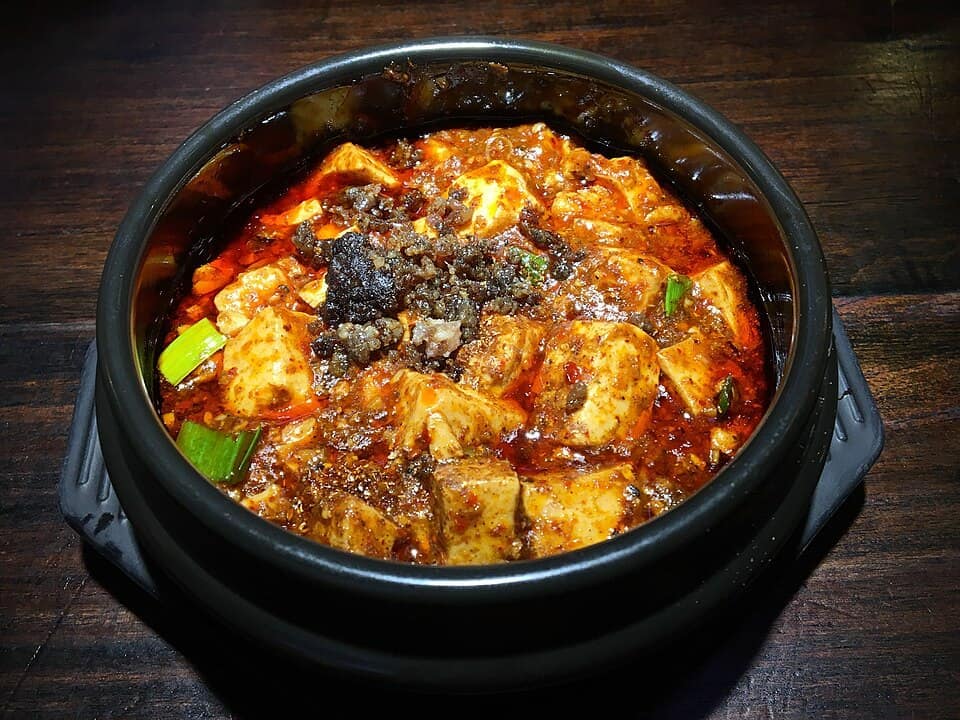
Mapo tofu
Sichuan · 25 min · 253 kcal
Fish-fragrant aubergine
Sichuan · 35 min · 269 kcal · Vegan
Taiwanese beef noodle soup
 Taiwanese · 3 h · 551 kcal