
Nature's Pantry
Garlic
Also: lehsun (Hindi) · ajo (Spanish) · Allium sativum
A kitchen essential. Garlic supplements may nudge cholesterol down a little; the evidence for colds is thin.
Overall evidence
The more consistent findings are for supplements and show only small effects; research on garlic eaten as food is limited.
A few small or low-quality studies, inconsistent results, or mostly lab and animal work. Interesting, but not enough to rely on.
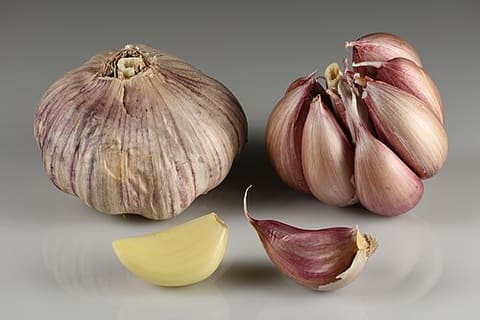
What it is
The bulb of Allium sativum, in the onion family. Crushing or chopping it releases allicin, which gives raw garlic its bite.
Traditional use
Tradition, not evidence: how cultures use it, not proof that it works.
Mediterranean Europe
Raw garlic rubbed on bread or pounded into aioli and pesto; garlic soup is a traditional winter comfort food in Spain.
South Asia
Ginger-garlic paste is the base of countless curries; garlic cloves fried in ghee are a home remedy offered for colds.
East Asia
Black garlic, slowly aged until sweet, is eaten as a tonic food in Korea.
What the research says
Each claim graded on its own evidence.
Garlic supplements and cholesterol
Evidence level: Moderate evidenceNCCIH reports that garlic supplements may reduce total and LDL cholesterol to a small extent in people with high levels. This is about supplements, not garlic in food.[1]
Garlic and blood pressure
Evidence level: Limited or early evidenceLimited evidence suggests garlic supplements may lower blood pressure to a small extent.[1]
Garlic and the common cold
Evidence level: Limited or early evidenceA Cochrane review found only one trial that met its criteria and concluded there is insufficient evidence on garlic for colds.[2][1]
In food amounts
A typical recipe uses one to a few cloves per dish. Supplement studies used standardised products whose amounts do not map neatly onto cloves.
We describe everyday cooking amounts only, never supplement doses.
Safety
- Pregnancy and breastfeeding
- Amounts above those normally eaten in food may not be safe in pregnancy or while breastfeeding.[1]
- Medicines
- Garlic supplements may increase the risk of bleeding. If you take a blood thinner or are having surgery, tell your doctor, dentist or pharmacist about any garlic supplements.[1]
- Allergies
- Some people are allergic to garlic. Raw garlic can also cause heartburn, gas, nausea and strong breath or body odour.[1]
If you take regular medicines, are pregnant or breastfeeding, or are cooking for a baby or someone who is unwell, check with a doctor, pharmacist or midwife before using any food or supplement for a health reason.
Sources
- [1] Garlic — fact sheet — US National Center for Complementary and Integrative Health (NCCIH, NIH)
- [2] Garlic for the common cold (Lissiman, Bhasale, Cohen) — Cochrane Database of Systematic Reviews, 2014
Sources were checked when this entry was written. Research changes; if you spot something out of date, please tell us.
Cook with garlic
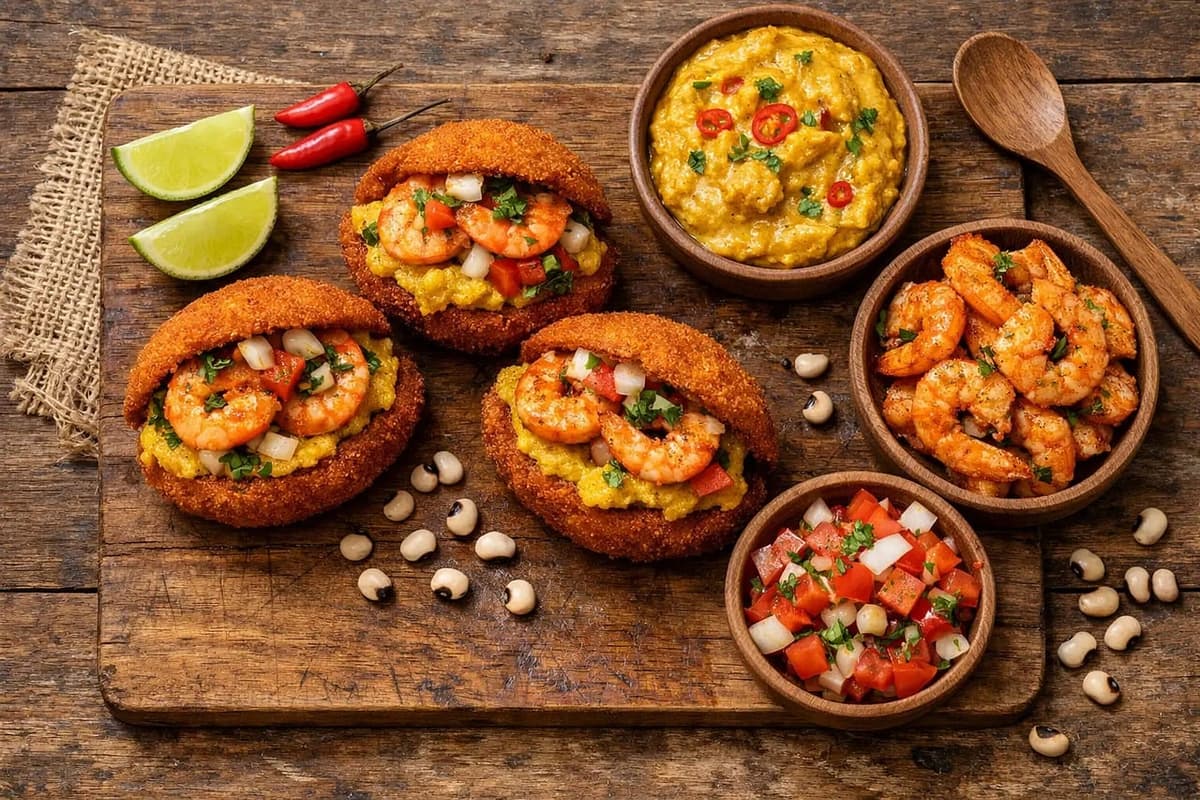
Acarajé
 Brazilian · 1 h 20 min · 534 kcal
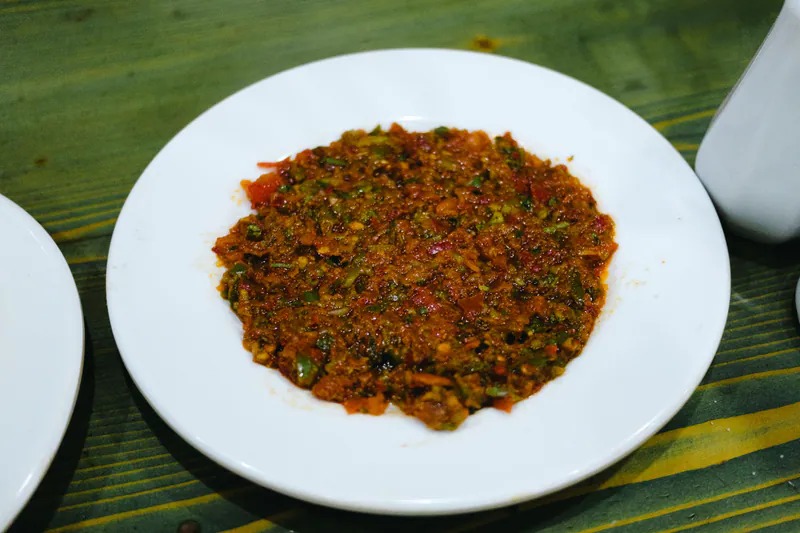
Acılı ezme (Turkish spicy tomato-pepper relish)
 Turkish · 40 min · 73 kcal · Vegan
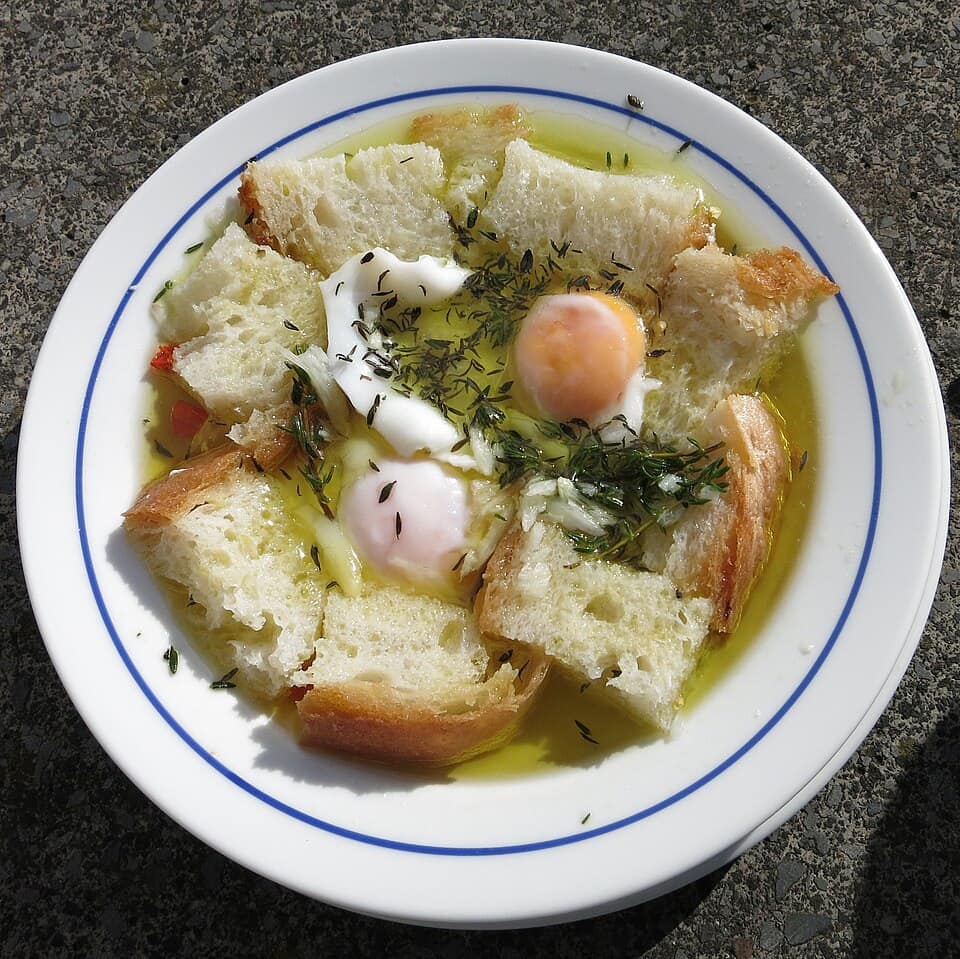
Açorda alentejana
 Portuguese · 20 min · 365 kcal · Contains egg
Adjika (red chilli paste)
 Georgian · 1 h 20 min · 13 kcal · Vegan
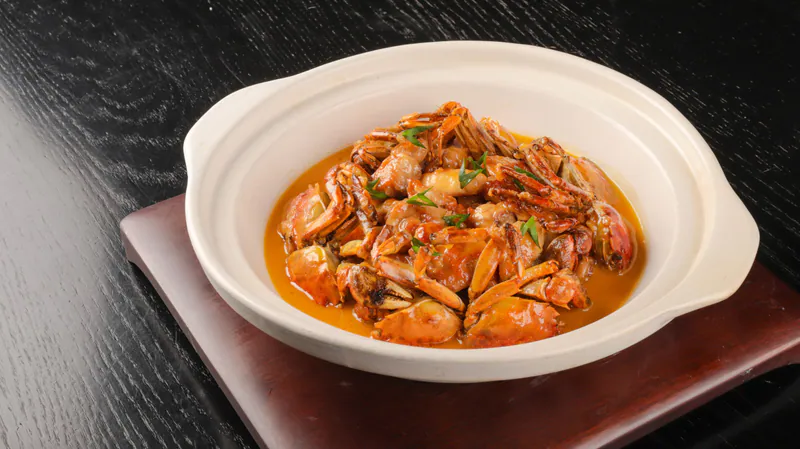
Ago glain
 Beninese · 1 h 5 min · 344 kcal
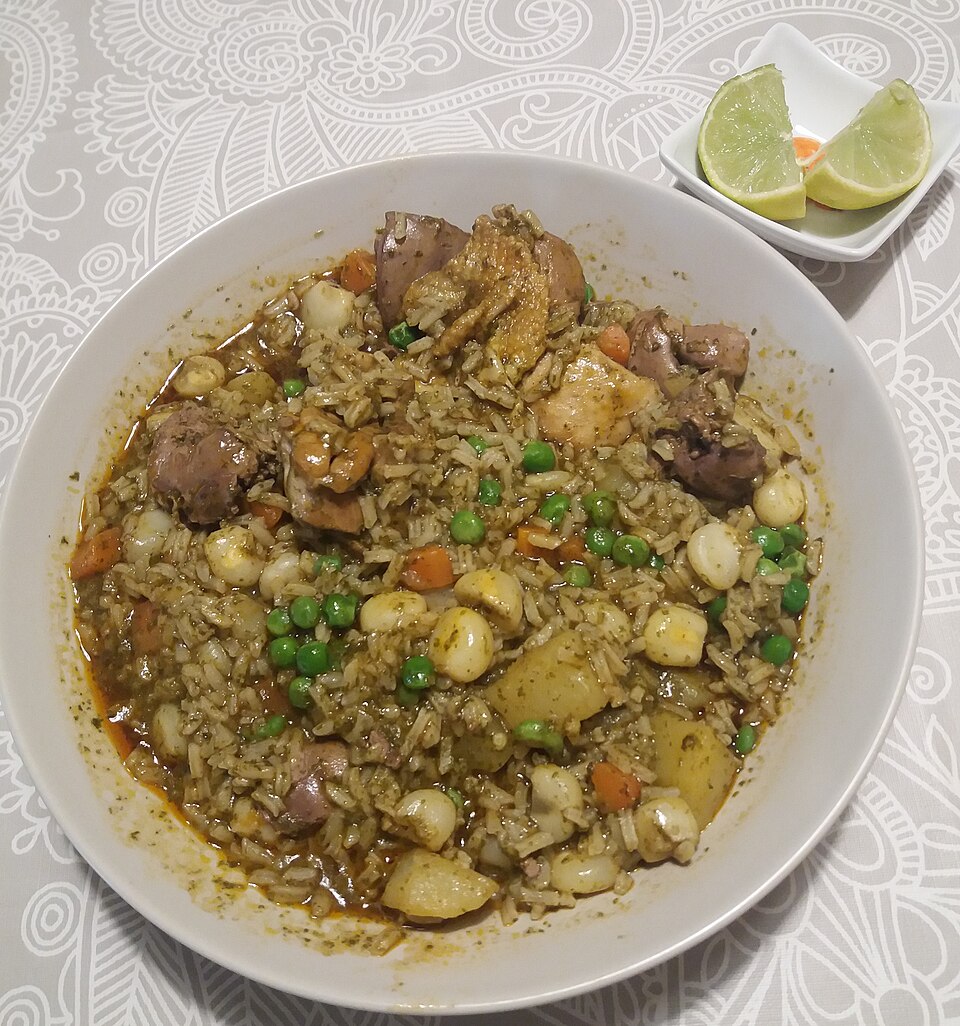
Aguadito de pollo
 Peruvian · 1 h 5 min · 408 kcal
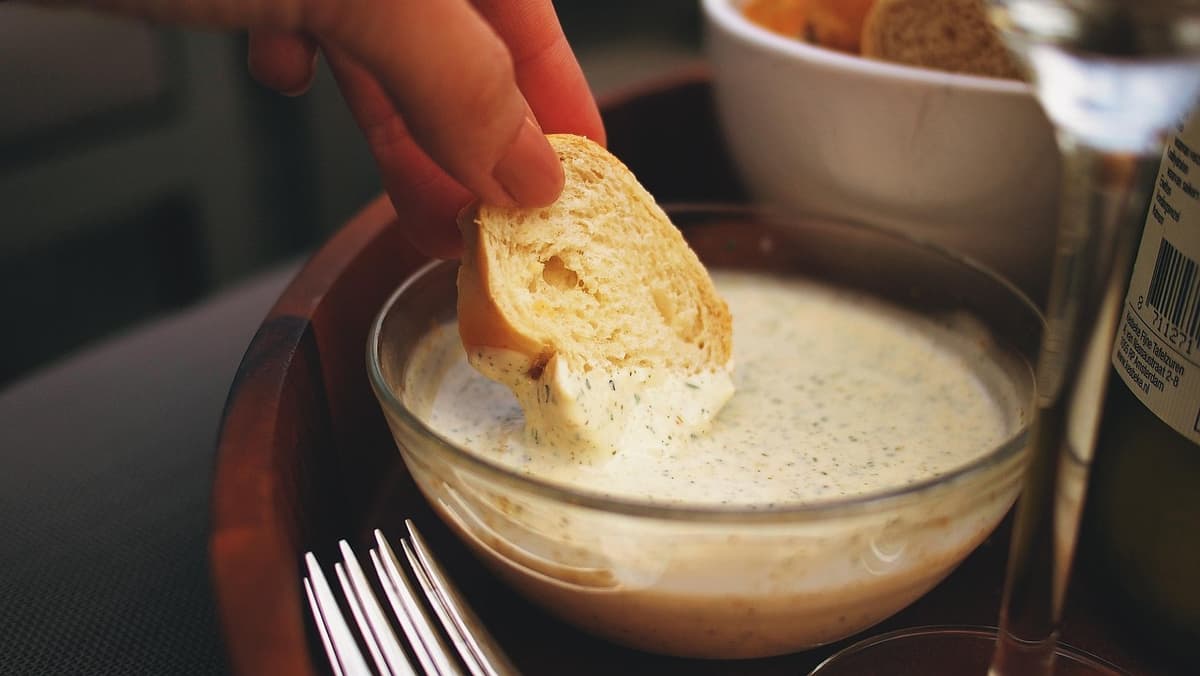
Aïoli (Provençal garlic mayonnaise)
 French · 20 min · 211 kcal · Contains egg
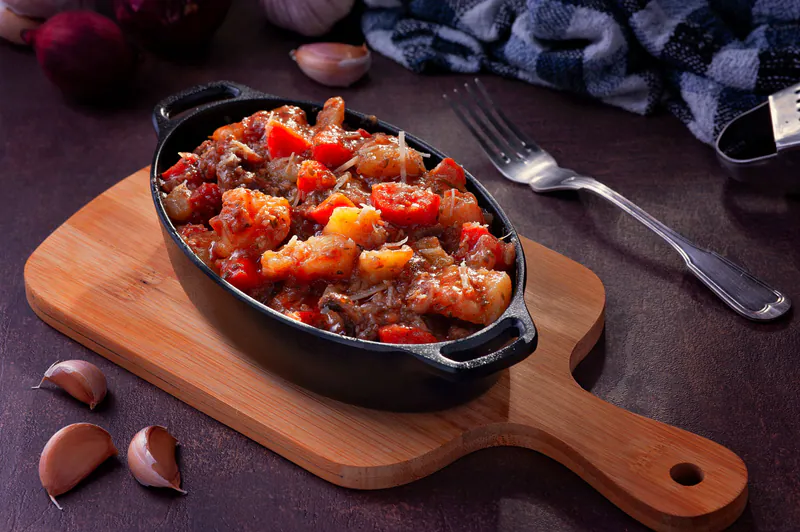
Ajapsandali
Georgian · 1 h 20 min · 325 kcal · Vegan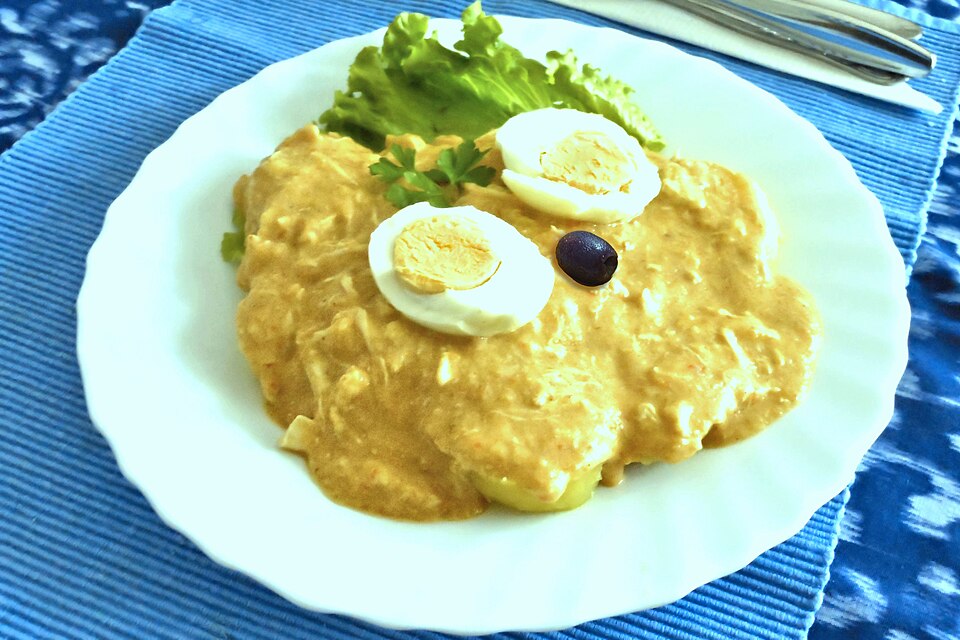
Ají de gallina
Peruvian · 1 h 5 min · 553 kcal
871 more
- Ají verde (Peruvian green sauce) · Peruvian
- Ajiaco santafereño · Colombian
- Ajo blanco · Spanish
- Ajvar · Balkan
- Akoho sy voanio · Malagasy
- Albóndigas en salsa · Spanish
- Aloo gobi · Punjabi
- Aloo gosht · Pakistani
- Aloo keema · Pakistani
- Aloo tama · Nepalese
- Amba (Iraqi mango pickle sauce) · Iraqi
- Ambuyat with cacah · Bruneian
- Amiwo · Beninese
- Anda curry · Indian
- Andhra chicken curry · South Indian
- Andhra tomato pachadi · South Indian
- Anticuchos de corazón · Peruvian
- Arroz caldo · Filipino
- Arroz con gandules · Puerto Rican
- Arroz de marisco · Portuguese
- Aseeda with mullah · Sudanese
- Ash reshteh · Iranian
- Ashlyam-fu · Kyrgyz
- Atkilt wat · Ethiopian
- Atom (strained yoghurt with chilli butter) · Turkish
- Attiéké with grilled fish · Ivorian
- Aushak · Afghan
- Avakaya (Andhra mango pickle) · South Indian
- Avocado hummus · International
- Awaze · Ethiopian
- Ayam bakar · Indonesian
- Ayam goreng kuning · Indonesian
- Ayam masak merah · Malaysian
- Azi dessi with fufu · Togolese
- Azifa · Ethiopian
- Baba ghanoush · Levantine
- Baba ghanoush (Lebanese-Syrian chopped style) · Lebanese
- Bacalhau à brás · Portuguese
- Bacalhau com natas · Portuguese
- Badrijani nigvzit · Georgian
- Baechu kimchi (napa cabbage kimchi) · Korean
- Bagara baingan · Indian
- Bagna càuda · Italian
- Bai sach chrouk · Cambodian
- Baingan bharta · Punjabi
- Bajan fish cakes · Bajan
- Bak kut teh (peppery Teochew style) · Singaporean
- Baked ziti · American
- Bakso · Indonesian
- Bamia (okra and beef stew) · South Sudanese
- Bandeja paisa · Colombian
- Bang bang chicken · Sichuan
- Bangladeshi beef bhuna · Bangladeshi
- Bánh mì thịt nướng · Vietnamese
- Bánh xèo · Vietnamese
- Bara · Nepalese
- Bariis iskukaris · Somali
- Barszcz czerwony · Polish
- Bassaru · South Indian
- Batar daan · Timorese
- Batata harra · Lebanese
- BBQ pulled pork · Southern US
- Beef and broccoli stir-fry · Cantonese
- Beef and Pepper Stir-Fry · International
- Beef bulgogi · Korean
- Beef kala bhuna · Bangladeshi
- Beef lok lak · Cambodian
- Beef nihari · Pakistani
- Beef rendang · Indonesian
- Beef stifado · Greek
- Beef tehari · Bangladeshi
- Beef tibs · Ethiopian
- Beerakaya pachadi (ridge gourd chutney) · South Indian
- Beetroot hummus · International
- Begun bhorta · Bangladeshi
- Belizean rice and beans with stew chicken · Belizean
- Benachin · Gambian
- Bessara (Egyptian green fava bean and herb dip) · Egyptian
- Bhindi masala · Indian
- Bibim guksu · Korean
- Bibimbap · Korean
- Bicol express · Filipino
- Bifana · Portuguese
- Bigilla · Maltese
- Bilahi pitika (Assamese roasted tomato mash) · Indian
- Birria de res · Mexican
- Bissara · Moroccan
- Bistek Tagalog · Filipino
- Black bean sauce · Cantonese
- Black bean tacos · Mexican
- Blue cheese dressing · American
- Bò lúc lắc (shaking beef) · Vietnamese
- Bobotie · Cape Malay
- Boerewors with pap and sous · South African
- Boeuf bourguignon · French
- Borani banjan · Afghan
- Bosanski lonac (Bosnian pot) · Bosnian
- Bouillabaisse · French
- Boule with okra sauce · Chadian
- Broccoli cheddar soup · American
- Brown stew chicken · Jamaican
- Budae jjigae (army base stew) · Korean
- Buffalo sauce · American
- Buffalo wings · American
- Bumbu dasar merah (Indonesian red spice base) · Indonesian
- Bumbu kacang (peanut satay sauce) · Indonesian
- Bún bò Huế · Vietnamese
- Bún chả · Vietnamese
- Bun kebab · Pakistani
- Bunny chow · South African
- Burani raita (Hyderabadi garlic raita) · Indian
- Burmese chicken curry · Burmese
- Burmese pork curry · Burmese
- Butter chicken · Punjabi
- Buuz (Mongolian steamed dumplings) · Mongolian
- Cá kho tộ · Vietnamese
- Cachupa · Cape Verdean
- Cacık · Turkish
- Caesar dressing · American
- Caesar salad · American
- Cajun seasoning · Southern US
- Caldo de feijão · Brazilian
- Caldo de res · Mexican
- Caldo verde · Portuguese
- Calulu · Angolan
- Canh chua cá · Vietnamese
- Canja (Cabo Verdean chicken and rice soup) · Cape Verdean
- Cape Malay chicken curry · Cape Malay
- Caribbean Scotch bonnet pepper sauce · Caribbean
- Carimañolas · Panamanian
- Carne de porco à alentejana · Portuguese
- Carnitas · Mexican
- Carrot and ginger soup · International
- Casado · Costa Rican
- Cassoulet · French
- Cazuela de vacuno · Chilean
- Ćevapi · Balkan
- Chả giò (fried spring rolls) · Vietnamese
- Chakalaka · South African
- Chakhapuli · Georgian
- Chakhokhbili · Georgian
- Champaran meat · Indian
- Chana masala · Punjabi
- Chana samosa (Chhattisgarh street-style) · Indian
- Chapli kebab · Pakistani
- Char kway teow · Malaysian
- Char siu (Cantonese barbecue pork) · Cantonese
- Chatamari · Nepalese
- Chechebsa · Ethiopian
- Chef's salad · American
- Chermoula · Moroccan
- Chettinad chicken curry · South Indian
- Chicken adobo · Filipino
- Chicken and andouille gumbo · Southern US
- Chicken and Vegetable Stir-Fry · International
- Chicken and waffles · Southern US
- Chicken balti · British
- Chicken biryani · Indian
- Chicken cacciatore · Italian
- Chicken chow mein · Cantonese
- Chicken kabsa · Saudi Arabian
- Chicken karaage · Japanese
- Chicken karahi · Pakistani
- Chicken korma · Indian
- Chicken kottu roti · Sri Lankan
- Chicken Kyiv · Ukrainian
- Chicken momo · Nepalese
- Chicken Noodle Soup · International
- Chicken rezala · Bangladeshi
- Chicken rice chilli sauce · Singaporean
- Chicken sajji · Pakistani
- Chicken saloona · Gulf Arab
- Chicken shawarma · Levantine
- Chicken sopas · Filipino
- Chicken souvlaki · Greek
- Chicken thukpa · Nepalese
- Chicken tikka masala · Indian
- Chicken tinola · Filipino
- Chicken yakhni pulao · Pakistani
- Chicken yassa · Senegalese
- Chikhirtma · Georgian
- Chilaquiles rojos · Mexican
- Chiles en nogada · Mexican
- Chili con carne · Tex-Mex
- Chilli cheese paratha · Indian
- Chilli crisp · Chinese
- Chimichurri · Argentine
- Chinese broccoli with oyster sauce · Cantonese
- Chinese dumpling dipping sauce · Chinese
- Chinese plum sauce · Cantonese
- Chingri bhuna · Bangladeshi
- Chipotle salsa (salsa de chipotle) · Mexican
- Cho-gochujang (vinegared chilli sauce) · Korean
- Chole bhature · Punjabi
- Chongqing chilli chicken · Sichuan
- Choripán · Argentine
- Chuchvara · Uzbek
- Chupe de camarones · Peruvian
- Chura sabzi (Arunachali cheese and chilli) · Indian
- Chutney-e gashneez (Afghan green chutney) · Afghan
- Çılbır · Turkish
- Cobb salad · American
- Cochinita pibil · Mexican
- Cold soba noodle salad with edamame · International
- Cơm tấm sườn nướng · Vietnamese
- Coorg pandi curry · South Indian
- Coq au vin · French
- Corn chowder · American
- Costa Rican arroz con pollo · Costa Rican
- Cou-cou and flying fish · Bajan
- Coxinha · Brazilian
- Cream of mushroom soup · International
- Creamy Tomato Soup · International
- Crispy Tofu and Vegetable Stir-Fry · International
- Crni rižot (black cuttlefish risotto) · Croatian
- Cuban black beans · Cuban
- Cuban mojo · Cuban
- Cuban sandwich · Cuban
- Curry channa and aloo · Trinidadian
- Curry laksa · Malaysian
- Da pan ji (Xinjiang big plate chicken) · Chinese
- Daal chawal · Pakistani
- Dakgalbi · Korean
- Dal bhat tarkari · Nepalese
- Dal makhani · Punjabi
- Dal pitha (Bihari rice dumplings) · Indian
- Dal shorba · Indian
- Dal tadka with red lentils · Indian
- Dan dan noodles · Sichuan
- Dhakai kacchi biryani · Bangladeshi
- Dhonepata bata (Bengali coriander paste) · Bengali
- Di san xian (Dongbei eggplant, potato and pepper) · Chinese
- Dimlama · Uzbek
- Diri ak djon djon · Haitian
- Doenjang jjigae · Korean
- Dohneiiong · Indian
- Domoda · Gambian
- Doro wat · Ethiopian
- Doubles · Trinidadian
- Dry garlic chutney (vada pav chutney) · Indian
- Duck curry with ash gourd · Indian
- Dushbara · Azerbaijani
- Eech · Armenian
- Eggplant parmigiana · Italian
- Egyptian mahshi (stuffed vegetables) · Egyptian
- Egyptian molokhia · Egyptian
- Ema datshi · Bhutanese
- Empanadas colombianas · Colombian
- Encebollado · Ecuadorian
- Enchiladas rojas · Mexican
- Enchiladas verdes · Mexican
- Ensalada de nopales · Mexican
- Erissery · South Indian
- Escondidinho de carne moída · Brazilian
- Espinacas con garbanzos · Spanish
- Everyday Vegetable Soup · International
- Fabada asturiana · Spanish
- Fah-fah · Djiboutian
- Fahsa · Yemeni
- Fakoye · Malian
- Falafel · Middle Eastern
- Faraa (steamed rice-flour dumplings) · Indian
- Farofa · Brazilian
- Fasolada · Greek
- Fattet hummus · Levantine
- Fattoush · Lebanese
- Feijão carioca · Brazilian
- Feijoada · Brazilian
- Fërgesë (peppers, tomatoes and cheese) · Albanian
- Fermented bamboo shoot chutney · Indian
- Fermented Louisiana-style hot sauce · Southern US
- Fish ambul thiyal · Sri Lankan
- Fish amok · Cambodian
- Fish molee · South Indian
- Fish yassa · Senegalese
- Fish-fragrant aubergine · Sichuan
- Francesinha · Portuguese
- Frango à zambeziana · Mozambican
- French onion dip · American
- Fried carrot cake (chai tow kway) · Singaporean
- Frijoles de olla · Mexican
- Ful medames · Egyptian
- Gà kho gừng · Vietnamese
- Gabonese fish bouillon · Gabonese
- Gabout · Kuwaiti
- Gado-gado · Indonesian
- Gai yang (Thai grilled chicken) · Thai
- Galayet bandora · Jordanian
- Galbi-jjim · Korean
- Gallo pinto · Central American
- Gambas al ajillo · Spanish
- Gamja jorim (soy-braised potatoes) · Korean
- Garba · Ivorian
- Garlic bok choy stir-fry · Chinese
- Garlic Bread · International
- Garlic butter naan (yeast-free, pan-cooked) · Indian
- Garlic Butter Shrimp · International
- Garlic Roasted Broccoli · International
- Gazpacho · Spanish
- Gboma dessi · Togolese
- Gemista · Greek
- Georgian tomato and cucumber salad with walnuts · Georgian
- Ghugni (Jharkhand-style) · Indian
- Gigantes plaki · Greek
- Ginger-garlic paste · Indian
- Githeri · Kenyan
- Gnocchi alla sorrentina · Italian
- Goan fish curry · Goan
- Goan green chutney (coconut-coriander chutney) · Goan
- Goan prawn curry · Goan
- Goan vindaloo paste · Goan
- Gỏi cuốn (fresh spring rolls) · Vietnamese
- Gỏi gà · Vietnamese
- Gỏi ngó sen tôm thịt · Vietnamese
- Golbheda ko achar · Nepalese
- Gomen · Ethiopian
- Gongura pachadi (Andhra sorrel-leaf chutney) · South Indian
- Gratin dauphinois · French
- Green chutney (coriander-mint) · Indian
- Gremolata · Italian
- Grilled chicken salad · International
- Grilled Garlic Prawn Skewers · Mediterranean
- Grilled Lemon-Herb Salmon · International
- Grilled Sea Bass with Lemon-Oil Dressing · Mediterranean
- Grilled Squid Salad · Mediterranean
- Grilled steak with chimichurri · Argentine
- Griot · Haitian
- Groundnut soup (nkatenkwan) · Ghanaian
- Gua bao (Taiwanese pork belly buns) · Taiwanese
- Guasacaca · Venezuelan
- Gulai kambing · Indonesian
- Gulyásleves (Hungarian goulash soup) · Hungarian
- Guyanese cook-up rice · Guyanese
- Guyanese pepperpot · Guyanese
- Gya thuk · Indian
- Gyoza (pan-fried pork dumplings) · Japanese
- Hachis parmentier · French
- Hainanese chicken rice · Singaporean
- Haleem · Pakistani
- Hallacas · Venezuelan
- Hari mirch chutney (green chilli chutney) · Indian
- Harissa · Tunisian
- Hariyali green masala · Indian
- Hawawshi · Egyptian
- Haydari · Turkish
- Hearty Lentil and Vegetable Soup · International
- Hokkien prawn mee · Singaporean
- Home-style tofu · Sichuan
- Homemade hoisin sauce · Cantonese
- Homemade tomato ketchup · American
- Hot and sour shredded potatoes · Chinese
- Htipiti (roasted red pepper and feta dip) · Greek
- Hudut · Belizean
- Huevos rancheros · Mexican
- Huku ne dovi · Zimbabwean
- Hummus · Levantine
- Hunan farmhouse stir-fried pork with green chillies · Chinese
- Hunan steamed fish with chopped chillies · Chinese
- Hünkar beğendi (lamb on smoky aubergine purée) · Turkish
- Hyderabadi dalcha · Indian
- Hyderabadi marag · Indian
- Ibiharage · Burundian
- Ika vakalolo · Fijian
- Ikan sabuko · Timorese
- İmam bayıldı · Turkish
- Imbakbaka · Libyan
- Indio viejo · Nicaraguan
- Indo-Chinese schezwan sauce · Indian
- Iraqi dolma · Iraqi
- Isombe · Rwandan
- Italian wedding soup · Italian
- Izgara köfte · Turkish
- Jamaican beef patties · Jamaican
- Jamaican curry chicken · Jamaican
- Jamaican curry goat · Jamaican
- Jamaican jerk chicken · Jamaican
- Jamaican jerk paste (wet jerk) · Jamaican
- Jamaican rice and peas · Jamaican
- Jambalaya · Southern US
- Japanese curry rice · Japanese
- Japchae · Korean
- Javas chutney (Maharashtrian flaxseed chutney) · Indian
- Jeera rasam · South Indian
- Jeyuk bokkeum · Korean
- Jollof rice · West African
- Jota (sauerkraut and bean stew) · Slovenian
- Kabuli pulao · Afghan
- Kadai paneer · Punjabi
- Kadala curry · South Indian
- Kaeng jued tao hu moo sap · Thai
- Kafteji · Tunisian
- Kafuli · Indian
- Kai palo · Thai
- Kajaik · South Sudanese
- Kak'ik · Guatemalan
- Kangkung belacan · Malaysian
- Kansas City-style barbecue sauce · American
- Kapana · Namibian
- Kapustnica · Slovak
- Kara chutney (Tamil red onion-chilli chutney) · South Indian
- Kara kuzhambu · South Indian
- Kare-kare · Filipino
- Kari ayam · Malaysian
- Karnıyarık · Turkish
- Kashk-e bademjan · Iranian
- Kasundi (Bengali mustard sauce) · Bengali
- Kati kati · Cameroonian
- Kedjenou · Ivorian
- Keema matar · Indian
- Kefta tagine with eggs · Moroccan
- Keftedes (Greek meatballs) · Greek
- Kenyan beef pilau · Kenyan
- Kerala chicken stew · South Indian
- Kerala egg roast · South Indian
- Kewa datshi · Bhutanese
- Khao pad (Thai fried rice) · Thai
- Khao piak sen · Lao
- Khao soi gai · Thai
- Khinkali · Georgian
- Khorovats · Armenian
- Khuushuur (Mongolian fried meat pastries) · Mongolian
- Kilishi · Nigerien
- Kimchi jjigae · Korean
- Kimchi mandu (kimchi dumplings) · Korean
- Kiri hodi · Sri Lankan
- Kleftiko · Cypriot
- Klepe (Bosnian meat dumplings) · Bosnian
- Kobbari pachadi (Andhra coconut chutney) · South Indian
- Kofta bil tahini · Jordanian
- Kolhapuri chicken curry · Indian
- Kolhapuri kanda-lasun masala · Indian
- Kolhapuri lal thecha (red chilli-garlic thecha) · Indian
- Kongnamul muchim · Korean
- Kongnamul-guk · Korean
- Korean fried chicken (yangnyeom) · Korean
- Kori gassi · South Indian
- Kosha mangsho · Bengali
- Koshari · Egyptian
- Kosksi bil hout · Tunisian
- Kranjska klobasa with sauerkraut · Slovenian
- Kukhura ko masu · Nepalese
- Kūmara soup · New Zealand
- Kung pao chicken · Sichuan
- Kuru fasulye · Turkish
- Kuurma lagman · Kyrgyz
- Kuy teav · Cambodian
- Kwati · Nepalese
- La bandera dominicana · Dominican
- Laal maas · Indian
- Laban bi toum (garlic yoghurt dip) · Levantine
- Lablabi · Tunisian
- Ladakhi thukpa · Indian
- Lagman · Uzbek
- Lahmacun · Turkish
- Lahori chargha · Pakistani
- Lahori fish fry · Pakistani
- Lahpet thoke · Burmese
- Lakshadweep-style tuna curry · South Indian
- Lamb machboos · Emirati
- Lamb peka · Croatian
- Lamb tagine with apricots · Moroccan
- Lamprais · Sri Lankan
- Lángos · Hungarian
- Lemon coriander soup · Indian
- Lemon Garlic Baked Salmon · International
- Lemon-Olive Oil Vinaigrette · Mediterranean
- Lenga-lenga · Burundian
- Lentil and Roasted Vegetable Bowl · Mediterranean
- Liangpi (cold skin noodles) · Chinese
- Liboké de poisson · Congolese
- Light soup · Ghanaian
- Litti chokha · Indian
- Llapingachos · Ecuadorian
- Lobio · Georgian
- Locro de papa · Ecuadorian
- Lomo saltado · Peruvian
- Loubia (Maghrebi white bean stew) · Algerian
- Loubieh bi zeit · Lebanese
- Louvi me lahana · Cypriot
- Lu rou fan (Taiwanese braised pork rice) · Taiwanese
- Lumpia shanghai · Filipino
- Machboos ala dajaj · Kuwaiti
- Machboos rubyan · Bahraini
- Machha besara · Indian
- Madrouba · Qatari
- Mafé · Senegalese
- Maharagwe (coconut bean stew) · Kenyan
- Makhani gravy · Punjabi
- Malai kofta · Indian
- Malloreddus alla campidanese · Italian
- Malvani fish curry · Indian
- Manchow soup · Indian
- Manhattan clam chowder · American
- Mantı · Turkish
- Mantu · Afghan
- Mapo tofu · Sichuan
- Margoog · Qatari
- Marinara sauce · Italian
- Mas riha · Maldivian
- Mashuai · Omani
- Massaman curry paste · Thai
- Massaman curry with beef · Thai
- Mast-o-khiar · Iranian
- Matapa · Mozambican
- Matar paneer · Punjabi
- Mchuzi wa samaki · Tanzanian
- Méchoui (Mauritanian roast lamb) · Mauritanian
- Mediterranean Chickpea Salad · Mediterranean
- Mediterranean quinoa salad · Mediterranean
- Mee goreng mamak · Malaysian
- Melitzanosalata (Greek smoky aubergine dip) · Greek
- Metemgee · Guyanese
- Mexican red rice · Mexican
- Mhadjeb · Algerian
- Mici · Romanian
- Milagu rasam · South Indian
- Milanesa a la napolitana · Argentine
- Minestrone · Italian
- Mirchi ka salan · Indian
- Misal pav · Indian
- Mishkak · Omani
- Misir wot · Ethiopian
- Miyeok guk · Korean
- Moambe chicken · Congolese
- Mofongo · Caribbean
- Mohinga · Burmese
- Mojo picón (Canarian red mojo) · Spanish
- Moksi alesi · Surinamese
- Mole poblano · Mexican
- Moo ping (Thai grilled pork skewers) · Thai
- Moqueca baiana · Brazilian
- Moroccan carrot salad · Moroccan
- Moroccan chicken tagine with olives and lemon · Moroccan
- Morog polao · Bangladeshi
- Moules marinières · French
- Moules-frites · Belgian
- Moussaka · Greek
- Mozambican peri-peri prawns · Mozambican
- Msabbaha (warm whole-chickpea hummus) · Levantine
- Mshikaki · Tanzanian
- Mu saengchae · Korean
- Muamba de galinha · Angolan
- Muhammara · Syrian
- Mulligatawny soup · Indian
- Murgh shorba · Indian
- Mushroom cheese paratha · Fusion
- Mutabbaq samak · Kuwaiti
- Mutton yakhni shorba · Indian
- Nacatamal · Nicaraguan
- Naga pork with bamboo shoot · Indian
- Nam jim kai (Thai sweet chilli sauce) · Thai
- Nam jim seafood · Thai
- Nam prik pao (Thai chilli jam) · Thai
- Nandu rasam · South Indian
- Nasi goreng · Indonesian
- Nasi katok · Bruneian
- Nasi lemak · Malaysian
- Ndambé · Senegalese
- Ndizi nyama · Tanzanian
- Ndolé · Cameroonian
- Nigerian goat meat pepper soup · Nigerian
- Nom banh chok · Cambodian
- Nước chấm · Vietnamese
- Ohn no khao swe · Burmese
- Oi muchim (spicy cucumber salad) · Korean
- Olla de carne · Costa Rican
- Omani shuwa-style slow-roast lamb · Omani
- One-Pot Tomato and Spinach Pasta · International
- Onion-tomato masala base · Indian
- Opor ayam · Indonesian
- Or lam · Lao
- Orecchiette alle cime di rapa · Italian
- Oshi palov · Tajik
- Osso buco alla milanese · Italian
- Pabellón criollo · Venezuelan
- Pad kra pao gai · Thai
- Pad pak boong fai daeng · Thai
- Pad see ew · Thai
- Pad Thai · Thai
- Palak paneer · Punjabi
- Palak paratha · Punjabi
- Palak shorba · Indian
- Pampushky · Ukrainian
- Pan con tomate · Spanish
- Panang curry paste · Thai
- Panang curry with beef · Thai
- Pancit canton · Filipino
- Pandhra rassa · Indian
- Paneer tikka · Punjabi
- Papa a la huancaína · Peruvian
- Papa rellena · Peruvian
- Pappa al pomodoro · Italian
- Pappardelle ai funghi (pappardelle with mushrooms) · Italian
- Pappu charu · South Indian
- Parippu · Sri Lankan
- Pasta alla Norma · Italian
- Pasta alla puttanesca · Italian
- Pasta e ceci · Italian
- Pasta e fagioli · Italian
- Pastel com diabo dentro · Cape Verdean
- Pastel de feira · Brazilian
- Pašticada · Croatian
- Pastitsio · Greek
- Patatas bravas · Spanish
- Patlıcan salatası · Turkish
- Pav bhaji · Indian
- Peanut chutney (palli pachadi) · South Indian
- Peanut-hoisin dipping sauce · Vietnamese
- Pebre · Chilean
- Penne all'arrabbiata · Italian
- Penne alla vodka · Italian
- Pepián de pollo · Guatemalan
- Peri-peri sauce · Mozambican
- Pernil · Puerto Rican
- Peruvian arroz con pollo · Peruvian
- Peruvian ceviche · Peruvian
- Pesto alla genovese · Italian
- Pesto Pasta with Peas · International
- Phagshapa · Indian
- Picadillo a la cubana · Cuban
- Pici all'aglione · Italian
- Pikliz · Haitian
- Pili-pili sauce · Congolese
- Pinakbet · Filipino
- Pipirrana · Spanish
- Pique macho · Bolivian
- Piri-piri chicken · Portuguese
- Pisto manchego · Spanish
- Pla nueng manao · Thai
- Plato típico hondureño · Honduran
- Pljeskavica · Serbian
- PNG chicken pot · Papua New Guinean
- Politiki salata · Greek
- Pollo a la brasa · Peruvian
- Pondu · Congolese
- Poondu rasam · South Indian
- Pork gyros pita · Greek
- Pork sisig · Filipino
- Pork souvlaki · Greek
- Pork vindaloo · Goan
- Porotos granados · Chilean
- Potato gnocchi with tomato sauce · Italian
- Potato leaf stew · Sierra Leonean
- Potjiekos · Namibian
- Pottukadalai chutney (roasted gram chutney) · South Indian
- Poulet DG · Cameroonian
- Poulet nyembwe · Gabonese
- Poutine · Canadian
- Pozole rojo · Mexican
- Prawn balchão · Goan
- Prebranac (baked beans with onions) · Serbian
- Pudina thogayal (Tamil mint chutney) · South Indian
- Punjabi dum aloo · Punjabi
- Qidreh · Palestinian
- Quick Yogurt Flatbread · International
- Rajasthani garlic chutney (lehsun ki chutney) · Indian
- Rajma · Punjabi
- Ranch dressing · American
- Ratatouille · French
- Ravitoto sy henakisoa · Malagasy
- Recado rojo (Yucatecan achiote paste) · Mexican
- Recheado masala (Goan red chilli paste) · Goan
- Red beans and rice · Southern US
- Red coconut chutney · South Indian
- Red red · Ghanaian
- Red zhug (zhug adom) · Yemeni
- Rempah for rendang · Malaysian
- Ribollita · Italian
- Riz gras · Burkinabè
- Roasted cauliflower soup · International
- Roasted garlic hummus · International
- Roasted Mediterranean Vegetables · Mediterranean
- Roasted Pumpkin Soup · International
- Roasted red pepper and tomato soup · International
- Roasted red pepper hummus · International
- Roasted tomato and king chilli chutney (Naga style) · Indian
- Rocoto relleno · Peruvian
- Romazava · Malagasy
- Romesco sauce · Spanish
- Ropa vieja · Cuban
- Rougaille saucisses · Mauritian
- Rwandan goat brochettes · Rwandan
- Sadza ne nyama · Zimbabwean
- Salada de grão-de-bico · Portuguese
- Salade lyonnaise · French
- Salade niçoise · French
- Salata mechouia · Tunisian
- Salmorejo · Spanish
- Salsa de aguacate (taquería avocado salsa) · Mexican
- Salsa huancaína · Peruvian
- Salsa macha · Mexican
- Salsa roja asada · Mexican
- Salsa taquera (chile de árbol salsa) · Mexican
- Salsa verde (Italian green sauce) · Italian
- Salsa verde (tomatillo salsa) · Mexican
- Salt and pepper tofu · Cantonese
- Saltah · Yemeni
- Samgyetang · Korean
- Sancocho · Caribbean
- Sancocho de siete carnes · Dominican
- Sancocho panameño · Panamanian
- Santorini fava (yellow split pea purée) · Greek
- Sardinhas assadas · Portuguese
- Sate ayam (chicken satay) · Indonesian
- Satsivi · Georgian
- Sattu paratha · Indian
- Sauce feuille · Guinean
- Sauce tomate (classical tomato sauce) · French
- Sawsawang suka (Filipino spiced vinegar dip) · Filipino
- Sayur lodeh · Indonesian
- Seekh kebab · Pakistani
- Selsko meso (village-style pork) · Macedonian
- Seolleongtang · Korean
- Sertéspörkölt · Hungarian
- Seychellois grilled fish with Creole sauce · Seychellois
- Seychellois octopus curry · Seychellois
- Shahi paneer · Indian
- Shaiyah · Sudanese
- Shakriyeh · Syrian
- Shakshuka · Tunisian
- Shami kebab · Pakistani
- Shan noodles · Burmese
- Shan tofu salad · Burmese
- Shandong sweet and sour carp · Chinese
- Shatta (Palestinian chilli sauce) · Palestinian
- Shchi · Russian
- Sheet-Pan Chicken and Vegetables · International
- Shengdana chutney (Maharashtrian dry peanut chutney) · Indian
- Shepherd's pie · British
- Shiro · Ethiopian
- Shish tawook · Lebanese
- Shito · Ghanaian
- Shorbet ads (Egyptian lentil soup) · Egyptian
- Shorwa · Afghan
- Shoyu ramen (home-style) · Japanese
- Shrimp and grits · Southern US
- Sichuan boiled fish · Sichuan
- Sichuan cold noodles · Sichuan
- Sichuan dry-fried green beans · Sichuan
- Sigeumchi namul · Korean
- Sindhi biryani · Pakistani
- Singapore chilli crab · Singaporean
- Skordalia · Greek
- Skoudehkaris · Djiboutian
- Skyu · Indian
- Smashed cucumber salad · Chinese
- Sol kadhi · Indian
- Som tam · Thai
- Somali sambusa · Somali
- Sop buntut · Indonesian
- Sopa de ajo · Spanish
- Sopa de caracol · Honduran
- Sopa de fideo · Mexican
- Sopa de lima · Mexican
- Sopa de maní · Bolivian
- Sopa de tortilla · Mexican
- Soto ayam · Indonesian
- Soup joumou · Haitian
- Soupe au pistou · French
- South Indian tomato chutney · South Indian
- Southern collard greens · Southern US
- Southern fried chicken · Southern US
- Soya chunk and chickpea curry · Indian
- Soya paratha · Indian
- Spaghetti aglio, olio e peperoncino · Italian
- Spaghetti al pomodoro · Italian
- Spaghetti alle vongole · Italian
- Spinach and artichoke dip · American
- Spinach and ricotta cannelloni · Italian
- Spinach pkhali · Georgian
- Split pea soup with ham · American
- Sri Lankan beetroot curry · Sri Lankan
- Sri Lankan black pork curry · Sri Lankan
- Sri Lankan chicken curry · Sri Lankan
- Ssamjang · Korean
- Sticky rice with jeow mak len · Lao
- Stuffat tal-fenek · Maltese
- Sundubu jjigae · Korean
- Sup kambing · Malaysian
- Suqaar · Somali
- Surinamese roti kip · Surinamese
- Suya · Nigerian
- Sweet corn soup (Indo-Chinese) · Indian
- Swiss cheese fondue · Swiss
- Ta'ameya (Egyptian fava bean falafel) · Egyptian
- Tacos al pastor · Mexican
- Tadka (tempered ghee with cumin, garlic and chilli) · Indian
- Tahini sauce (taratur) · Levantine
- Taiwanese beef noodle soup · Taiwanese
- Taiwanese popcorn chicken · Taiwanese
- Talumein soup · Indian
- Tam mak hoong · Lao
- Tamales de rajas con queso · Mexican
- Tamatar shorba · Indian
- Tambda rassa · Indian
- Tandoori chicken · Punjabi
- Tandoori masala · Punjabi
- Tapenade (Provençal olive, caper and anchovy spread) · French
- Tarator · Balkan
- Tavë kosi (baked lamb with yogurt) · Albanian
- Tempe bacem · Indonesian
- Tex-Mex chili powder · Tex-Mex
- Thai basil eggplant stir-fry · Thai
- Thai green curry paste · Thai
- Thai green curry with chicken · Thai
- Thai red curry paste · Thai
- Thai red curry with chicken and bamboo shoots · Thai
- Thai yellow chicken curry · Thai
- Thai yellow curry paste · Thai
- Thareed · Emirati
- Thecha (Maharashtrian green chilli and garlic relish) · Indian
- Thenthuk · Indian
- Thiéboudienne · Senegalese
- Thịt kho trứng · Vietnamese
- Three-Bean Vegetable Chili · International
- Three-cup chicken · Taiwanese
- Tigadegena · Malian
- Tikil gomen · Ethiopian
- Tilachi chutney (Maharashtrian dry sesame chutney) · Indian
- Timatim salata · Ethiopian
- Tinga de pollo tostadas · Mexican
- Tkemali · Georgian
- Tofu and chickpea saag · Indian
- Töltött káposzta · Hungarian
- Tomato beef noodle soup · Chinese
- Tomato bruschetta · Italian
- Tomato chokha (Bihari roasted tomato mash) · Indian
- Tomato rasam · South Indian
- Tomato thokku · South Indian
- Torta pascualina · Uruguayan
- Tostones · Caribbean
- Toum · Lebanese
- Tourtière · Canadian
- Trinidad curry duck · Trinidadian
- Trinidad green seasoning · Trinidadian
- Trofie al pesto with potatoes and green beans · Italian
- Tsuivan (Mongolian steamed noodles with meat) · Mongolian
- Tteokbokki · Korean
- Tteokguk (rice cake soup) · Korean
- Turkish walnut tarator · Turkish
- Twice-cooked pork · Sichuan
- Tzatziki · Greek
- Ukrainian borscht · Ukrainian
- Uova in purgatorio (eggs in purgatory) · Italian
- Urap sayur · Indonesian
- Uzbek plov · Uzbek
- Vada pav · Indian
- Vatapá · Brazilian
- Vegetable pulao · Indian
- Vepřo knedlo zelo · Czech
- Vinegar-glazed napa cabbage · Chinese
- Vori vori · Paraguayan
- White Bean and Kale Stew · Mediterranean
- Wood ear mushroom salad · Chinese
- Xaak bhaji (Assamese stir-fried greens) · Indian
- Xacuti masala · Goan
- XO sauce · Cantonese
- Yam nuea · Thai
- Yam talay · Thai
- Yam woon sen (glass noodle salad) · Thai
- Yangnyeom chicken sauce · Korean
- Yangnyeom-ganjang (seasoned soy dipping sauce) · Korean
- Yarpaq dolması · Azerbaijani
- Yuca frita con chicharrón · Salvadoran
- Zaalouk · Moroccan
- Zanzibar pizza · Tanzanian
- Zarb-style roast lamb and chicken · Jordanian
- Zeamă · Moldovan
- Zhug · Yemeni
- Zigni · Eritrean
- Żurek · Polish
Showing 9 of 880 recipes.
More from Nature's Pantry
- Ajwain (carom seeds)Evidence level: Traditional use only
- Apple cider vinegarEvidence level: Limited or early evidence
- BarleyEvidence level: Strong evidence
- Beans, lentils and chickpeasEvidence level: Moderate evidence
- BeetrootEvidence level: Moderate evidence
- Black pepperEvidence level: Limited or early evidence