
Tteokbokki
Non-vegetarian
떡볶이 · tteokbokki
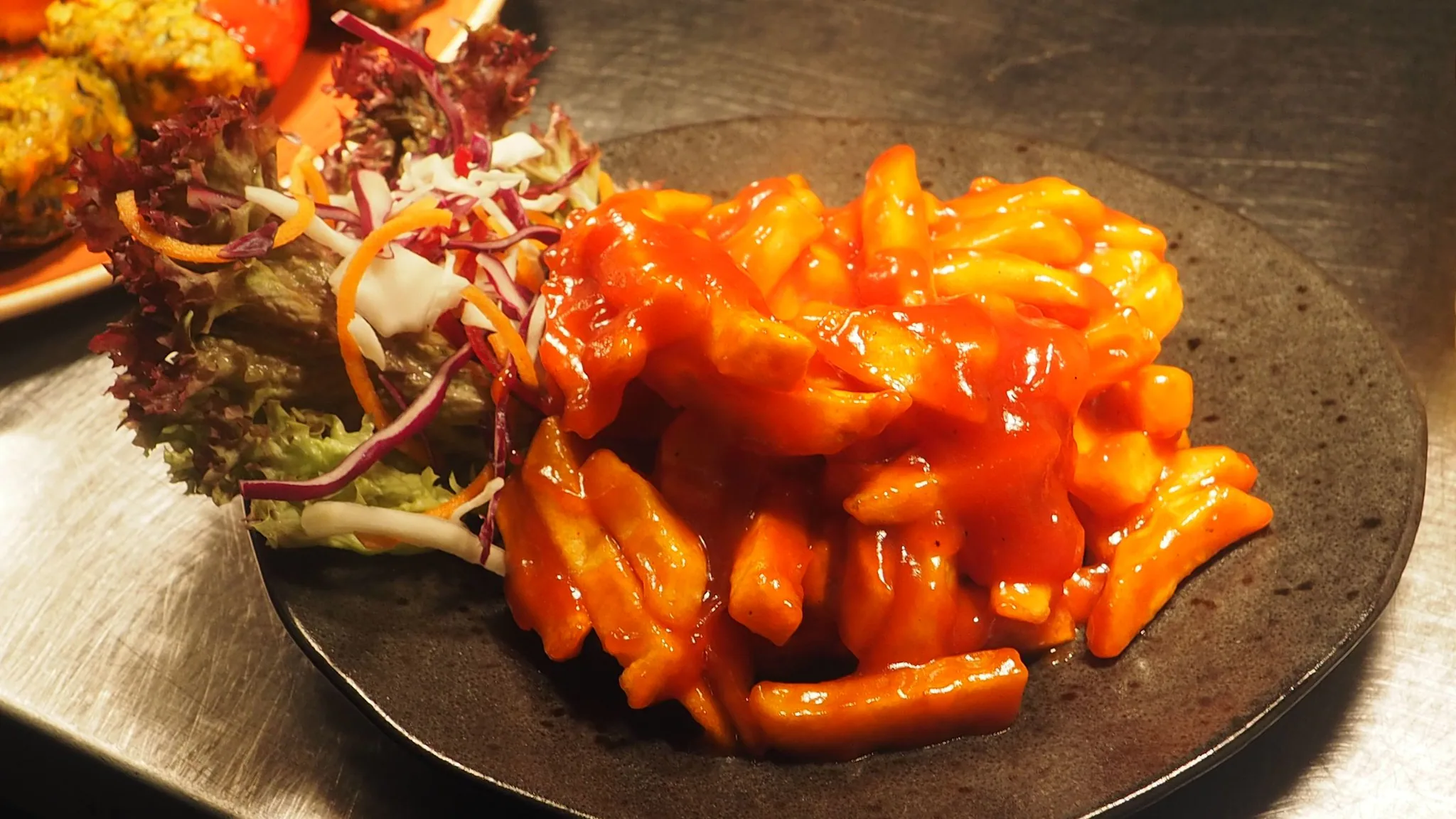
Chewy cylinder rice cakes simmered in a sweet, spicy red chilli sauce with spring onion — Korea's best-loved street snack.
Tteokbokki is a Korean street food from South Korea, ready in about 25 minutes and made with korean rice cakes (tteok) and red chilli flakes. It serves 3 and is rated easy to cook.
- Prep
- 10 min
- Cook
- 15 min
- Total
- 25 min
- Serves
- 3
- Level
- Easy
- Calories
- 473
Method
Step 1
Rinse the rice cakes and separate any that are stuck together.
- 2 min
Step 2
Bring the stock to the boil in a wide pan and stir in the chilli flakes (opens in a new tab), soy sauce (opens in a new tab), sugar (opens in a new tab), garlic (opens in a new tab) and gochujang (opens in a new tab) (if using).
- 3 min
- high heat
- Frying pan / skillet (opens in a new tab)
Step 3
Add the rice cakes, fish cakes (opens in a new tab) and cabbage (opens in a new tab) and simmer, stirring often so nothing sticks, until the rice cakes are soft and the sauce is thick and glossy.
- 10 min
- medium heat
Food safety: Fish cakes are sold cooked, but simmer them until piping hot right through.
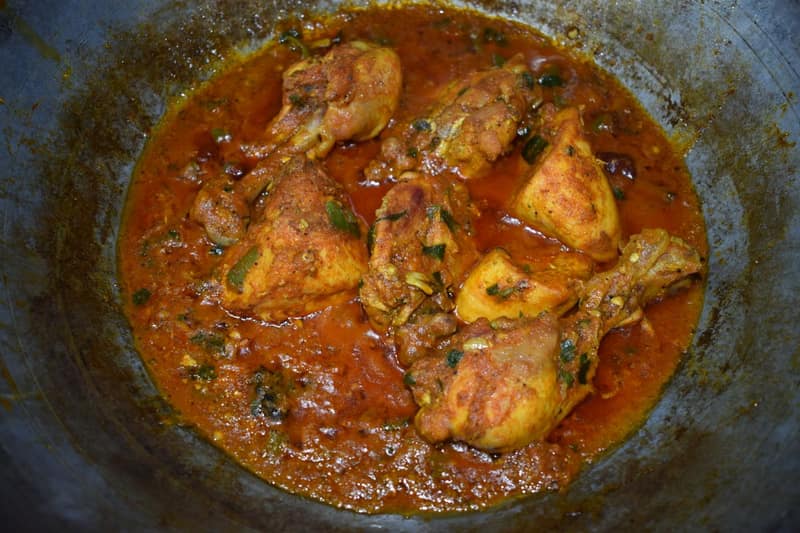
How it looks · Photo: Bachir Mamud on Pexels Step 4
Add the spring onion (opens in a new tab) and eggs (opens in a new tab) for the last minute, then sprinkle with sesame seeds (opens in a new tab) and serve hot.
- 1 min
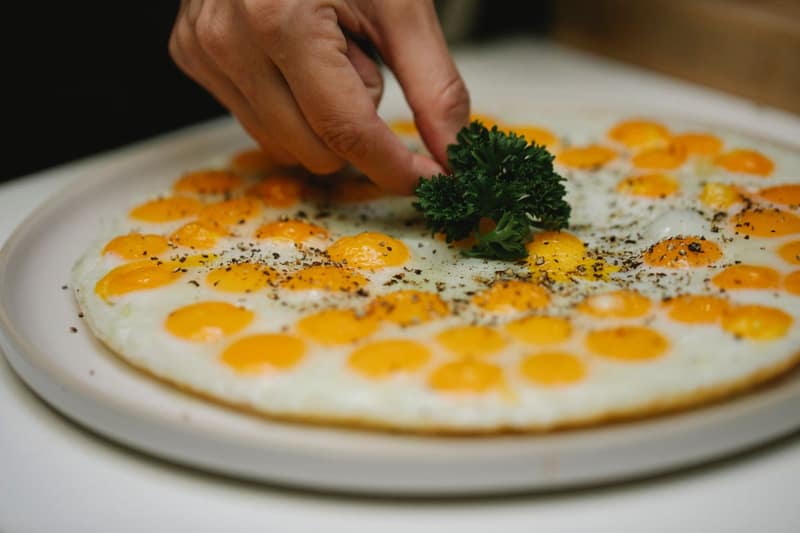
How it looks · Photo: Klaus Nielsen on Pexels
About this dish
- Origin
- South Korea · Well documentedMore food from South Korea
- Dish
- Lunch · Snack · Street food · Main courses
- Cooking method
- Simmered
- Taste
- spicy (chilli heat), sweet & spicy, savoury
- Diet
- Pescatarian · Dairy-free · No nut ingredientsWithout the optional extras: Egg-freeWorked out from the ingredients. How labels work
All labels
Pescatarian · Non-vegetarian · Flexitarian-friendly · Dairy-free · No nut ingredients · Alcohol-free · Pork-free · Beef-free · Low-fat · Calorie-conscious - Good for
- Street food · Budget-friendly · One-pan
- Cook more with
- Korean rice cakes (tteok) · Red chilli flakes · Fish stock · Soy sauce · Sugar · Garlic
Allergens
- Contains, can be adapted: Eggsfrom fish cake (eomuk / fish cake slices), egg
- Contains: Fishfrom fish stock, fish cake (eomuk / fish cake slices)
- May contain: Crustaceansfrom fish stock
- Contains, can be adapted: Wheatfrom soy sauce, gochujang, fish cake (eomuk / fish cake slices)
- Contains, can be adapted: Glutenfrom soy sauce, gochujang, fish cake (eomuk / fish cake slices)
- Contains: Soyfrom soy sauce, gochujang, fish cake (eomuk / fish cake slices)
- Contains, can be adapted: Sesamefrom sesame seeds
- May contain: Celeryfrom fish stock
Based on typical versions of these ingredients and not verified allergen-free. Brands differ and cross-contact happens, so always check labels. For severe allergies, follow your clinician’s advice.
Nutrition
473 kcal per serving
Estimated1 serving ≈ 425 g · recipe makes 3
Where the energy comes from
- Protein 16%
- Carbohydrate 66%
- Fat 18%
| Nutrient | Per serving | Per 100 g* |
|---|---|---|
| Energy | 473 kcal | 111 kcal |
| Protein | 19.3 g | 4.5 g |
| Carbohydrate | 79.3 g | 18.7 g |
| Net carbohydrate | 71.5 g | 16.8 g |
| Sugars | 14.9 g | 3.5 g |
| Added sugars | 8.4 g | 2 g |
| Fibre | 7.9 g | 1.9 g |
| Fat | 9.4 g | 2.2 g |
| Saturated fat | 1.9 g | 0.4 g |
| Trans fat | — | — |
| Cholesterol | 17 mg | 4 mg |
| Sodium | 1560 mg | 367 mg |
| Salt equivalent | 3.9 g | 0.9 g |
Vitamins & minerals per serving
- Potassium
- 616 mg
- Calcium
- 233 mg
- Iron
- 4.5 mg
- Magnesium
- 70 mg
- Vitamin A (RAE)
- 81 µg
- Vitamin C
- 19 mg
- Vitamin D
- —
- Vitamin B12
- 1.9 µg
- Folate (DFE)
- 81 µg
How these numbers were made
- Calculated from USDA FoodData Central (SR Legacy) per-100 g values and the listed quantities.
- *Per 100 g of combined raw ingredients; the cooked dish may weigh more or less.
- Optional ingredients are not included: gochujang, egg, sesame seeds.
- Korean rice cakes (tteok): Gluten-free white bread made with rice flour (FDC 174100) used as a stand-in for plain cylinder rice cakes; energy and carbohydrate are similar, fat is somewhat overestimated.
- Red chilli flakes: Ground cayenne (FDC 170932) used as a stand-in for dried chilli flakes such as pul biber or Aleppo pepper.
- Fish cake (eomuk / fish cake slices): Surimi used as a stand-in; ready-made fish cakes are surimi bound with starch or flour and are often fried, so a little higher in fat and carbohydrate.
- “—” means the value isn’t known for enough of the ingredients; it is never zero by default.
- Values are estimates for guidance, not for medical dosing. U.S. Department of Agriculture, Agricultural Research Service. FoodData Central, 2019. fdc.nal.usda.gov.
Good to know
Tips
- The sauce thickens from the rice-cake starch — add a splash of water if it gets too thick.
Common mistakes
- Walking away: rice cakes stick to the pan and burn quickly.
Serve with
- Serve with kimbap, or add fish cakes and ramen noodles (rabokki).
Storage
- Best eaten fresh; rice cakes harden in the fridge.
Reheating
- Reheat in a pan with a little water until soft again.
Variations
- Gungjung tteokbokki: The older royal-court style, stir-fried with beef, vegetables and soy sauce rather than chilli.
- Rabokki: Add instant ramen noodles to the sauce.
Original editorial recipe · FriendsPantry editorial · Not yet independently reviewed · Added · Updated
Recipe DNA
How this dish is built
Grouped by each ingredient’s role in the dish. Each band’s width is its share of the dish by weight. Choose a component to see what it does.
What the dish is built around
Main ingredient
- Korean rice cakes (tteok)400 g
- Fish cake (eomuk / fish cake slices), eomuk sheets, cut into triangles or strips150 g
- Cabbage, cut into pieces100 g
- Egg, hard-boiled and peeled (optional)2 piece · 100 g
Reviews & corrections
Reviews come from signed-in cooks and appear after a moderator checks them. We never show made-up ratings.
You might also like
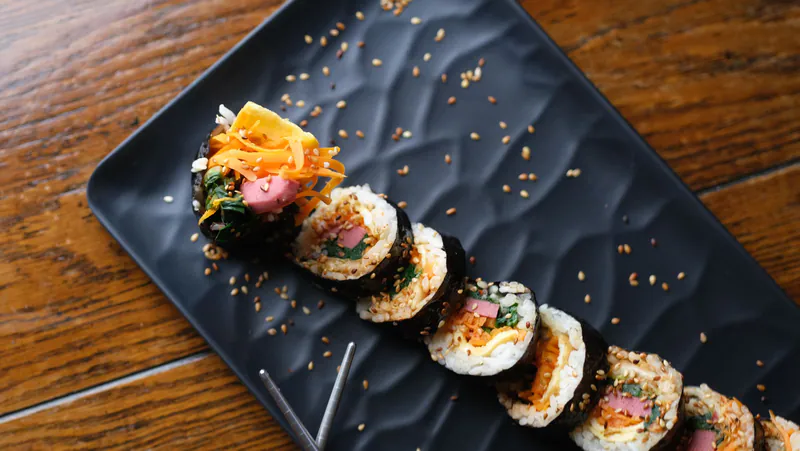
Kimbap
 Korean · 1 h · 384 kcal
Dakgalbi
Korean · 1 h 10 min · 349 kcal
Kimchi jjigae
Korean · 40 min · 426 kcal
Jeyuk bokkeum
Korean · 45 min · 409 kcal