
Kung pao chicken
Non-vegetarian
宫保鸡丁 · gōngbǎo jīdīng
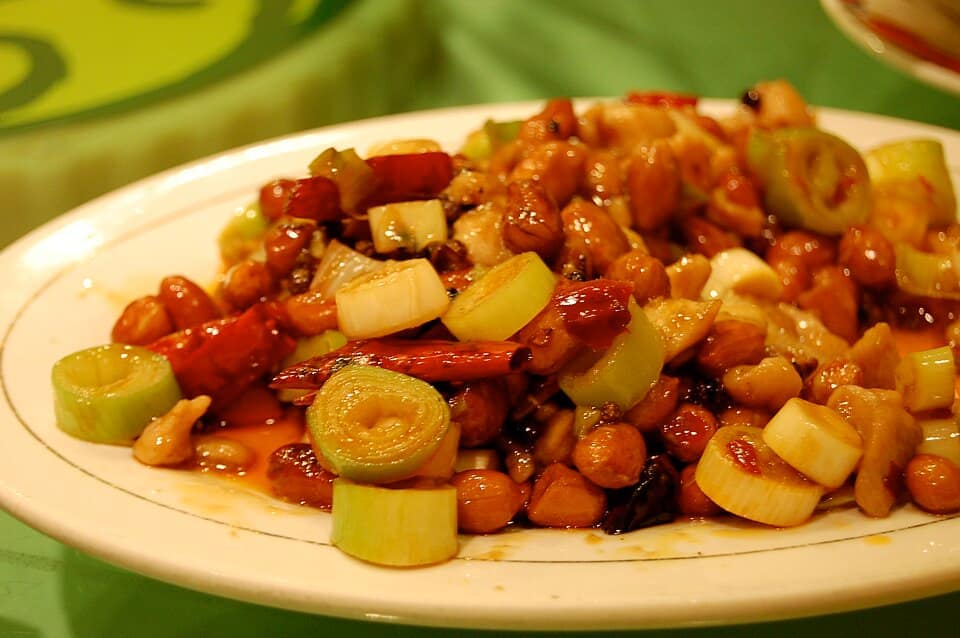
Diced chicken stir-fried with dried chillies, Sichuan pepper and peanuts in a sauce that is gently sweet, sour and savoury.
Kung pao chicken is a Sichuan main course from China, ready in about 35 minutes and made with chicken thigh, dried whole chillies and roasted peanuts. It serves 4 and is rated easy to cook.
- Prep
- 15 min
- Cook
- 10 min
- Rest
- 10 min
- Total
- 35 min
- Serves
- 4
- Level
- Easy
- Calories
- 341
Method
Step 1
Toss the chicken with the marinade soy sauce (opens in a new tab), wine and cornstarch (opens in a new tab) and leave for 10 minutes. Mix the sauce ingredients in a small bowl.
- 10 min
Food safety: Wash hands, boards and knives after handling raw chicken.
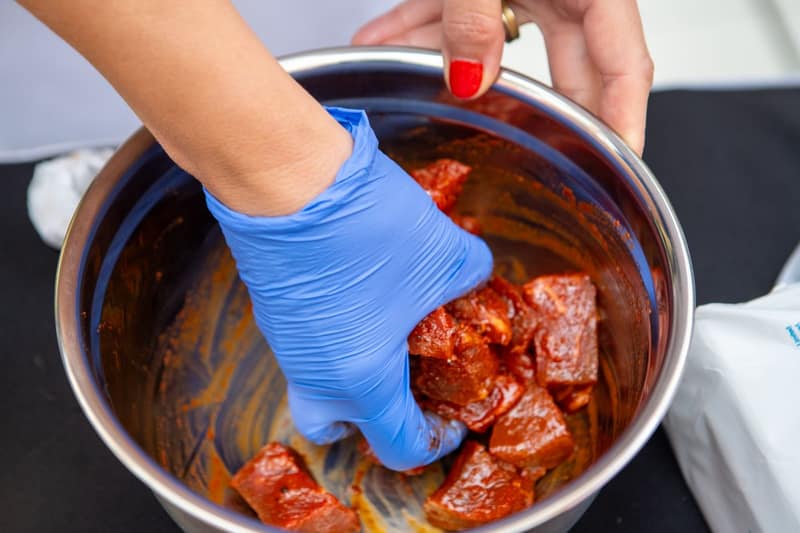
How it looks · Photo: Ip Photographer on Pexels Step 2
Heat the oil in a wok (opens in a new tab) over medium heat, add the chillies and Sichuan pepper and stir until the chillies darken slightly — do not let them blacken.
- 1 min
- medium heat
- Wok (opens in a new tab)
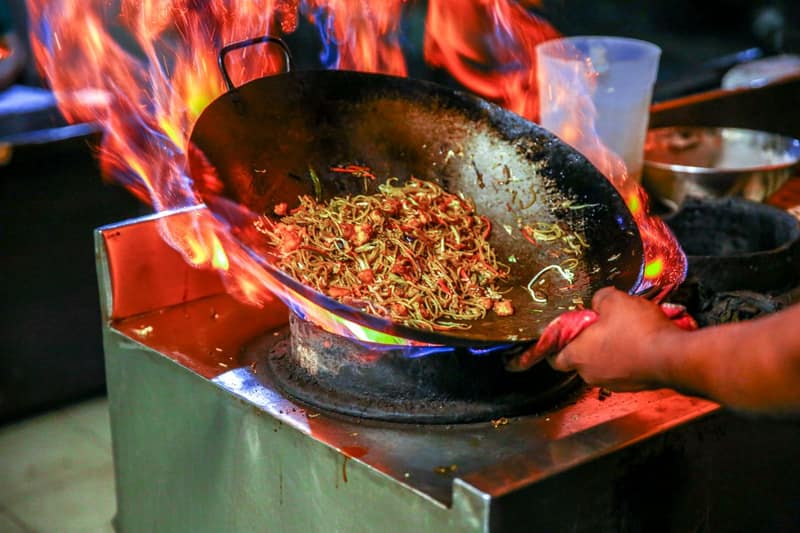
How it looks · Photo: Aesthos AR. Photography on Pexels Step 3
Turn the heat to high, add the chicken and stir-fry until it turns opaque, then add garlic (opens in a new tab), ginger and spring onion (opens in a new tab) and stir-fry until the chicken is cooked through.
- 5 min
- high heat
Food safety: Cook chicken until no pink remains (74 °C in the centre).
Step 4
Stir the sauce, pour it in and toss until it thickens and turns glossy. Stir in the peanuts and serve.
- 1 min
- high heat
About this dish
- Origin
- Sichuan, China · Commonly attributedUsually linked to Sichuan and Guizhou; the name is popularly tied to a Qing-dynasty official's title.Also popular in United States, United KingdomMore food from China
- Dish
- Lunch · Dinner · Main courses
- Cooking method
- Stir-fried, Marinated / cured
- Taste
- spicy (chilli heat), sweet & sour, nutty, savoury
- Diet
- Dairy-free · Low-carb · High-proteinWith the listed swaps: Vegan, Plant-based, Vegetarian (lacto-ovo), Eggetarian, Lacto-vegetarian, Ovo-vegetarian, Pescatarian, Flexitarian-friendlyWorked out from the ingredients. How labels work
All labels
Non-vegetarian · Dairy-free · Egg-free · Pork-free · Beef-free · Low-carb · High-protein · DASH-style · Calorie-conscious - Good for
- Everyday · One-pan
- Cook more with
- Chicken thigh · Dried whole chillies · Roasted peanuts · Soy sauce · Shaoxing wine · Cornstarch
- Techniques
- Stir-frying · Marinating · Curing
Allergens
- Contains, can be adapted: Peanutsfrom roasted peanuts
- Contains, can be adapted: Wheatfrom soy sauce, shaoxing wine, chinese black vinegar
- Contains, can be adapted: Glutenfrom soy sauce, shaoxing wine, chinese black vinegar
- Contains: Soyfrom soy sauce
Based on typical versions of these ingredients and not verified allergen-free. Brands differ and cross-contact happens, so always check labels. For severe allergies, follow your clinician’s advice.
Nutrition
341 kcal per serving
Estimated1 serving ≈ 191 g · recipe makes 4
Where the energy comes from
- Protein 32%
- Carbohydrate 17%
- Fat 51%
| Nutrient | Per serving | Per 100 g* |
|---|---|---|
| Energy | 341 kcal | 179 kcal |
| Protein | 27.6 g | 14.4 g |
| Carbohydrate | 14.3 g | 7.5 g |
| Net carbohydrate | 11.4 g | 6 g |
| Sugars | 4.9 g | 2.6 g |
| Added sugars | 3.1 g | 1.6 g |
| Fibre | 2.9 g | 1.5 g |
| Fat | 19.4 g | 10.2 g |
| Saturated fat | 3 g | 1.5 g |
| Trans fat | 0.1 g | 0 g |
| Cholesterol | 106 mg | 55 mg |
| Sodium | 581 mg | 304 mg |
| Salt equivalent | 1.5 g | 0.8 g |
Vitamins & minerals per serving
- Potassium
- 590 mg
- Calcium
- 41 mg
- Iron
- 2.1 mg
- Magnesium
- 70 mg
- Vitamin A (RAE)
- 66 µg
- Vitamin C
- 4 mg
- Vitamin D
- 0 µg
- Vitamin B12
- 0.7 µg
- Folate (DFE)
- 34 µg
How these numbers were made
- Calculated from USDA FoodData Central (SR Legacy) per-100 g values and the listed quantities.
- *Per 100 g of combined raw ingredients; the cooked dish may weigh more or less.
- Not counted (tiny amounts or “to taste”): sichuan peppercorns.
- Shaoxing wine: Sake (FDC 167723) used as a stand-in for Chinese rice cooking wine.
- Chinese black vinegar: Balsamic vinegar (FDC 172241) used as a stand-in for Chinkiang/Zhenjiang black rice vinegar; both are dark, aged and slightly sweet.
- “—” means the value isn’t known for enough of the ingredients; it is never zero by default.
- Values are estimates for guidance, not for medical dosing. U.S. Department of Agriculture, Agricultural Research Service. FoodData Central, 2019. fdc.nal.usda.gov.
Good to know
Tips
- Add the peanuts at the very end so they stay crunchy.
Common mistakes
- Burning the dried chillies makes the oil bitter — keep the heat moderate for that step.
Serve with
- Serve with steamed rice.
Storage
- Refrigerate for up to 2 days; the peanuts soften.
Reheating
- Stir-fry briefly in a hot pan.
Original editorial recipe · FriendsPantry editorial · Not yet independently reviewed · Added · Updated
Recipe DNA
How this dish is built
Built from the recipe’s own sections. Each band’s width is its share of the dish by weight. Choose a component to see what it does.
What the dish is built around
Main ingredient
- Chicken thigh, boneless, skinless, cut into 1.5 cm cubes450 g
- Roasted peanuts, unsalted60 g
Reviews & corrections
Reviews come from signed-in cooks and appear after a moderator checks them. We never show made-up ratings.
You might also like
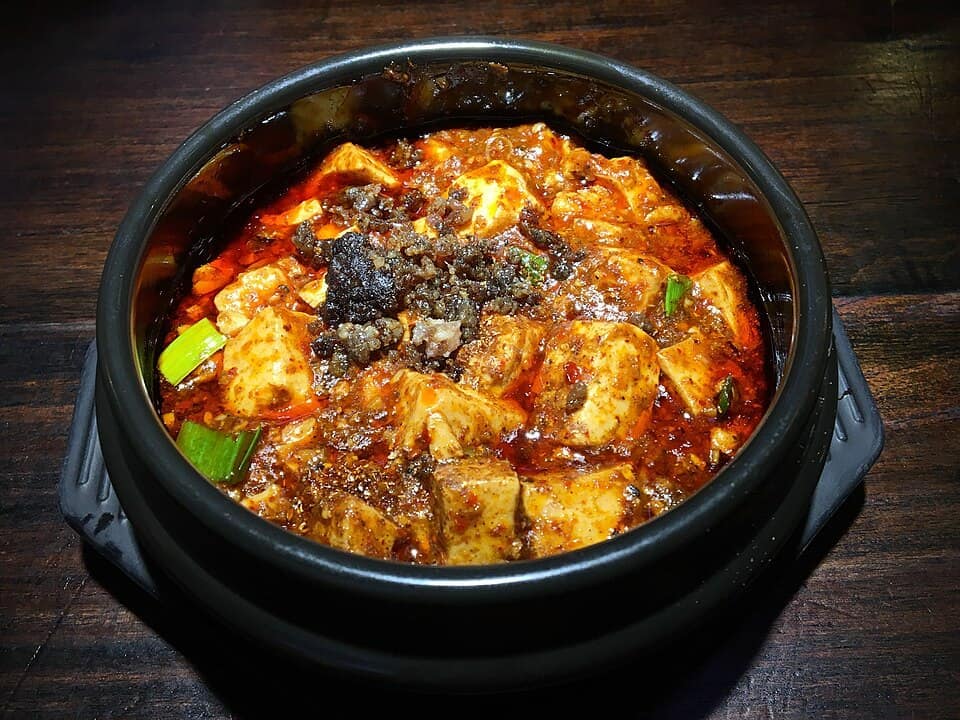
Mapo tofu
 Sichuan · 25 min · 253 kcal
Egg fried rice
Chinese · 13 min · 601 kcal · Contains egg
Chongqing chilli chicken
Sichuan · 45 min · 332 kcal
Fish-fragrant aubergine
Sichuan · 35 min · 269 kcal · Vegan