
Bibim guksu
Non-vegetarian
비빔국수 · bibim-guksu
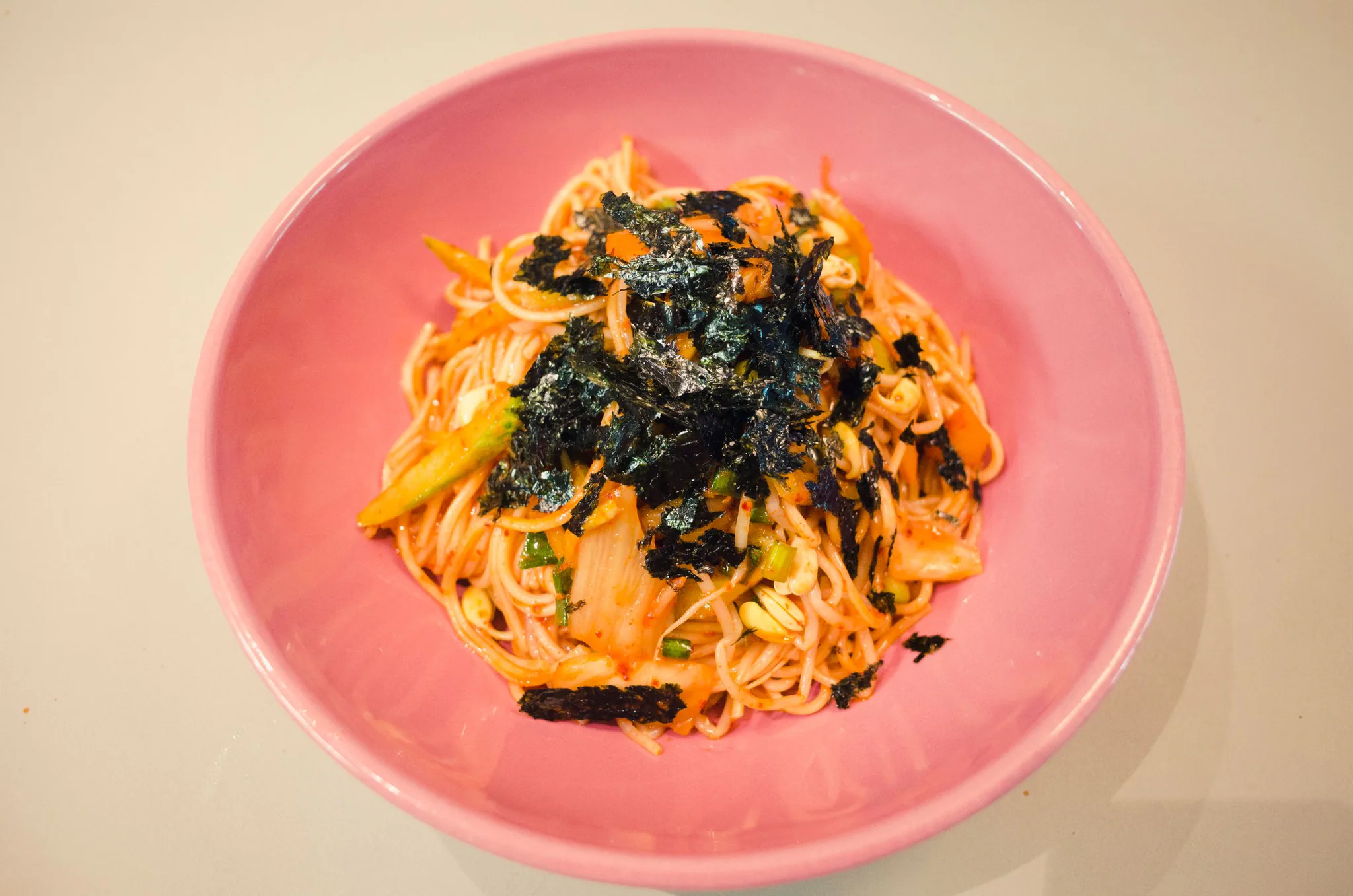
Thin wheat noodles rinsed until cold and tossed in a sweet, tangy, spicy chilli dressing with cucumber and sesame — a summer lunch in minutes.
Bibim guksu is a Korean noodle dish from South Korea, ready in about 15 minutes and made with udon noodles and red chilli flakes. It serves 2 and is rated beginner to cook.
- Prep
- 10 min
- Cook
- 5 min
- Total
- 15 min
- Serves
- 2
- Level
- Beginner
- Calories
- 527
Ingredients
For the sauce
Method
Step 1
Mix the chilli flakes (opens in a new tab), soy sauce (opens in a new tab), rice vinegar (opens in a new tab), sugar (opens in a new tab), sesame oil (opens in a new tab), garlic (opens in a new tab) and gochujang (opens in a new tab) (if using) into a smooth sauce.
- 3 min
Step 2
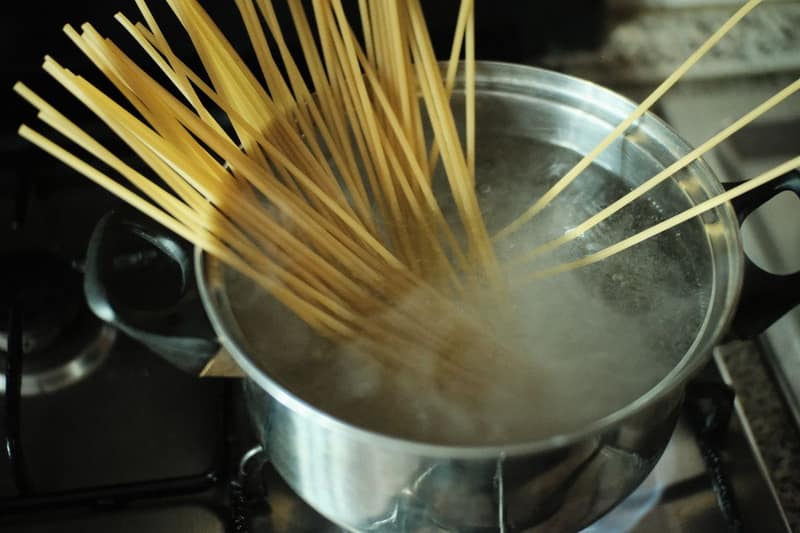
Cook the noodles in plenty of boiling water until just tender, about 3 minutes.
- 4 min
- high heat
- Stockpot / large pot (opens in a new tab)
How it looks · Photo: Gianpiero Ferraro on Pexels Step 3
Drain and rinse thoroughly under cold running water, rubbing to remove starch, then drain very well.
Step 4
Toss the noodles with the sauce and pile into bowls. Top with cucumber (opens in a new tab), kimchi (opens in a new tab), egg (opens in a new tab) and sesame seeds (opens in a new tab).
- 2 min
About this dish
- Origin
- South Korea · Well documentedMore food from South Korea
- Dish
- Lunch · Noodles · Main courses
- Cooking method
- Boiled, No-cook
- Taste
- spicy (chilli heat), sweet & sour, nutty, refreshing
- Diet
- Pescatarian · Dairy-free · No nut ingredientsWithout the optional extras: Vegan, Plant-based, Vegetarian (lacto-ovo), Eggetarian, Lacto-vegetarian, Ovo-vegetarian, Egg-freeWorked out from the ingredients. How labels work
All labels
Pescatarian · Non-vegetarian · Flexitarian-friendly · Dairy-free · No nut ingredients · Alcohol-free · Pork-free · Beef-free - Good for
- Everyday · Budget-friendly
- Cook more with
- Udon noodles · Red chilli flakes · Soy sauce · Rice vinegar · Sugar · Toasted sesame oil
- Techniques
- Boiling
Allergens
- Contains, can be adapted: Eggsfrom egg
- Contains, can be adapted: Fishfrom kimchi
- Contains, can be adapted: Crustaceansfrom kimchi
- Contains: Wheatfrom udon noodles, soy sauce, gochujang
- Contains: Glutenfrom udon noodles, soy sauce, gochujang
- Contains: Soyfrom soy sauce, gochujang
- Contains: Sesamefrom toasted sesame oil, sesame seeds
Based on typical versions of these ingredients and not verified allergen-free. Brands differ and cross-contact happens, so always check labels. For severe allergies, follow your clinician’s advice.
Nutrition
527 kcal per serving
Estimated1 serving ≈ 243 g · recipe makes 2
Where the energy comes from
- Protein 11%
- Carbohydrate 71%
- Fat 18%
| Nutrient | Per serving | Per 100 g* |
|---|---|---|
| Energy | 527 kcal | 217 kcal |
| Protein | 14.5 g | 6 g |
| Carbohydrate | 93.5 g | 38.5 g |
| Net carbohydrate | 87.4 g | 36 g |
| Sugars | — | — |
| Added sugars | 12.6 g | 5.2 g |
| Fibre | 6.1 g | 2.5 g |
| Fat | 10.5 g | 4.3 g |
| Saturated fat | 1.5 g | 0.6 g |
| Trans fat | — | — |
| Cholesterol | 0 mg | 0 mg |
| Sodium | 2778 mg | 1144 mg |
| Salt equivalent | 6.9 g | 2.9 g |
Vitamins & minerals per serving
- Potassium
- 435 mg
- Calcium
- 94 mg
- Iron
- 2.7 mg
- Magnesium
- 71 mg
- Vitamin A (RAE)
- 62 µg
- Vitamin C
- 5 mg
- Vitamin D
- 0 µg
- Vitamin B12
- 0 µg
- Folate (DFE)
- 29 µg
How these numbers were made
- Calculated from USDA FoodData Central (SR Legacy) per-100 g values and the listed quantities.
- *Per 100 g of combined raw ingredients; the cooked dish may weigh more or less.
- Optional ingredients are not included: gochujang, kimchi, egg.
- Udon noodles: Dry somen (FDC 168908) used as a stand-in; both are plain Japanese wheat noodles.
- Red chilli flakes: Ground cayenne (FDC 170932) used as a stand-in for dried chilli flakes such as pul biber or Aleppo pepper.
- Rice vinegar: Distilled vinegar (FDC 172237) used as a stand-in for unseasoned rice vinegar.
- “—” means the value isn’t known for enough of the ingredients; it is never zero by default.
- Values are estimates for guidance, not for medical dosing. U.S. Department of Agriculture, Agricultural Research Service. FoodData Central, 2019. fdc.nal.usda.gov.
Good to know
Tips
- Shake the noodles really dry or the sauce will be diluted.
Common mistakes
- Under-rinsing the noodles — leftover starch makes them clump and sticky.
- Dressing the noodles long before serving; they absorb the sauce and go soft.
Serve with
- Serve with grilled meat or a mild soup.
Food safety
- Hard-boil the optional egg fully (10 minutes). Cooked noodles should be eaten within 2 hours or refrigerated.
Storage
- Best eaten immediately; the sauce keeps for a week in the fridge.
Variations
- Bibim naengmyeon: Chewy buckwheat-and-starch naengmyeon noodles with the same style of sauce.
Original editorial recipe · FriendsPantry editorial · Not yet independently reviewed · Added · Updated
Recipe DNA
How this dish is built
Built from the recipe’s own sections. Each band’s width is its share of the dish by weight. Choose a component to see what it does.
Reviews & corrections
Reviews come from signed-in cooks and appear after a moderator checks them. We never show made-up ratings.
You might also like
Zaru soba
 Japanese · 45 min · 374 kcal
Bibimbap
 Korean · 1 h · 657 kcal
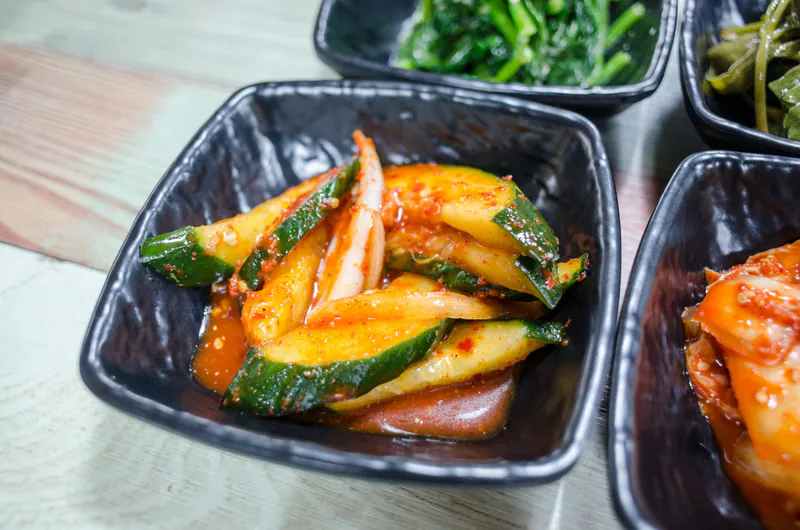
Oi muchim (spicy cucumber salad)
Korean · 15 min · 49 kcal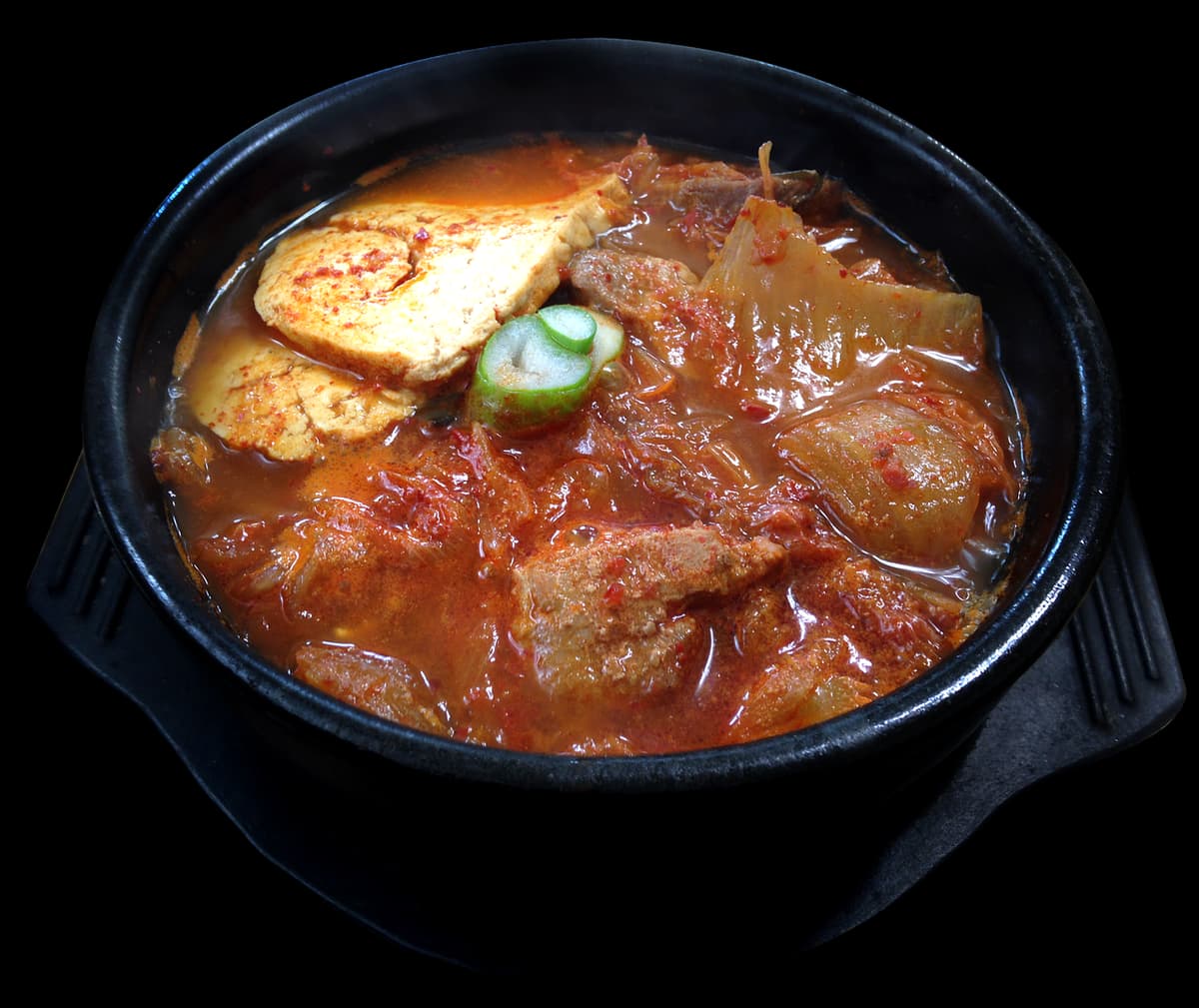
Kimchi jjigae
Korean · 40 min · 426 kcal