
Char kway teow
Non-vegetarian
炒粿条 · chhá-kóe-tiâu
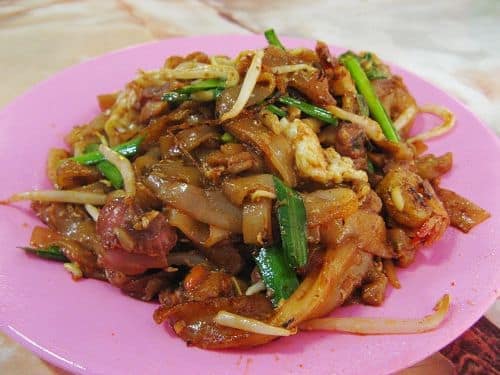
Flat rice noodles fried in a blazing wok with prawns, egg, bean sprouts and chives in dark soy and chilli paste — the smoky hawker classic of Penang and Singapore.
Char kway teow is a Malaysian noodle dish, ready in about 35 minutes and made with rice noodles, prawns / shrimp and bean sprouts. It serves 2 and is rated intermediate to cook.
- Prep
- 25 min
- Cook
- 10 min
- Total
- 35 min
- Serves
- 2
- Level
- Intermediate
- Calories
- 886
Ingredients
For the chilli paste
For the sauce
For frying
Method
Step 1
Blend the drained chillies and garlic (opens in a new tab) with the oil to a paste, then fry it gently for 2 minutes until fragrant. Mix the soy sauce (opens in a new tab), sweet soy and fish sauce (opens in a new tab).
- 8 min
- low heat
- Blender (opens in a new tab)
Step 2
Soak the noodles until pliable but firm, then drain well.
- 15 min
Step 3
Heat the lard (opens in a new tab) in a wok (opens in a new tab) over the highest heat until smoking. Fry the garlic (opens in a new tab) for a few seconds, then the Chinese sausage (opens in a new tab) if using, then the prawns (opens in a new tab), fish cake (opens in a new tab) (and cockles) until the prawns are just pink.
- 2 min
- high heat
- Wok (opens in a new tab)
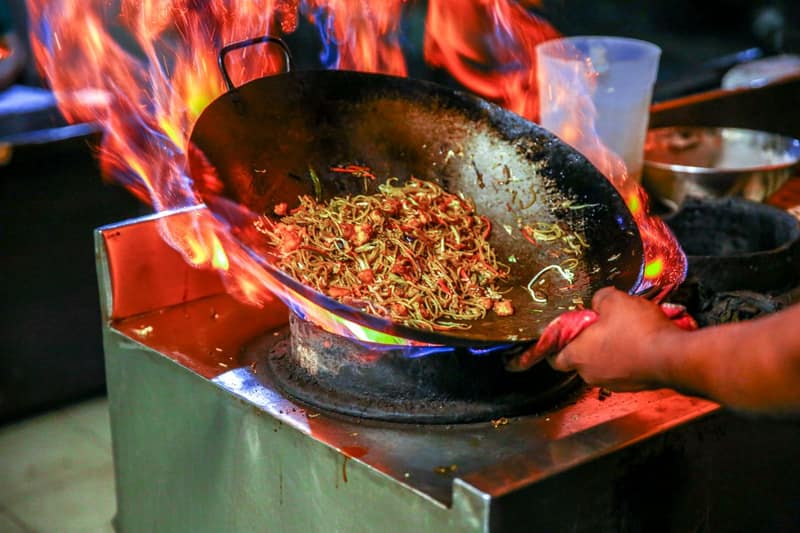
How it looks · Photo: Aesthos AR. Photography on Pexels Step 4
Add the noodles, the sauce and 1–2 teaspoons of chilli paste. Toss and let the noodles sit briefly against the wok (opens in a new tab) to char.
- 3 min
- high heat
Step 5
Push the noodles aside, crack in the eggs (opens in a new tab), let them set slightly, then toss through. Add the bean sprouts (opens in a new tab) and chives (opens in a new tab) and toss for 30 seconds. Serve at once.
- 2 min
- high heat
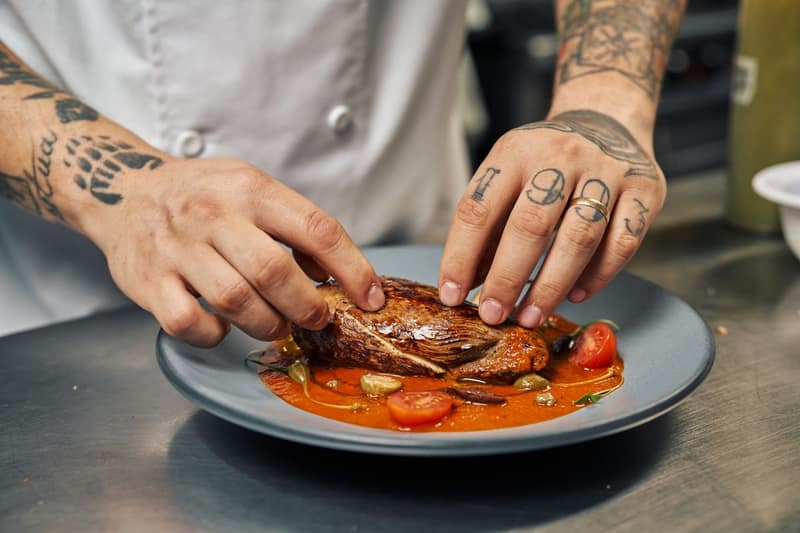
How it looks · Photo: Willians Huerta on Pexels
About this dish
- Origin
- Not attributed to one place · Origin disputedA Teochew Chinese hawker dish strongly associated with both Penang (Malaysia) and Singapore.Also popular in Malaysia, Singapore
- Dish
- Lunch · Dinner · Noodles · Main courses · Street food
- Cooking method
- Stir-fried
- Taste
- smoky, savoury, spicy (chilli heat), sweet & savoury
- Diet
- Dairy-free · No nut ingredients · High-proteinWithout the optional extras: Alcohol-freeWith the listed swaps: Pescatarian, Pork-freeWorked out from the ingredients. How labels work
All labels
Non-vegetarian · Dairy-free · No nut ingredients · Beef-free · High-protein - Good for
- Street food · One-pan
- Cook more with
- Rice noodles · Prawns / shrimp · Bean sprouts · Dried whole chillies · Garlic · Soy sauce
- Techniques
- Stir-frying
Allergens
- Contains: Eggsfrom fish cake (eomuk / fish cake slices), egg
- Contains: Fishfrom fish sauce, fish cake (eomuk / fish cake slices)
- Contains: Crustaceansfrom fish sauce, prawns / shrimp
- Contains, can be adapted: Molluscsfrom clams
- Contains: Wheatfrom soy sauce, kecap manis (sweet soy sauce), chinese sausage (lap cheong), fish cake (eomuk / fish cake slices)
- Contains: Glutenfrom soy sauce, kecap manis (sweet soy sauce), chinese sausage (lap cheong), fish cake (eomuk / fish cake slices)
- Contains: Soyfrom soy sauce, kecap manis (sweet soy sauce), chinese sausage (lap cheong), fish cake (eomuk / fish cake slices)
- May contain: Sulphitesfrom chinese sausage (lap cheong)
Based on typical versions of these ingredients and not verified allergen-free. Brands differ and cross-contact happens, so always check labels. For severe allergies, follow your clinician’s advice.
Nutrition
886 kcal per serving
Estimated1 serving ≈ 431 g · recipe makes 2
Where the energy comes from
- Protein 18%
- Carbohydrate 54%
- Fat 28%
| Nutrient | Per serving | Per 100 g* |
|---|---|---|
| Energy | 886 kcal | 206 kcal |
| Protein | 39.6 g | 9.2 g |
| Carbohydrate | 119.2 g | 27.7 g |
| Net carbohydrate | — | — |
| Sugars | — | — |
| Added sugars | 7.2 g | 1.7 g |
| Fibre | — | — |
| Fat | 27 g | 6.3 g |
| Saturated fat | 7.6 g | 1.8 g |
| Trans fat | — | — |
| Cholesterol | 360 mg | 83 mg |
| Sodium | 1592 mg | 370 mg |
| Salt equivalent | 4 g | 0.9 g |
Vitamins & minerals per serving
- Potassium
- 793 mg
- Calcium
- 170 mg
- Iron
- 4.4 mg
- Magnesium
- 105 mg
- Vitamin A (RAE)
- —
- Vitamin C
- —
- Vitamin D
- —
- Vitamin B12
- —
- Folate (DFE)
- —
How these numbers were made
- Calculated from USDA FoodData Central (SR Legacy) per-100 g values and the listed quantities.
- *Per 100 g of combined raw ingredients; the cooked dish may weigh more or less.
- Optional ingredients are not included: chinese sausage (lap cheong), fish cake (eomuk / fish cake slices), clams.
- Kecap manis (sweet soy sauce): Hoisin sauce (FDC 172886) used as a stand-in for this thick palm-sugar-sweetened soy sauce; sugar and sodium differ by brand.
- “—” means the value isn’t known for enough of the ingredients; it is never zero by default.
- Values are estimates for guidance, not for medical dosing. U.S. Department of Agriculture, Agricultural Research Service. FoodData Central, 2019. fdc.nal.usda.gov.
Good to know
Tips
- Cook one or two portions at a time to keep the wok smoking hot.
- Slices of Chinese sweet sausage (lap cheong) are a classic addition — fry them with the garlic.
Common mistakes
- Over-stirring breaks up the noodles.
Serve with
- Serve on a banana leaf with extra chilli paste and a squeeze of lime.
Food safety
- Cook prawns and cockles until opaque; cockles eaten barely cooked carry a risk for vulnerable people, so cook them through.
- Cooked rice noodles should be eaten straight away or refrigerated within 1 hour.
Storage
- Best eaten immediately.
Variations
- Singapore-style (Singapore): Sweeter, with more dark soy, and often with fish cake and Chinese sausage.
Original editorial recipe · FriendsPantry editorial · Not yet independently reviewed · Added · Updated
Recipe DNA
How this dish is built
Built from the recipe’s own sections. Each band’s width is its share of the dish by weight. Choose a component to see what it does.
What the dish is built around
Main ingredient
- Rice noodles, dried flat rice noodles, soaked until pliable250 g
Reviews & corrections
Reviews come from signed-in cooks and appear after a moderator checks them. We never show made-up ratings.
You might also like
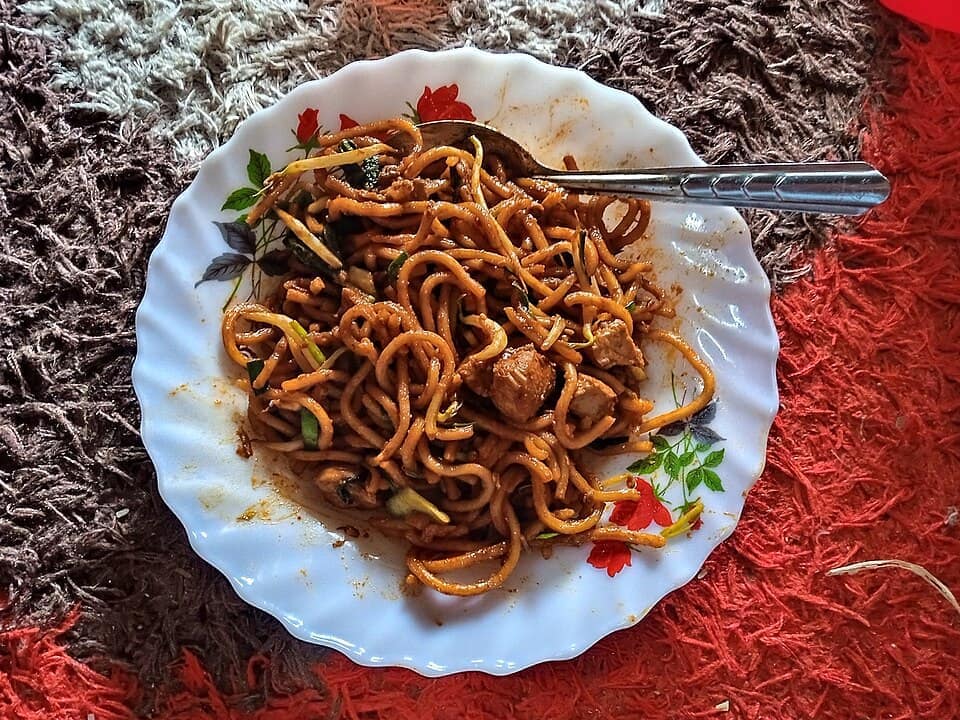
Mee goreng mamak
 Malaysian · 32 min · 714 kcal
Curry laksa
Malaysian · 1 h 5 min · 950 kcalHokkien prawn mee
 Singaporean · 1 h 15 min · 775 kcal
Nasi lemak
Malaysian · 1 h 25 min · 963 kcal