
Chinese dumpling dipping sauce
Vegetarian
饺子蘸料 · jiǎozi zhànliào
Light soy sauce and Chinkiang black vinegar sharpened with fresh garlic and finished with chilli oil and a few drops of sesame oil. The everyday dip on the table wherever jiaozi are eaten.
Chinese dumpling dipping sauce is a Chinese dip from China, ready in about 15 minutes and made with soy sauce and chinese black vinegar. It serves 4 and is rated beginner to cook.
No licensed photograph of this dish yet.
- Prep
- 5 min
- Cook
- 0 min
- Rest
- 10 min
- Total
- 15 min
- Serves
- 4
- Level
- Beginner
- Calories
- 56
Method
Step 1
Grate the garlic (opens in a new tab); cut the ginger into needle-fine shreds and slice the spring onion (opens in a new tab) if using.
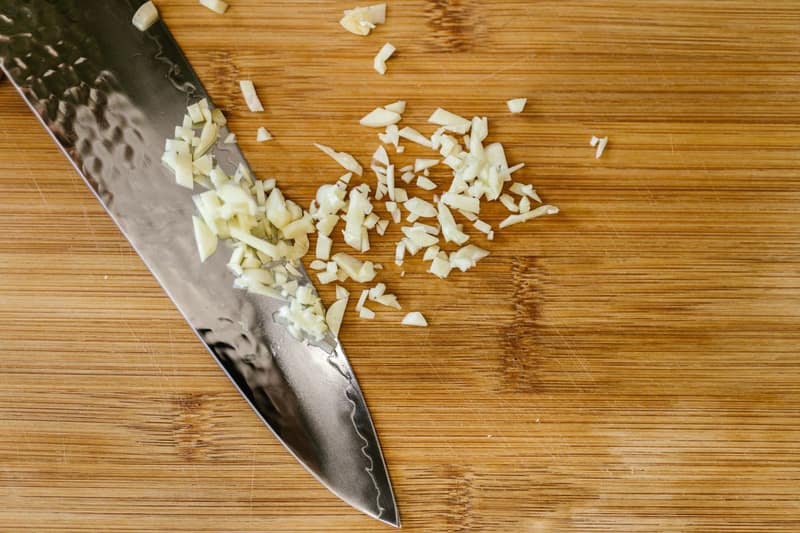
How it looks · Photo: RDNE Stock project on Pexels Step 2
Stir the sugar (opens in a new tab) into the soy sauce (opens in a new tab) and black vinegar until dissolved, then add the garlic (opens in a new tab) and leave for 10 minutes so the garlic mellows into the liquid.
Step 3
Just before serving, spoon in the chilli oil (opens in a new tab) and its sediment and the sesame oil (opens in a new tab), and scatter over the ginger and spring onion (opens in a new tab). Divide among small dishes so everyone can dip.
- 1 min
How it looks · Photo: Klaus Nielsen on Pexels
About this dish
- Origin
- Northern China, China · Commonly attributedEvery household has its own proportions. This is a widely used northern-style mix; Shanghai and Japanese gyoza versions are given as variations.Also popular in Taiwan, Japan, South KoreaMore food from China
- Dish
- Lunch · Dinner · Snack · Dips & spreads · Sauces
- Cooking method
- No-cook
- Taste
- salty, sour, umami, garlicky, spicy (chilli heat)
- Diet
- Vegan · Dairy-freeWorked out from the ingredients. How labels work
All labels
Vegan · Plant-based · Vegetarian (lacto-ovo) · Eggetarian · Lacto-vegetarian · Ovo-vegetarian · Pescatarian · Flexitarian-friendly · Dairy-free · Egg-free · Alcohol-free · Pork-free · Beef-free - Good for
- Everyday · Budget-friendly
- Cook more with
- Soy sauce · Chinese black vinegar · Sugar · Garlic · Chilli oil · Toasted sesame oil
Allergens
- May contain: Peanutsfrom chilli oil
- Contains: Wheatfrom soy sauce, chinese black vinegar
- Contains: Glutenfrom soy sauce, chinese black vinegar
- Contains: Soyfrom soy sauce, chilli oil
- Contains: Sesamefrom chilli oil, toasted sesame oil
Based on typical versions of these ingredients and not verified allergen-free. Brands differ and cross-contact happens, so always check labels. For severe allergies, follow your clinician’s advice.
Nutrition
56 kcal per serving
Estimated1 serving ≈ 26 g · recipe makes 4
Where the energy comes from
- Protein 9%
- Carbohydrate 23%
- Fat 68%
| Nutrient | Per serving | Per 100 g |
|---|---|---|
| Energy | 56 kcal | 212 kcal |
| Protein | 1.2 g | 4.5 g |
| Carbohydrate | 3.2 g | 12.3 g |
| Net carbohydrate | — | — |
| Sugars | 2 g | 7.6 g |
| Added sugars | 0.8 g | 2.9 g |
| Fibre | — | — |
| Fat | 4.2 g | 16.1 g |
| Saturated fat | 0.4 g | 1.4 g |
| Trans fat | — | — |
| Cholesterol | — | — |
| Sodium | 713 mg | 2715 mg |
| Salt equivalent | 1.8 g | 6.8 g |
Vitamins & minerals per serving
- Potassium
- 71 mg
- Calcium
- 9 mg
- Iron
- 0.3 mg
- Magnesium
- 11 mg
- Vitamin A (RAE)
- 0 µg
- Vitamin C
- 0 mg
- Vitamin D
- —
- Vitamin B12
- —
- Folate (DFE)
- —
How these numbers were made
- Calculated from USDA FoodData Central (SR Legacy) per-100 g values and the listed quantities.
- Optional ingredients are not included: fresh ginger, spring onion.
- Chinese black vinegar: Balsamic vinegar (FDC 172241) used as a stand-in for Chinkiang/Zhenjiang black rice vinegar; both are dark, aged and slightly sweet.
- Chilli oil: Neutral vegetable oil (FDC 172336) used as a stand-in; the chilli solids add little energy.
- “—” means the value isn’t known for enough of the ingredients; it is never zero by default.
- Values are estimates for guidance, not for medical dosing. U.S. Department of Agriculture, Agricultural Research Service. FoodData Central, 2019. fdc.nal.usda.gov.
Good to know
Tips
- Start with equal parts soy and vinegar and adjust; northerners often like it more vinegary.
Common mistakes
- Using dark soy sauce, which is too thick and sweet for dipping.
Serve with
- Boiled or pan-fried jiaozi and gyoza.
- Wontons, potstickers and steamed buns.
- Cold noodles and smacked cucumber.
Storage
- Best the same day; without the garlic, the soy-vinegar base keeps a week in the fridge.
Variations
- Shanghai xiaolongbao dip (China): Only black vinegar with fine ginger shreds, no soy.
- Gyoza dip (Japan): Soy sauce and rice vinegar 1:1 with a few drops of rayu (Japanese chilli oil).
- Chojang (South Korea): Soy sauce, vinegar and gochugaru with sesame seeds, for Korean mandu.
Original editorial recipe · FriendsPantry editorial · Not yet independently reviewed · Added · Updated
Goes with
Recipe DNA
How this dish is built
Grouped by each ingredient’s role in the dish. Each band’s width is its share of the dish by weight. Choose a component to see what it does.
Onion, garlic, ginger and friends
Aromatics
- Garlic, 1 large clove, finely grated or pounded6 g
- Fresh ginger, peeled and cut into needle-fine julienne (optional)5 g
- Spring onion, green part, finely sliced (optional)5 g
Make it milder, swap ingredients for your diet, change the batch size or thickness — the original stays as it is.
Customise in Sauce & DrizzleReviews & corrections
Reviews come from signed-in cooks and appear after a moderator checks them. We never show made-up ratings.
You might also like
Sichuan chilli oil (hong you)
 Sichuan · 12 h 25 min · 132 kcal · Vegan
Chilli crisp
Chinese · 1 h 15 min · 136 kcal · VeganGinger-scallion sauce
Cantonese · 24 min · 130 kcal · VeganPonzu
 Japanese · 24 h 5 min · 16 kcal