
Yangnyeom chicken sauce
Vegetarian
양념치킨 소스 · yangnyeom chikin soseu
Gochujang, ketchup and syrup cooked with garlic and soy into a sticky, sweet-spicy glaze that is tossed with double-fried chicken.
Yangnyeom chicken sauce is a Korean sauce from South Korea, ready in about 10 minutes and made with gochujang and tomato ketchup. It serves 4 and is rated beginner to cook.
No licensed photograph of this dish yet.
- Prep
- 5 min
- Cook
- 5 min
- Total
- 10 min
- Serves
- 4
- Level
- Beginner
- Calories
- 136
Method
Step 1
Mince the garlic (opens in a new tab) finely. Mix the gochujang (opens in a new tab), ketchup (opens in a new tab), syrup, sugar (opens in a new tab), soy sauce (opens in a new tab), chilli flakes (opens in a new tab) and water in a bowl.
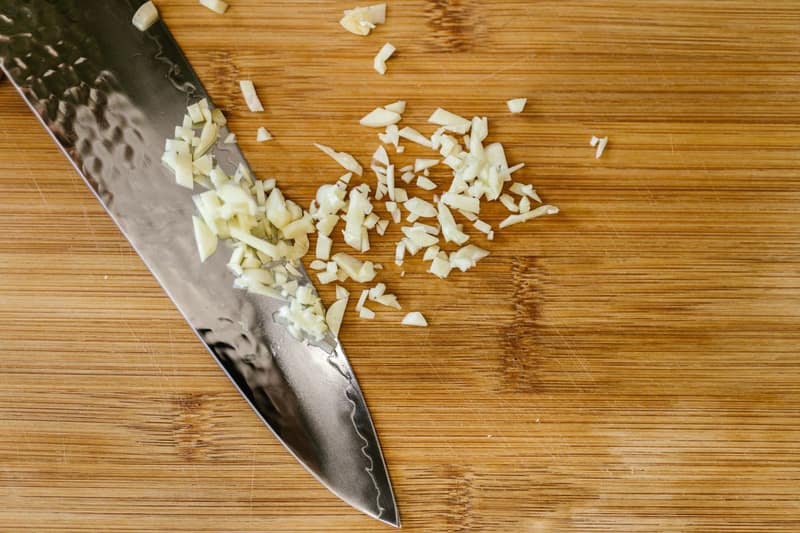
How it looks · Photo: RDNE Stock project on Pexels Step 2
Warm the oil in a saucepan (opens in a new tab) or wok over low heat and fry the garlic (opens in a new tab) for 30–60 seconds until fragrant but not coloured.
- 1 min
- low heat
- Saucepan (opens in a new tab)
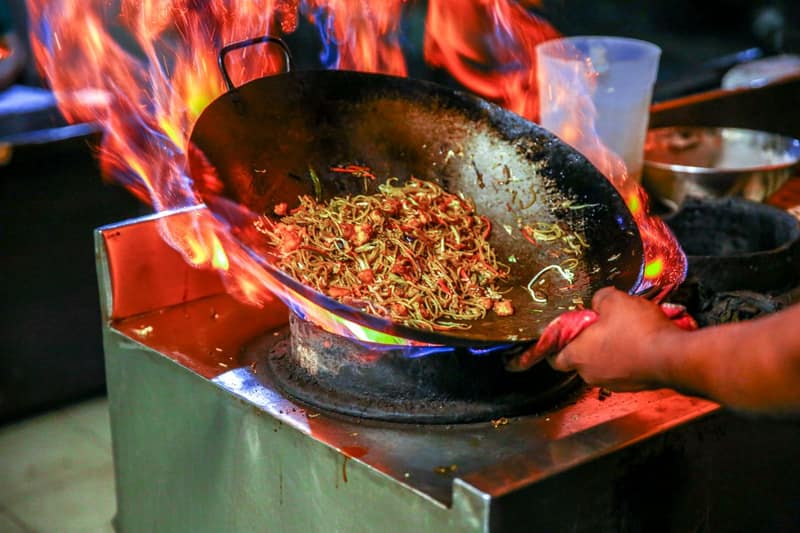
How it looks · Photo: Aesthos AR. Photography on Pexels Step 3
Add the sauce mixture and simmer, stirring, for 2–3 minutes until it bubbles all over and turns thick and glossy, leaving a trail when you drag a spoon through it.
- 3 min
- medium-low heat
- Wooden spoon (opens in a new tab)
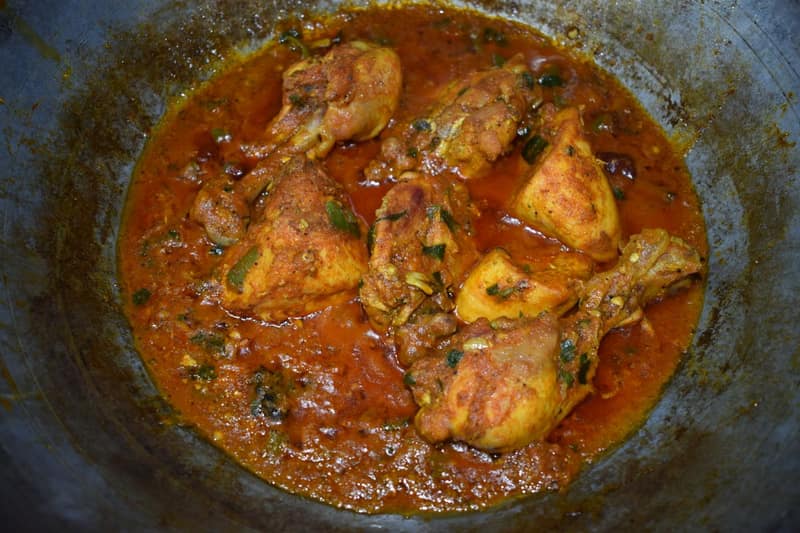
How it looks · Photo: Bachir Mamud on Pexels Step 4
Take off the heat. Add hot, freshly fried chicken and toss quickly until every piece is evenly coated, then scatter with crushed peanuts.
- 1 min
How it looks · Photo: Klaus Nielsen on Pexels
About this dish
- Origin
- South Korea · Commonly attributedYangnyeom chicken spread through Korea in the 1980s; Yun Jong-gye of Mexicana Chicken in Daegu is often credited with popularising the sauce. Proportions vary widely; this is a typical home version.Also popular in United StatesMore food from South Korea
- Dish
- Dinner · Snack · Sauces
- Cooking method
- Simmered
- Taste
- sweet & spicy, garlicky, umami
- Diet
- Vegan · Dairy-freeWithout the optional extras: No nut ingredientsWorked out from the ingredients. How labels work
All labels
Vegan · Plant-based · Vegetarian (lacto-ovo) · Eggetarian · Lacto-vegetarian · Ovo-vegetarian · Pescatarian · Flexitarian-friendly · Dairy-free · Egg-free · Alcohol-free · Pork-free · Beef-free - Good for
- Child-friendly
- Cook more with
- Gochujang · Tomato ketchup · Light corn syrup · Sugar · Soy sauce · Garlic
- Techniques
- Simmering
Allergens
- Contains, can be adapted: Peanutsfrom roasted peanuts
- Contains: Wheatfrom gochujang, soy sauce
- Contains: Glutenfrom gochujang, soy sauce
- Contains: Soyfrom gochujang, soy sauce
- May contain: Mustardfrom tomato ketchup
- May contain: Celeryfrom tomato ketchup
Based on typical versions of these ingredients and not verified allergen-free. Brands differ and cross-contact happens, so always check labels. For severe allergies, follow your clinician’s advice.
Nutrition
136 kcal per serving
Estimated1 serving ≈ 63 g · recipe makes 4
Where the energy comes from
- Protein 5%
- Carbohydrate 76%
- Fat 19%
| Nutrient | Per serving | Per 100 g |
|---|---|---|
| Energy | 136 kcal | 218 kcal |
| Protein | 2 g | 3.2 g |
| Carbohydrate | 27.7 g | 44.4 g |
| Net carbohydrate | 27 g | 43.3 g |
| Sugars | 23.5 g | 37.6 g |
| Added sugars | — | — |
| Fibre | 0.7 g | 1.1 g |
| Fat | 3 g | 4.8 g |
| Saturated fat | 0.3 g | 0.4 g |
| Trans fat | — | — |
| Cholesterol | 0 mg | 0 mg |
| Sodium | 759 mg | 1215 mg |
| Salt equivalent | 1.9 g | 3 g |
Vitamins & minerals per serving
- Potassium
- 97 mg
- Calcium
- 20 mg
- Iron
- 0.4 mg
- Magnesium
- 11 mg
- Vitamin A (RAE)
- 4 µg
- Vitamin C
- 2 mg
- Vitamin D
- 0 µg
- Vitamin B12
- 0 µg
- Folate (DFE)
- 4 µg
How these numbers were made
- Calculated from USDA FoodData Central (SR Legacy) per-100 g values and the listed quantities.
- Optional ingredients are not included: red chilli flakes, roasted peanuts.
- Gochujang: Miso (FDC 172442) as a stand-in fermented soy paste; gochujang is sweeter (rice syrup) and hotter, so carbohydrate is understated.
- “—” means the value isn’t known for enough of the ingredients; it is never zero by default.
- Values are estimates for guidance, not for medical dosing. U.S. Department of Agriculture, Agricultural Research Service. FoodData Central, 2019. fdc.nal.usda.gov.
Good to know
Tips
- Toss the chicken in the sauce just before serving; it softens the crisp crust within 15–20 minutes.
Common mistakes
- Cooking the sauce on high heat; the sugars burn and turn bitter quickly.
Serve with
- Yangnyeom chicken with pickled radish (chicken-mu) and beer (chimaek).
- Glaze for fried tofu, cauliflower or rice cakes.
Storage
- Refrigerate the sauce (before tossing) for up to 1 week.
Reheating
- Warm gently in a pan until fluid again.
Variations
- Honey-garlic (dakgangjeong-style) (South Korea): Less gochujang, more garlic, honey and soy, for a milder glaze.
- Soy-garlic chicken sauce (South Korea): Soy, garlic, sugar and vinegar without chilli.
Original editorial recipe · FriendsPantry editorial · Not yet independently reviewed · Added · Updated
Goes with
Recipe DNA
How this dish is built
Grouped by each ingredient’s role in the dish. Each band’s width is its share of the dish by weight. Choose a component to see what it does.
What the dish is built around
Main ingredient
- Roasted peanuts, crushed, to garnish (optional)20 g
Make it milder, swap ingredients for your diet, change the batch size or thickness — the original stays as it is.
Customise in Sauce & DrizzleReviews & corrections
Reviews come from signed-in cooks and appear after a moderator checks them. We never show made-up ratings.
You might also like
Cho-gochujang (vinegared chilli sauce)
 Korean · 5 min · 37 kcal · Vegan
Yangnyeom-ganjang (seasoned soy dipping sauce)
Korean · 5 min · 21 kcal · VeganSsamjang
Korean · 5 min · 51 kcal · Vegan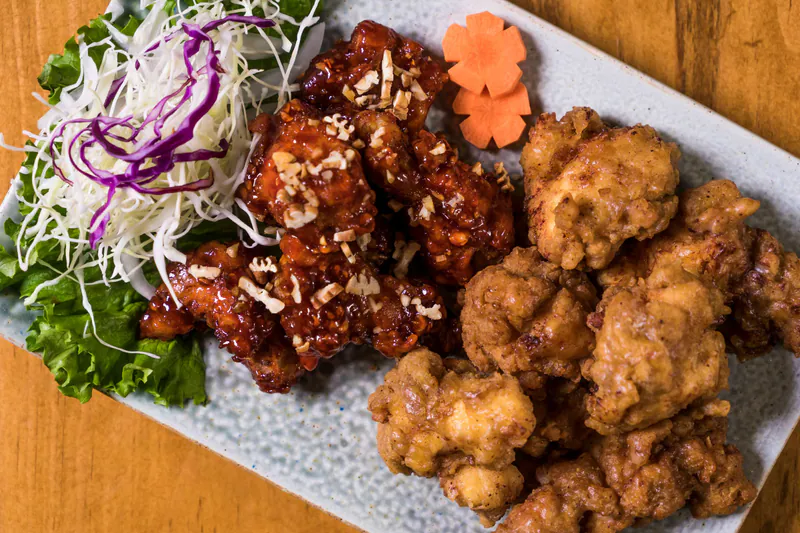
Korean fried chicken (yangnyeom)
Korean · 55 min · 683 kcal