
Dakgalbi
Non-vegetarian
닭갈비 · dakgalbi
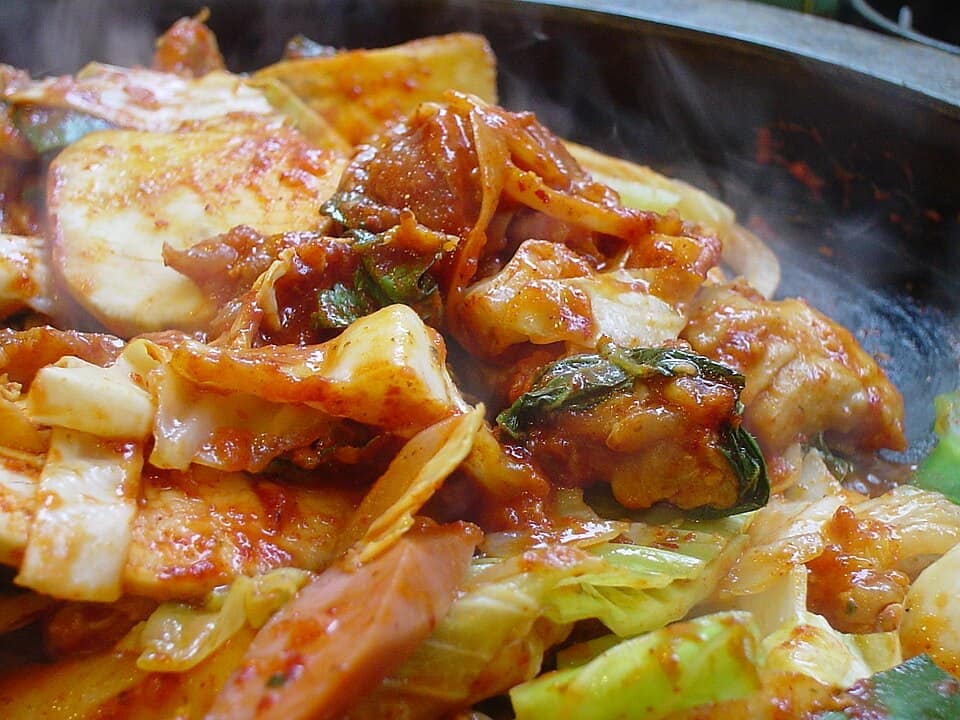
Chicken thigh, cabbage, sweet potato and rice cakes stir-fried in a red chilli sauce on a big pan — fiery, sweet and shared at the table.
Dakgalbi is a Korean main course from South Korea, ready in about 1 hour 10 minutes and made with chicken thigh and red chilli flakes. It serves 4 and is rated easy to cook.
- Prep
- 20 min
- Cook
- 20 min
- Rest
- 30 min
- Total
- 1 h 10 min
- Serves
- 4
- Level
- Easy
- Calories
- 349
Method
Step 1
Mix all the sauce ingredients, toss with the chicken and marinate in the fridge for 30 minutes.
- 5 min
Food safety: Wash hands and boards after handling raw chicken.
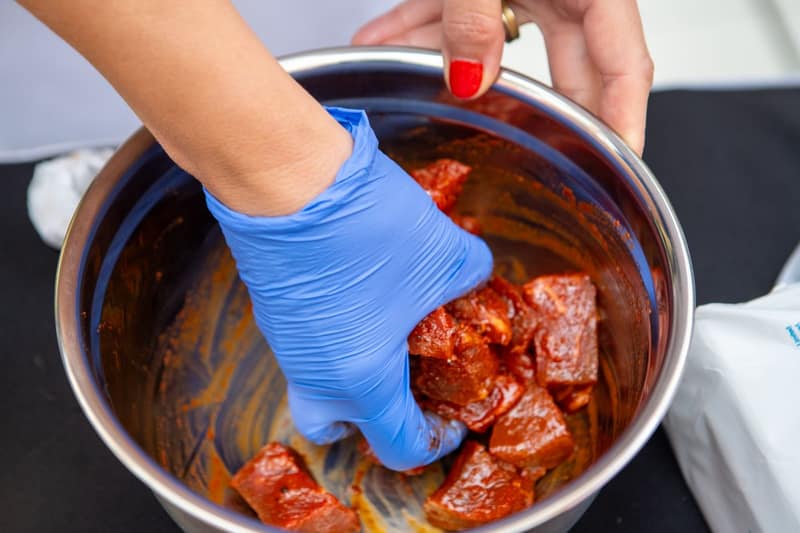
How it looks · Photo: Ip Photographer on Pexels Step 2
Heat the oil in a large pan or wok (opens in a new tab). Spread the cabbage (opens in a new tab), sweet potato (opens in a new tab) and onion (opens in a new tab) over the base and lay the chicken and its marinade on top.
- 3 min
- medium-high heat
- Frying pan / skillet (opens in a new tab)
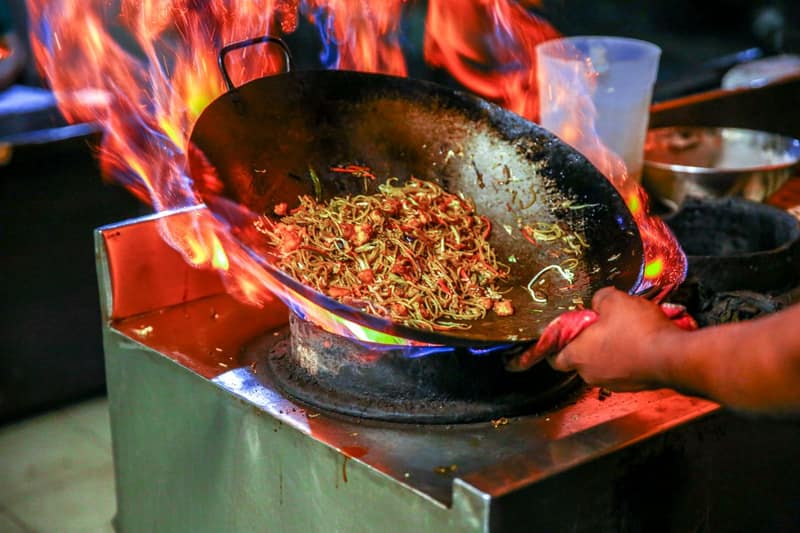
How it looks · Photo: Aesthos AR. Photography on Pexels Step 3
Cook, turning everything regularly, until the chicken is cooked through and the sweet potato (opens in a new tab) is tender. Add the rice cakes and spring onion (opens in a new tab) for the last 5 minutes and a splash of water if it catches.
- 15 min
- medium heat
Food safety: Chicken should reach 74 °C.
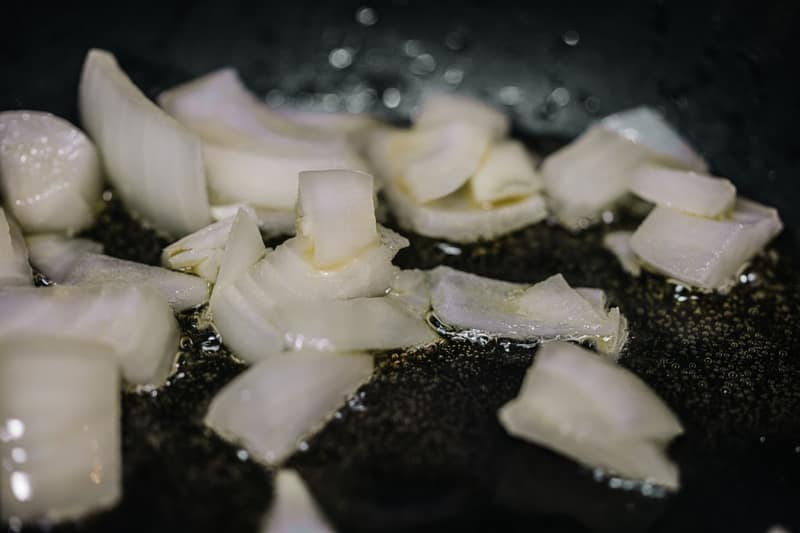
How it looks · Photo: Magda Ehlers on Pexels

About this dish
- Origin
- Chuncheon, Gangwon, South Korea · Well documentedMore food from South Korea
- Dish
- Dinner · Main courses
- Cooking method
- Stir-fried, Marinated / cured
- Taste
- spicy (chilli heat), sweet & spicy, garlicky, savoury
- Diet
- Dairy-free · No nut ingredients · Low-carb · High-proteinWorked out from the ingredients. How labels work
All labels
Non-vegetarian · Dairy-free · Egg-free · No nut ingredients · Pork-free · Beef-free · Low-carb · High-protein · Calorie-conscious - Good for
- One-pan
- Cook more with
- Chicken thigh · Red chilli flakes · Soy sauce · Sugar · Garlic · Fresh ginger
- Techniques
- Stir-frying · Marinating · Curing
Allergens
- Contains, can be adapted: Wheatfrom soy sauce, gochujang
- Contains, can be adapted: Glutenfrom soy sauce, gochujang
- Contains: Soyfrom soy sauce, gochujang
- Contains: Sesamefrom toasted sesame oil
Based on typical versions of these ingredients and not verified allergen-free. Brands differ and cross-contact happens, so always check labels. For severe allergies, follow your clinician’s advice.
Nutrition
349 kcal per serving
Estimated1 serving ≈ 332 g · recipe makes 4
Where the energy comes from
- Protein 38%
- Carbohydrate 26%
- Fat 36%
| Nutrient | Per serving | Per 100 g* |
|---|---|---|
| Energy | 349 kcal | 105 kcal |
| Protein | 33.1 g | 10 g |
| Carbohydrate | 22.9 g | 6.9 g |
| Net carbohydrate | 18.3 g | 5.5 g |
| Sugars | 10.3 g | 3.1 g |
| Added sugars | 4.7 g | 1.4 g |
| Fibre | 4.6 g | 1.4 g |
| Fat | 13.7 g | 4.1 g |
| Saturated fat | 2.5 g | 0.8 g |
| Trans fat | 0 g | 0 g |
| Cholesterol | 141 mg | 43 mg |
| Sodium | 879 mg | 265 mg |
| Salt equivalent | 2.2 g | 0.7 g |
Vitamins & minerals per serving
- Potassium
- 804 mg
- Calcium
- 81 mg
- Iron
- 2.5 mg
- Magnesium
- 72 mg
- Vitamin A (RAE)
- 309 µg
- Vitamin C
- 36 mg
- Vitamin D
- 0 µg
- Vitamin B12
- 0.9 µg
- Folate (DFE)
- 59 µg
How these numbers were made
- Calculated from USDA FoodData Central (SR Legacy) per-100 g values and the listed quantities.
- *Per 100 g of combined raw ingredients; the cooked dish may weigh more or less.
- Optional ingredients are not included: gochujang, korean rice cakes (tteok).
- Red chilli flakes: Ground cayenne (FDC 170932) used as a stand-in for dried chilli flakes such as pul biber or Aleppo pepper.
- “—” means the value isn’t known for enough of the ingredients; it is never zero by default.
- Values are estimates for guidance, not for medical dosing. U.S. Department of Agriculture, Agricultural Research Service. FoodData Central, 2019. fdc.nal.usda.gov.
Good to know
Tips
- Leave a little at the end, add cooked rice, kimchi and seaweed and fry it into bokkeumbap.
Common mistakes
- Cooking over too high heat — the sugary marinade burns before the chicken and sweet potato are done.
- Cutting the sweet potato thick so it is still hard when the chicken is cooked.
Serve with
- Wrap in lettuce or perilla leaves; finish leftovers as fried rice.
Storage
- Refrigerate for up to 2 days.
Reheating
- Reheat in a pan with a splash of water.
Original editorial recipe · FriendsPantry editorial · Not yet independently reviewed · Added · Updated
Recipe DNA
How this dish is built
Built from the recipe’s own sections. Each band’s width is its share of the dish by weight. Choose a component to see what it does.
What the dish is built around
Main ingredient
- Chicken thigh, boneless, cut into bite-size pieces600 g
- Cabbage, cut into large pieces300 g
- Sweet potato, halved and sliced 5 mm thick1 piece · 130 g
- Korean rice cakes (tteok) (optional)150 g
Reviews & corrections
Reviews come from signed-in cooks and appear after a moderator checks them. We never show made-up ratings.
You might also like
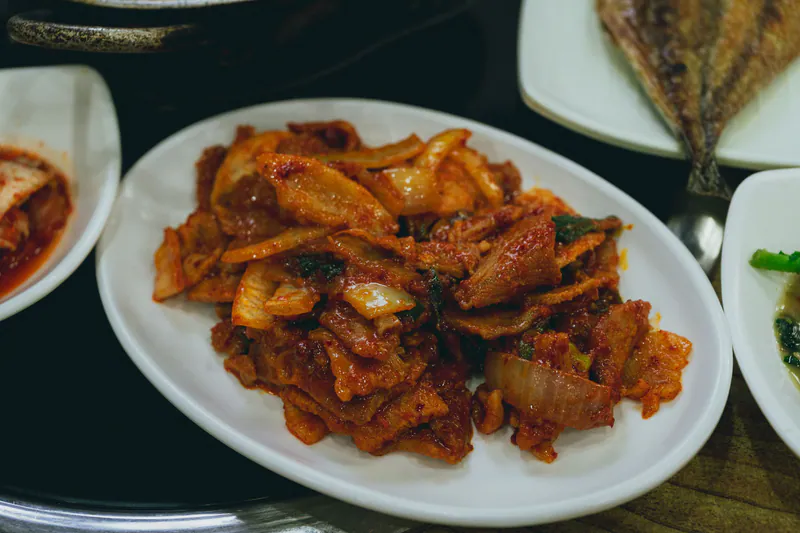
Jeyuk bokkeum
 Korean · 45 min · 409 kcal
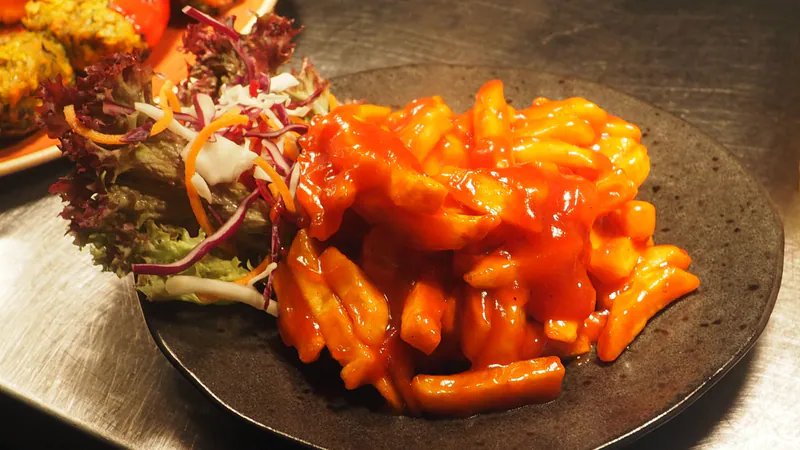
Tteokbokki
Korean · 25 min · 473 kcal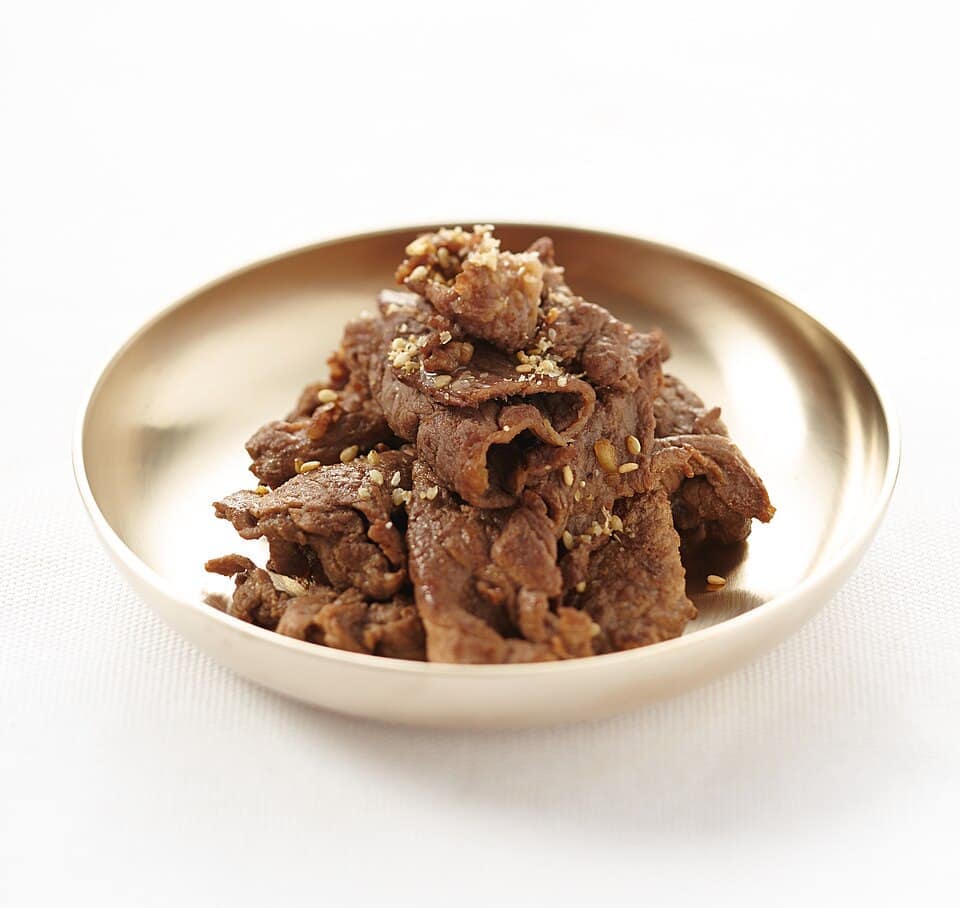
Beef bulgogi
Korean · 55 min · 288 kcal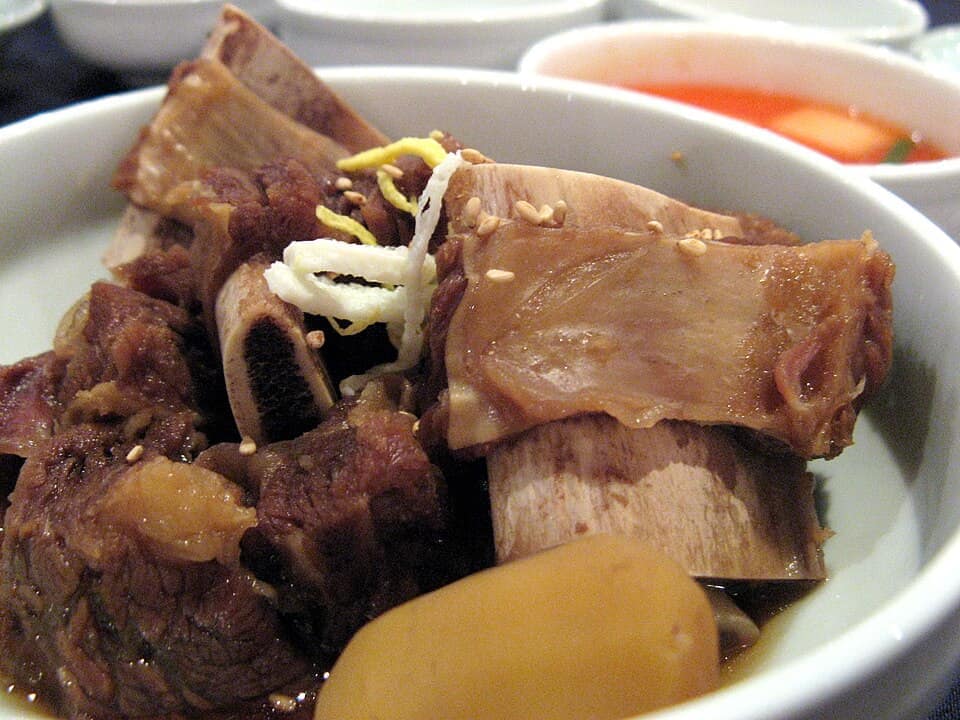
Galbi-jjim
Korean · 2 h 40 min · 599 kcal