
Preparation skills · beginner
Kneading
Also: dough working, goondhna
Working dough by pressing, folding and stretching to develop gluten and an even texture.
What it is
Kneading combines flour and water fully and develops gluten, the stretchy network that lets bread rise and flatbreads roll thin without tearing. Atta dough for roti and paratha is kneaded to be soft and pliable; yeast bread dough is kneaded longer to become smooth and elastic.
Why cooks use it: Gluten gives structure, chew and the ability to trap gas; a well-kneaded and rested atta dough rolls easily and puffs on the flame.
The science
When wheat flour is wetted, glutenin and gliadin proteins bond into gluten. Kneading aligns and strengthens these bonds. Resting lets gluten relax and flour hydrate fully, so dough becomes easier to roll.
Gluten developmentMoisture and textureSalt and osmosisYeast fermentation
Step by step
Mix flour, salt and most of the water until a shaggy dough forms; add the rest gradually.
Push the dough away with the heel of your hand, fold it back, give it a quarter turn and repeat.
Knead until smooth and elastic: about 8–12 minutes for yeast bread by hand, about 5–8 minutes for soft atta dough.
For atta, wet your fingers and knead in a little more water for a softer roti dough; add a teaspoon of oil at the end.
Cover and rest at least 20–30 minutes (atta) or until doubled (yeast dough).
Heat and timing
- Kneading 22–27 °C · Yeast doughs ferment best at roughly 24–27 °C after kneading.
Time: 5–12 minutes by hand, then rest.
How you know it’s right
- Dough smooth and slightly tacky, not sticky
- Springs back slowly when poked
- Bread dough stretches thin enough to see light through it (windowpane test)
Common mistakes
- Adding lots of extra flour so dough gets dry and tough
- Skipping the rest
- Under-kneading bread dough
Troubleshooting
- Roti dough tears when rolled
- Rest the dough longer and add a little more water.
- Dough too sticky
- Keep kneading for a few minutes before adding flour; use a scraper and lightly oiled hands.
Restaurant DNA
How professionals do it
Bakeries use spiral mixers and control dough temperature by adjusting water temperature; Indian restaurants knead large batches of atta or naan dough before service and keep them covered.
At home
A stand mixer with a dough hook saves effort; for roti, knead by hand and rest the dough for 30 minutes.
General professional practice — not any particular restaurant’s recipe.
Food safety
- Raw flour and dough can carry bacteria; do not eat raw dough.
Practise it
Açma (soft Turkish breakfast rolls)
 Turkish · 2 h 32 min · 265 kcal · Contains egg
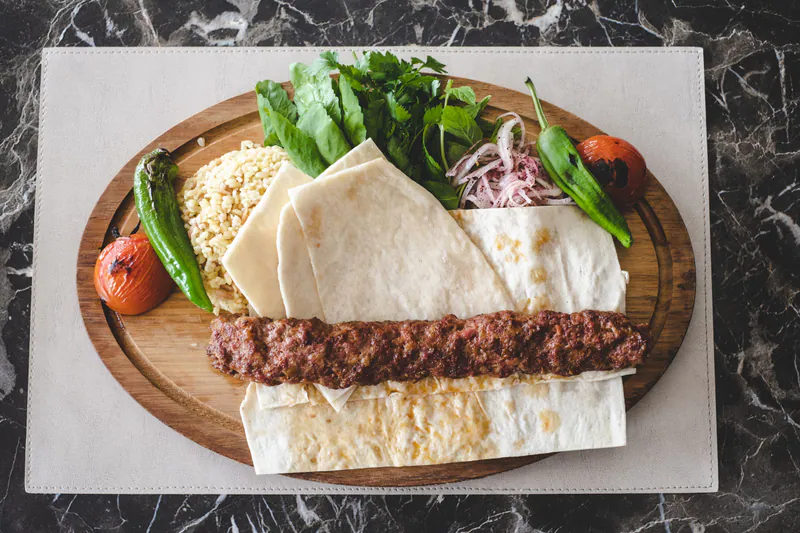
Adana kebab
Turkish · 1 h 7 min · 438 kcalAfghan naan
 Afghan · 2 h 20 min · 344 kcal · Vegan
Agege bread
 Nigerian · 3 h 35 min · 210 kcal · Vegetarian
Akki roti
 South Indian · 55 min · 257 kcal · Vegan
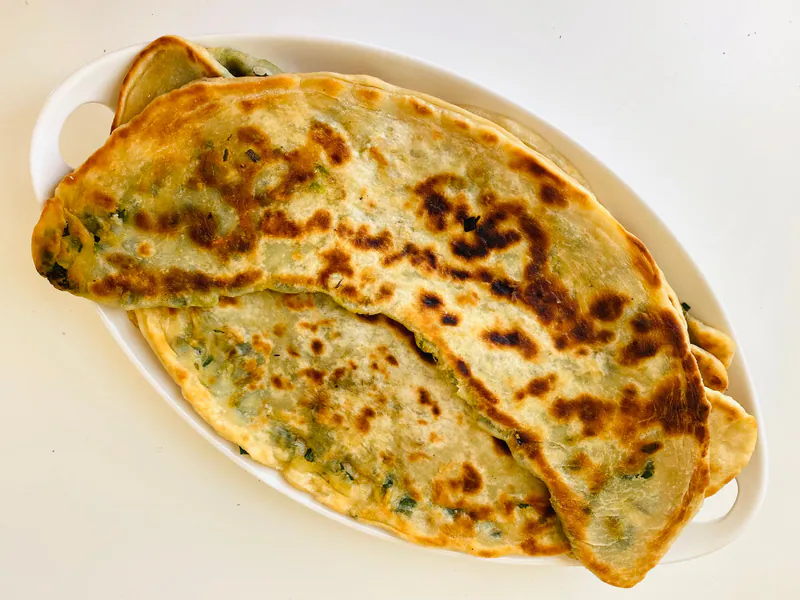
Aloo paratha
Punjabi · 1 h 15 min · 430 kcal · VegetarianAmritsari kulcha
Punjabi · 3 h 10 min · 358 kcal · VegetarianAnda paratha
Indian · 55 min · 334 kcal · Contains eggAnpan (sweet red bean buns)
 Japanese · 2 h 45 min · 266 kcal · Contains egg
243 more
- Baguettes with poolish · French
- Bajra roti · Indian
- Bakarkhani (Hyderabadi style) · Indian
- Baked beef empanadas · Argentine
- Baleadas · Honduran
- Bandeja paisa · Colombian
- Bannock · Canadian
- Batbout (Moroccan pan pocket bread) · Moroccan
- Baursak · Kazakh
- Bayerischer Krautsalat · German
- Bazeen · Libyan
- Bazlama (Turkish stovetop flatbread) · Turkish
- Beshbarmak · Kazakh
- Bint al sahn · Yemeni
- Bolani · Afghan
- Bolillos (Mexican crusty rolls) · Mexican
- Broa de milho (Portuguese corn bread) · Portuguese
- Buchty · Czech
- Buuz (Mongolian steamed dumplings) · Mongolian
- Cannoli siciliani · Italian
- Cantonese egg tarts · Cantonese
- Cantucci (biscotti di Prato) · Italian
- Causa limeña · Peruvian
- Ćevapi · Balkan
- Chana paratha · Indian
- Chana samosa (Chhattisgarh street-style) · Indian
- Chapli kebab · Pakistani
- Cheese corn paratha · Indian
- Cheese paratha · Indian
- Chicken keema paratha · Indian
- Chicken momo · Nepalese
- Chilli cheese paratha · Indian
- Chin chin · Nigerian
- Chipa · Paraguayan
- Chocolate babka · Polish
- Chole bhature · Punjabi
- Chuchvara · Uzbek
- Ciabatta · Italian
- Cinnamon rolls with cream cheese frosting · American
- Coconut paratha · Indian
- Colțunași cu brânză · Moldovan
- Conchas (Mexican sweet bread) · Mexican
- Corn tortillas (masa harina) · Mexican
- Cornish pasty · British
- Coxinha · Brazilian
- Curry puffs · Singaporean
- Da pan ji (Xinjiang big plate chicken) · Chinese
- Dal paratha · Indian
- Dal pitha (Bihari rice dumplings) · Indian
- Damper · Australian
- Dholl puri · Mauritian
- Dresden Christmas stollen · German
- Dry fruit paratha · Indian
- Dushbara · Azerbaijani
- Easy White Sandwich Loaf · International
- Empanadas colombianas · Colombian
- Empanadas salteñas · Argentine
- English muffins · British
- Faraa (steamed rice-flour dumplings) · Indian
- Fatayer bi sabanekh (spinach triangles) · Lebanese
- Feteer meshaltet · Egyptian
- Flour tortillas · Mexican
- Focaccia · Italian
- Fougasse · French
- Fresh egg pasta (pasta all'uovo) · Italian
- Fry jacks · Belizean
- Fuchka · Bangladeshi
- Fura da nono · Nigerien
- Garlic butter naan (yeast-free, pan-cooked) · Indian
- Ghadichi poli (layered triangle chapati) · Indian
- Gluten-free psyllium sandwich loaf · International
- Gnocchi alla sorrentina · Italian
- Goan poi · Goan
- Gobi paratha · Punjabi
- Gol gappay · Pakistani
- Göy qutabı · Azerbaijani
- Grissini torinesi · Italian
- Gua bao (Taiwanese pork belly buns) · Taiwanese
- Gulab jamun · Indian
- Gulha · Maldivian
- Gur paratha · Punjabi
- Gutap · Turkmen
- Gyoza (pan-fried pork dumplings) · Japanese
- Hallacas · Venezuelan
- Halwa puri · Pakistani
- High-protein paneer paratha · Indian
- Higher-protein Greek yoghurt bread · International
- Hojaldras · Panamanian
- Hot cross buns · British
- Houskové knedlíky · Czech
- Hua juan (steamed scallion flower rolls) · Chinese
- Irish soda bread · Irish
- Irish wheaten bread · Irish
- Ispanaklı gözleme · Turkish
- Izgara köfte · Turkish
- Jamaican coco bread · Jamaican
- Japanese milk bread (tangzhong shokupan) · Japanese
- Jian dui (sesame balls) · Cantonese
- Jowar bhakri · Indian
- Ka'ak al-Quds · Palestinian
- Kalduny · Belarusian
- Kanelbullar (Swedish cinnamon buns) · Swedish
- Kaspressknödel · Austrian
- Kefta tagine with eggs · Moroccan
- Keftedes (Greek meatballs) · Greek
- Kenyan chapati · Kenyan
- Kerala pathiri · South Indian
- Khachapuri adjaruli · Georgian
- Khao piak sen · Lao
- Khinkali · Georgian
- Khobz (Moroccan round bread) · Moroccan
- Khoya paratha · Indian
- Khuushuur (Mongolian fried meat pastries) · Mongolian
- Kısır (bulgur salad) · Turkish
- Kıymalı pide · Turkish
- Kleicha · Iraqi
- Klepe (Bosnian meat dumplings) · Bosnian
- Koeksisters · South African
- Kopytka · Polish
- Korvapuusti (Finnish cinnamon rolls) · Finnish
- Kouign-amann · French
- Kuli-kuli · Beninese
- Lachha paratha · Indian
- Ladi pav · Indian
- Lagman · Uzbek
- Lahmacun · Turkish
- Lángos · Hungarian
- Laugenbrezel · German
- Lavash · Armenian
- Liangpi (cold skin noodles) · Chinese
- Liège waffles · Belgian
- Litti chokha · Indian
- Lokše · Slovak
- Luchi · Bengali
- Ma'amoul with dates · Levantine
- Makki di roti · Punjabi
- Malabar parotta · South Indian
- Malai kofta · Indian
- Manakish za'atar · Lebanese
- Mandazi · Kenyan
- Mantı · Turkish
- Mantou (steamed buns) · Chinese
- Margoog · Qatari
- Matar paratha · Indian
- Matoke with groundnut sauce · Ugandan
- Medialunas (Argentine croissants) · Argentine
- Melonpan · Japanese
- Methi paratha · Punjabi
- Methi thepla · Gujarati
- Mhadjeb · Algerian
- Mici · Romanian
- Missi roti · Punjabi
- Mitarashi dango · Japanese
- Mix veg paratha · Indian
- Mont lone yay paw · Burmese
- Mooli paratha · Punjabi
- Msemen · Moroccan
- Mughlai paratha · Bengali
- Mushroom cheese paratha · Fusion
- Mutabbaq · Saudi Arabian
- Naan (home-oven method) · Indian
- Nan-e barbari · Iranian
- Nankhatai · Indian
- New York-style bagels · American
- Oromo · Kyrgyz
- Pain de campagne · French
- Palak paratha · Punjabi
- Pampushky · Ukrainian
- Pan de muerto · Mexican
- Pane toscano (unsalted Tuscan bread) · Italian
- Paneer cheese paratha · Indian
- Paneer paratha · Punjabi
- Pastel com diabo dentro · Cape Verdean
- Pastel de feira · Brazilian
- Pastrmajlija · Macedonian
- Patta gobhi paratha · Indian
- Pelmeni · Russian
- Peynirli poğaça (cheese-filled pastries) · Turkish
- Phulka (puffed roti) · Indian
- Pici all'aglione · Italian
- Pierogi ruskie · Polish
- Pineapple bun (bo lo bao) · Hong Kong
- Pirozhki with cabbage and egg · Russian
- Pita (pocket bread) · Middle Eastern
- Pizza Margherita · Italian
- Pizza paratha · Fusion
- Plăcinte cu brânză · Moldovan
- Pljeskavica · Serbian
- Pol roti · Sri Lankan
- Pork baozi (steamed pork buns) · Chinese
- Potato gnocchi with tomato sauce · Italian
- Potbrood · South African
- Potica (walnut roll) · Slovenian
- Puran poli · Indian
- Pyaaz paratha · Punjabi
- Quick Yogurt Flatbread · International
- Ragi roti · South Indian
- Ramazan pidesi (Turkish pide bread) · Turkish
- Rasgulla · Bengali
- Rechta · Algerian
- Ricotta and spinach ravioli with butter and sage · Italian
- Rolex · Ugandan
- Roti canai · Malaysian
- Rumali roti · Indian
- Sattu paratha · Indian
- Scallion pancakes · Chinese
- Scones · British
- Scottish shortbread · British
- Seeded multigrain loaf · British
- Seekh kebab · Pakistani
- Sfeeha · Lebanese
- Sheermal · Indian
- Simit · Turkish
- Skyu · Indian
- Sopaipillas · Chilean
- South African buttermilk rusks · South African
- Soya paratha · Indian
- Surinamese roti kip · Surinamese
- Swedish rye crispbread (knäckebröd) · Swedish
- Swiss butter plait (Zopf) · Swiss
- Taboon bread · Palestinian
- Tajik non · Tajik
- Tandoori roti · Punjabi
- Tangyuan (black sesame rice balls in ginger syrup) · Chinese
- Taralli pugliesi · Italian
- Tarte flambée · French
- Thalipeeth · Indian
- Thekua · Indian
- Thenthuk · Indian
- Torta frita · Uruguayan
- Tortellini in brodo · Italian
- Tsuivan (Mongolian steamed noodles with meat) · Mongolian
- Uzbek manti · Uzbek
- Varenyky with sour cherries · Ukrainian
- Vegan soft sandwich loaf · International
- Vetkoek · South African
- Vori vori · Paraguayan
- Wholemeal tin loaf · British
- Xiaolongbao (soup dumplings) · Chinese
- Yakgwa (Korean honey cookies) · Korean
- Yomari · Nepalese
- Zagorski štrukli (baked cheese štrukli) · Croatian
- Zanzibar pizza · Tanzanian