
Gulab jamun
Vegetarian
गुलाब जामुन · gulāb jāmun
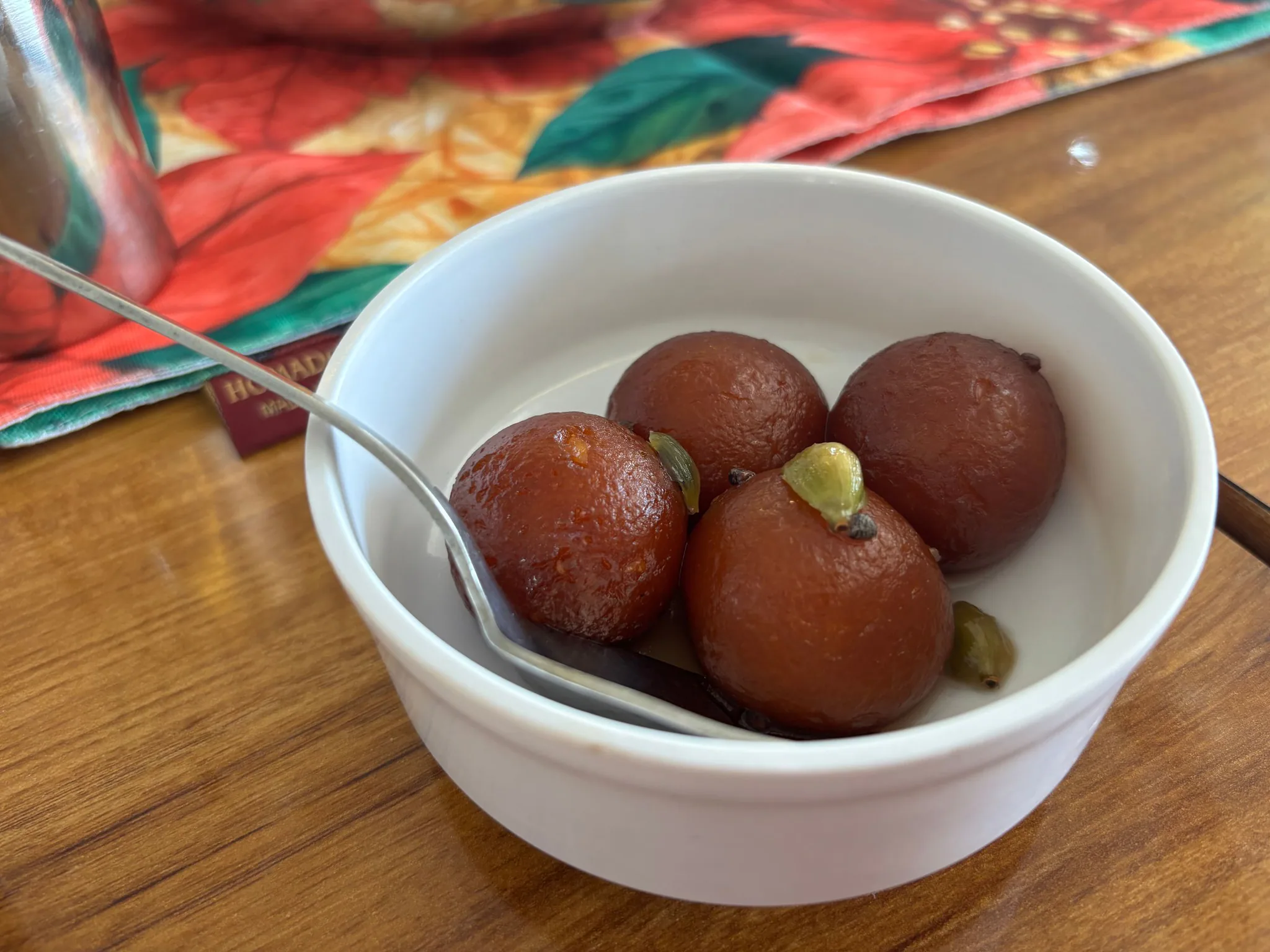
Soft milk dumplings fried slowly to a deep brown, then soaked in warm cardamom and rose syrup until they swell and turn spongy.
Gulab jamun is an Indian dessert, ready in about 2 hours 45 minutes and made with milk powder and sugar. It serves 18 and is rated intermediate to cook.
- Prep
- 15 min
- Cook
- 30 min
- Rest
- 2 h
- Total
- 2 h 45 min
- Serves
- 18
- Level
- Intermediate
- Calories
- 132
Method
Step 1
Simmer the sugar (opens in a new tab), water and cardamom (opens in a new tab) for 5 minutes until slightly sticky (not stringy). Add the rose water (opens in a new tab) and saffron (opens in a new tab) and keep warm.
- 7 min
- medium heat
- Saucepan (opens in a new tab)
Food safety: Sugar syrup is far hotter than boiling water and sticks to skin; handle it carefully and keep children away.
Step 2
Mix the milk powder (opens in a new tab), flour and baking soda (opens in a new tab), rub in the ghee (opens in a new tab), then add milk (opens in a new tab) a spoonful at a time and gather into a soft, smooth, slightly sticky dough without kneading. Rest 5 minutes.
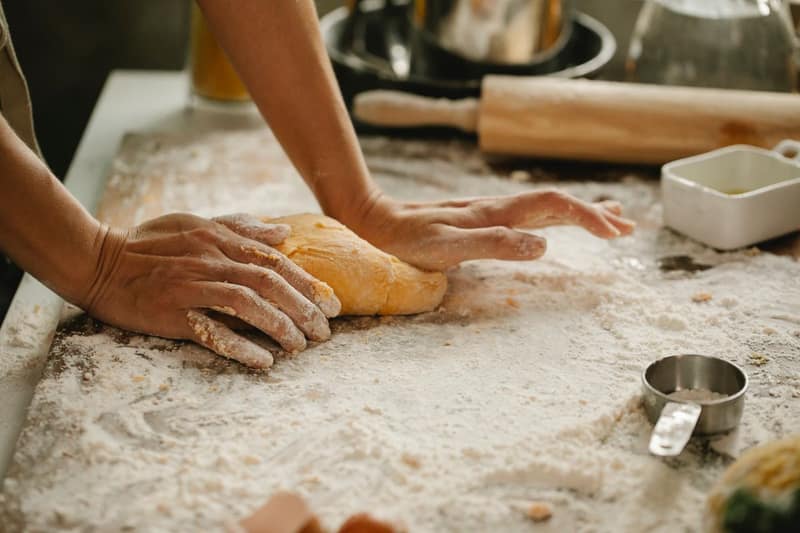
How it looks · Photo: Klaus Nielsen on Pexels Step 3
Grease your palms and roll into 18 smooth, crack-free balls about 2.5 cm across.
- 8 min
Cracks open up in the oil — roll until the surface is perfectly smooth.
Step 4
Heat the oil to about 140 °C — low. Fry the balls in batches, nudging the oil over them rather than touching them, for 8–10 minutes until evenly deep golden-brown. Too hot and they brown outside but stay raw inside.
- 20 min
- 140°C · oil, low and steady
- low heat
- Wok (opens in a new tab)
- Slotted spoon (opens in a new tab)
- Food thermometer (opens in a new tab)
Food safety: Use a deep, heavy pan no more than a third full of oil, keep a lid nearby and never leave hot oil unattended.
Step 5
Drain for a few seconds and drop straight into the warm syrup. Soak at least 2 hours, until they double in size and are soft right through. Serve warm or at room temperature with pistachios (opens in a new tab).
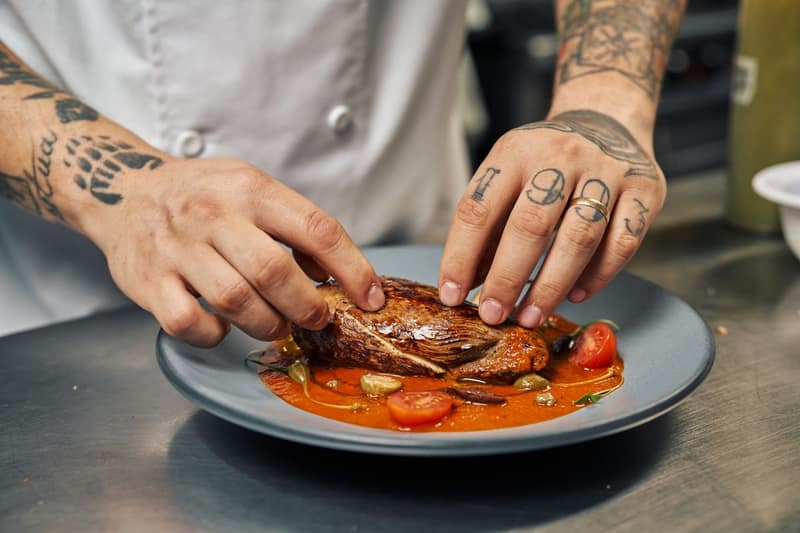
How it looks · Photo: Willians Huerta on Pexels
About this dish
- Origin
- India · Commonly attributedEaten across South Asia; widely thought to have developed in medieval India from Persian-influenced fried sweets in syrup. Traditional versions use khoya; milk powder is a common home method.Also popular in Pakistan, Bangladesh, Nepal, Sri LankaMore food from India
- Dish
- Dessert · Snack · Desserts · Sweets & confectionery
- Cooking method
- Deep-fried, Simmered
- Taste
- sweet, aromatic / warmly spiced, creamy
- Diet
- Vegetarian (lacto-ovo)Without the optional extras: No nut ingredientsWorked out from the ingredients. How labels work
All labels
Vegetarian (lacto-ovo) · Eggetarian · Lacto-vegetarian · Pescatarian · Flexitarian-friendly · Egg-free · Alcohol-free · Pork-free · Beef-free · Low-sodium - Good for
- Festive & celebration · Make-ahead
- Cook more with
- Milk powder · Sugar · All-purpose flour · Baking soda · Ghee · Milk
- Techniques
- Deep-frying · Simmering · Kneading
Allergens
- Contains: Milkfrom milk powder, ghee, milk
- Contains, can be adapted: Tree nutsfrom pistachios
- Contains: Wheatfrom all-purpose flour
- Contains: Glutenfrom all-purpose flour
Based on typical versions of these ingredients and not verified allergen-free. Brands differ and cross-contact happens, so always check labels. For severe allergies, follow your clinician’s advice.
Nutrition
132 kcal per serving
Estimated1 serving ≈ 48 g · recipe makes 18
Where the energy comes from
- Protein 6%
- Carbohydrate 61%
- Fat 33%
| Nutrient | Per serving | Per 100 g* |
|---|---|---|
| Energy | 132 kcal | 273 kcal |
| Protein | 2 g | 4.2 g |
| Carbohydrate | 20.7 g | 42.7 g |
| Net carbohydrate | 20.6 g | 42.6 g |
| Sugars | 19.4 g | 40 g |
| Added sugars | 16.7 g | 34.4 g |
| Fibre | 0.1 g | 0.1 g |
| Fat | 4.9 g | 10.1 g |
| Saturated fat | 1.8 g | 3.7 g |
| Trans fat | — | — |
| Cholesterol | 9 mg | 18 mg |
| Sodium | 45 mg | 92 mg |
| Salt equivalent | 0.1 g | 0.2 g |
Vitamins & minerals per serving
- Potassium
- 96 mg
- Calcium
- 67 mg
- Iron
- 0.1 mg
- Magnesium
- 7 mg
- Vitamin A (RAE)
- 25 µg
- Vitamin C
- 1 mg
- Vitamin D
- 0.7 µg
- Vitamin B12
- 0.2 µg
- Folate (DFE)
- 7 µg
How these numbers were made
- Calculated from USDA FoodData Central (SR Legacy) per-100 g values and the listed quantities.
- *Per 100 g of combined raw ingredients; the cooked dish may weigh more or less.
- Optional ingredients are not included: saffron, pistachios.
- Rose water: Water (FDC 174158); rose water is a distillate with negligible nutrients.
- “—” means the value isn’t known for enough of the ingredients; it is never zero by default.
- Values are estimates for guidance, not for medical dosing. U.S. Department of Agriculture, Agricultural Research Service. FoodData Central, 2019. fdc.nal.usda.gov.
Good to know
Common mistakes
- Kneading the dough, which makes hard, dense jamuns.
- Putting them into boiling syrup — they shrink and toughen.
Storage
- Keep in the syrup, covered, in the fridge for 5 days. Warm gently to serve.
Original editorial recipe · FriendsPantry editorial · Not yet independently reviewed · Added · Updated
Recipe DNA
How this dish is built
Built from the recipe’s own sections. Each band’s width is its share of the dish by weight. Choose a component to see what it does.
What the dish is built around
Main ingredient
- Milk powder120 g
- All-purpose flour30 g
- Ghee1 tbsp · 14 g
- Milk60 ml · 62 g
Reviews & corrections
Reviews come from signed-in cooks and appear after a moderator checks them. We never show made-up ratings.
You might also like
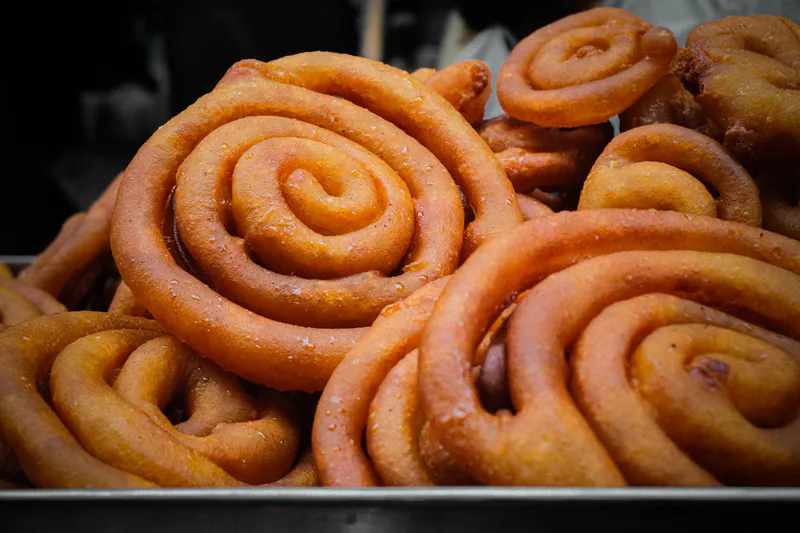
Jalebi
 Indian · 10 h 40 min · 295 kcal · Vegetarian
Rasgulla
Bengali · 3 h 55 min · 117 kcal · Vegetarian
Rice kheer
Indian · 55 min · 245 kcal · Vegetarian
Chicken biryani
Indian · 2 h 55 min · 681 kcal