
Preservation · intermediate
Fermentation
Also: khameer, souring
Letting beneficial microbes transform food, souring, leavening or preserving it.
What it is
Fermentation uses yeasts and bacteria, either wild or added, to change food. In Indian kitchens it gives idli, dosa, dhokla, appam, jalebi batter, dahi and kanji; elsewhere it makes bread, yogurt, sauerkraut, kimchi, miso and soy sauce.
Why cooks use it: It creates sourness, complex flavour, lightness (from gas) and, for lactic ferments, a more acidic and less spoilage-prone food.
The science
Lactic acid bacteria convert sugars into lactic acid, lowering pH and souring the food. Yeasts convert sugars into carbon dioxide and alcohol, which leavens dough and batter. Temperature strongly controls speed: warm batters ferment overnight, cool ones may take a day or more.
Acids and bases in cookingGluten developmentSalt and osmosisYeast fermentationLactic acid fermentationThe science of pickling
Step by step
Use clean (not necessarily sterile) containers with room for the batter or dough to rise.
For idli/dosa batter: mix ground urad and rice batter with salt (about 1–1.5% of batter weight) by hand.
Cover loosely and keep somewhere warm, ideally 25–32 °C.
Ferment until risen, bubbly and pleasantly sour (8–14 hours in warm weather; longer in cold).
For dahi: heat milk to near-boiling, cool to about 40–45 °C, stir in a spoon of yogurt and keep warm and undisturbed for 4–8 hours.
Refrigerate once ready to slow further fermentation.
Heat and timing
- Fermentation 20–45 °C · Idli/dosa batter about 25–32 °C; yogurt incubation about 40–45 °C; bread dough about 24–27 °C.
Time: 4–8 hours (yogurt); 8–14 hours (idli batter); days to weeks (sauerkraut, kimchi).
How you know it’s right
- Batter roughly doubled, with bubbles and a domed top
- Pleasant sour smell
- Yogurt set firm and pulls cleanly from the side
Common mistakes
- Too cold, so nothing happens
- Too warm or too long, so batter becomes very sour and runny
- Over-stirring fermented batter, knocking out the air
Troubleshooting
- Batter not rising
- Move it somewhere warmer (an oven with only the light on) and give it more time; check that the urad dal was ground until fluffy.
- Too sour
- Ferment for less time or refrigerate sooner; a pinch of baking soda can soften sourness in dosa batter.
- Pink, black or fuzzy mould, or a rotten smell
- Discard it; this is spoilage, not fermentation.
Restaurant DNA
How professionals do it
Restaurants that serve idli and dosa ferment batter daily in large batches and refrigerate it once ripe; bakeries use proofing cabinets to control temperature and humidity.
At home
In cold weather, ferment in an oven with only the light on, or in a warm insulated box; in hot weather check the batter early.
General professional practice — not any particular restaurant’s recipe.
Food safety
- Discard any ferment with fuzzy mould, slime or a putrid smell.
- Keep vegetable ferments submerged under brine.
- Refrigerate finished ferments.
Practise it
Ablo
 Togolese · 2 h 10 min · 269 kcal · Vegan
Açma (soft Turkish breakfast rolls)
 Turkish · 2 h 32 min · 265 kcal · Contains egg
Afghan naan
 Afghan · 2 h 20 min · 344 kcal · Vegan
Agege bread
 Nigerian · 3 h 35 min · 210 kcal · Vegetarian
Amba (Iraqi mango pickle sauce)
 Iraqi · 72 h 45 min · 39 kcal · Vegan
Anpan (sweet red bean buns)
 Japanese · 2 h 45 min · 266 kcal · Contains egg
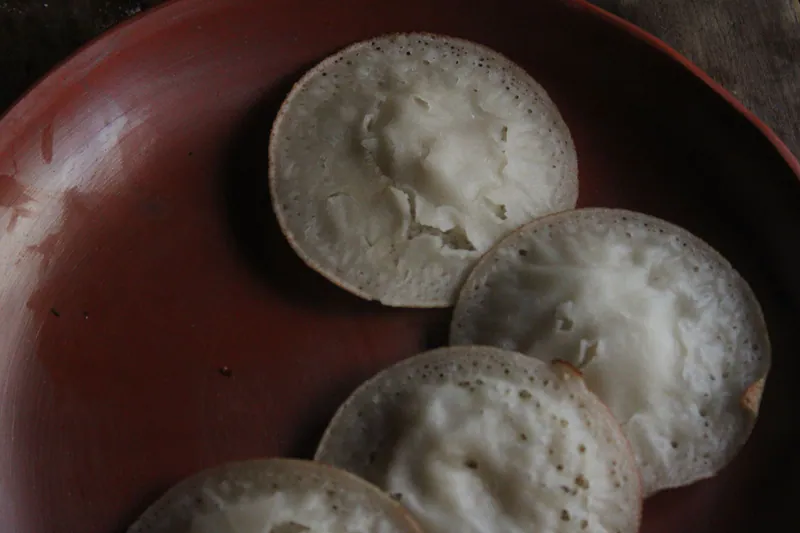
Appam
 South Indian · 45 min · 358 kcal · Vegan
Avakaya (Andhra mango pickle)
South Indian · 73 h · 49 kcal · Vegan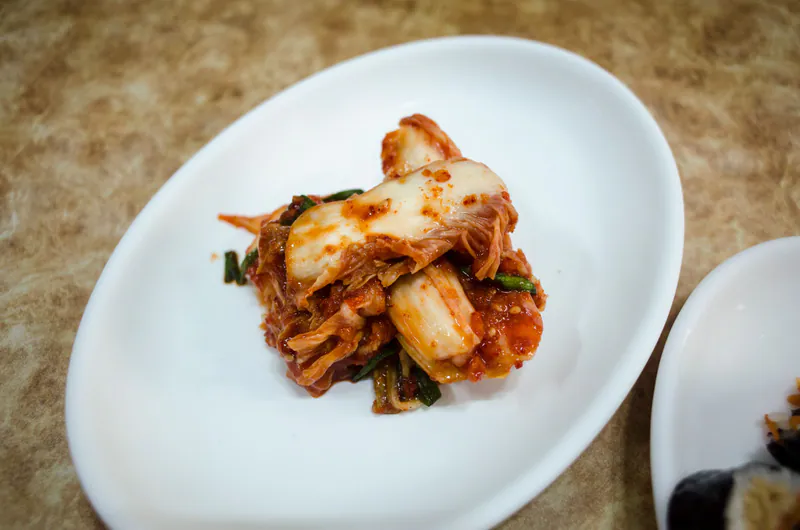
Baechu kimchi (napa cabbage kimchi)
 Korean · 7 h 5 min · 44 kcal
123 more
- Baguettes with poolish · French
- Bakewell tart · British
- Banana bread · American
- Bara brith (Welsh tea loaf) · British
- Barmbrack · Irish
- Batbout (Moroccan pan pocket bread) · Moroccan
- Baursak · Kazakh
- Bazlama (Turkish stovetop flatbread) · Turkish
- Bint al sahn · Yemeni
- Blueberry Muffins · American
- Bolillos (Mexican crusty rolls) · Mexican
- Bore baasi (Chhattisgarhi soaked rice) · Indian
- Brioche Nanterre · French
- Broa de milho (Portuguese corn bread) · Portuguese
- Buchty · Czech
- Canjeero · Somali
- Carrot cake with cream cheese frosting · American
- Chocolate babka · Polish
- Ciabatta · Italian
- Cinnamon rolls with cream cheese frosting · American
- Conchas (Mexican sweet bread) · Mexican
- Crema mexicana (cultured cream) · Mexican
- Croissants · French
- Crumpets · British
- Dalle khursani achar (Sikkimese round chilli pickle) · Indian
- Danish pastries (spandauer) · Danish
- Danish rye bread (rugbrød) · Danish
- Dehrori (Chhattisgarhi rice fritters in syrup) · Indian
- Doubles · Trinidadian
- Dresden Christmas stollen · German
- Easy White Sandwich Loaf · International
- Egg hoppers · Sri Lankan
- Eggless Chocolate Mug Cake · International
- English muffins · British
- Ethiopian coffee (jebena buna) · Ethiopian
- Fatayer bi sabanekh (spinach triangles) · Lebanese
- Fermented Louisiana-style hot sauce · Southern US
- Financiers (brown-butter almond cakes) · French
- Fougasse · French
- German rye sourdough (Roggenmischbrot) · German
- Gluten-free psyllium sandwich loaf · International
- Goan poi · Goan
- Gua bao (Taiwanese pork belly buns) · Taiwanese
- Higher-protein Greek yoghurt bread · International
- Hot cross buns · British
- Hotteok · Korean
- Houskové knedlíky · Czech
- Hua juan (steamed scallion flower rolls) · Chinese
- Hunan steamed fish with chopped chillies · Chinese
- Idli · South Indian
- Injera · Ethiopian
- Irish wheaten bread · Irish
- Jalebi · Indian
- Jamaican coco bread · Jamaican
- Japanese milk bread (tangzhong shokupan) · Japanese
- Juju dhau · Nepalese
- Ka'ak al-Quds · Palestinian
- Kanelbullar (Swedish cinnamon buns) · Swedish
- Kanji (fermented carrot drink) · Indian
- Khachapuri adjaruli · Georgian
- Kharoli (Assamese fermented mustard paste) · Indian
- Khobz (Moroccan round bread) · Moroccan
- Kisra · Sudanese
- Kıymalı pide · Turkish
- Korvapuusti (Finnish cinnamon rolls) · Finnish
- Kouign-amann · French
- Ladi pav · Indian
- Lahmacun · Turkish
- Lahoh · Djiboutian
- Lahpet thoke · Burmese
- Lángos · Hungarian
- Liège waffles · Belgian
- Loukoumades · Greek
- Luqaimat · Gulf Arab
- Mahewu · Zimbabwean
- Manakish za'atar · Lebanese
- Mandazi · Kenyan
- Mantou (steamed buns) · Chinese
- Masala chai · Indian
- Masala dosa · South Indian
- Medialunas (Argentine croissants) · Argentine
- Melonpan · Japanese
- Naan (home-oven method) · Indian
- Nan-e barbari · Iranian
- New York-style bagels · American
- Onion tomato uttapam · South Indian
- Pain au chocolat · French
- Pain de campagne · French
- Pampushky · Ukrainian
- Pan de muerto · Mexican
- Pane toscano (unsalted Tuscan bread) · Italian
- Pastrmajlija · Macedonian
- Pineapple bun (bo lo bao) · Hong Kong
- Pirozhki with cabbage and egg · Russian
- Pita (pocket bread) · Middle Eastern
- Pizza Margherita · Italian
- Poondu rasam · South Indian
- Pork baozi (steamed pork buns) · Chinese
- Potbrood · South African
- Potica (walnut roll) · Slovenian
- Pound cake · British
- Puff-puff · Nigerian
- Punjabi mango pickle (aam ka achaar) · Punjabi
- Ramazan pidesi (Turkish pide bread) · Turkish
- Salt-cured lime pickle (nimbu ka achaar) · Indian
- Sannas (Goan steamed rice cakes) · Goan
- Seeded buckwheat gluten-free loaf · International
- Seeded multigrain loaf · British
- Sfeeha · Lebanese
- Simit · Turkish
- Sourdough country loaf (pain au levain) · French
- South Indian filter coffee · Indian
- Sticky toffee pudding · British
- Swiss butter plait (Zopf) · Swiss
- Taboon bread · Palestinian
- Tajik non · Tajik
- Toad in the hole · British
- Vegan soft sandwich loaf · International
- Vetkoek · South African
- Westphalian pumpernickel · German
- Wholegrain sourdough tin loaf · International
- Wholemeal tin loaf · British
- Żurek · Polish