
Seeds
Sesame seeds
Sesamum indicum
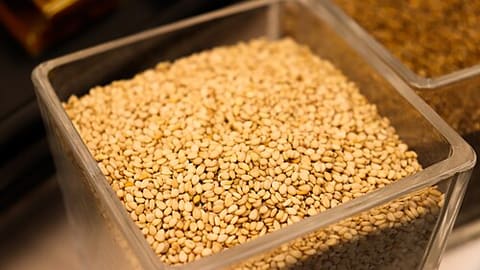
Tiny, flat, oily seeds, white or black; toasted for bread toppings, Asian dishes, tahini and sweets.
Also called: sesame, til, susam, gingelly, ajonjolí
- Nutty & toasty
- No heat
Photo: ally j, via Wikimedia Commons (CC0-1.0)
Flavour and aroma
nutty, toasty, rich, slightly bitter when black. Nutty; deeply toasty when roasted.
- Heat
- No heat
- Forms
- whole, paste, ground
How to use it
dry roast · Spice roasting (dry-roasting) technique
Toast in a dry pan over medium-low heat for 3–5 minutes, stirring constantly, until golden and some begin to pop. Tip out at once; they keep darkening in the hot pan.
grind · Dry grinding technique
Grind toasted seeds in a suribachi or mortar for Japanese goma-ae dressing; stop while still coarse and fragrant.
use raw
Raw hulled seeds go onto breads and bagels before baking, where they toast in the oven.
- Sprinkled on bread, bagels, simit and burger buns
- Toasted over Korean, Japanese and Chinese dishes
- Ground into tahini, gomasio and black sesame paste
- Made into halva, til ladoo and sesame brittle
Identifying good quality
Small, flat, teardrop-shaped seeds. Hulled seeds are creamy white; unhulled are beige; black sesame is a different variety with a stronger, more bitter taste. Smell for rancidity: fresh seeds smell faintly nutty, old ones like stale oil.
Origin and history
Origin: Domesticated in the Indian subcontinent from a wild South Asian relative; wild Sesamum species also grow in Africa.. Grown and used: Major producers include Sudan, Myanmar, Tanzania, India, Nigeria and China; eaten across Asia, the Middle East, Africa and the Americas..
Sesame is one of the oldest oilseed crops: charred seeds have been found at Harappan sites in the Indus Valley from the third millennium BCE, and it was traded to Mesopotamia early. Today it underpins tahini and halva in the Middle East, sesame oil and pastes in China, Korea and Japan, and benne seed traditions brought to the American South by enslaved West Africans.
Well documented
In masalas, pastes and sauces
- Goda masalaMasala15 g per batch
- Kolhapuri kanda-lasun masalaMasala10 g per batch
- Za'atarMasala20 g per batch
- Egyptian dukkahMasala40 g per batch
- Shichimi togarashiMasala6 g per batch
- HummusSauce120 g per batch
- Baba ghanoushSauce60 g per batch
- Golbheda ko acharSauce18 g per batch
- Mole poblanoSauce50 g per batch
- Dry garlic chutney (vada pav chutney)Sauce9 g per batch
- Molagapodi (idli podi with oil)Sauce15 g per batch
- Ellu podi (sesame powder)Sauce100 g per batch
- Tilachi chutney (Maharashtrian dry sesame chutney)Sauce100 g per batch
- Msabbaha (warm whole-chickpea hummus)Sauce90 g per batch
- Roasted garlic hummusSauce120 g per batch
- Beetroot hummusSauce90 g per batch
- Avocado hummusSauce60 g per batch
- Roasted red pepper hummusSauce90 g per batch
- Dukkah with bread and olive oilSauce40 g per batch
- Salsa machaSauce18 g per batch
- Goma dare (Japanese sesame sauce)Sauce60 g per batch
- SsamjangSauce3 g per batch
- Cho-gochujang (vinegared chilli sauce)Sauce3 g per batch
- Yangnyeom-ganjang (seasoned soy dipping sauce)Sauce3 g per batch
- Sichuan chilli oil (hong you)Sauce9 g per batch
- Chilli crispSauce9 g per batch
- Tahini sauce (taratur)Sauce120 g per batch
Recipes with sesame seeds
Açma (soft Turkish breakfast rolls)
 Turkish · 2 h 32 min · 265 kcal · Contains egg
Afghan naan
 Afghan · 2 h 20 min · 344 kcal · Vegan
Aloo sadeko
 Nepalese · 30 min · 205 kcal · Vegan
Anpan (sweet red bean buns)
 Japanese · 2 h 45 min · 266 kcal · Contains egg
Avocado hummus
International · 1 h · 199 kcal · Vegan
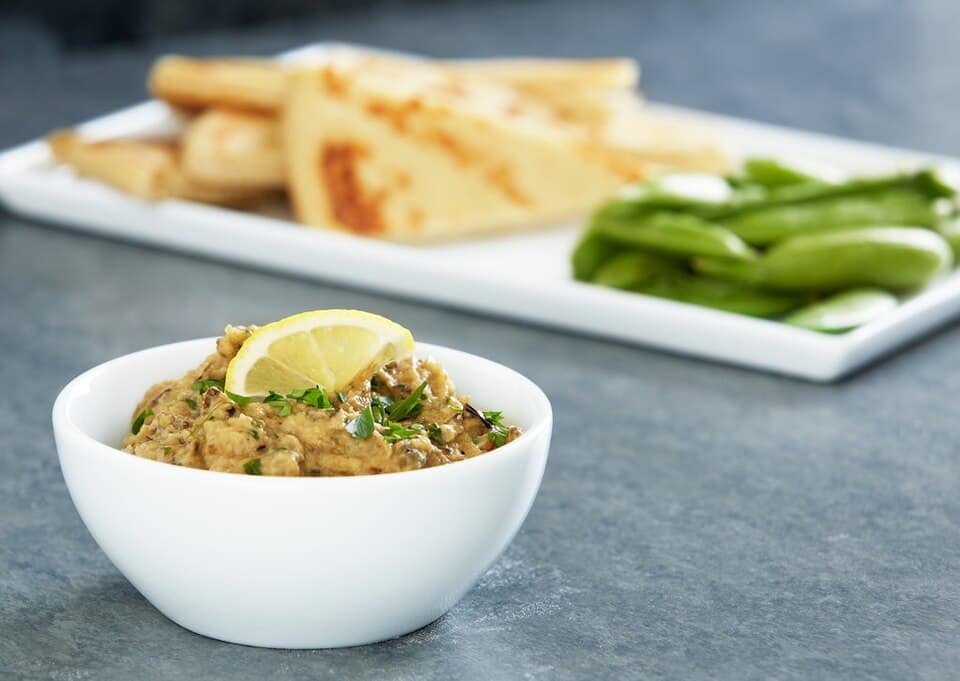
Baba ghanoush
Levantine · 55 min · 139 kcal · Vegan
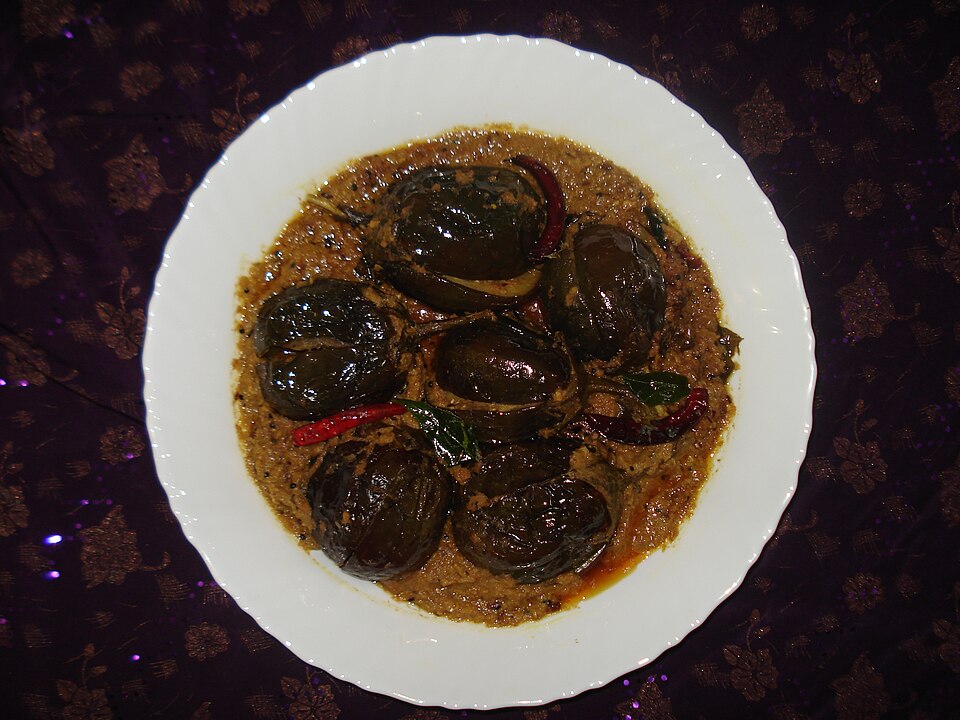
Bagara baingan
 Indian · 55 min · 314 kcal · Vegan
Bakarkhani (Hyderabadi style)
Indian · 2 h · 266 kcal · VegetarianBang bang chicken
 Sichuan · 50 min · 224 kcal
98 more
- Beef bulgogi · Korean
- Beetroot hummus · International
- Bharli vangi · Indian
- Bibim guksu · Korean
- Bibimbap · Korean
- Chicken and Vegetable Stir-Fry · International
- Chicken shawarma · Levantine
- Chicken teriyaki · Japanese
- Chilli crisp · Chinese
- Chirashizushi (scattered sushi bowl) · Japanese
- Cho-gochujang (vinegared chilli sauce) · Korean
- Chongqing chilli chicken · Sichuan
- Chuchitos · Guatemalan
- Cold soba noodle salad with edamame · International
- Cucumber sunomono · Japanese
- Dan dan noodles · Sichuan
- Dohneiiong · Indian
- Dry garlic chutney (vada pav chutney) · Indian
- Dukkah with bread and olive oil · Egyptian
- Ellu podi (sesame powder) · South Indian
- Falafel · Middle Eastern
- Faraa (steamed rice-flour dumplings) · Indian
- Fattet hummus · Levantine
- Ful medames · Egyptian
- Gamja jorim (soy-braised potatoes) · Korean
- Gers ogaily · Bahraini
- Golbheda ko achar · Nepalese
- Goma dare (Japanese sesame sauce) · Japanese
- Grissini torinesi · Italian
- Gur paratha · Punjabi
- Gyeran-jjim · Korean
- Haemul pajeon · Korean
- Hawaiian ahi poke · Pacific Island
- Hummus · Levantine
- Japchae · Korean
- Jeyuk bokkeum · Korean
- Jian dui (sesame balls) · Cantonese
- Jianbing (Chinese breakfast crepe) · Chinese
- Ka'ak al-Quds · Palestinian
- Khaman dhokla · Gujarati
- Kimbap · Korean
- Kimchi fried rice · Korean
- Kleicha · Iraqi
- Kofta bil tahini · Jordanian
- Kolhapuri chicken curry · Indian
- Kongnamul muchim · Korean
- Korean fried chicken (yangnyeom) · Korean
- Lahpet thoke · Burmese
- Lamb tagine with apricots · Moroccan
- Liangpi (cold skin noodles) · Chinese
- Luqaimat · Gulf Arab
- Mango sticky rice · Thai
- Methi thepla · Gujarati
- Mirchi ka salan · Indian
- Molagapodi (idli podi with oil) · South Indian
- Mole poblano · Mexican
- Msabbaha (warm whole-chickpea hummus) · Levantine
- Mu saengchae · Korean
- Nan-e barbari · Iranian
- Nasu dengaku · Japanese
- New York-style bagels · American
- Oi muchim (spicy cucumber salad) · Korean
- Pandhra rassa · Indian
- Pepián de pollo · Guatemalan
- Peynirli poğaça (cheese-filled pastries) · Turkish
- Pulihora (Andhra tamarind rice) · South Indian
- Ramazan pidesi (Turkish pide bread) · Turkish
- Roasted cauliflower soup · International
- Roasted garlic hummus · International
- Roasted red pepper hummus · International
- Rojak buah · Malaysian
- Sabich · Israeli
- Salmon onigiri · Japanese
- Salmon teriyaki · Japanese
- Salsa macha · Mexican
- Samsa · Uzbek
- Sausage rolls · Australian
- Seeded multigrain loaf · British
- Sfouf · Lebanese
- Shan noodles · Burmese
- Sichuan chilli oil (hong you) · Sichuan
- Sigeumchi namul · Korean
- Simit · Turkish
- Spinach goma-ae · Japanese
- Ssamjang · Korean
- Swedish rye crispbread (knäckebröd) · Swedish
- Ta'ameya (Egyptian fava bean falafel) · Egyptian
- Tahini sauce (taratur) · Levantine
- Tajik non · Tajik
- Tambda rassa · Indian
- Tangyuan (black sesame rice balls in ginger syrup) · Chinese
- Thalipeeth · Indian
- Tilachi chutney (Maharashtrian dry sesame chutney) · Indian
- Tteokbokki · Korean
- Wakame and cucumber sesame salad · Japanese
- Xinjiang cumin lamb skewers · Chinese
- Yangnyeom-ganjang (seasoned soy dipping sauce) · Korean
- Yomari · Nepalese