
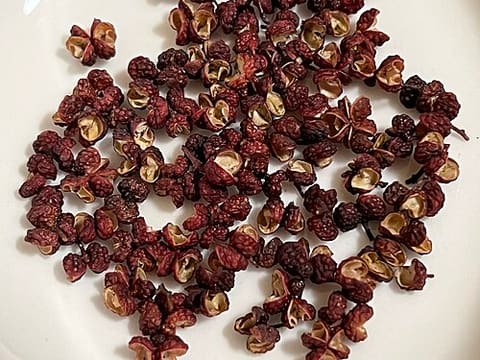
Whole spices
Sichuan peppercorns
Zanthoxylum spp.
Reddish citrus-scented husks that make the mouth tingle and go numb; key to Sichuan mala flavour.
Also called: szechuan pepper, huajiao, timur
- Hot & numbing
- Citrus & bright
- Resinous & piney
- Very mild
Photo: Matt K, via Wikimedia Commons (CC-BY-SA-4.0)
Flavour and aroma
numbing, tingling, lemony, woody. Citrusy, woody, with a buzzing, numbing tingle.
- Heat
- Very mild
- Forms
- whole, ground
How to use it
dry roast · Spice roasting (dry-roasting) technique
Pick out black seeds and stems (they are gritty and bitter). Toast husks in a dry pan over low heat for 2–4 minutes, shaking, until fragrant and just darker.
grind · Dry grinding technique
Grind toasted husks finely and sieve out the papery shell fragments. Use within a few weeks; the numbing compounds fade fast after grinding.
infuse · Simmering technique
For huajiao oil, pour oil heated to about 120–130 °C over the husks and leave to cool; hotter oil scorches them.
bloom in fat · Tadka (tempering) technique
Fry whole husks briefly in oil with dried chillies at the start of a stir-fry, then lift them out if you don't want to bite them.
- Mapo tofu and mala hot pot
- Chilli oils
- Five-spice powder
- Salt-and-pepper dips
- Nepalese timur chutneys
Identifying good quality
Split, rough, reddish-brown husks about 4–5 mm, often open like tiny flowers; green Sichuan pepper (Z. armatum) is olive green and more citrusy. Good quality is mostly husks with few black seeds or twigs and smells strongly of citrus peel. A husk on the tongue should cause tingling within seconds.
- Not to be confused with Sansho pepper: Japanese sansho is a related species, sold mainly ground, more citrusy and less numbing.
- Not to be confused with Black peppercorns: Black pepper is unrelated: round, closed, hot rather than numbing.
- Not to be confused with White pepper: White pepper is the hulled seed of Piper nigrum and has no tingle.
Origin and history
Origin: Western China (Sichuan and neighbouring provinces) and the Himalayas, from several Zanthoxylum species.. Grown and used: Grown in Sichuan, Gansu, Shaanxi and Yunnan; used across China, Tibet, Nepal and Bhutan, and increasingly worldwide..
Sichuan pepper (huajiao) was used in China for well over 2,000 years, long before chillies arrived from the Americas in the late Ming period. It was combined with chilli to produce the numbing-hot (mala) flavour of modern Sichuan cooking. The United States banned imports from 1968 to 2005 because the plants can carry citrus canker; heat-treated peppercorns are now allowed.
Well documented
In masalas, pastes and sauces
- Chinese five-spice powderMasala5 g per batch
- Shichimi togarashiMasala2 g per batch
- Golbheda ko acharSauce0.9 g per batch
- Indo-Chinese schezwan sauceSauce0.9 g per batch
- Dalle khursani achar (Sikkimese round chilli pickle)Sauce1 g per batch
- Sichuan chilli oil (hong you)Sauce3.5 g per batch
- Chilli crispSauce2.6 g per batch
Recipes with sichuan peppercorns
Aloo sadeko
 Nepalese · 30 min · 205 kcal · Vegan
Bang bang chicken
 Sichuan · 50 min · 224 kcal
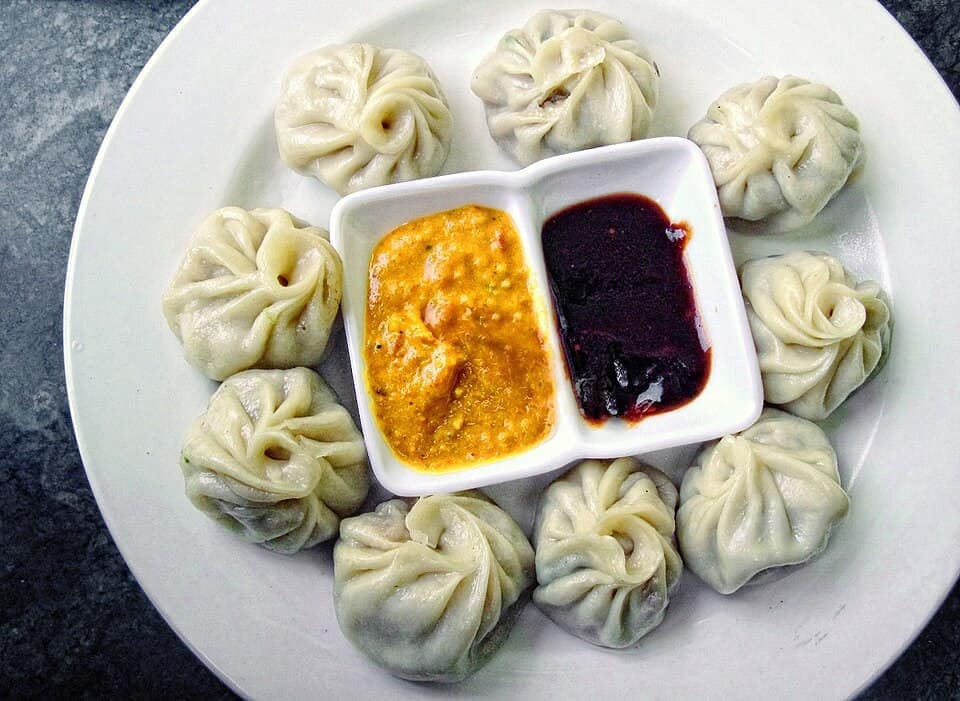
Chicken momo
Nepalese · 2 h · 518 kcal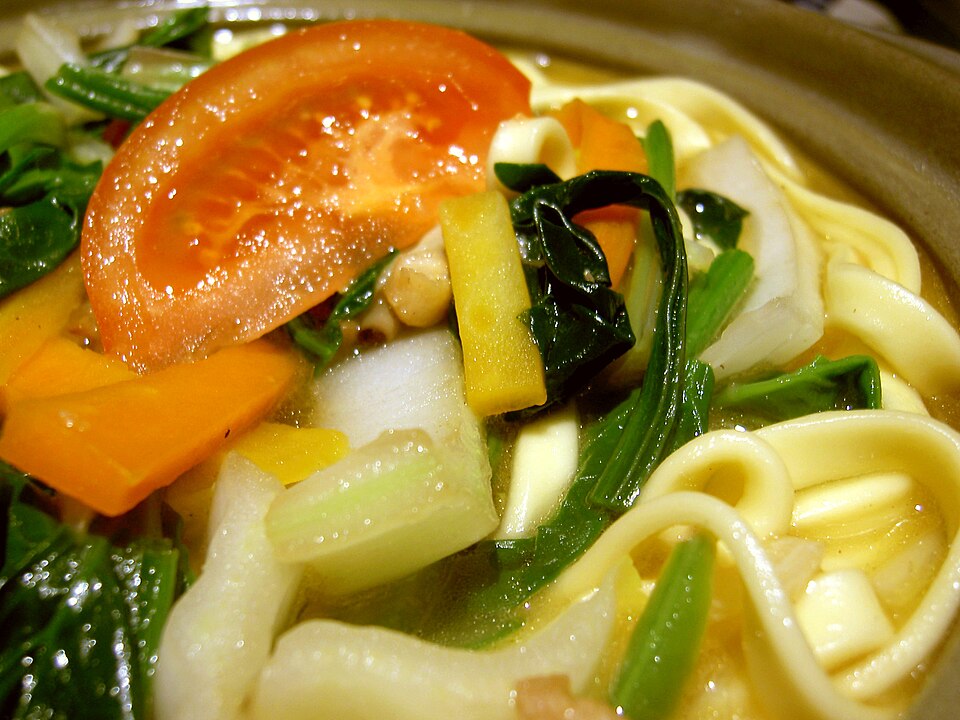
Chicken thukpa
Nepalese · 45 min · 599 kcalChilli crisp
Chinese · 1 h 15 min · 136 kcal · Vegan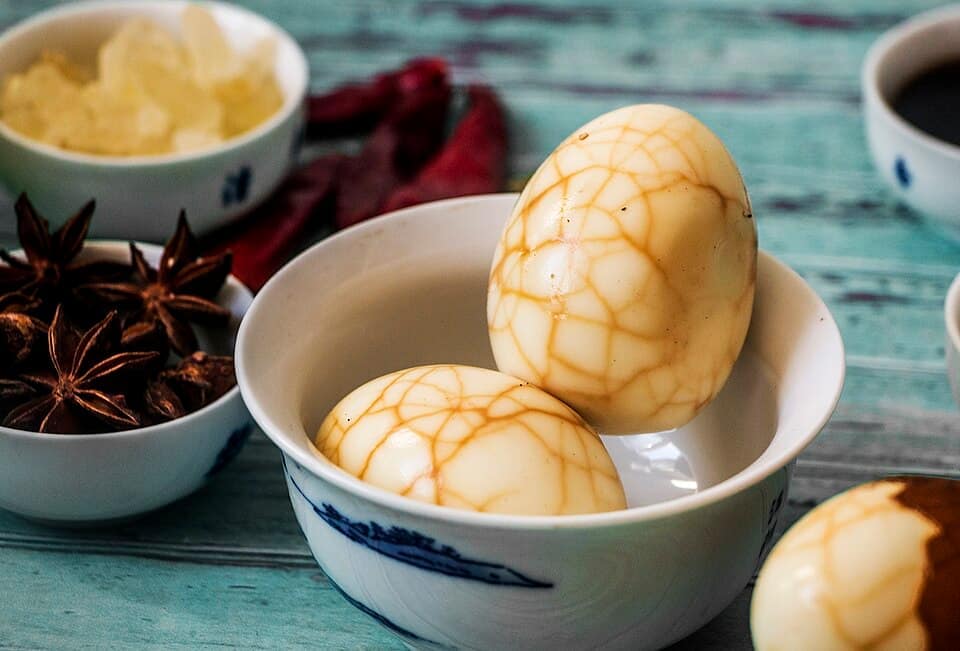
Chinese tea eggs
Chinese · 50 min · 75 kcal · Contains egg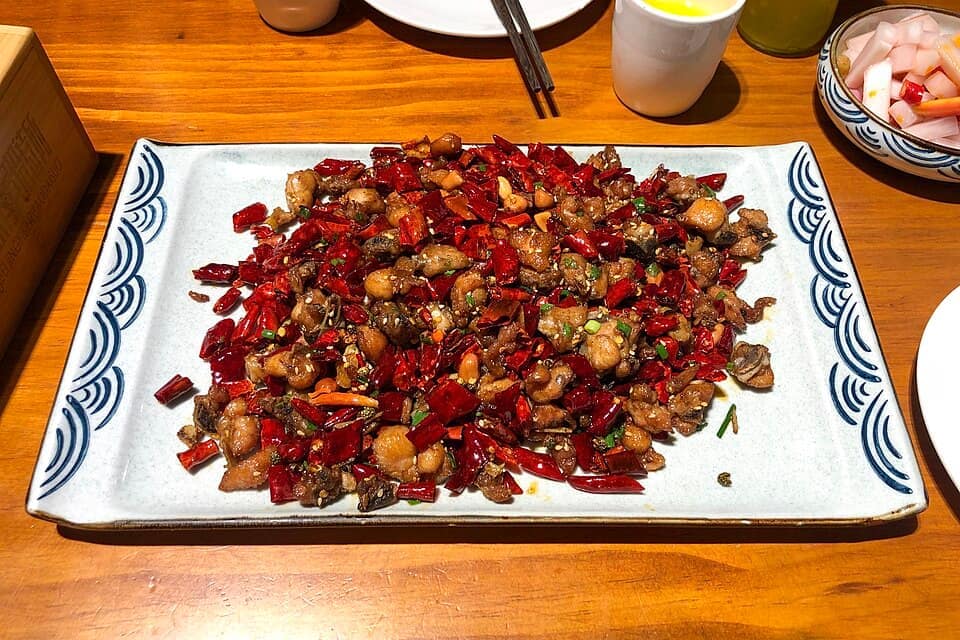
Chongqing chilli chicken
Sichuan · 45 min · 332 kcal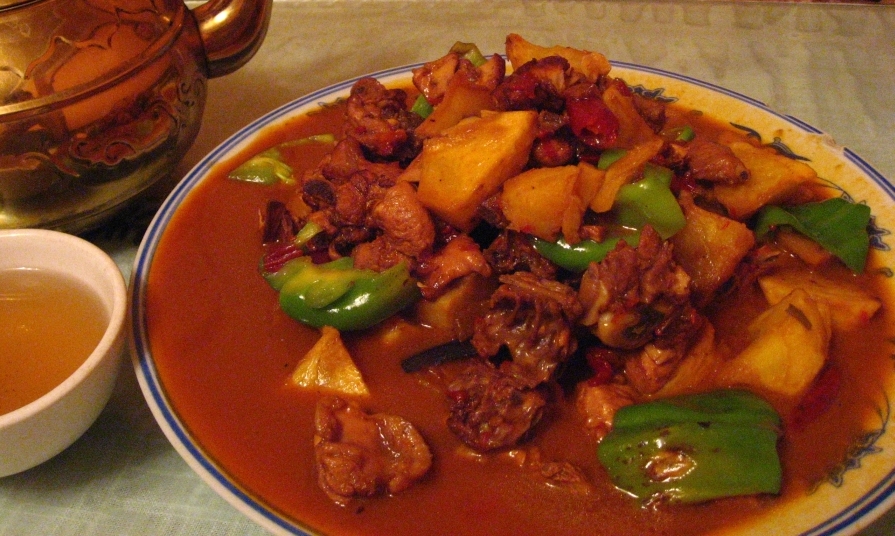
Da pan ji (Xinjiang big plate chicken)
Chinese · 1 h 50 min · 697 kcalDalle khursani achar (Sikkimese round chilli pickle)
 Indian · 72 h 25 min · 18 kcal · Vegan
16 more
- Dan dan noodles · Sichuan
- Golbheda ko achar · Nepalese
- Hot and sour shredded potatoes · Chinese
- Hua juan (steamed scallion flower rolls) · Chinese
- Indo-Chinese schezwan sauce · Indian
- Kung pao chicken · Sichuan
- Kwati · Nepalese
- Liangpi (cold skin noodles) · Chinese
- Mapo tofu · Sichuan
- Phagshapa · Indian
- Sichuan boiled fish · Sichuan
- Sichuan chilli oil (hong you) · Sichuan
- Sichuan cold noodles · Sichuan
- Sichuan dry-fried green beans · Sichuan
- Taiwanese beef noodle soup · Taiwanese
- Xinjiang cumin lamb skewers · Chinese