
Cooking in fat · intermediate
Deep-frying
Cooking food fully submerged in hot oil.
What it is
Deep-frying immerses food completely in oil at 160–190 °C. It is the method for pakoras, samosas, puris, jalebi, chips, tempura and fried chicken.
Why cooks use it: Oil surrounds the food, cooking every surface at once and forming a crisp, dry crust while the inside steams.
The science
Water at the surface boils off vigorously, forming a dry crust and an outward flow of steam that limits oil uptake. Most oil is absorbed as food cools after leaving the fryer, so draining well and frying at the correct temperature both reduce greasiness.
How heat moves into foodThe Maillard reactionSmoke point of fatsFats and oilsOxidation and rancidityMoisture and textureChanging texture: tenderising and crisping
Step by step
Use a deep, heavy pan or a kadhai/wok and fill it no more than half to one-third full with oil.
Heat the oil to the target temperature with a thermometer clipped to the side.
Pat food dry or let excess batter drip off.
Lower food in gently with a slotted spoon in small batches.
Fry, turning, until evenly golden and cooked through.
Lift out, drain on a wire rack, and let the oil recover its temperature before the next batch.
Heat and timing
- Deep-frying 160–190 °C · 160–170 °C for thick or dense items and the first fry of chips; 175–190 °C for quick-cooking items, puris and the second fry.
Time: 1–2 minutes for puris; 3–5 minutes for pakoras; double-fried chips about 5–6 minutes then 2–3 minutes.
How you know it’s right
- Food rises and floats
- Bubbles become smaller and quieter as moisture leaves
- Puris puff fully when pressed gently
- Even golden colour
Common mistakes
- Oil not hot enough (greasy food)
- Too many pieces at once
- Wet food or ice crystals going in
- Reusing dark, foamy oil
Troubleshooting
- Greasy, heavy pakoras
- Raise the oil to 175–180 °C, fry smaller batches and drain on a rack.
- Dark outside, raw inside
- Lower to 160–165 °C or make smaller pieces; double-fry thick items.
- Oil foaming
- It is old or contaminated; replace it.
Restaurant DNA
How professionals do it
Restaurant fryers hold oil at a set temperature and are filtered daily. Kitchens commonly blanch chips and some fried items at a lower temperature ahead of service and finish them hot to order.
At home
A heavy kadhai or Dutch oven with a clip-on thermometer, small batches, and a wire rack instead of paper towels.
General professional practice — not any particular restaurant’s recipe.
Food safety
- Keep oil between 160 and 190 °C; never let it smoke.
- Never fill the pan more than half full, and never add water or wet food in quantity.
- If oil catches fire, turn off the heat and cover with a lid or fire blanket; never use water.
- Cool used oil completely before straining or disposing of it.
Practise it
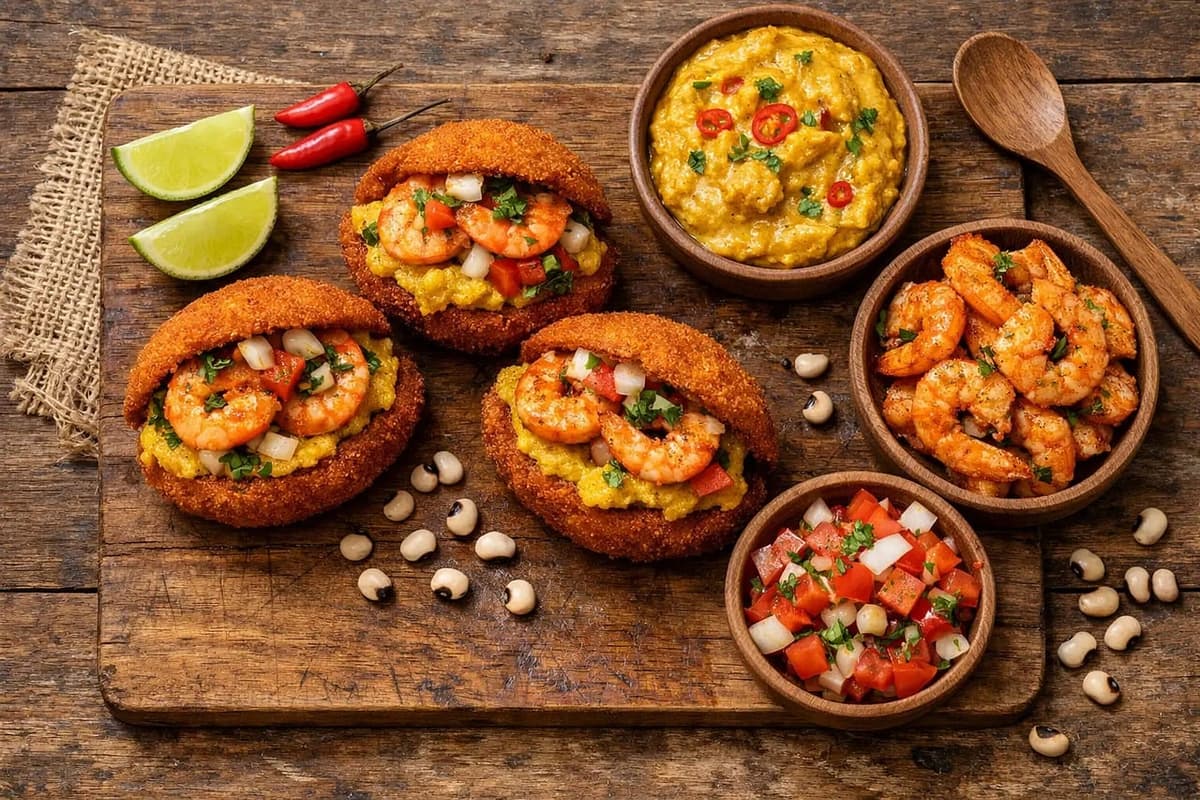
Acarajé
 Brazilian · 1 h 20 min · 534 kcal
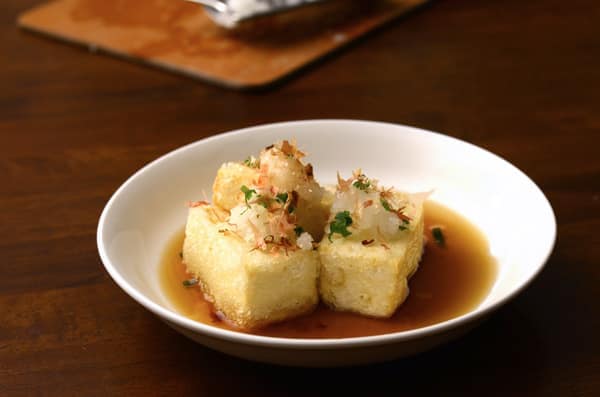
Agedashi tofu
 Japanese · 30 min · 329 kcal
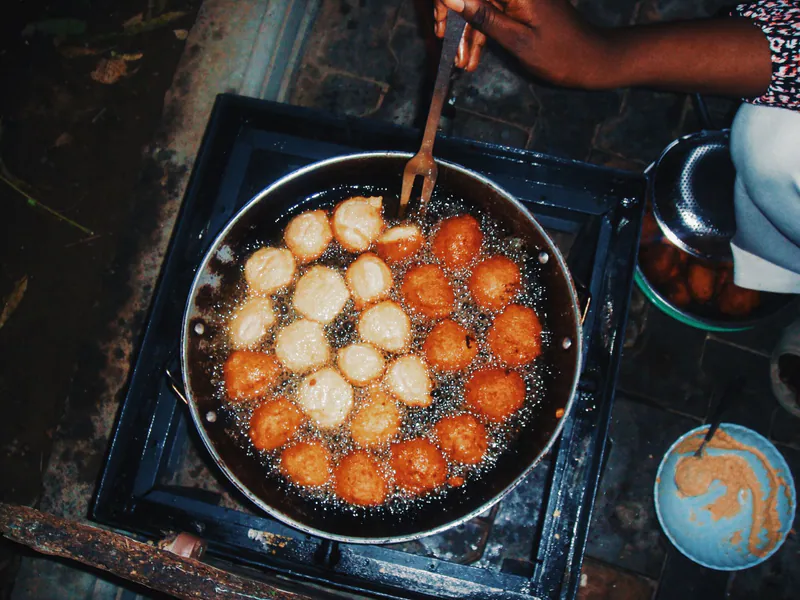
Akara
 Nigerian · 55 min · 338 kcal · Vegan
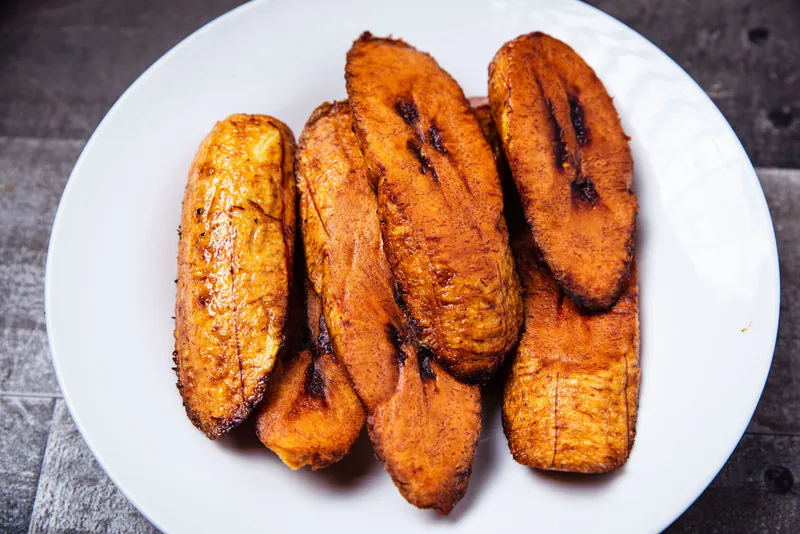
Aloko
 Ivorian · 25 min · 356 kcal · Vegan
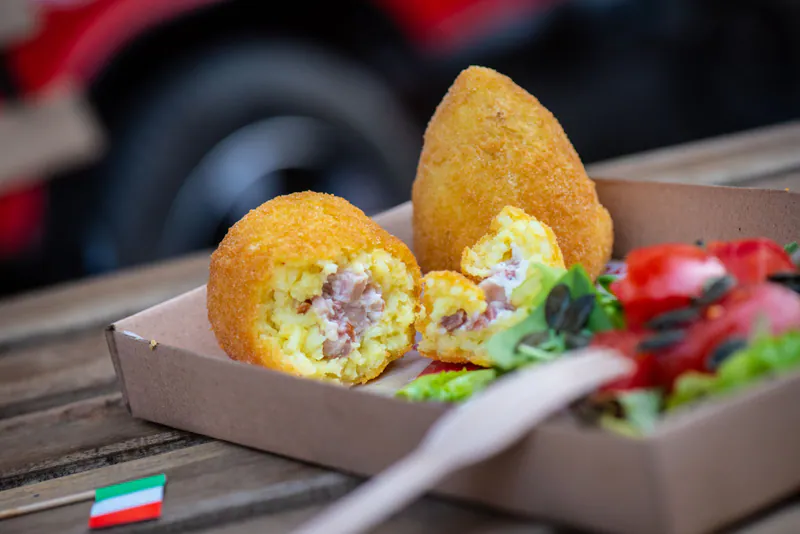
Arancini
 Italian · 3 h 20 min · 285 kcal · Contains egg
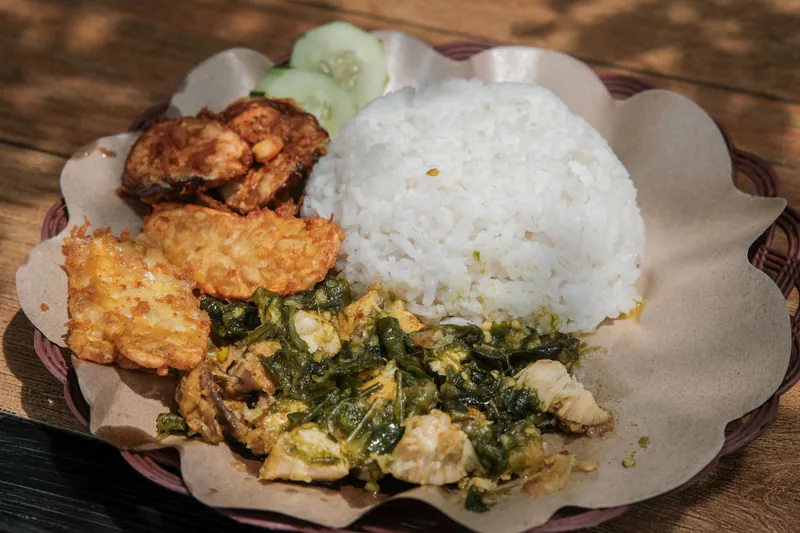
Ayam goreng kuning
 Indonesian · 1 h 10 min · 639 kcal
Bacalhau à brás
 Portuguese · 55 min · 581 kcal
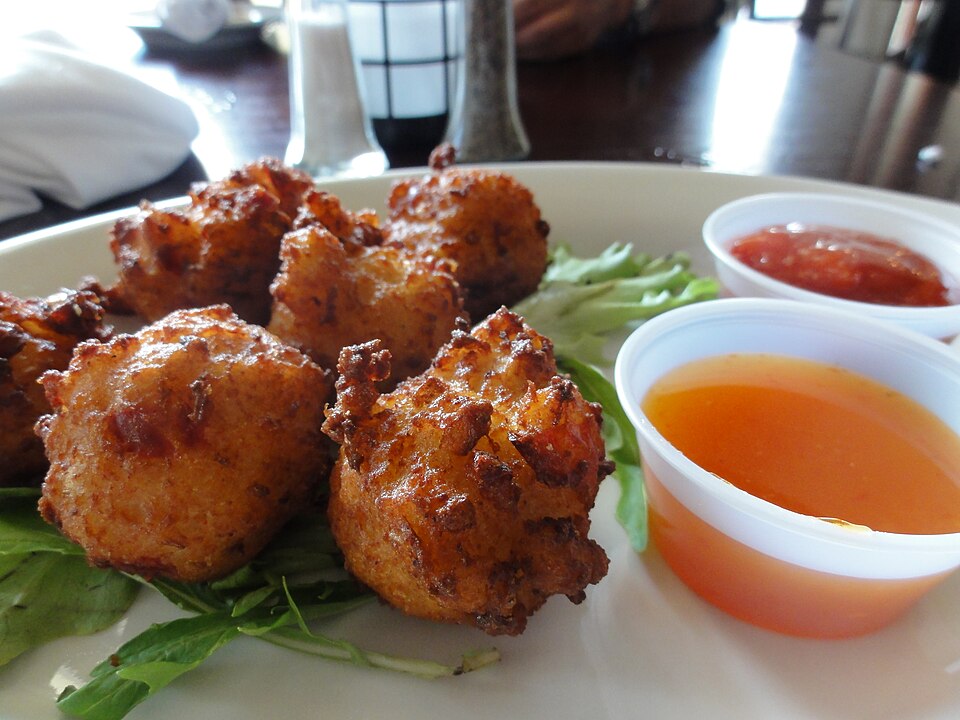
Bahamian conch fritters
 Bahamian · 1 h · 307 kcal
Bajan fish cakes
 Bajan · 55 min · 348 kcal
112 more
- Bandeja paisa · Colombian
- Baursak · Kazakh
- Beignets de banane · Gabonese
- Bitterballen · Dutch
- Bolinhos de bacalhau · Portuguese
- Cannoli siciliani · Italian
- Carimañolas · Panamanian
- Carne de porco à alentejana · Portuguese
- Chả giò (fried spring rolls) · Vietnamese
- Chana samosa (Chhattisgarh street-style) · Indian
- Chicken and waffles · Southern US
- Chicken karaage · Japanese
- Chicken Kyiv · Ukrainian
- Chin chin · Nigerian
- Chipsi mayai · Tanzanian
- Chole bhature · Punjabi
- Chongqing chilli chicken · Sichuan
- Churros con chocolate · Spanish
- Corn fritters · New Zealand
- Coxinha · Brazilian
- Croquetas de jamón · Spanish
- Curry puffs · Singaporean
- Dahi baray · Pakistani
- Dehrori (Chhattisgarhi rice fritters in syrup) · Indian
- Dodo (fried plantain) · Nigerian
- Doubles · Trinidadian
- Empanadas colombianas · Colombian
- Falafel · Middle Eastern
- Fish and chips · British
- Fried kibbeh · Syrian
- Fry jacks · Belizean
- Fuchka · Bangladeshi
- Garba · Ivorian
- Gâteau piment · Mauritian
- Gol gappay · Pakistani
- Griot · Haitian
- Gulab jamun · Indian
- Gulha · Maldivian
- Guo bao rou (Dongbei sweet and sour crispy pork) · Chinese
- Halwa puri · Pakistani
- Hojaldras · Panamanian
- Huevos rotos (broken eggs over fried potatoes) · Spanish
- Jalebi · Indian
- Jian dui (sesame balls) · Cantonese
- Kadhi pakora · Punjabi
- Kafteji · Tunisian
- Katsudon · Japanese
- Kelewele · Ghanaian
- Khanfaroosh · Qatari
- Khao soi gai · Thai
- Khuushuur (Mongolian fried meat pastries) · Mongolian
- Koeksisters · South African
- Korean fried chicken (yangnyeom) · Korean
- Kubbat halab · Iraqi
- Kuli-kuli · Beninese
- Lahori chargha · Pakistani
- Lahori fish fry · Pakistani
- Lángos · Hungarian
- Lomo saltado · Peruvian
- Loukoumades · Greek
- Luchi · Bengali
- Lumpia shanghai · Filipino
- Luqaimat · Gulf Arab
- Makemba · Congolese
- Malai kofta · Indian
- Manchow soup · Indian
- Mandazi · Kenyan
- Medu vada · South Indian
- Mofongo · Caribbean
- Moules-frites · Belgian
- Mulgipuder · Estonian
- Nasi katok · Bruneian
- Oshi palov · Tajik
- Papa rellena · Peruvian
- Papanași · Romanian
- Pastel com diabo dentro · Cape Verdean
- Pastel de feira · Brazilian
- Patatas bravas · Spanish
- Pelēkie zirņi ar speķi · Latvian
- Perkedel kentang · Indonesian
- Pique macho · Bolivian
- Poulet DG · Cameroonian
- Poutine · Canadian
- Priganice (fried dough puffs) · Montenegrin
- Puff-puff · Nigerian
- Rellenitos de plátano · Guatemalan
- Salt and pepper tofu · Cantonese
- Scotch eggs · British
- Sel roti · Nepalese
- Shandong sweet and sour carp · Chinese
- Shrimp and vegetable tempura · Japanese
- Sigara böreği · Turkish
- Smažený sýr · Czech
- Somali sambusa · Somali
- Sopa de maní · Bolivian
- Sopaipillas · Chilean
- Southern fried chicken · Southern US
- Sweet and sour pork · Cantonese
- Ta'ameya (Egyptian fava bean falafel) · Egyptian
- Taiwanese popcorn chicken · Taiwanese
- Tequeños · Venezuelan
- Thekua · Indian
- Tonkatsu · Japanese
- Torta frita · Uruguayan
- Tortang talong · Filipino
- Tostones · Caribbean
- Turon · Filipino
- Uyghur polo (lamb and carrot pilaf) · Chinese
- Vada pav · Indian
- Vetkoek · South African
- Yakgwa (Korean honey cookies) · Korean
- Yuca frita con chicharrón · Salvadoran