
Ingredients and chemistry · intermediate
Oxidation and rancidity
Oxygen slowly damages fats, aromas and some vitamins, making oils rancid and spices dull.
What happens
Oxygen reacts with many food components, especially unsaturated fats. The reaction starts slowly but speeds up as it goes, producing small, smelly compounds that give the cardboard, paint-like or fishy smell of rancid oil, old nuts and stale whole-wheat flour. Light, heat, metals such as iron and copper, and moisture speed it up. Aroma compounds in ground spices and herbs also oxidise and evaporate, so they lose their character. Some vitamins, especially vitamin C, are destroyed by oxygen, heat and light. This is a separate process from enzymatic browning, though both involve oxygen.
Why it matters in the kitchen
Most 'old' tastes in the pantry are oxidation. Storing fats, nuts, flours and spices properly keeps them tasting fresh far longer.
Temperatures and conditions
- Room-temperature storage, light 20–35 °C · Oxidation steady; worse in hot kitchens.
- Refrigerator slows oxidation 0–5 °C
- Freezer slows it further, but doesn't stop it from -18 °C
- Frying temperatures speed it greatly 160–190 °C
In practice
- Walnuts and whole-wheat flour going bitter and stale in a warm cupboard.
- Ground garam masala losing its fragrance within months.
- Leftover meat developing a 'warmed-over' flavour when reheated.
- Oily fish such as mackerel smelling stronger after a few days.
Myths and facts
Myth: Ground spices keep forever because they don't go mouldy.
Fact: They rarely spoil, but their aroma oxidises and evaporates. Most ground spices are at their best within about 6 months to a year; whole spices keep their character much longer.
Myth: If oil doesn't smell bad yet, it's fresh.
Fact: Rancidity starts before you can smell it, and the nose gets used to it. Smell a little warmed in a pan, and compare with a fresh bottle if unsure.
Myth: Freezing stops all deterioration.
Fact: Freezing slows oxidation a lot but doesn't stop it, so fatty fish and nuts still decline slowly in the freezer, especially if not airtight.
Use it to cook better
- Buy whole spices and grind small amounts as needed; store in airtight containers away from the stove and sunlight.
- Keep nuts, seeds, whole-wheat flour and flaxseed in airtight containers in the fridge or freezer in hot weather.
- Store oil in dark bottles or cupboards with the cap closed; buy sizes you'll use within a few months of opening.
- Squeeze lemon on cut fruit and cook vegetables quickly with little water to keep vitamin C.
- Wrap fatty foods tightly, pressing out air, before freezing.
Try it at home
Fresh versus old spice
You need: A spoonful of whole cumin or coriander seeds, A jar of the same spice ground a long time ago, A mortar and pestle or spice grinder
- Grind the whole seeds.
- Smell the freshly ground spice and the old ground spice one after the other.
- Warm a pinch of each in a dry pan for 20 seconds and smell again.
What you’ll see: The freshly ground spice smells far stronger and brighter; the old one is flat or dusty because its aroma compounds have oxidised and evaporated.
Going deeper
Fat oxidation is a free-radical chain reaction: once started, each radical can trigger many more reactions, which is why rancidity accelerates. Antioxidants such as vitamin E, compounds in rosemary and the sesamol in sesame oil interrupt the chain. Polyunsaturated fats with more double bonds oxidise much faster; omega-3 fats in flaxseed and fish are especially sensitive.
Ingredients it affects most
Techniques that rely on it
Worth double-checking
- Spice shelf-life figures are general guidance and vary with spice, storage and climate.
 South Indian · 1 h 35 min · 567 kcal
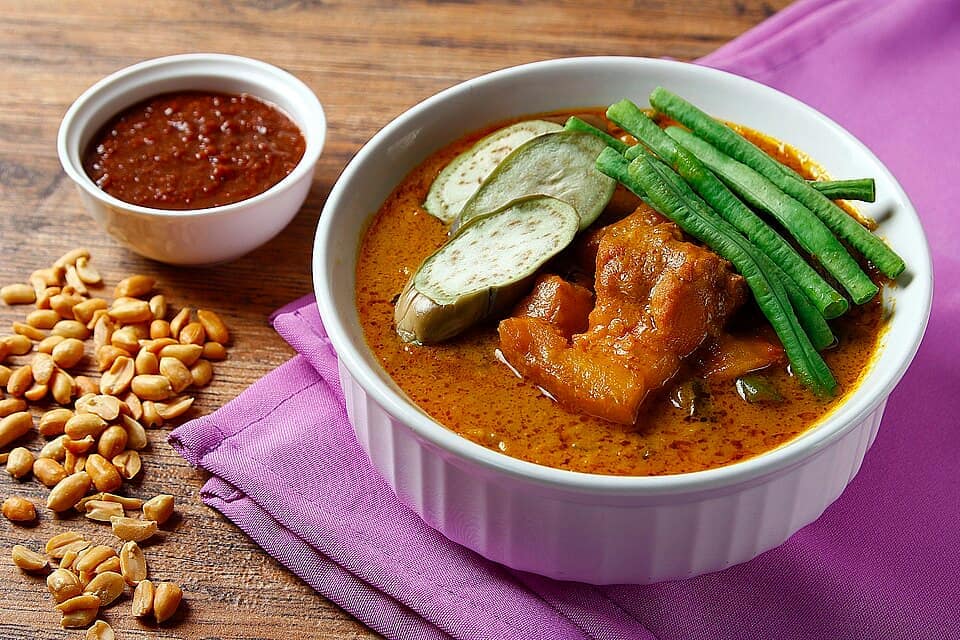
 Filipino · 3 h 5 min · 441 kcal

 Thai · 30 min · 235 kcal
 Sri Lankan · 1 h 45 min · 610 kcal