
Advanced food science · intermediate
Changing texture: tenderising and crisping
Mechanical work, enzymes, salt, acid, alkali and heat all change how tough, tender, crisp or soft food is.
What happens
Toughness in meat comes from muscle fibres and connective tissue. Cutting across the grain, pounding and mincing shorten fibres mechanically. Enzymes in raw papaya (papain), pineapple (bromelain), kiwi (actinidin) and ginger break proteins down on the surface. Salt dissolves some proteins so meat holds more water. Yogurt and buttermilk tenderise gently; strong acids can make the surface mushy. Alkali such as a little baking soda raises the pH of meat so it holds water and stays tender, which is the basis of restaurant 'velveting' in Chinese cooking. Long, gentle heat converts collagen into gelatin. For crispness, starches like rice flour and cornflour, double-frying and drying the surface create brittle, dry structures.
Why it matters in the kitchen
Picking the right method for the cut and dish turns tough meat tender without turning it mushy, and keeps fried coatings crisp.
Temperatures and conditions
- Fruit enzymes most active 50–70 °C · They work fastest as meat warms during cooking, then are destroyed by higher heat.
- Collagen to gelatin (braising) 70–95 °C · Takes hours; faster at higher temperatures.
- Marinate in the fridge 0–5 °C
In practice
- Raw papaya paste in kebab and mutton marinades.
- Yogurt marinades for tandoori chicken.
- Velveted chicken in Indo-Chinese stir-fries.
- Slow-cooked mutton curry and nihari, tender from long cooking.
- Pakoras and fried chicken made crisper with rice flour or cornflour.
Myths and facts
Myth: The longer the marinade, the more tender the meat.
Fact: Enzyme and acid marinades work mostly on the surface and can turn it mushy or mealy if left too long. Raw papaya or pineapple usually needs only 30 minutes to a few hours.
Myth: Marinades soak right into the meat.
Fact: Most marinade flavours penetrate only a few millimetres, even overnight. Salt travels deeper over time. Thin cuts, scoring and minced meat get the most effect.
Myth: Slow cooking makes every cut tender.
Fact: Lean, tender cuts like chicken breast or tenderloin get dry and stringy with long cooking. Slow cooking suits cuts with lots of collagen, like shoulder, shank and neck.
Use it to cook better
- Slice cooked meat across the grain, and cut stir-fry meat thinly across the grain before cooking.
- Use raw papaya, pineapple or kiwi in small amounts and for short times; taste the timing on a test batch.
- For velveting, toss sliced meat with a small amount of baking soda (or egg white and cornflour), rest it, then rinse or blanch before stir-frying.
- Choose slow braising for collagen-rich cuts and fast, precise cooking for lean, tender ones.
- For crisp coatings, mix rice flour or cornflour into batters and fry at a steady 170–190 °C, or double-fry.
Try it at home
Across the grain or along it
You need: A small piece of cooked beef, lamb or chicken thigh, A sharp knife, A cutting board
- Look at the cooked meat and find the direction of the muscle fibres (the lines running through it).
- Cut two thin slices: one across the fibres and one along them.
- Chew each and compare.
What you’ll see: The slice cut across the grain is much easier to chew, because the knife has already shortened the tough fibres.
Use cooked meat only, and take care with the knife.
Going deeper
Fruit proteases such as papain and bromelain are most active at roughly 55–75 °C, so much of their effect happens as the meat heats during cooking, then stops as they are denatured. Alkaline treatments raise meat pH away from the point where its proteins hold least water (about pH 5.2–5.5), increasing water retention. Collagen solubility also depends on the animal's age, as older animals have more cross-linked collagen, which is why mutton needs longer cooking than lamb.
Ingredients it affects most
Techniques that rely on it
Worth double-checking
- Optimum temperatures for fruit enzymes vary between sources; the ranges are approximate.
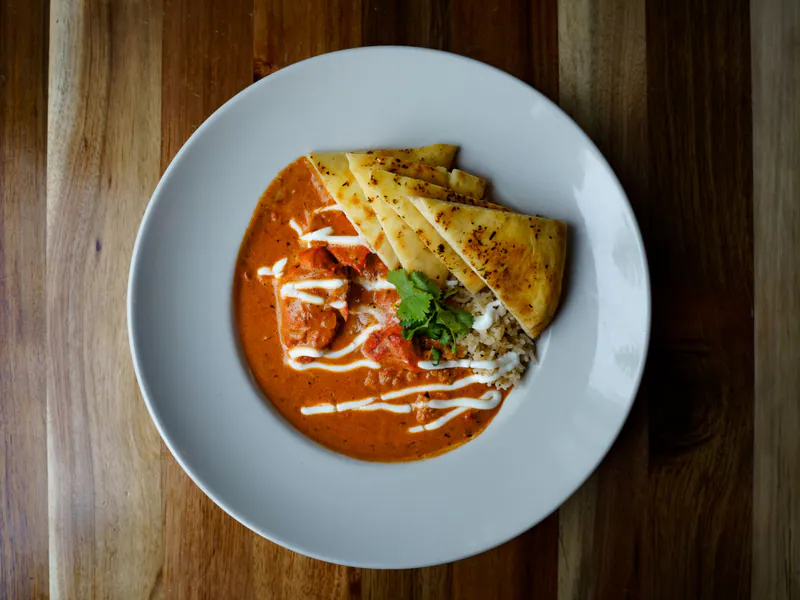
 Punjabi · 2 h 5 min · 559 kcal
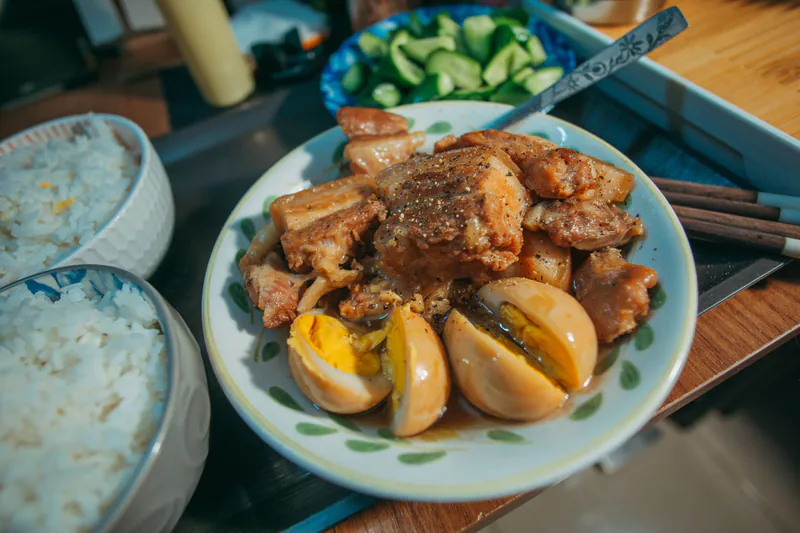
 Filipino · 1 h 30 min · 529 kcal
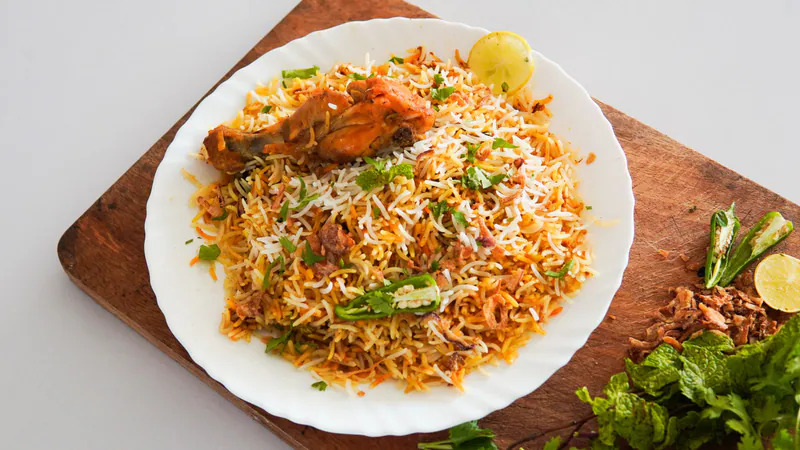
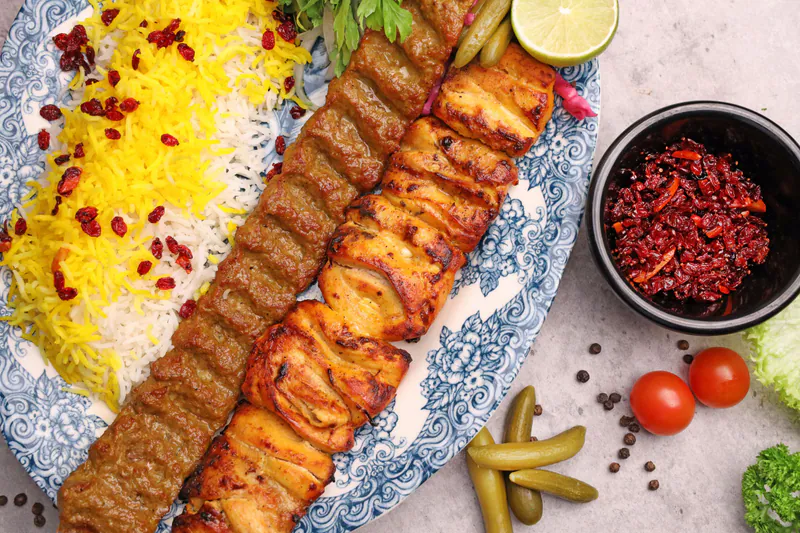
 Iranian · 4 h 35 min · 370 kcal
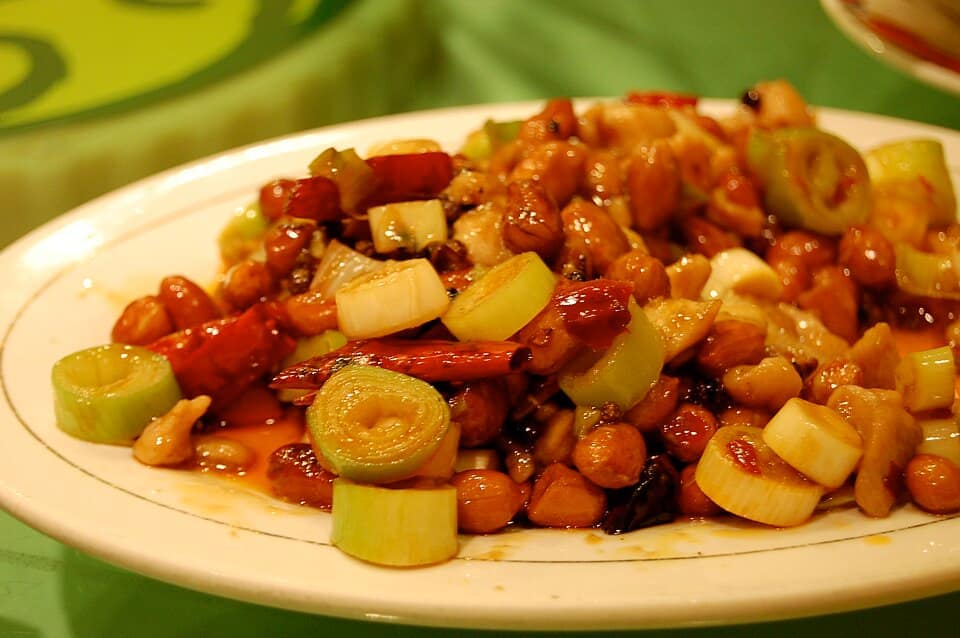
 Sichuan · 35 min · 341 kcal
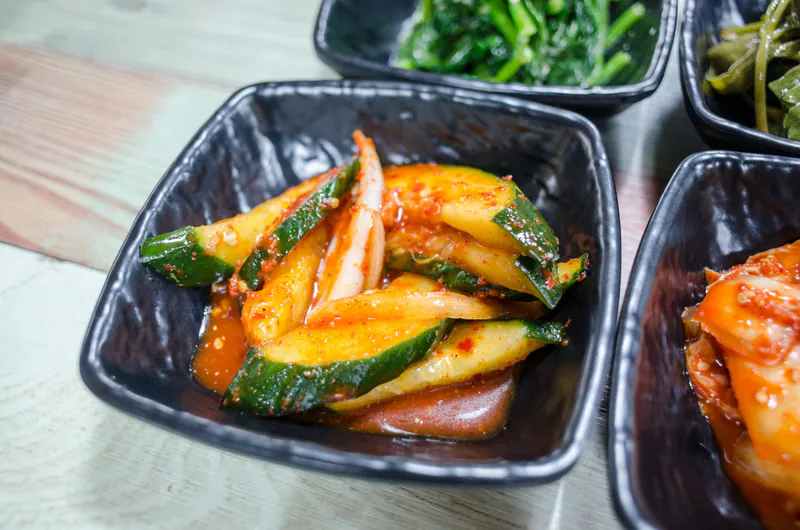
 Korean · 15 min · 49 kcal
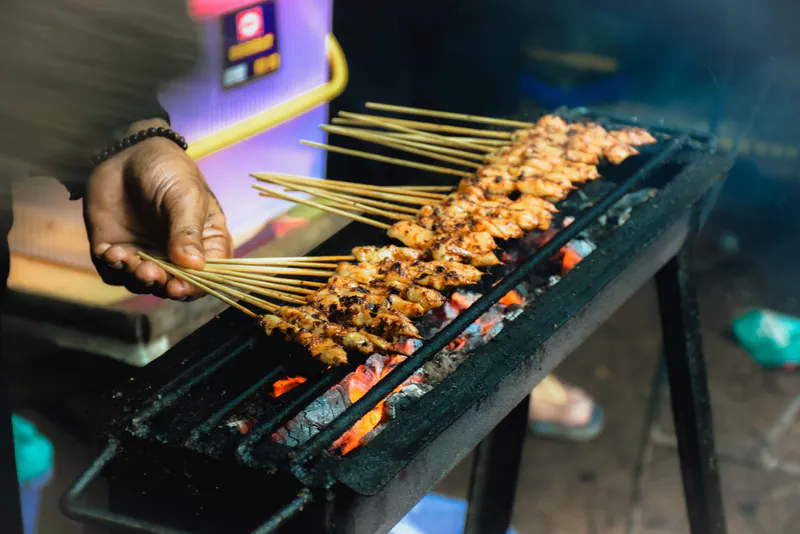
 Indonesian · 1 h 50 min · 473 kcal
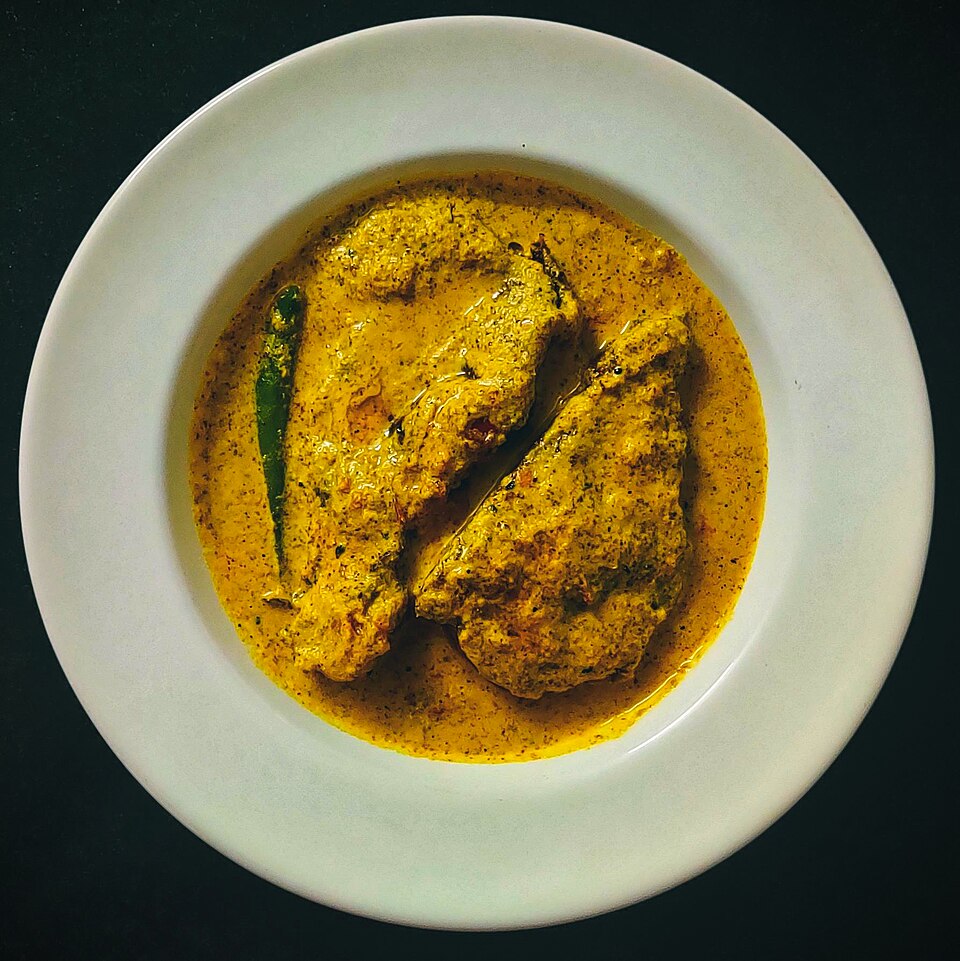
 Bangladeshi · 45 min · 456 kcal