
Utensils & kitchen tools · Knife
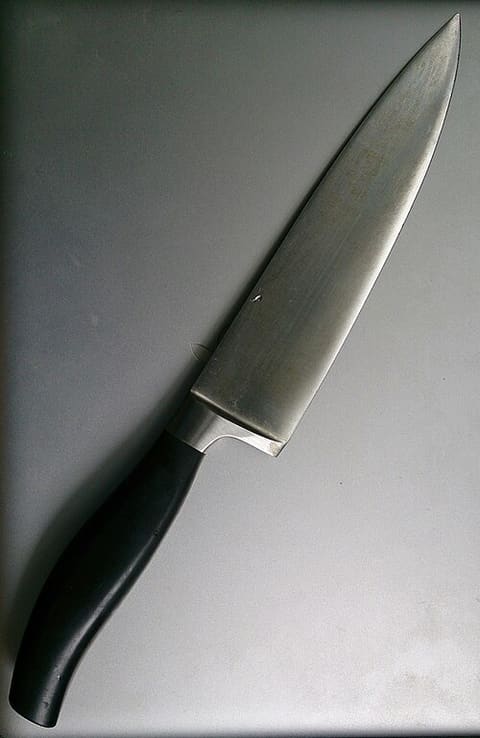
Chef's knife
A broad, all-purpose kitchen knife, usually 18–25 cm, for chopping, slicing, dicing and mincing.
Essential in most kitchens · Manual · 140 recipes
Photo: ProjectManhattan, via Wikimedia Commons (CC-BY-SA-3.0)
What it is
A knife with a wide blade that curves gently towards the tip, so it can rock on the board. The broad heel gives knuckle clearance and power for hard vegetables. Japanese gyuto are lighter and harder; santoku are shorter and flatter with less curve. It is the main workhorse of the kitchen.
What it’s for: Most cutting tasks on a chopping board, from onions to meat to herbs.
How to use it
- Grip the handle with your thumb and forefinger pinching the blade just ahead of the handle.
- Curl the fingertips of the other hand into a 'claw' to hold food, knuckles against the blade.
- Rock the blade, keeping the tip on the board, or slice forwards and down.
- Use the spine, not the edge, to scrape food across the board.
Good to know
- Tasks
- chopping onions and garlic, dicing vegetables, mincing herbs, slicing meat, crushing garlic with the flat of the blade, breaking down poultry
- Materials
- stainless steel, high-carbon steel, ceramic, Damascus steel
- Care and cleaning
- Wash by hand, dry at once and store in a block, guard or on a magnetic strip. Hone regularly and sharpen when it stops gripping a tomato skin. Carbon steel rusts if left wet.
- Limitations
- Too big for fine peeling and too smooth for crusty bread.
Safety
- A sharp knife is safer than a blunt one, which slips.
- Never leave knives in a sink of water.
- Use a stable board with a damp cloth underneath.
If you don’t have one
- Santoku — Shorter and flatter, good for push-cutting; works for nearly all the same tasks.
- Food processor — For large-volume chopping.
Equipment guide
How it works: A thin, sharp edge concentrates force onto a tiny area so it parts food rather than crushing it. A curved belly lets the knife rock for mincing; the blade's weight and balance decide how much work your hand does. A sharp knife needs less pressure and so is safer than a dull one.
| Material | Good | Watch out |
|---|---|---|
| Stainless steel (German-style, about 56–58 HRC) | Tough and resistant to chipping and rust; easy to hone. | Softer, so it loses its edge sooner. |
| Harder stainless steel (Japanese-style, about 60–63 HRC) | Holds a very sharp, thin edge for longer. | Thinner edges can chip on bones, frozen food or twisting. |
| Carbon steel | Takes a very keen edge and is easy to sharpen. | Rusts and discolours; reacts with acidic foods. |
| Ceramic | Stays sharp a long time; non-reactive. | Brittle; chips and cannot be sharpened at home. |
- Western chef's knife
- 20–25 cm, curved belly; rocking and chopping.
- Gyuto
- Japanese chef's knife; thinner, lighter.
- Santoku
- Shorter (16–18 cm), flatter; push cutting.
- Chinese cleaver (cai dao)
- Wide, thin blade; slicing and scooping.
- Nakiri
- Flat edge for vegetables.
Buying guidance
Starting out: A 20 cm stainless chef's knife or 18 cm santoku that feels balanced in your hand, plus a honing steel.
Keen cook: A harder-steel gyuto and a whetstone (about 1000 grit) for sharpening.
Professional: Cooks choose by task and maintain their own edges on stones.
- Blade length: 18–24 cm
- Steel hardness (HRC) and type
- Edge angle about 15–20° per side
- Full or near-full tang, comfortable grip
- Weight and balance point that suit you
No brands or prices — check current reviews before buying.
Related tools


Recipes that use it
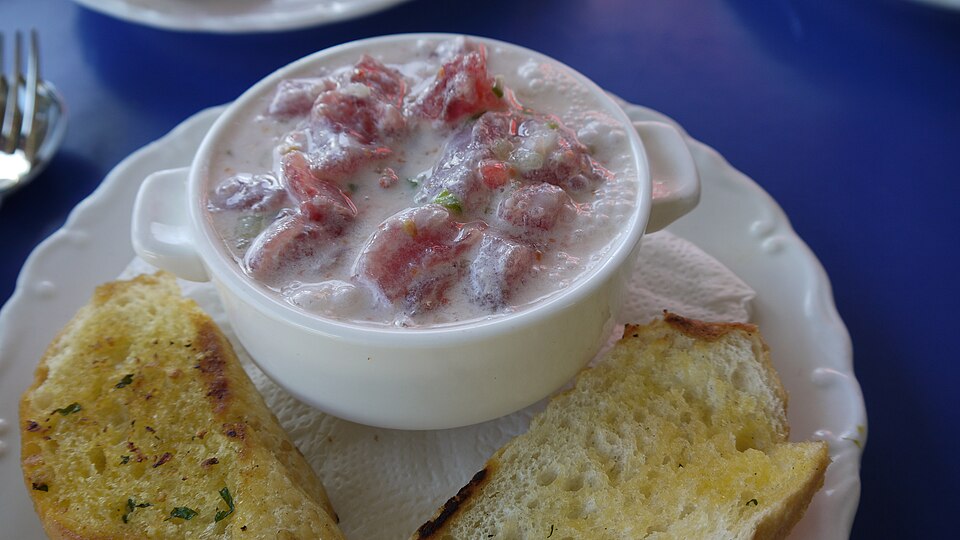
'Ota 'ika
 Tongan · 50 min · 235 kcal
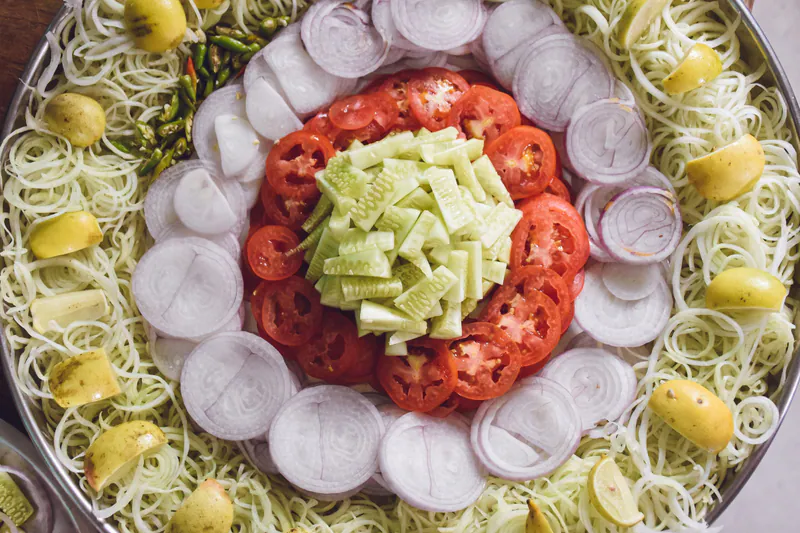
Achichuk
 Uzbek · 15 min · 33 kcal · Vegan
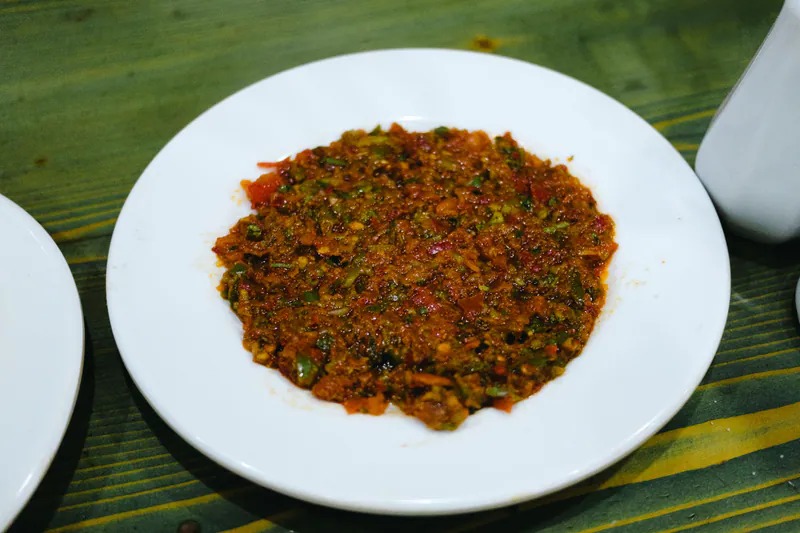
Acılı ezme (Turkish spicy tomato-pepper relish)
 Turkish · 40 min · 73 kcal · Vegan
Agua de melón
 Mexican · 10 min · 73 kcal · Vegan
Andhra tomato pachadi
 South Indian · 50 min · 56 kcal · Vegan
Apple cinnamon oat breakfast smoothie
International · 10 min · 306 kcal · Vegetarian
Avakaya (Andhra mango pickle)
South Indian · 73 h · 49 kcal · VeganBaba ghanoush (Lebanese-Syrian chopped style)
 Lebanese · 1 h 5 min · 123 kcal · Vegan
Beerakaya pachadi (ridge gourd chutney)
South Indian · 41 min · 69 kcal · Vegan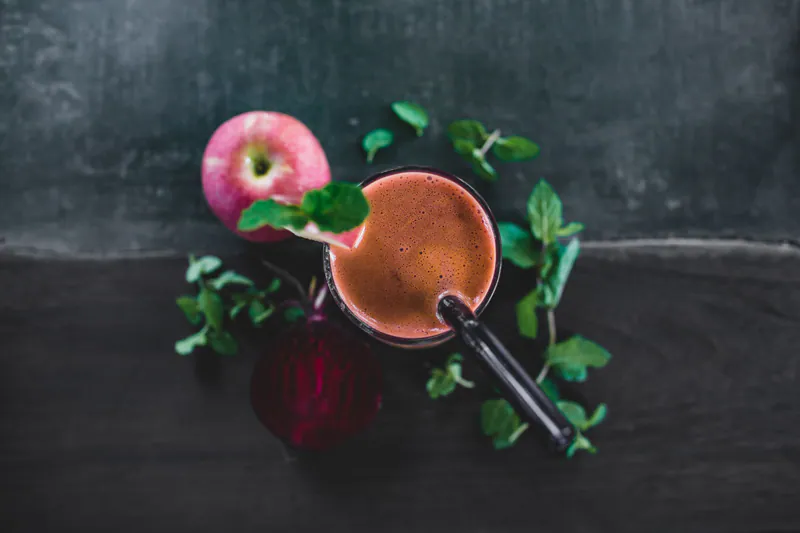
Beetroot, carrot and apple juice
International · 15 min · 104 kcal · Vegan
Bilahi pitika (Assamese roasted tomato mash)
Indian · 26 min · 39 kcal · VeganBudu (Timorese tomato relish)
 Timorese · 20 min · 25 kcal · Vegan
128 more
- Anardana chutney (dried pomegranate seed chutney) · Punjabi
- Burani raita (Hyderabadi garlic raita) · Indian
- Chana chaat · Indian
- Chermoula · Moroccan
- Chickpea and Bulgur Herb Salad · Mediterranean
- Chile con queso · Tex-Mex
- Chimichurri · Argentine
- Chinese plum sauce · Cantonese
- Chocolate babka · Polish
- Chocolate sauce · French
- Classic Tuna Salad · International
- Çoban salatası · Turkish
- Colombian ají picante · Colombian
- Creamy Coleslaw · International
- Croissants · French
- Cucumber sunomono · Japanese
- Danish pastries (spandauer) · Danish
- Dhonepata bata (Bengali coriander paste) · Bengali
- Dry fruit paratha · Indian
- Eromba (Manipuri fermented fish and vegetable mash) · Indian
- Espagnole sauce · French
- Fermented bamboo shoot chutney · Indian
- French onion dip · American
- Fresh egg pasta (pasta all'uovo) · Italian
- Fresh orange juice · International
- Fresh pineapple juice · International
- Fresh pomegranate juice · Middle Eastern
- Fresh pressed apple juice · International
- Fruta picada con chile · Mexican
- Gavurdağı salatası · Turkish
- Goan green chutney (coconut-coriander chutney) · Goan
- Gotu kola sambol · Sri Lankan
- Greek village salad · Greek
- Green chutney (coriander-mint) · Indian
- Green coconut chutney · South Indian
- Green cucumber, celery and apple juice · International
- Green goddess dressing · American
- Gremolata · Italian
- Grilled chicken salad · International
- Grilled halloumi with watermelon and mint · Cypriot
- Guasacaca · Venezuelan
- Gujarati lili chutney (coriander-peanut chutney) · Gujarati
- Hari mirch chutney (green chilli chutney) · Indian
- Hawaiian ahi poke · Pacific Island
- Hiyayakko · Japanese
- Htipiti (roasted red pepper and feta dip) · Greek
- Hua juan (steamed scallion flower rolls) · Chinese
- Insalata caprese · Italian
- Israeli salad · Israeli
- Kachumbari · Kenyan
- Kachumber · Indian
- Kairi pudina chutney (raw mango-mint chutney) · Indian
- Kancha aamer chutney (Bengali green mango chutney) · Bengali
- Khari biscuit · Indian
- Kısır (bulgur salad) · Turkish
- Kokoda · Pacific Island
- Kolhapuri lal thecha (red chilli-garlic thecha) · Indian
- Kothamalli thogayal (coriander chutney) · South Indian
- Kouign-amann · French
- Labneh with za'atar and olive oil · Levantine
- Laccha pyaz · Punjabi
- Limonada suíça (Brazilian lemonade) · Brazilian
- Mas huni · Maldivian
- Medialunas (Argentine croissants) · Argentine
- Mediterranean Chickpea Salad · Mediterranean
- Melitzanosalata (Greek smoky aubergine dip) · Greek
- Melonpan · Japanese
- Mint sauce · British
- Mixed fruit juice · International
- Mizeria · Polish
- Mohabbat ka sharbat · Indian
- Mooli ki chutney (fresh radish chutney) · Indian
- Mu saengchae · Korean
- Nam jim seafood · Thai
- Oi muchim (spicy cucumber salad) · Korean
- Oka i'a · Samoan
- Orange, Carrot and Ginger Juice · International
- Pain au chocolat · French
- Palmiers · French
- Panzanella · Italian
- Pappardelle ai funghi (pappardelle with mushrooms) · Italian
- Pasta alla genovese (Neapolitan onion and beef ragù) · Italian
- Pasta con le sarde · Italian
- Patlıcan salatası · Turkish
- Pebre · Chilean
- Peruvian ceviche · Peruvian
- Piccalilli · British
- Pici all'aglione · Italian
- Pico de gallo · Mexican
- Pineapple raita · Indian
- Piyaz · Turkish
- Punjabi mango pickle (aam ka achaar) · Punjabi
- Pyaaz paratha · Punjabi
- Red zhug (zhug adom) · Yemeni
- Rémoulade sauce · French
- Rempah for rendang · Malaysian
- Salad-e Shirazi · Iranian
- Salata baladi · Egyptian
- Salsa criolla (Peruvian onion relish) · Peruvian
- Salsa de aguacate (taquería avocado salsa) · Mexican
- Salsa verde (Italian green sauce) · Italian
- Salt-cured lime pickle (nimbu ka achaar) · Indian
- Sambal matah · Indonesian
- Sambal oelek · Indonesian
- Sauce gribiche · French
- Sauce tomate (classical tomato sauce) · French
- Sawsawang suka (Filipino spiced vinegar dip) · Filipino
- Shopska salad · Balkan
- Sicilian orange and fennel salad · Italian
- Smashed cucumber salad · Chinese
- Spinach and artichoke dip · American
- Tabbouleh · Lebanese
- Tartare sauce · British
- Thai green curry paste · Thai
- Thai red curry paste · Thai
- Thousand Island dressing · American
- Tiger salad · Chinese
- Timatim salata · Ethiopian
- Tirokafteri (spicy whipped feta) · Greek
- Tomato chokha (Bihari roasted tomato mash) · Indian
- Tomato kanda koshimbir · Indian
- Tomato khajuri khatta (Odia tomato-date chutney) · Indian
- Tortellini in brodo · Italian
- Trinidad green seasoning · Trinidadian
- Vinagrete · Brazilian
- Watermelon juice · International
- XO sauce · Cantonese
- Yangnyeom chicken sauce · Korean