
Levantine · Lebanese · Palestinian
Labneh with za'atar and olive oil
Vegetarian
لبنة وزعتر · labna wa-zaʿtar
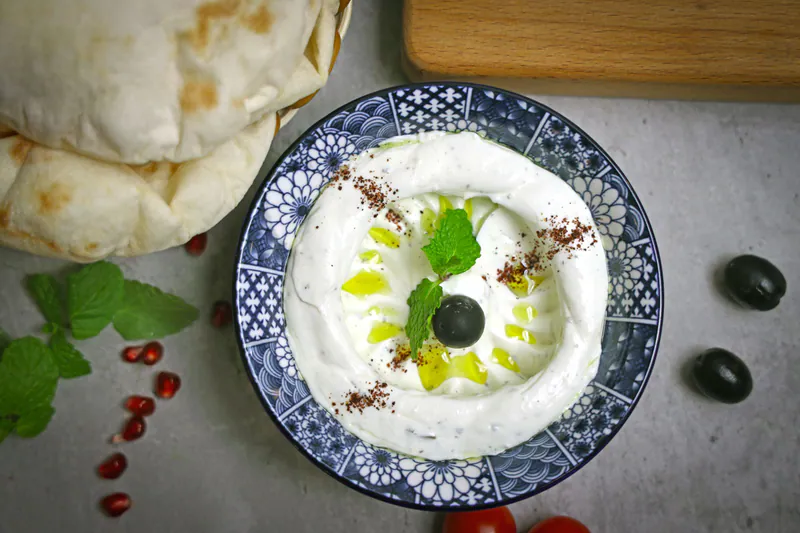
Thick labneh swirled on a plate, flooded with green olive oil and showered with za'atar, served with cucumber, tomato, olives and mint. The classic Levantine breakfast plate, scooped up with warm bread.
Labneh with za'atar and olive oil is a Levantine dip, ready in about 8 minutes and made with labneh, olive oil and za'atar. It serves 4 and is rated beginner to cook.
No licensed photograph of this dish yet.
- Prep
- 8 min
- Cook
- 0 min
- Total
- 8 min
- Serves
- 4
- Level
- Beginner
- Calories
- 125
Assumes the labneh is already strained (24 hours).
Method
Step 1
Spoon the labneh (opens in a new tab) onto a shallow plate and spread it into a round about 1.5 cm thick with the back of a spoon, pushing a deep swirl or a ring of ridges into the surface so the oil has somewhere to pool.
Step 2
Pour the olive oil (opens in a new tab) slowly into the swirl until it pools, then scatter the za'atar (opens in a new tab) evenly over the top; it should cling to the oil.
- 1 min

How it looks · Photo: Klaus Nielsen on Pexels Step 3
Arrange the tomato (opens in a new tab) wedges, cucumber (opens in a new tab), olives (opens in a new tab) and mint (opens in a new tab) around the edge. Serve with warm flatbread; tear a piece, drag it through labneh (opens in a new tab), oil and za'atar (opens in a new tab) together.

How it looks · Photo: Willians Huerta on Pexels
About this dish
- Origin
- Levant · Commonly attributedA standard breakfast and meze plate in Lebanon, Syria, Palestine and Jordan.Also popular in Lebanon, Syria, Palestine, Jordan, Israel
- Dish
- Breakfast · Snack · Dips & spreads · Appetizers & starters
- Cooking method
- No-cook
- Taste
- tangy, creamy, herby, fresh
- Diet
- Vegetarian (lacto-ovo) · No gluten ingredients · No nut ingredients · Keto-style · Low-carbWorked out from the ingredients. How labels work
All labels
Vegetarian (lacto-ovo) · Eggetarian · Lacto-vegetarian · Pescatarian · Flexitarian-friendly · Whole-food focused · No gluten ingredients · Egg-free · No nut ingredients · No added sugar · Alcohol-free · Pork-free · Beef-free · Mediterranean-style · Keto-style · Low-carb · Low-sodium - Good for
- Everyday · Child-friendly
Allergens
- Contains: Milkfrom labneh
- Contains: Sesamefrom za'atar
Based on typical versions of these ingredients and not verified allergen-free. Brands differ and cross-contact happens, so always check labels. For severe allergies, follow your clinician’s advice.
Nutrition
125 kcal per serving
Estimated1 serving ≈ 73 g · recipe makes 4
Where the energy comes from
- Protein 18%
- Carbohydrate 11%
- Fat 71%
| Nutrient | Per serving | Per 100 g |
|---|---|---|
| Energy | 125 kcal | 173 kcal |
| Protein | 5.8 g | 7.9 g |
| Carbohydrate | 3.4 g | 4.8 g |
| Net carbohydrate | 2.9 g | 4 g |
| Sugars | 2.5 g | 3.5 g |
| Added sugars | 0 g | 0 g |
| Fibre | 0.6 g | 0.8 g |
| Fat | 10.1 g | 13.9 g |
| Saturated fat | 2.5 g | 3.4 g |
| Trans fat | — | — |
| Cholesterol | 8 mg | 11 mg |
| Sodium | 23 mg | 31 mg |
| Salt equivalent | 0.1 g | 0.1 g |
Vitamins & minerals per serving
- Potassium
- 100 mg
- Calcium
- 91 mg
- Iron
- 1.9 mg
- Magnesium
- 10 mg
- Vitamin A (RAE)
- 4 µg
- Vitamin C
- 1 mg
- Vitamin D
- 0 µg
- Vitamin B12
- 0.5 µg
- Folate (DFE)
- 7 µg
How these numbers were made
- Calculated from USDA FoodData Central (SR Legacy) per-100 g values and the listed quantities.
- Optional ingredients are not included: tomato, cucumber, black olives, mint.
- Labneh: Strained whole-milk Greek yogurt used as a stand-in; labneh is usually strained further and saltier.
- Za'atar: Dried thyme (FDC 170938) used as a stand-in for the herb portion of za'atar; the sesame in the blend is listed in allergens.
- “—” means the value isn’t known for enough of the ingredients; it is never zero by default.
- Values are estimates for guidance, not for medical dosing. U.S. Department of Agriculture, Agricultural Research Service. FoodData Central, 2019. fdc.nal.usda.gov.
Good to know
Tips
- Toast store-bought za'atar for 30 seconds in a dry pan if it tastes dusty; it wakes up the thyme and sesame.
- Bring the labneh out of the fridge 15 minutes before serving so the oil does not set on it.
Common mistakes
- Mixing the za'atar into the labneh, which turns it grey; it belongs on top with the oil.
Serve with
- With warm khubz or manakish for breakfast, alongside boiled eggs, hummus and mint tea.
- As part of a meze spread with olives and pickles.
Food safety
- Keep chilled and do not leave yoghurt- or cheese-based dips out of the fridge for more than 2 hours (1 hour in hot weather).
Storage
- Assemble just before serving. Leftover labneh with oil and za'atar keeps 2 days covered in the fridge.
Variations
- With fresh za'atar (Palestine): In spring, Palestinian and Lebanese cooks scatter fresh za'atar (wild thyme/hyssop) leaves over the plate as well as the dried blend.
- With Aleppo pepper and mint (Syria): Swap the za'atar for dried mint and a pinch of Aleppo pepper.
Original editorial recipe · FriendsPantry editorial · Not yet independently reviewed · Added · Updated
Goes with
Recipe DNA
How this dish is built
Grouped by each ingredient’s role in the dish. Each band’s width is its share of the dish by weight. Choose a component to see what it does.
What the dish is built around
Main ingredient
- Labneh, 24-hour labneh, well chilled250 g
- Tomato, cut into wedges (optional)100 g
- Cucumber, small Lebanese cucumber, sliced into rounds or batons (optional)80 g
- Black olives, green or black, drained (optional)40 g
Masalas in this recipe
Make the masala first, then come back to finish the dish.
Dry spice blend
Za'atar
This recipe uses 6 g (6 g for 4 servings (about 70 g with garnish)).
Make it milder, swap ingredients for your diet, change the batch size or thickness — the original stays as it is.
Customise in Sauce & DrizzleReviews & corrections
Reviews come from signed-in cooks and appear after a moderator checks them. We never show made-up ratings.
You might also like
Labneh (strained yoghurt cheese)
Levantine · 24 h 10 min · 73 kcal · Vegetarian
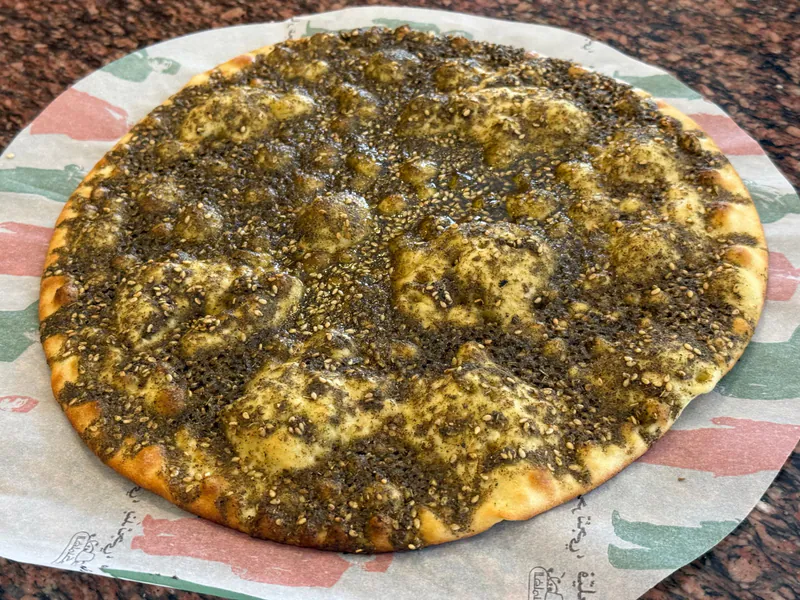
Manakish za'atar
 Lebanese · 1 h 41 min · 424 kcal · Vegetarian
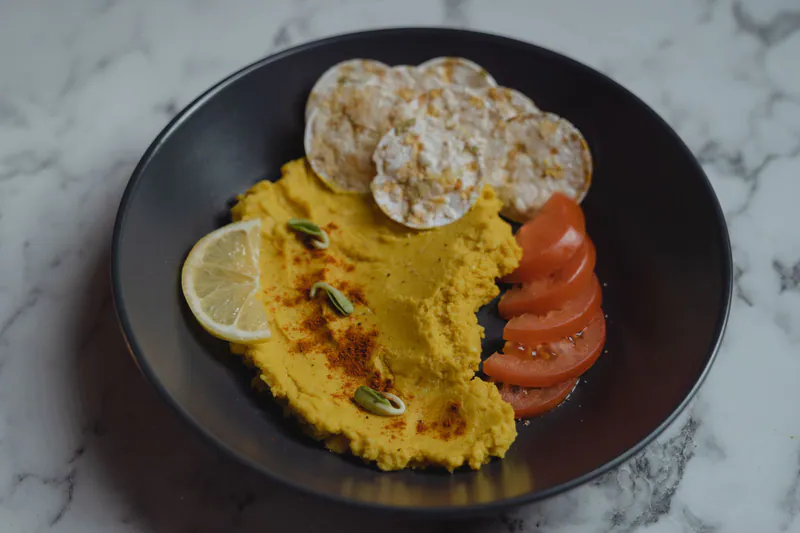
Hummus
Levantine · 15 min · 274 kcal · Vegan
Msabbaha (warm whole-chickpea hummus)
Levantine · 1 h · 392 kcal · Vegan