
Utensils & kitchen tools · Board
Chopping board
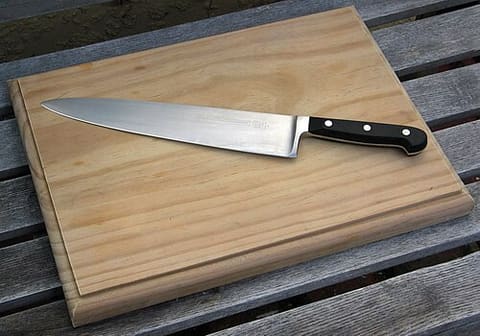
A flat board of wood or plastic that gives a safe, knife-friendly surface for cutting food.
Essential in most kitchens · No power needed · 125 recipes
Photo: Donovan Govan., via Wikimedia Commons (CC-BY-SA-3.0)
What it is
A thick board of wood, bamboo, plastic or composite. Wood and plastic are kind to knife edges; glass and stone boards blunt knives quickly. Many kitchens use colour-coded plastic boards to keep raw meat separate from vegetables and ready-to-eat food.
What it’s for: Protecting counters and knives and giving a stable cutting surface.
How to use it
- Lay a damp cloth or non-slip mat under the board so it stays put.
- Cut ready-to-eat food and vegetables before raw meat, or use separate boards.
- Keep the cutting area clear by moving prepared food to a bowl.
- Wash right after cutting raw meat, fish or poultry.
Good to know
- Tasks
- chopping vegetables and herbs, slicing meat and fish, cutting bread, rolling dough, serving cheese and bread
- Materials
- hardwood, bamboo, polyethylene, composite
- Care and cleaning
- Scrub with hot soapy water and dry upright. Oil wooden boards occasionally with food-safe oil; never soak them. Plastic boards can go in the dishwasher and should be replaced when deeply scored.
- Limitations
- Deeply scratched boards trap bacteria; wood absorbs strong smells like garlic.
Safety
- Use separate boards, or wash thoroughly, between raw meat and ready-to-eat foods.
- A sliding board causes knife accidents; anchor it.
If you don’t have one
- Large plate — Works for small jobs but blunts knives and slips.
Equipment guide
How it works: A board protects knives and benches. A slightly yielding surface lets the edge sink in a little without dulling it; a hard surface (glass, stone) blunts knives quickly.
| Material | Good | Watch out |
|---|---|---|
| Wood (end grain) | Fibres part and close around the edge; gentlest on knives; self-heals. | Heavy; needs oiling; must not soak. |
| Wood (edge grain) | Durable, kind to knives, lighter than end grain. | Shows cuts more; needs oiling. |
| High-density polyethylene (HDPE) | Dishwasher-safe; colour-coded options. | Deep scratches hold bacteria; replace when gouged. |
| Bamboo | Hard and renewable. | Harder on knife edges than most woods. |
| Glass or stone | Easy to clean. | Dulls knives fast; slippery. |
- Large wooden board
- Main board for vegetables and bread.
- Plastic board
- Raw meat and fish.
- Colour-coded boards
- Separate boards by food type (common in professional kitchens).
Buying guidance
Starting out: A large wooden board (at least 40 × 30 cm) and a plastic board for raw meat.
- Large enough to hold chopped food
- Thickness 2–4 cm for wood
- Juice groove for meat
- Non-slip feet or a damp cloth underneath
No brands or prices — check current reviews before buying.
Techniques:Stir-fryingKnife skillsMise en place
Related tools
Recipes that use it
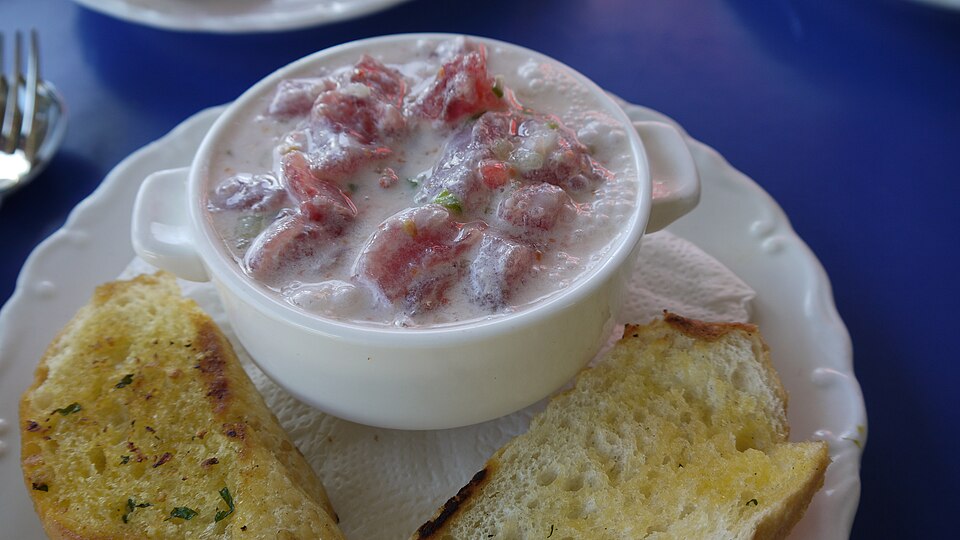
'Ota 'ika
 Tongan · 50 min · 235 kcal
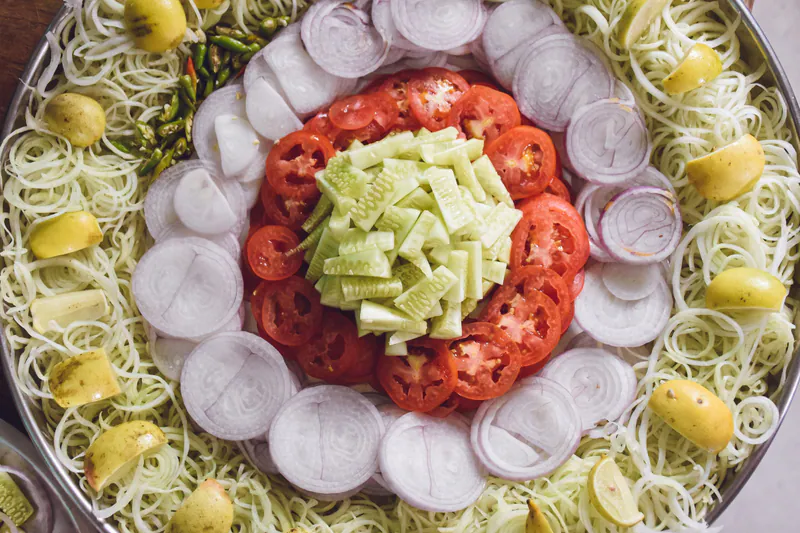
Achichuk
 Uzbek · 15 min · 33 kcal · Vegan
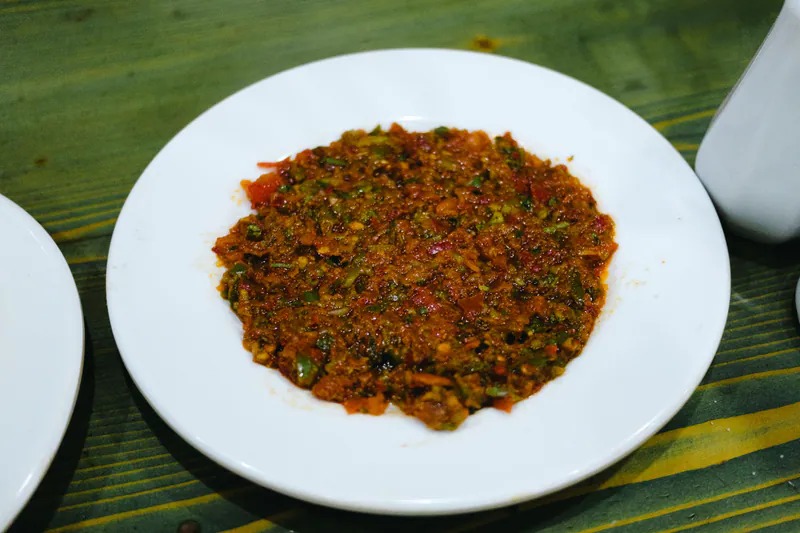
Acılı ezme (Turkish spicy tomato-pepper relish)
 Turkish · 40 min · 73 kcal · Vegan
Agua de melón
 Mexican · 10 min · 73 kcal · Vegan
Aloo bukhara chutney (sweet-sour plum chutney)
 Indian · 1 h 10 min · 65 kcal · Vegan
Amla chutney (Indian gooseberry chutney)
Indian · 15 min · 22 kcal · VeganAndhra tomato pachadi
South Indian · 50 min · 56 kcal · VeganApple cinnamon oat breakfast smoothie
International · 10 min · 306 kcal · Vegetarian
Avakaya (Andhra mango pickle)
South Indian · 73 h · 49 kcal · VeganBaba ghanoush (Lebanese-Syrian chopped style)
 Lebanese · 1 h 5 min · 123 kcal · Vegan
Beerakaya pachadi (ridge gourd chutney)
South Indian · 41 min · 69 kcal · Vegan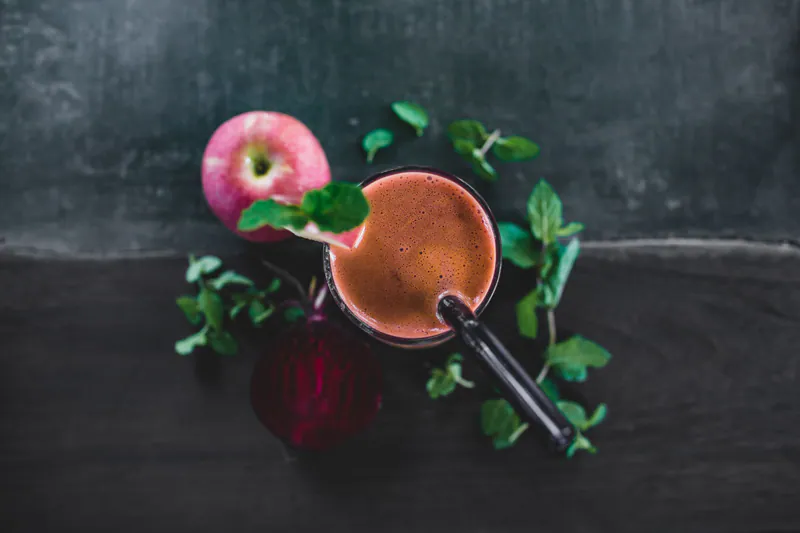
Beetroot, carrot and apple juice
International · 15 min · 104 kcal · Vegan
113 more
- Anardana chutney (dried pomegranate seed chutney) · Punjabi
- Bilahi pitika (Assamese roasted tomato mash) · Indian
- Budu (Timorese tomato relish) · Timorese
- Burani raita (Hyderabadi garlic raita) · Indian
- Chana chaat · Indian
- Chickpea and Bulgur Herb Salad · Mediterranean
- Chile con queso · Tex-Mex
- Chimichurri · Argentine
- Chinese plum sauce · Cantonese
- Chocolate sauce · French
- Classic Tuna Salad · International
- Çoban salatası · Turkish
- Colombian ají picante · Colombian
- Cucumber sunomono · Japanese
- Dalle khursani achar (Sikkimese round chilli pickle) · Indian
- Dhonepata bata (Bengali coriander paste) · Bengali
- Eromba (Manipuri fermented fish and vegetable mash) · Indian
- Espagnole sauce · French
- Fermented bamboo shoot chutney · Indian
- French onion dip · American
- Fresh orange juice · International
- Fresh pineapple juice · International
- Fresh pressed apple juice · International
- Fruit chaat · Indian
- Fruta picada con chile · Mexican
- Ftira biż-żejt · Maltese
- Gavurdağı salatası · Turkish
- Ginger-garlic paste · Indian
- Goan green chutney (coconut-coriander chutney) · Goan
- Gotu kola sambol · Sri Lankan
- Greek village salad · Greek
- Green chutney (coriander-mint) · Indian
- Green coconut chutney · South Indian
- Green cucumber, celery and apple juice · International
- Green goddess dressing · American
- Gremolata · Italian
- Grilled chicken salad · International
- Grilled halloumi with watermelon and mint · Cypriot
- Guasacaca · Venezuelan
- Gujarati lili chutney (coriander-peanut chutney) · Gujarati
- Hari mirch chutney (green chilli chutney) · Indian
- Hariyali green masala · Indian
- Hawaiian ahi poke · Pacific Island
- Hiyayakko · Japanese
- Htipiti (roasted red pepper and feta dip) · Greek
- Insalata caprese · Italian
- Israeli salad · Israeli
- Kachumbari · Kenyan
- Kachumber · Indian
- Kairi pudina chutney (raw mango-mint chutney) · Indian
- Kancha aamer chutney (Bengali green mango chutney) · Bengali
- Kısır (bulgur salad) · Turkish
- Kokoda · Pacific Island
- Kolhapuri lal thecha (red chilli-garlic thecha) · Indian
- Kothamalli thogayal (coriander chutney) · South Indian
- Labneh with za'atar and olive oil · Levantine
- Laccha pyaz · Punjabi
- Limonada suíça (Brazilian lemonade) · Brazilian
- Mas huni · Maldivian
- Mediterranean Chickpea Salad · Mediterranean
- Melitzanosalata (Greek smoky aubergine dip) · Greek
- Mint sauce · British
- Mixed fruit juice · International
- Mizeria · Polish
- Mohabbat ka sharbat · Indian
- Mooli ki chutney (fresh radish chutney) · Indian
- Mu saengchae · Korean
- Nam jim seafood · Thai
- Oi muchim (spicy cucumber salad) · Korean
- Oka i'a · Samoan
- Orange, Carrot and Ginger Juice · International
- Panzanella · Italian
- Patlıcan salatası · Turkish
- Pebre · Chilean
- Peruvian ceviche · Peruvian
- Piccalilli · British
- Pico de gallo · Mexican
- Pineapple raita · Indian
- Piyaz · Turkish
- Punjabi mango pickle (aam ka achaar) · Punjabi
- Red zhug (zhug adom) · Yemeni
- Rémoulade sauce · French
- Rempah for rendang · Malaysian
- Salad-e Shirazi · Iranian
- Salata baladi · Egyptian
- Salsa criolla (Peruvian onion relish) · Peruvian
- Salsa de aguacate (taquería avocado salsa) · Mexican
- Salsa verde (Italian green sauce) · Italian
- Salt-cured lime pickle (nimbu ka achaar) · Indian
- Sambal matah · Indonesian
- Sambal oelek · Indonesian
- Sauce gribiche · French
- Sauce tomate (classical tomato sauce) · French
- Sawsawang suka (Filipino spiced vinegar dip) · Filipino
- Shopska salad · Balkan
- Sicilian orange and fennel salad · Italian
- Smashed cucumber salad · Chinese
- Spinach and artichoke dip · American
- Tabbouleh · Lebanese
- Tartare sauce · British
- Thai green curry paste · Thai
- Thai red curry paste · Thai
- Tiger salad · Chinese
- Timatim salata · Ethiopian
- Tirokafteri (spicy whipped feta) · Greek
- Tomato chokha (Bihari roasted tomato mash) · Indian
- Tomato kanda koshimbir · Indian
- Tomato khajuri khatta (Odia tomato-date chutney) · Indian
- Trinidad green seasoning · Trinidadian
- Vengaya chutney (raw onion chutney) · South Indian
- Vinagrete · Brazilian
- Watermelon juice · International
- XO sauce · Cantonese