
Fermentation and preservation · intermediate
Lactic acid fermentation
Lactic acid bacteria turn sugars into acid, souring and preserving yogurt, kimchi, sauerkraut, idli batter and many pickles.
What happens
Lactic acid bacteria (LAB) are found naturally on vegetables, grains and in milk. Given the right conditions, often salt, no air and a suitable temperature, they outgrow other microbes and convert sugars into lactic acid. As acid builds, the pH falls, which sours the food, changes its texture and, once low enough, stops most spoilage and disease-causing bacteria. In yogurt, heat-loving bacteria ferment milk sugar at about 40–45 °C and the acid makes milk proteins set into a gel. In vegetable ferments such as sauerkraut and kimchi, salt at around 2–3% favours LAB over spoilage organisms, and fermentation usually runs best at cool room temperature.
Why it matters in the kitchen
Fermentation is among the oldest ways to keep food and builds complex sour, savoury flavours. Knowing the conditions lets you make dahi, sauerkraut or fermented pickles safely and consistently.
Temperatures and conditions
- Vegetable ferments (sauerkraut, kimchi) 15–24 °C · Cooler is slower but often better in flavour and texture.
- Yogurt incubation 40–45 °C
In practice
- Dahi and yogurt set from a spoonful of the previous batch.
- Sauerkraut and kimchi.
- Idli and dosa batter, soured overnight.
- Fermented carrot or kanji drinks.
- Fermented bamboo shoot in north-east Indian cooking.
Myths and facts
Myth: Fermented food is basically food that has gone off.
Fact: Controlled fermentation creates acid conditions that most spoilage and disease organisms can't grow in. Mould, sliminess or a putrid smell are signs of a failed ferment and the batch should be discarded.
Myth: All fermented foods contain live probiotic bacteria.
Fact: Baking (sourdough), cooking, pasteurising or canning after fermentation kills the microbes. Only unheated ferments such as fresh yogurt, unpasteurised sauerkraut or kimchi still contain live cultures.
Myth: Any white film on a ferment is dangerous mould.
Fact: A flat, white film is often kahm yeast, which is generally harmless but can spoil flavour; skim it off. Fuzzy, coloured (green, black, pink) growth is mould and the batch should be discarded.
Use it to cook better
- Heat milk for yogurt to near boiling first (about 85–90 °C), cool to about 43–45 °C, then stir in starter for a thicker, smoother set.
- Keep vegetables under their brine with a weight; air at the surface invites mould.
- Weigh salt for vegetable ferments rather than using cups.
- Use clean jars and utensils, and keep ferments out of direct sunlight.
- Once a ferment tastes right, move it to the fridge to slow it down.
Try it at home
Homemade dahi at two temperatures
You need: 500 ml milk, 2 tbsp plain yogurt with live cultures, 2 clean jars, A thermometer
- Bring the milk nearly to the boil, then cool it to about 43 °C.
- Stir 1 tbsp yogurt into each jar of warm milk.
- Keep one jar somewhere warm (an oven with only the light on, or wrapped in a towel) and put the other in the fridge.
- Check both after 6–8 hours.
What you’ll see: The warm jar has set into yogurt; the fridge jar is still liquid because the bacteria barely worked in the cold.
Refrigerate finished yogurt. If either jar smells off or shows mould, discard it.
Going deeper
Different LAB take over in turn as acidity rises: in sauerkraut, Leuconostoc species typically start, producing carbon dioxide and some acetic acid, and more acid-tolerant Lactobacillus species finish. Yogurt uses Streptococcus thermophilus and Lactobacillus delbrueckii subsp. bulgaricus working together. Acid causes the milk protein casein to lose its charge and cluster, forming the gel; heating milk first unfolds whey proteins so they join the network and hold more water.
Ingredients it affects most
Techniques that rely on it
Worth double-checking
- Salt and temperature guidance follows NCHFP sauerkraut instructions; kimchi recipes vary widely.
- Kahm yeast is generally considered harmless, but guidance differs; when in doubt, discard.

 Trinidadian · 2 h 35 min · 641 kcal ·

 South Indian · 55 min · 247 kcal ·
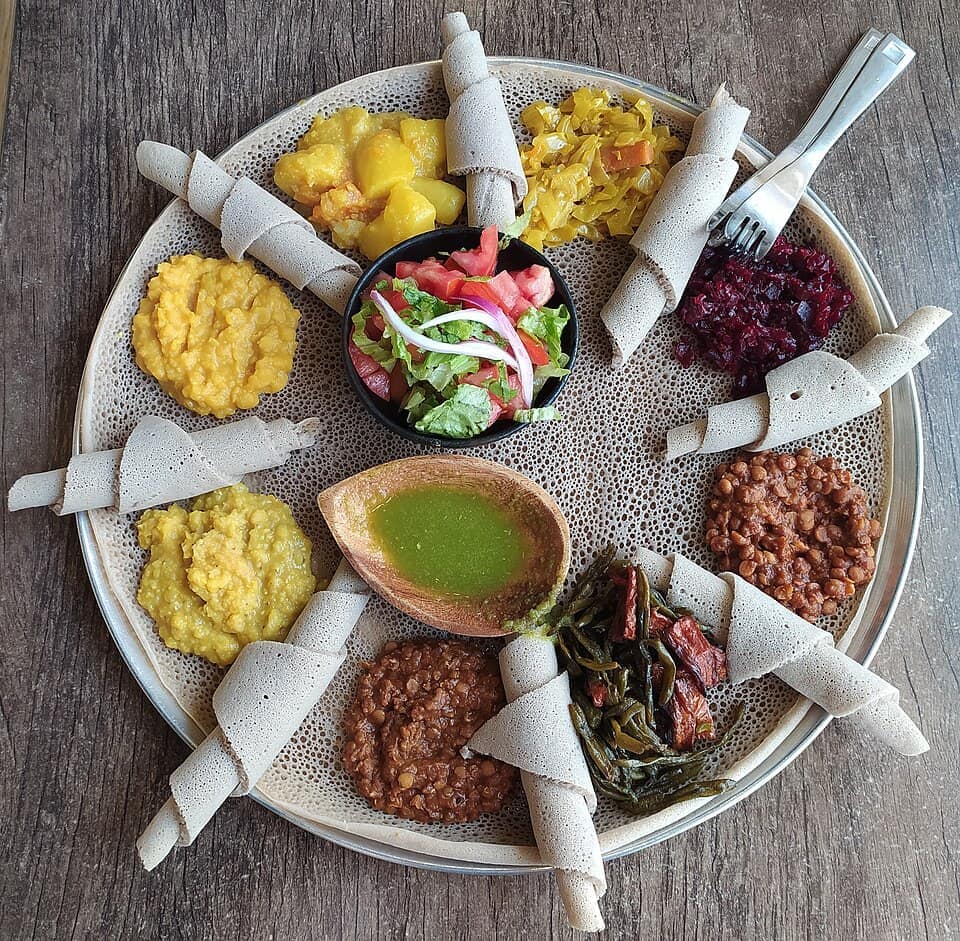
 Ethiopian · 48 h 55 min · 165 kcal ·
 Georgian · 2 h · 957 kcal ·




 Italian · 3 h 27 min · 756 kcal ·