Southern US · regional cuisine
Cajun and Creole (Louisiana)
Louisiana's two linked traditions: urban New Orleans Creole cooking and rural Cajun country cooking, both built on roux, the 'holy trinity' of onion, celery and green pepper, rice and Gulf seafood.
Flavour character: Deep, savoury and peppery: dark roux, the trinity, garlic, thyme and bay, cayenne heat, smoky sausage and seafood; Creole dishes often add tomato, Cajun ones usually do not.
History
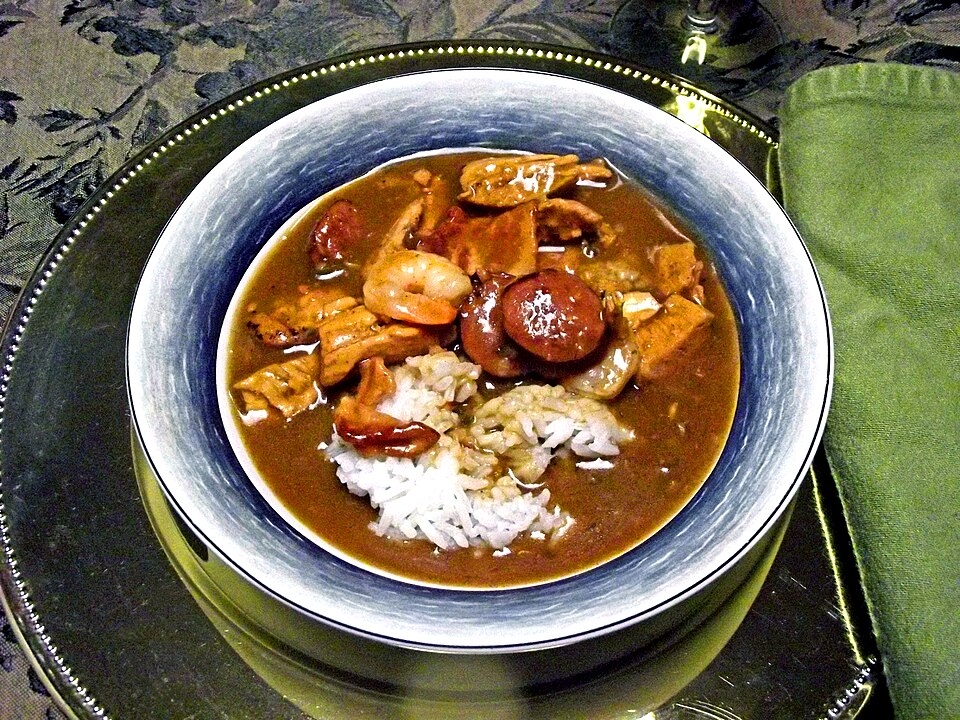
Creole cooking developed in New Orleans from French and Spanish colonial cooking, the skills of enslaved Africans, Caribbean (especially Haitian) migrants and later Italian and German immigrants. Cajun cooking descends from French Acadians expelled from Nova Scotia by the British from 1755 who settled in the bayous of south-west Louisiana. Gumbo shows all these strands: a French roux, African okra (the word gumbo is commonly traced to a Bantu word for okra) and Choctaw filé (ground sassafras). Andouille and boudin sausages reflect French charcuterie.
Commonly told; not firmly documented
Geography and influences
The Mississippi delta, bayous, marshes and Gulf coast of southern Louisiana: rice, sugar cane, crawfish, shrimp, oysters, crabs and game.
- French colonists and Acadian exiles
- Spanish colonial rule
- West African and Caribbean cooking
- Choctaw and other Native peoples
- Italian and German immigrants
Regional variations
- New Orleans Creole
- Tomato-inclusive gumbos and red jambalaya, rémoulade, refined restaurant dishes.
- Cajun country (Acadiana)
- Dark-roux gumbos, brown jambalaya, boudin, crawfish and cracklins.
Festive and seasonal food
- King cake during Mardi Gras
- Crawfish boils in spring
- Red beans and rice on Mondays (washday tradition)
- Gumbo z'herbes on Holy Thursday
Signature dishes
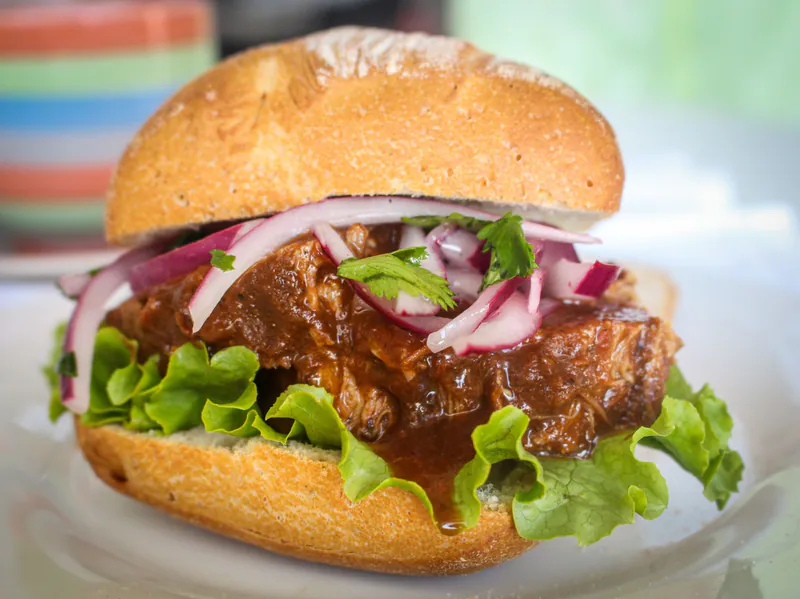
Not on the site yet: Crawfish étouffée, Crawfish boil, Po' boy sandwiches, Beignets, Boudin, Shrimp creole
 American · 4 h 45 min · 551 kcal ·