
Sauces and finishing · intermediate
Roux thickening
Also: roux
Cooking equal weights of fat and flour together, then whisking in liquid to thicken it.
What it is
A roux is flour cooked in fat. It is the thickener for béchamel, velouté, many gravies, gumbo and some Anglo-Indian dishes. It ranges from white (cooked briefly) to blond, brown and dark brown; darker roux has more flavour but less thickening power.
Why cooks use it: Coating flour in fat separates the starch grains so they thicken liquid without lumps, and cooking removes the raw flour taste.
The science
When the starch granules in flour are heated in liquid they swell and gelatinise, thickening the sauce; full thickness develops close to the boil. Browning the roux breaks down some starch, so dark roux thickens less. Mixing cold liquid into hot roux (or hot into cool) gives the starch time to disperse before it swells, preventing lumps.
The Maillard reactionStarch gelatinisationFats and oilsHydrocolloids: thickeners and gelling agents
Step by step
Melt equal weights of butter (or oil) and flour over medium-low heat.
Stir constantly: 2–3 minutes for white roux, 5–8 for blond, 15–30+ for brown and dark roux.
Take the pan off the heat and add liquid gradually (cold or warm liquid into hot roux), whisking until smooth.
Return to the heat and bring to a boil, whisking, then simmer at least 5–10 minutes.
Adjust thickness with more liquid; season and strain if needed.
Heat and timing
- Roux thickening 95–100 °C · The sauce must come close to the boil for the starch to thicken fully.
Time: Roux 2–30 minutes; sauce simmer 5–20 minutes.
How you know it’s right
- White roux smells like baked pastry, not raw flour
- Sauce coats the back of a spoon
- Sauce thickens noticeably as it boils
Common mistakes
- Adding liquid too fast
- Not simmering long enough (floury taste)
- Burning a dark roux (black specks: start again)
Troubleshooting
- Lumpy sauce
- Whisk hard or blend with a stick blender, then strain.
- Too thick
- Whisk in more liquid a little at a time.
- Too thin
- Simmer longer or whisk in a little beurre manié (equal butter and flour kneaded together).
Restaurant DNA
How professionals do it
Classical kitchens keep roux ready-made and use roughly 60 g of roux per litre for a thin sauce, 90–100 g for a medium (coating) sauce and 120 g or more for a thick binding sauce.
At home
Weigh the butter and flour; a 1:1 ratio by weight is easy to remember and scale.
General professional practice — not any particular restaurant’s recipe.
Food safety
- Dark roux is extremely hot and sticks to skin; stir with a long spoon.
Practise it
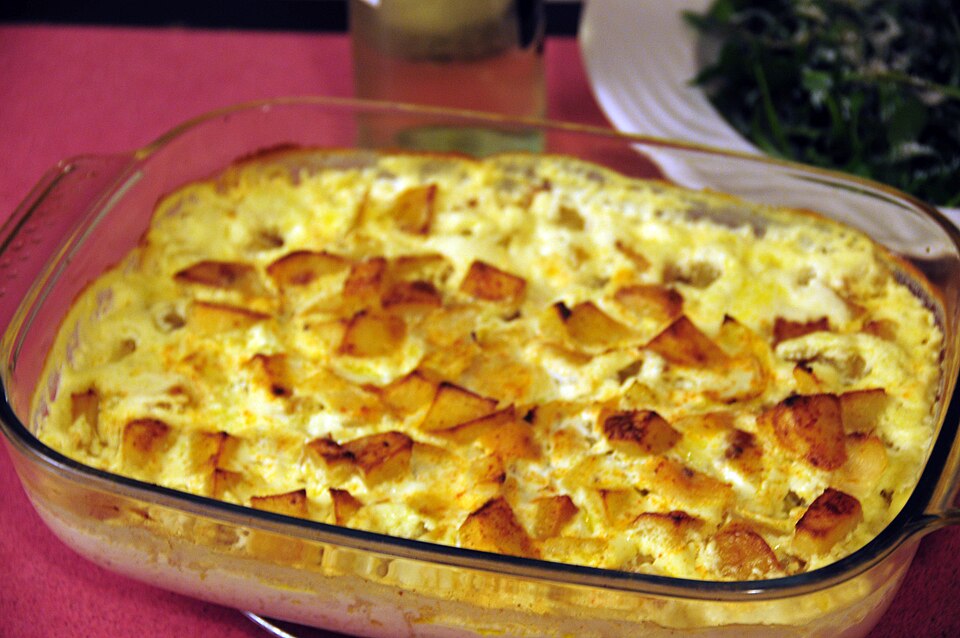
Bacalhau com natas
 Portuguese · 1 h 30 min · 506 kcal
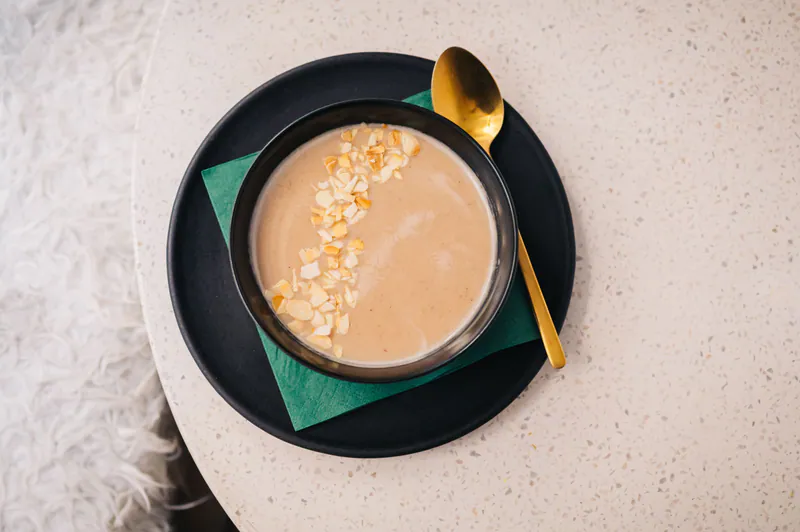
Badam shorba
 Indian · 40 min · 237 kcal · Vegetarian
Béchamel sauce
 French · 25 min · 115 kcal · Vegetarian
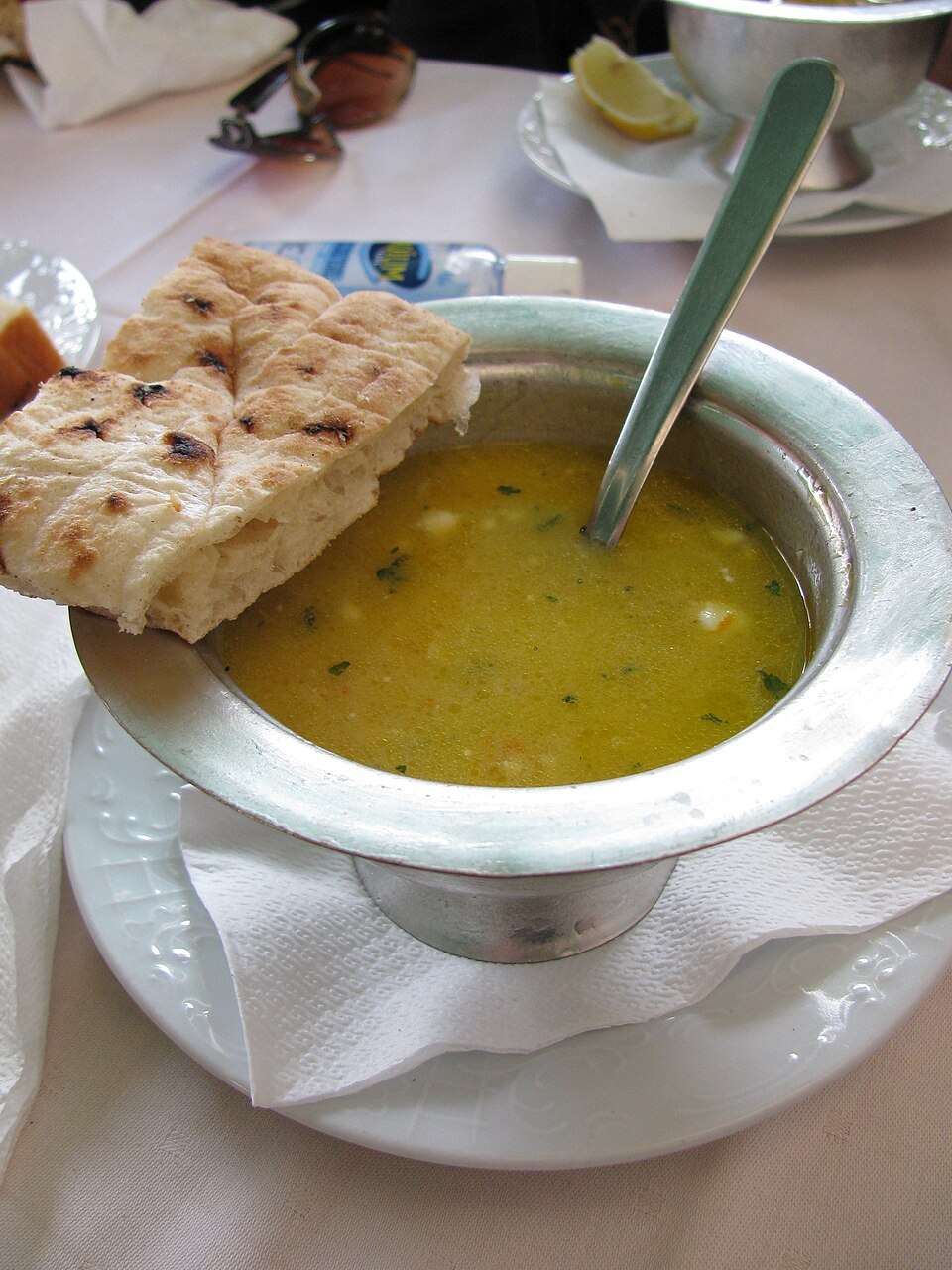
Begova čorba (Bey's soup)
 Bosnian · 1 h 35 min · 456 kcal

Bitterballen
 Dutch · 6 h 30 min · 424 kcal

Broccoli cheddar soup
 American · 45 min · 340 kcal
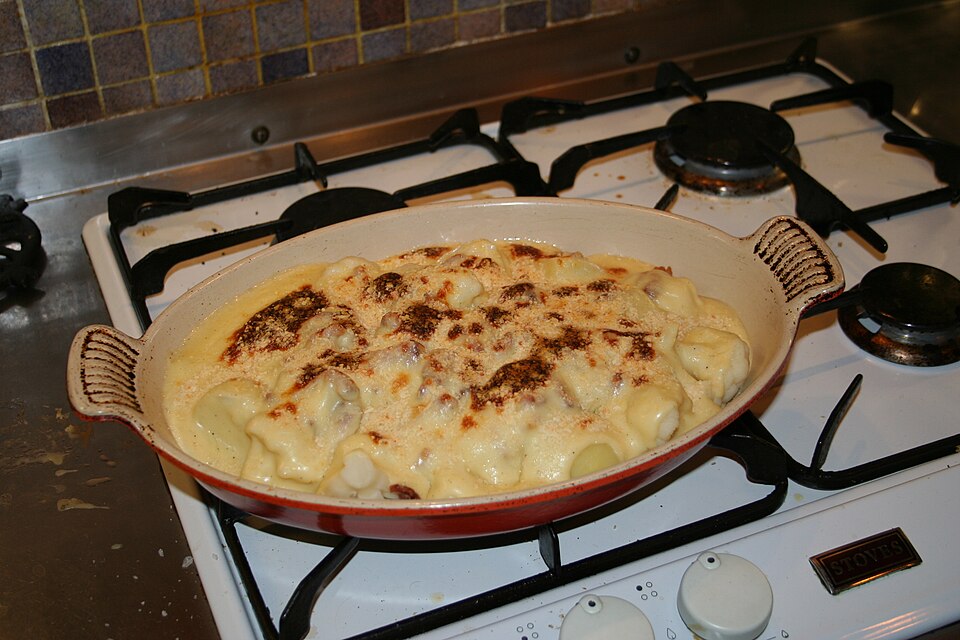
Cauliflower cheese
 British · 45 min · 240 kcal · Vegetarian
Cheese soufflé
French · 50 min · 333 kcal · Contains egg
Chicken and andouille gumbo
Southern US · 2 h 5 min · 771 kcal
17 more
- Croque monsieur · French
- Croquetas de jamón · Spanish
- Espagnole sauce · French
- Japanese curry rice · Japanese
- Japanese curry roux (homemade) · Japanese
- Jota (sauerkraut and bean stew) · Slovenian
- Kjøttkaker i brun saus · Norwegian
- Königsberger Klopse · German
- Lasagne alla bolognese · Italian
- Macaroni and cheese · American
- Moussaka · Greek
- Pastitsio · Greek
- Sauce tomate (classical tomato sauce) · French
- Spinach and ricotta cannelloni · Italian
- Tavë kosi (baked lamb with yogurt) · Albanian
- Velouté sauce · French
- Welsh rarebit · British