Cuisine
Korean (Hansik)
A rice-and-banchan cuisine defined by fermented sauces (jang), kimchi, sesame, garlic and chilli, with a strong culture of soups, stews and grilled meat.
Flavour character: Savoury, garlicky and often spicy-sweet; deep fermented umami from jang and jeotgal (salted seafood); nutty sesame oil; sourness from mature kimchi.
History
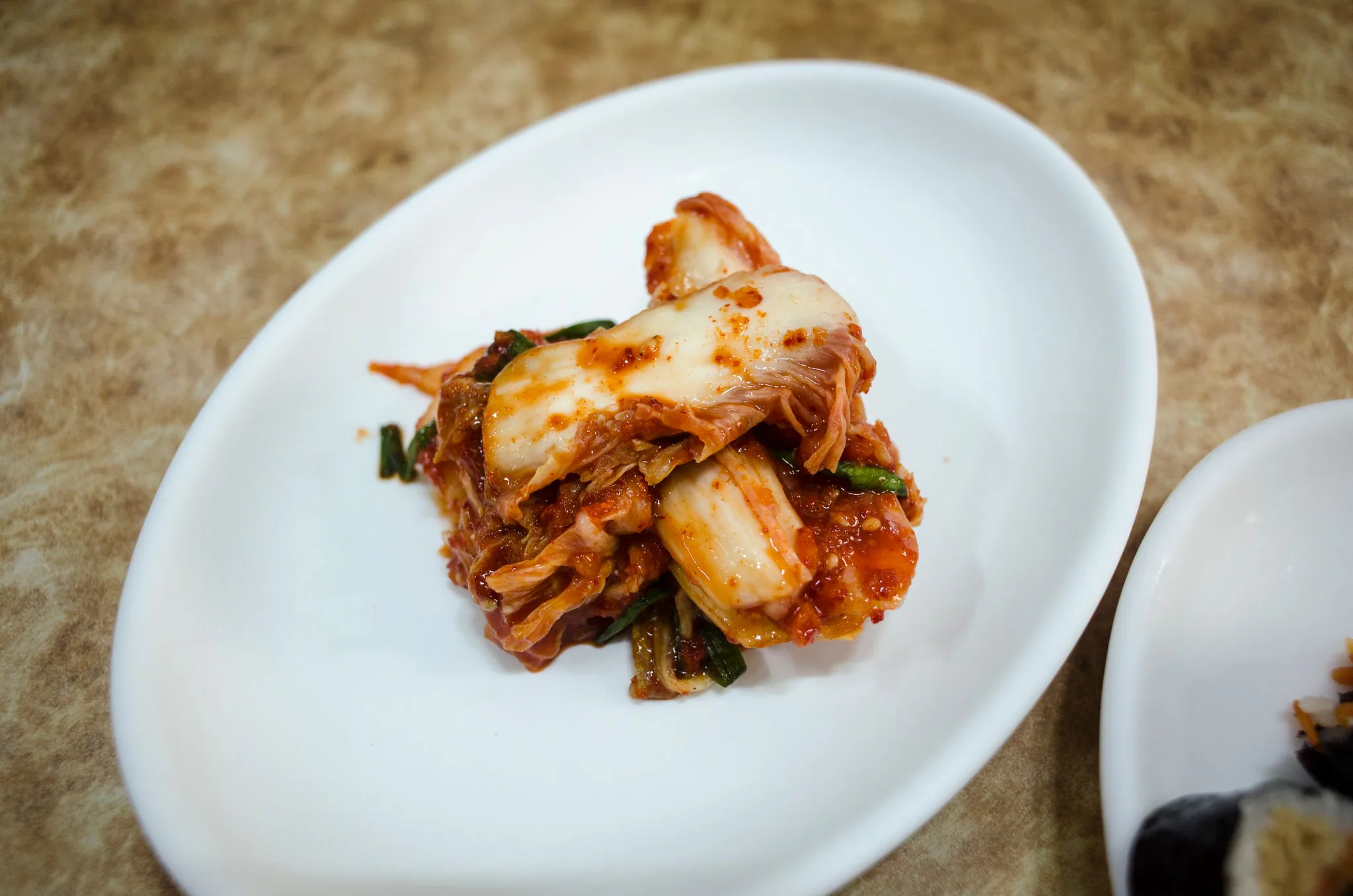
Fermented soybean pastes and sauces (doenjang and ganjang) and salted vegetables have deep roots on the peninsula. Chillies arrived around the late 16th or early 17th century, probably via Japan, and gochujang and red kimchi developed afterwards; napa-cabbage kimchi as eaten today became common in the 19th century. Joseon court cuisine influenced formal dining, and Buddhist temple food remains a distinct tradition. Kimjang, the communal autumn making of kimchi, was inscribed by UNESCO in 2013.
Well documented
Geography and influences
A mountainous peninsula with harsh winters and hot summers: rice, barley, soybeans, cabbage and radish, plus abundant seafood on three coasts; preservation was essential for winter.
- Chinese and Buddhist cooking
- Joseon royal court cuisine
- Japanese colonial period
- US military presence after 1950 (budae jjigae)
Regional variations
- Jeolla
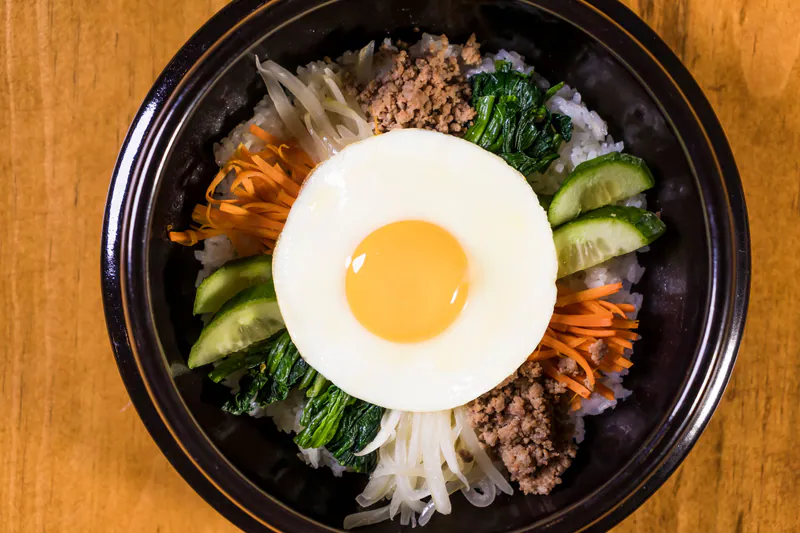
- Regarded as the richest regional cooking: many banchan, bold jeotgal, Jeonju bibimbap.
- Gyeongsang
- Saltier and spicier, with seafood from the south-east coast.
- Gangwon
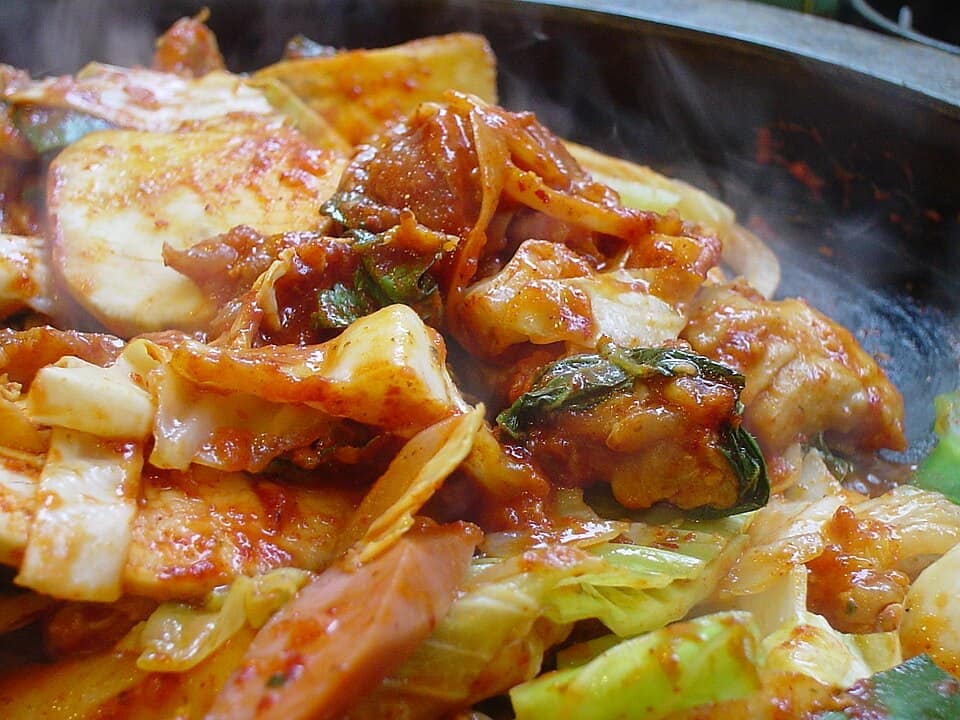
- Mountain cooking with potato, buckwheat and corn; Chuncheon dakgalbi.
- Jeju
- Island cooking with black pork, seafood and less reliance on rice historically.
Festive and seasonal food
- Tteokguk (rice-cake soup) at Seollal (Lunar New Year)
- Songpyeon rice cakes at Chuseok
- Miyeok-guk on birthdays
- Kimjang kimchi-making in late autumn
- Samgyetang on the hottest summer days (boknal)
Signature dishes
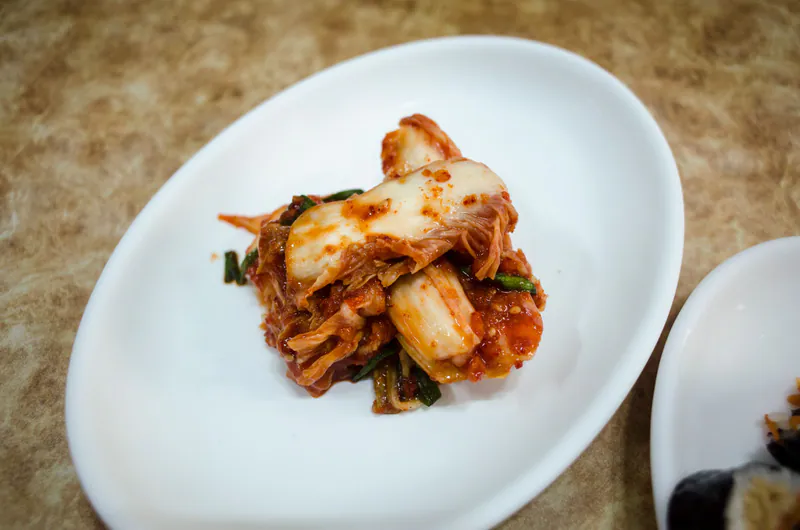
- Baechu kimchi (napa cabbage kimchi)
- Bibimbap
- Kimchi jjigae
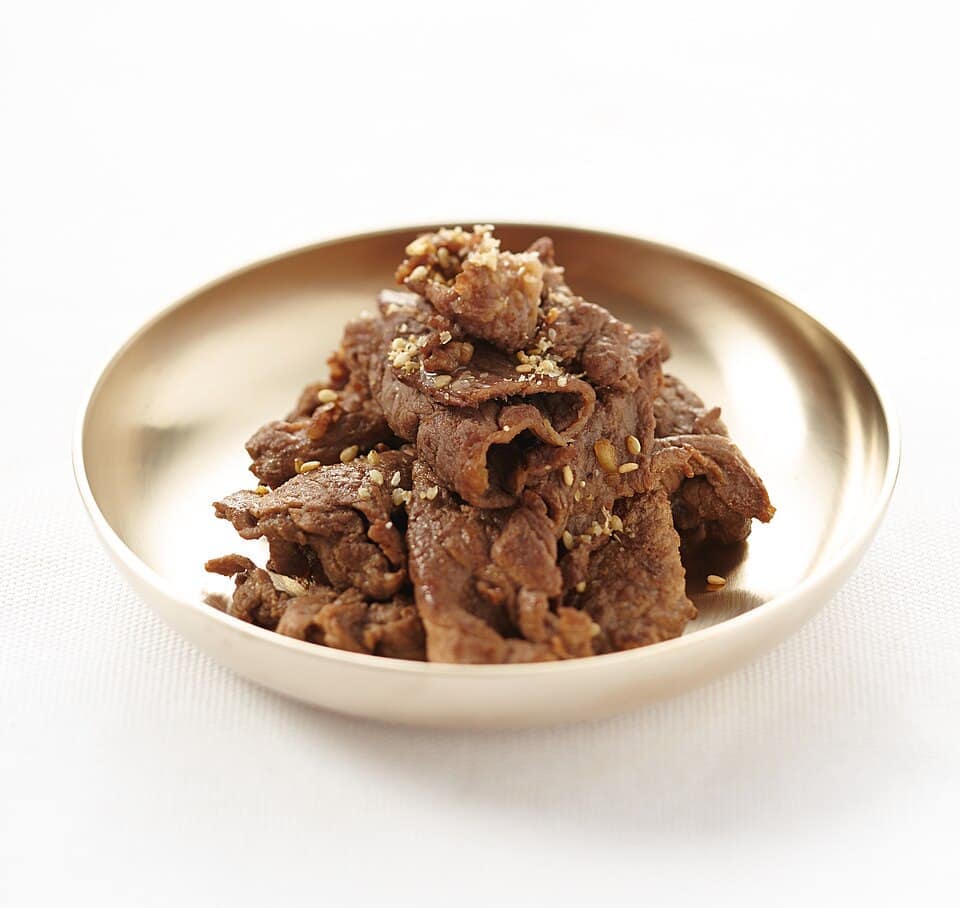
- Beef bulgogi
- Japchae
- Doenjang jjigae
- Sundubu jjigae
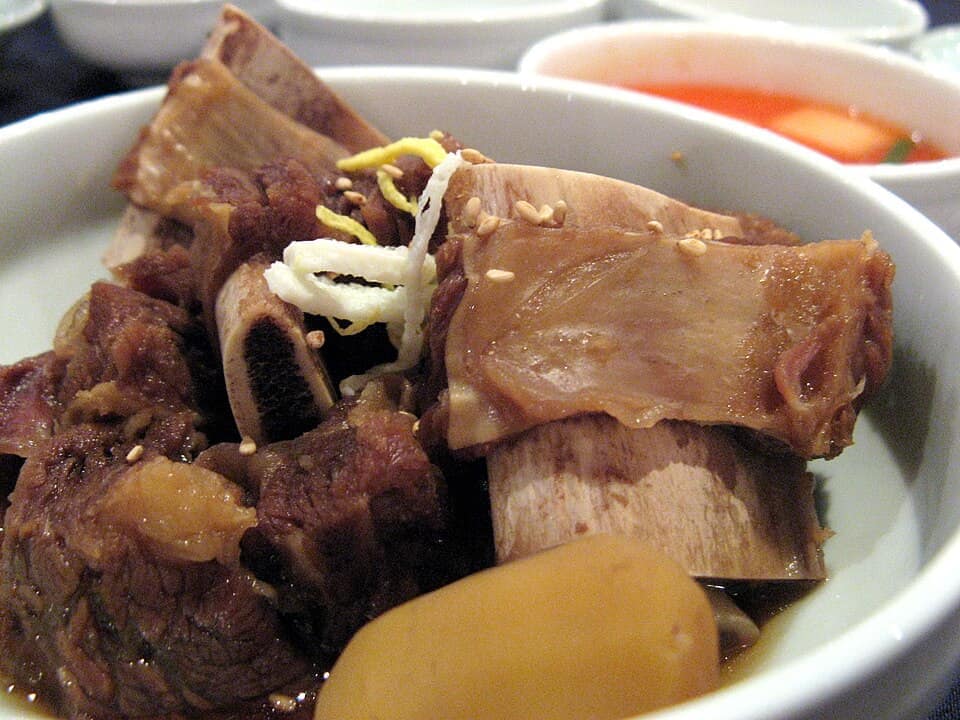
- Galbi-jjim
- Tteokbokki
- Samgyetang
- Kimbap
- Haemul pajeon
- Korean fried chicken (yangnyeom)
- Tteokguk (rice cake soup)
- Miyeok guk
Not on the site yet: Samgyeopsal (grilled pork belly), Naengmyeon (cold buckwheat noodles), Bossam, Gamjatang
 Korean · 7 h 5 min · 44 kcal