
Moist-heat cooking · beginner
Blanching
Briefly boiling food, then stopping the cooking in iced water.
What it is
Blanching plunges vegetables, nuts or fruit into boiling salted water for a short time, then into iced water. It is used to set green colour, soften vegetables before stir-frying, loosen tomato and almond skins, and prepare vegetables for freezing.
Why cooks use it: It partly cooks food evenly and quickly, keeps green vegetables bright, and inactivates enzymes that would otherwise spoil colour and flavour in the freezer.
The science
Brief heating drives air from plant tissue (making greens look brighter) and inactivates enzymes that cause browning and off-flavours. Long cooking or acid converts bright chlorophyll to olive-coloured compounds, so speed matters.
How heat moves into foodAcids and bases in cookingEnzymatic browningThe science of drying
Step by step
Bring a large pot of well-salted water to a rolling boil.
Prepare a bowl of iced water.
Add the food in small batches so the boil returns quickly.
Cook briefly: from 15–30 seconds for tomatoes and spinach to 2–3 minutes for beans.
Lift straight into the iced water until fully cold.
Drain well and pat dry.
Heat and timing
- Blanching 100–100 °C · Boiling water, then iced water close to 0 °C.
Time: 15 seconds to 3 minutes.
How you know it’s right
- Colour turns vivid green
- Tomato skin splits at a scored cross
- Vegetables tender-crisp when bitten
Common mistakes
- Too much food at once
- Skipping the ice bath so food keeps cooking
- Adding lemon or baking soda to the water
Troubleshooting
- Greens turned olive-drab
- Cook for less time, use more water, and chill immediately.
- Palak gravy dull green
- Blanch spinach for under a minute, chill, and add the purée at the end of cooking.
Restaurant DNA
How professionals do it
Kitchens blanch large quantities of vegetables before service, chill them, and finish them to order in butter or a sauté pan; the step is called 'refreshing' when the food goes into iced water.
At home
Blanch vegetables ahead when entertaining, then reheat them in a pan for one or two minutes.
General professional practice — not any particular restaurant’s recipe.
Food safety
- Use a slotted spoon, not your hands, to move food between boiling and iced water.
Practise it
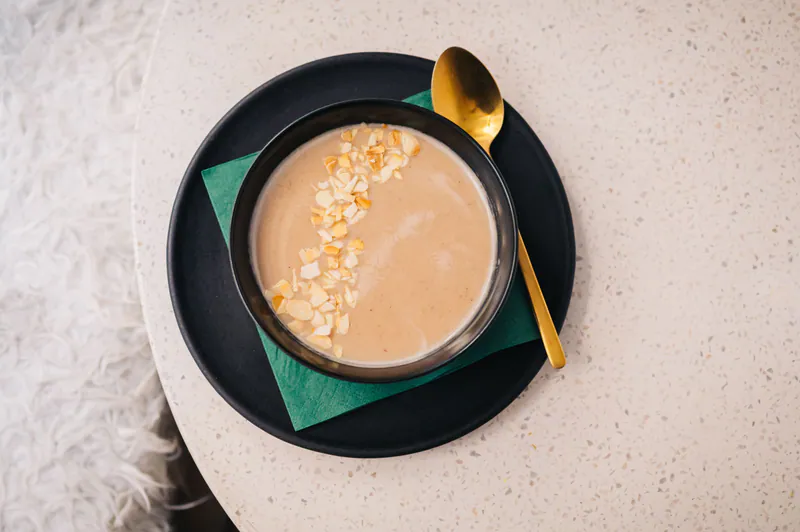
Badam shorba
 Indian · 40 min · 237 kcal · Vegetarian
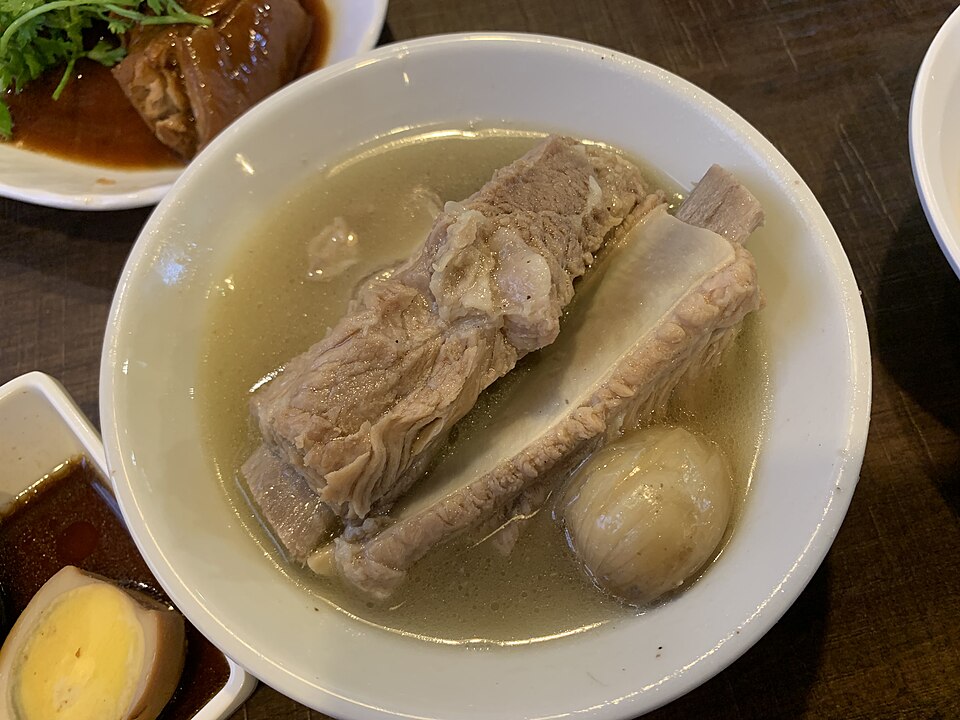
Bak kut teh (peppery Teochew style)
 Singaporean · 2 h 15 min · 739 kcal
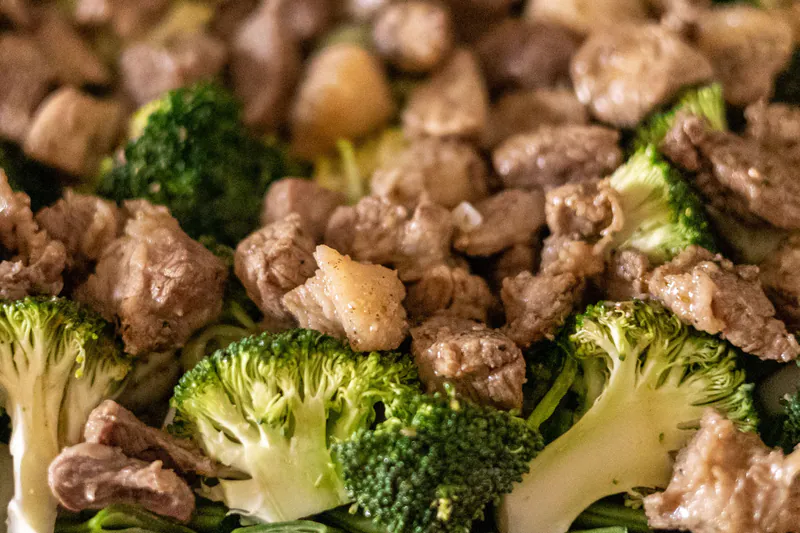
Beef and broccoli stir-fry
 Cantonese · 30 min · 309 kcal
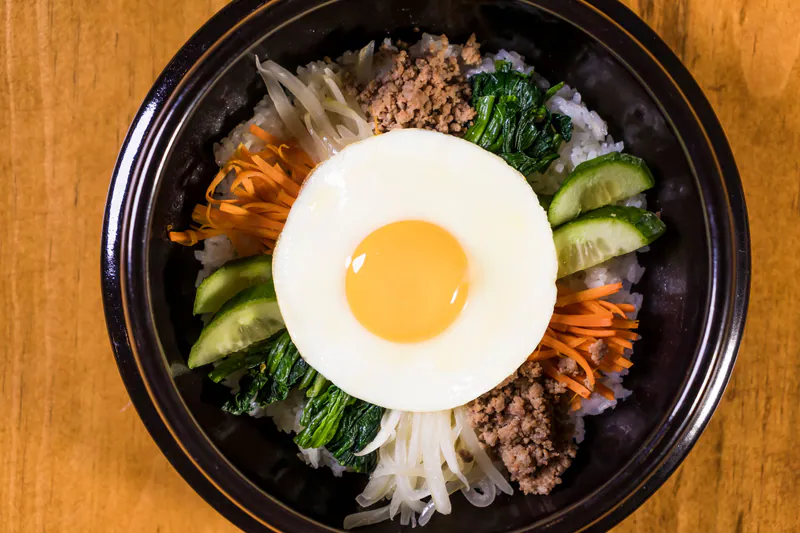
Bibimbap
 Korean · 1 h · 657 kcal
Bulalo
 Filipino · 3 h 35 min · 260 kcal
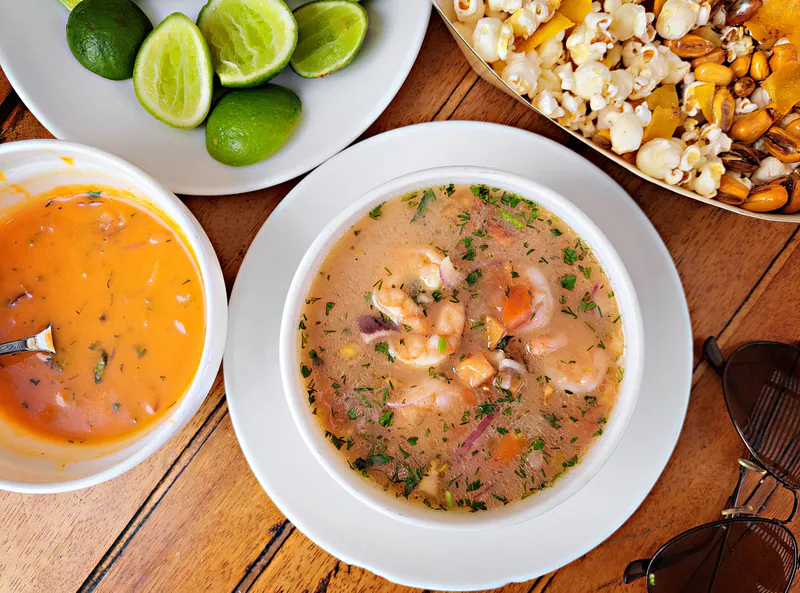
Ceviche ecuatoriano de camarón
 Ecuadorian · 1 h · 195 kcal
Chinese broccoli with oyster sauce
Cantonese · 13 min · 72 kcalCumberland sauce
 British · 1 h 25 min · 88 kcal · Vegan
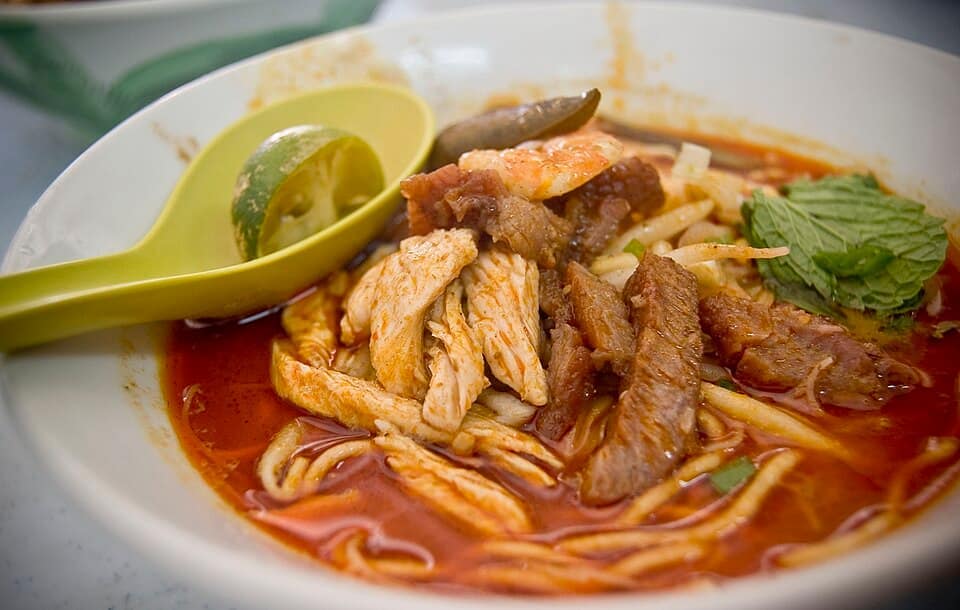
Curry laksa
 Malaysian · 1 h 5 min · 950 kcal
40 more
- Curtido · Salvadoran
- Dolmadakia (rice-stuffed vine leaves) · Greek
- Dublin coddle · Irish
- Gado-gado · Indonesian
- Galbi-jjim · Korean
- Gboma dessi · Togolese
- Gołąbki · Polish
- Gomen · Ethiopian
- Japchae · Korean
- Judd mat Gaardebounen · Luxembourgish
- Kimbap · Korean
- Kuy teav · Cambodian
- Moules-frites · Belgian
- Palak paneer · Punjabi
- Palak paratha · Punjabi
- Phở bò (beef pho) · Vietnamese
- Red-braised pork belly · Chinese
- Rocoto relleno · Peruvian
- Rojak buah · Malaysian
- Seolleongtang · Korean
- Sichuan boiled fish · Sichuan
- Sigeumchi namul · Korean
- Solterito arequipeño · Peruvian
- Sop buntut · Indonesian
- Spinach goma-ae · Japanese
- Spinach pkhali · Georgian
- Sprouted moong salad · Indian
- Taiwanese beef noodle soup · Taiwanese
- Thịt kho trứng · Vietnamese
- Three-bean salad · American
- Tofu and chickpea saag · Indian
- Tom saep · Thai
- Tomato beef noodle soup · Chinese
- Torta pascualina · Uruguayan
- Urap sayur · Indonesian
- Winter melon soup with pork ribs · Cantonese
- Wood ear mushroom salad · Chinese
- Yam talay · Thai
- Yam woon sen (glass noodle salad) · Thai
- Zaru soba · Japanese