
Fish & seafood · Fermented seafood
Salted fermented shrimp (saeujeot)
Tiny shrimp salted and fermented in brine; Korea's key seasoning for kimchi paste, soups and steamed eggs.
Also called: saeu-jeot, salted shrimp, fermented shrimp, yukjeot, korean salted shrimp
Around the world: 새우젓 (ko)
A kind of prawns / shrimp
What it is
Very small shrimp packed with a lot of salt and left to ferment for months, sold in jars with their briny liquid. The best is yukjeot, made from shrimp caught in June. It seasons kimchi and many soups with a clean, savoury saltiness rather than a strong fishy taste.
How it’s used
- Minced into kimchi seasoning paste
- Seasoning steamed egg (gyeran-jjim) and clear soups
- Served as a dipping condiment with boiled pork (bossam)
Characteristics
- Taste
- Very salty and savoury with a light sweetness.
- Texture
- Soft, tiny whole shrimp in brine.
- Sold as
- fermented
- Cooking uses
- Mainly a seasoning
- Common in
- Korean
Storage
Refrigerated. Keep in the fridge or freezer; the high salt content keeps it for many months.
Diet, allergens and safety
Contains Crustaceans.
- Vegetarian
- Vegan
- Dairy-free
- Egg-free
- Gluten-free
- Nut-free
- Soy-free
- Caffeine-free
- Contains crustaceans.
Nutrition per 100 g
- Energy
- 35 kcal
- Protein
- 5.06 g
- Carbohydrate
- 3.64 g
- Fat
- 0.01 g
- Fibre
- 0 g
- Sugars
- 3.64 g
USDA FoodData Central: Sauce, fish, ready-to-serve (a close stand-in).
Substitutes
Optional — what works if you don’t have it, and how it changes the dish.
- Fish sauce — Use about the same volume; the kimchi will be a little less rounded.
Related ingredients
Recipes with salted fermented shrimp (saeujeot)
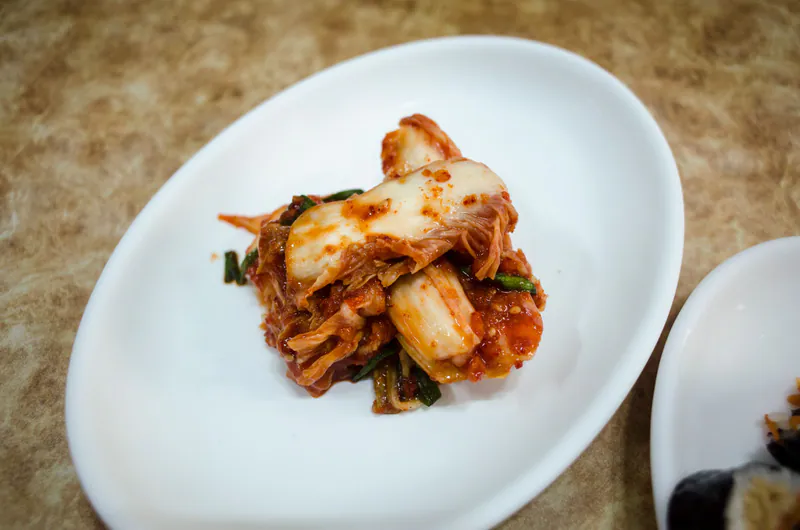
Baechu kimchi (napa cabbage kimchi)
 Korean · 7 h 5 min · 44 kcal