
Pasta, noodles & bread · Noodles
Glass noodles
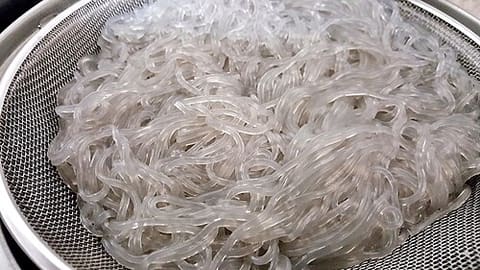
Transparent noodles of mung bean or sweet potato starch; slippery, chewy and gluten-free.
Also called: cellophane noodles, mung bean vermicelli, dangmyeon, sweet potato noodles, fensi, sotanghon
A kind of noodles
Photo: 토리랑, via Wikimedia Commons (CC-BY-4.0)
What it is
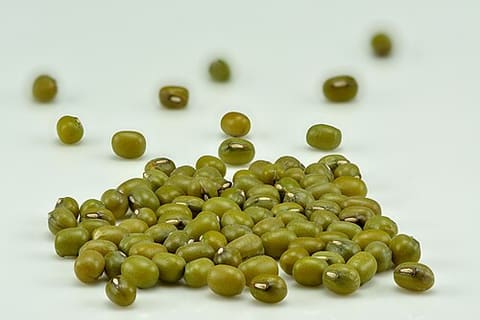
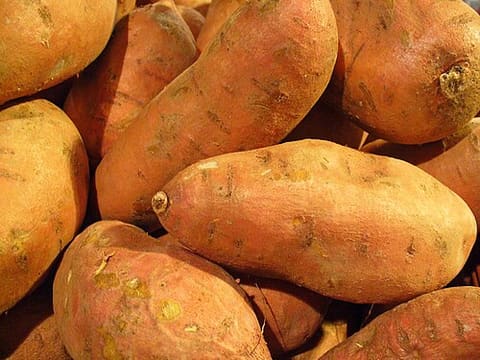
Glass or cellophane noodles are made from pure starch, usually mung bean (fine, wiry fensi and sotanghon) or sweet potato (thicker, grey Korean dangmyeon). Dried they are wiry and opaque white or grey; cooked they turn clear and slippery. They absorb flavour well and stay chewy, unlike rice noodles, which stay opaque and soften.
How it’s used
- Japchae (Korean sweet potato noodles)
- Thai yum woon sen salad
- Hot pots and soups
- Spring roll and dumpling fillings
- Sotanghon soup
Characteristics
- Texture
- Slippery, springy and chewy.
- When cooked
- Soak or boil briefly; snip long strands with scissors. They keep absorbing liquid, so sauce soups just before serving.
- Sold as
- dried
- Cooking uses
- Commonly cooked, Suitable for boiling, Suitable for frying
Storage
Pantry-stable. Dried noodles keep for a long time in a dry place.
Diet, allergens and safety
No major allergens in typical versions.
- Vegetarian
- Vegan
- Dairy-free
- Egg-free
- Gluten-free
- Nut-free
- Soy-free
- Caffeine-free
- Naturally gluten-free; check labels for added wheat.
Nutrition per 100 g
- Energy
- 351 kcal
- Protein
- 0.16 g
- Carbohydrate
- 86.09 g
- Fat
- 0.06 g
- Fibre
- 0.5 g
- Sugars
- 0 g
USDA FoodData Central: Noodles, chinese, cellophane or long rice (mung beans), dehydrated.
Substitutes
Optional — what works if you don’t have it, and how it changes the dish.
- Rice noodles — Thin rice vermicelli works in salads and soups; softer and not clear.
Related ingredients
Recipes with glass noodles
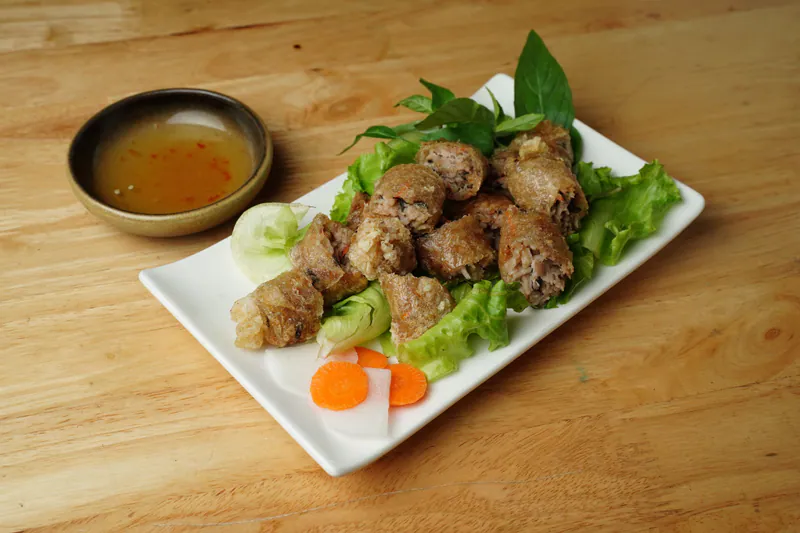
Chả giò (fried spring rolls)
 Vietnamese · 1 h 15 min · 616 kcal
Japchae
 Korean · 45 min · 464 kcal
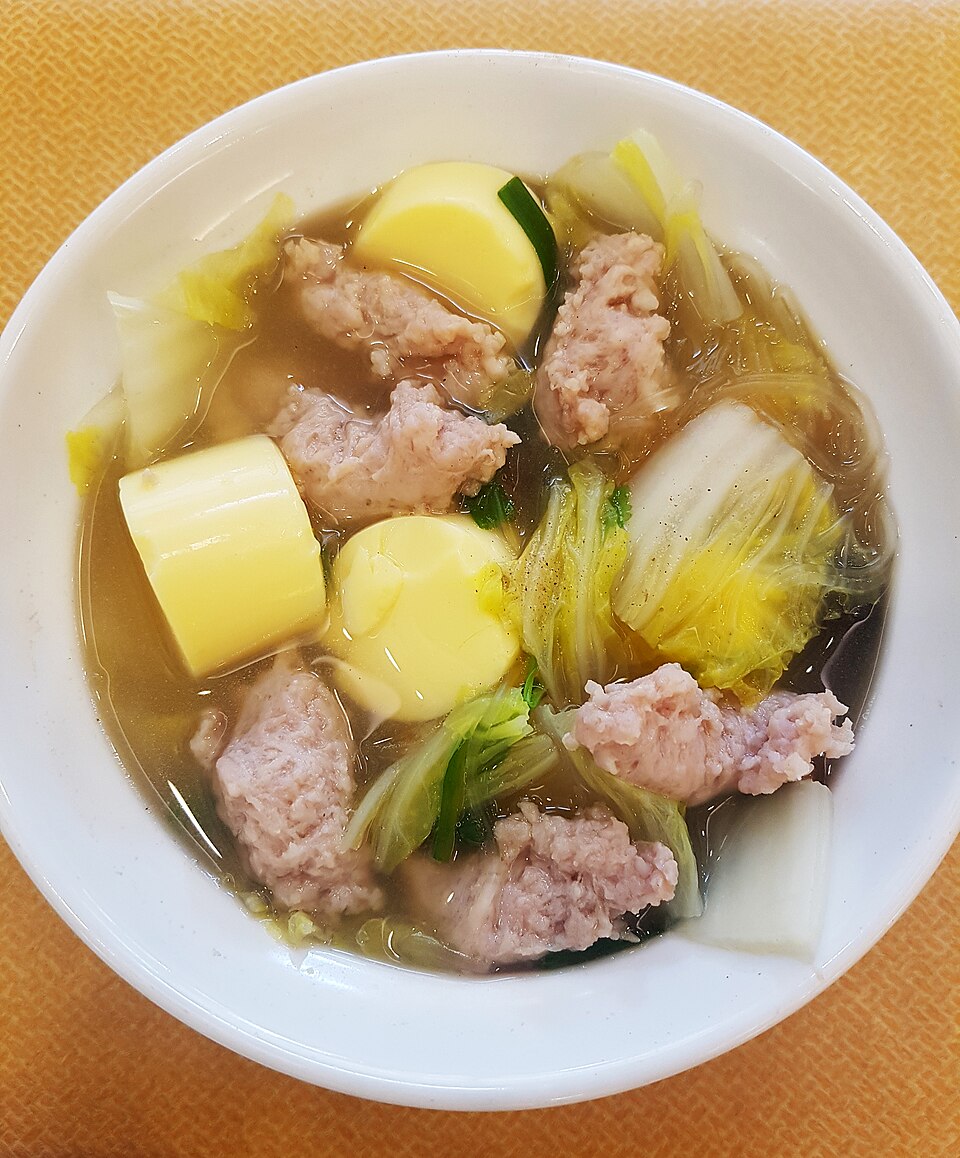
Kaeng jued tao hu moo sap
 Thai · 35 min · 343 kcal
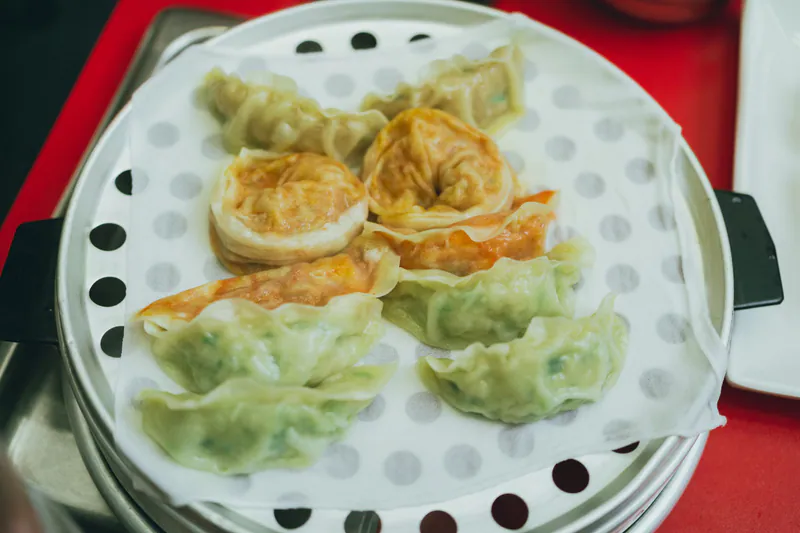
Kimchi mandu (kimchi dumplings)
Korean · 57 min · 546 kcal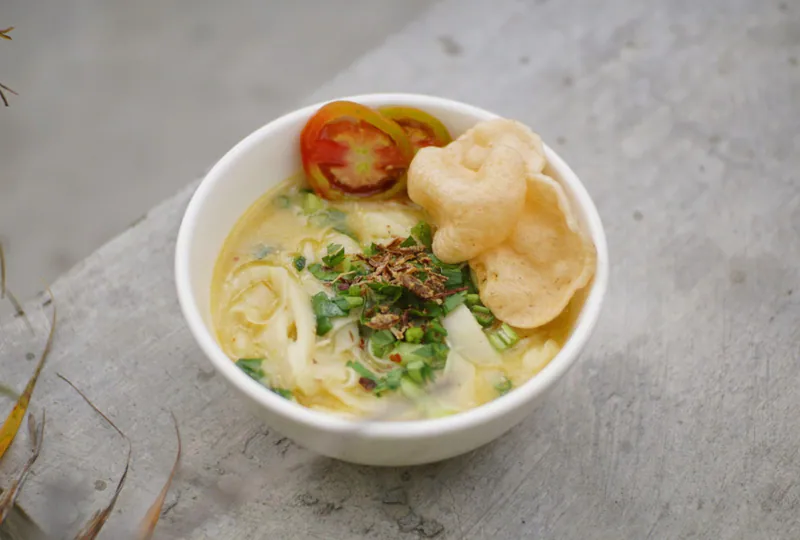
Soto ayam
 Indonesian · 1 h 25 min · 582 kcal
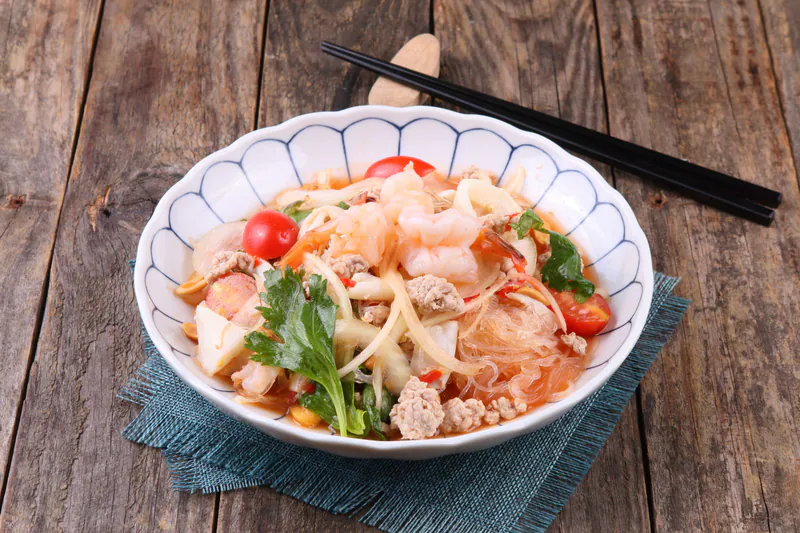
Yam woon sen (glass noodle salad)
Thai · 28 min · 352 kcal
More noodles
Noodles
Egg noodles
Chinese-style wheat noodles enriched with egg; springy, yellow and good for lo mein, chow mein and soups.
19 recipes
Noodles
Noodles
Long strands of dough or starch, from wheat and egg noodles to rice, buckwheat and glass noodles.
53 recipes
Noodles
Rice noodles
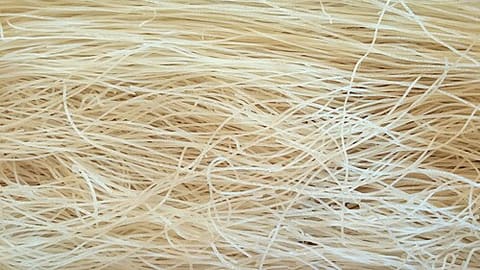
Dried noodles of rice flour and water, from hair-thin vermicelli to flat pho noodles; gluten-free and quick to soak.
18 recipes
Noodles
Udon noodles
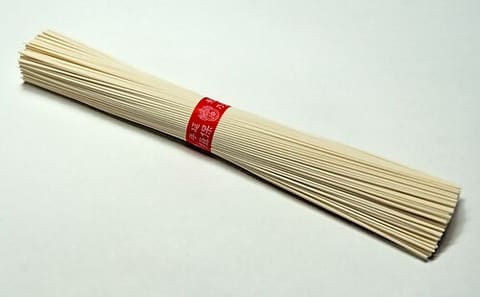
Thick, white Japanese wheat noodles with a soft, bouncy chew; sold fresh, frozen or dried.
6 recipes
Noodles
Soba noodles
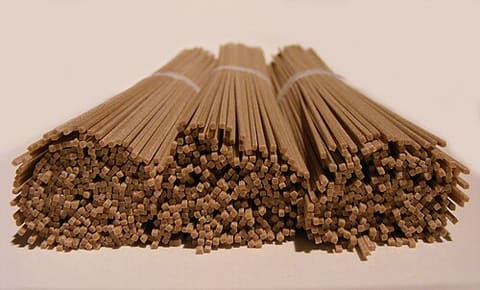
Thin, grey-brown Japanese buckwheat noodles, served hot in broth or cold with dipping sauce.
2 recipes
Noodles
Ramen noodles
Springy yellow wheat noodles made with alkaline salts (kansui); used in ramen and as chow mein noodles.
4 recipes
Noodles
Fresh wide rice noodles (ho fun)
Soft, fresh sheets or wide ribbons of steamed rice batter; the noodles in beef chow fun and pad see ew.
1 recipe
Noodles
Falooda vermicelli
Very thin vermicelli noodles cooked soft and layered with rose syrup, milk, basil seeds and ice cream in falooda.
2 recipes