
Utensils & kitchen tools · Grinder
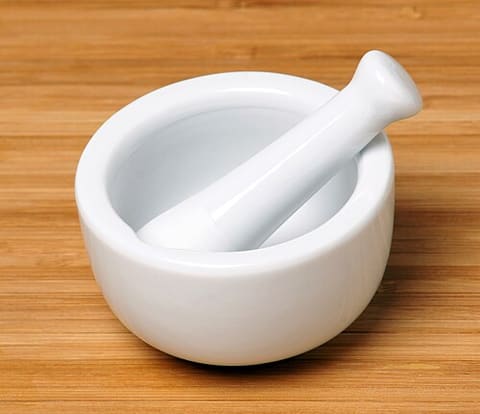
Mortar and pestle
A heavy bowl and club-shaped tool for crushing and grinding spices, garlic, herbs and pastes by hand.
Useful to have · Manual · 124 recipes
Photo: Evan-Amos, via Wikimedia Commons (public-domain)
What it is
The mortar is a thick bowl of stone, granite, marble, wood or ceramic; the pestle is a heavy rounded club. Food is pounded and ground between them. Rough granite suits pastes and curry bases; smooth ceramic suits fine powders. Japanese suribachi have ridged bowls; Thai and Mexican versions (krok, molcajete) are deep stone bowls.
What it’s for: Releasing oils and flavour by crushing, giving texture control that machines cannot.
How to use it
- Set the mortar on a folded cloth on a stable surface.
- Add a small amount at a time; a pinch of salt or sugar adds grip.
- Pound straight down to crack, then grind in circles to turn into powder or paste.
- Add wetter ingredients last, scraping down the sides.
Good to know
- Tasks
- grinding whole spices, making ginger-garlic and curry pastes, making pesto and guacamole, crushing nuts and seeds, bruising herbs and lemongrass
- Cooking methods
- Raw, No-cook
- Materials
- granite, marble, basalt, wood, ceramic
- Care and cleaning
- Rinse with warm water and a brush; avoid soap in porous stone and wood. Season new granite by grinding a little raw rice until the grit stops. Dry fully.
- Limitations
- Slow for large batches; very hard spices like dried turmeric root are tough to grind.
Safety
- Heavy; keep it on a low, stable surface.
- Avoid pounding very hard spices with a light pestle that could slip.
If you don’t have one
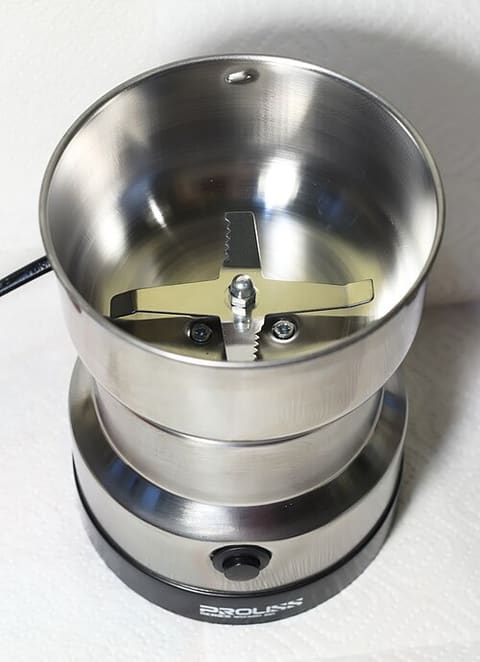
- Coffee / spice grinder — Faster for dry spices, less textural control.
- Rolling pin and freezer bag — Crushes seeds and peppercorns coarsely.
Equipment guide
How it works: The pestle crushes and grinds by pressure and a rolling, rubbing motion against the bowl. Unlike blades, it bursts cells and releases oils, giving pastes with better aroma and texture. A heavy, rough mortar does the work faster; a smooth one is for wet grinding.
| Material | Good | Watch out |
|---|---|---|
| Granite | Heavy and rough; grinds spices and pastes quickly; does not absorb much. | Very heavy; season first by grinding rice. |
| Marble | Smooth and attractive. | Etched by acids (lime, tamarind); slippery for whole spices. |
| Wood | Light; good for gently bruising herbs and salt. | Absorbs oils and smells; poor for hard spices. |
| Ceramic or porcelain | Non-porous; good for small amounts of powder. | Smooth, so slow for coarse grinding; chips. |
| Volcanic basalt (molcajete) | Rough grinding surface for salsas. | Must be seasoned to remove grit. |
| Clay mortar with wooden pestle | Traditional for pounding Thai and Lao salads. | Breakable. |
- Deep granite mortar
- Spice pastes and curry pastes.
- Small ceramic mortar
- Small amounts of spices and saffron.
- Indian stone grinder (sil-batta, ammikal)
- Flat or hollowed stone with a grinding stone for wet masalas and chutneys.
- Molcajete
- Mexican volcanic-stone mortar.
Buying guidance
Starting out: A granite mortar 15–20 cm across holds enough to grind a paste without spilling.
- Inner bowl at least 15 cm across for pastes
- Heavy enough not to slide (about 2 kg or more for granite)
- Unpolished interior for grip
- Pestle long enough to keep knuckles clear
No brands or prices — check current reviews before buying.
Techniques:Spice roasting (dry-roasting)Wet grindingDry grindingEmulsification
Related tools

Recipes that use it
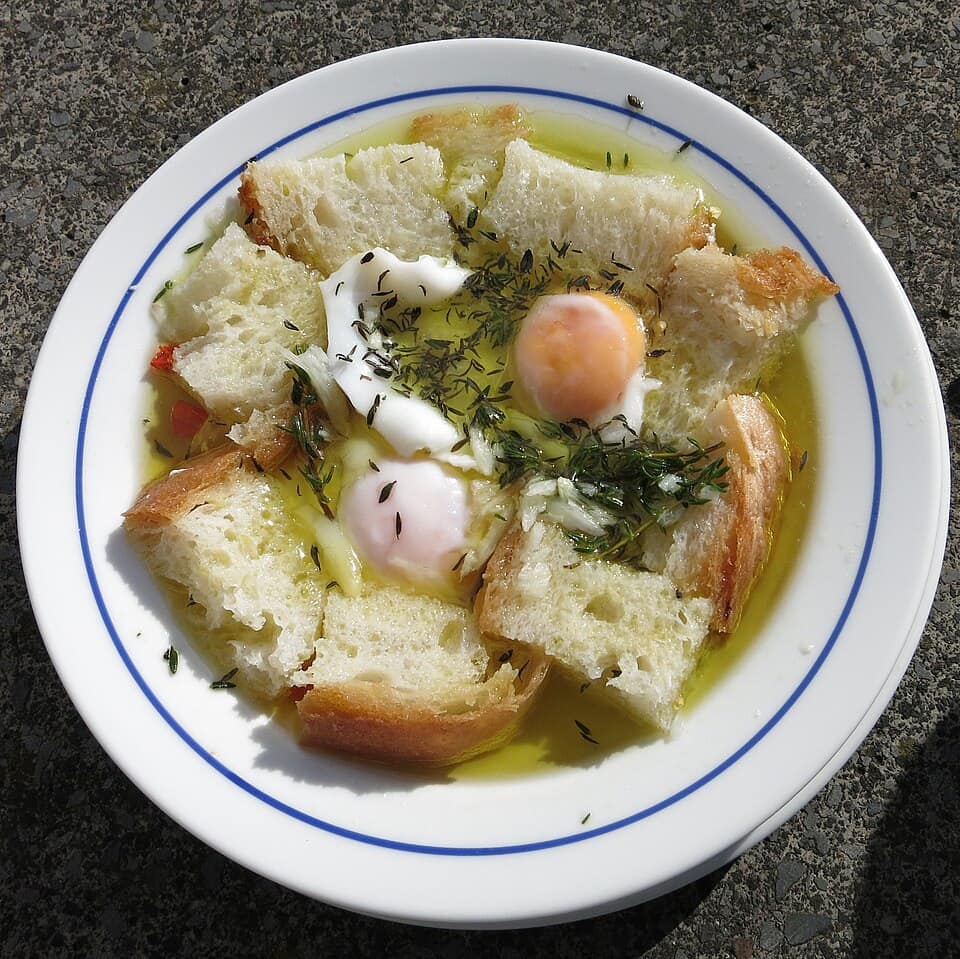
Açorda alentejana
 Portuguese · 20 min · 365 kcal · Contains egg
Adjika (red chilli paste)
 Georgian · 1 h 20 min · 13 kcal · Vegan
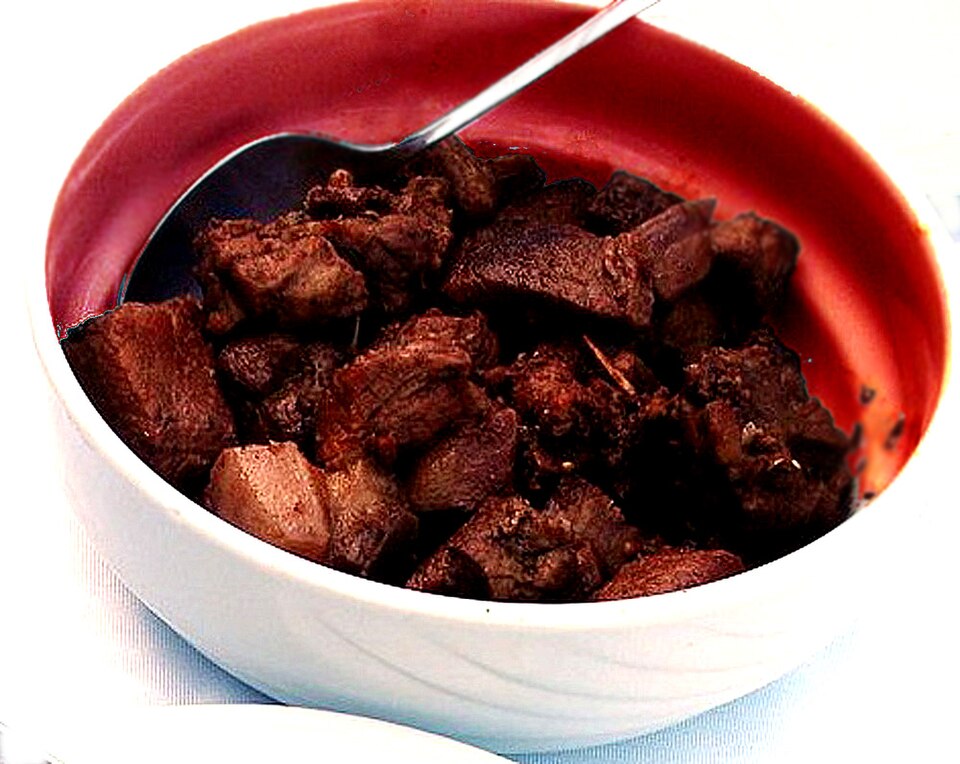
Afelia
 Cypriot · 13 h 45 min · 695 kcal
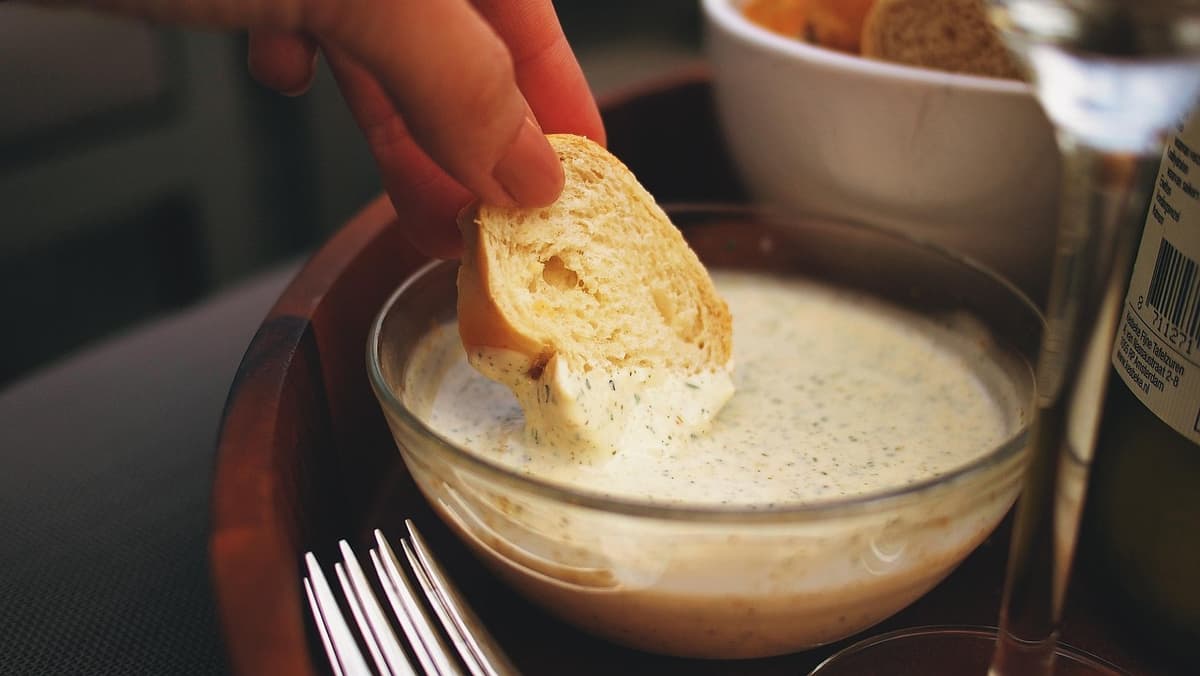
Aïoli (Provençal garlic mayonnaise)
 French · 20 min · 211 kcal · Contains egg
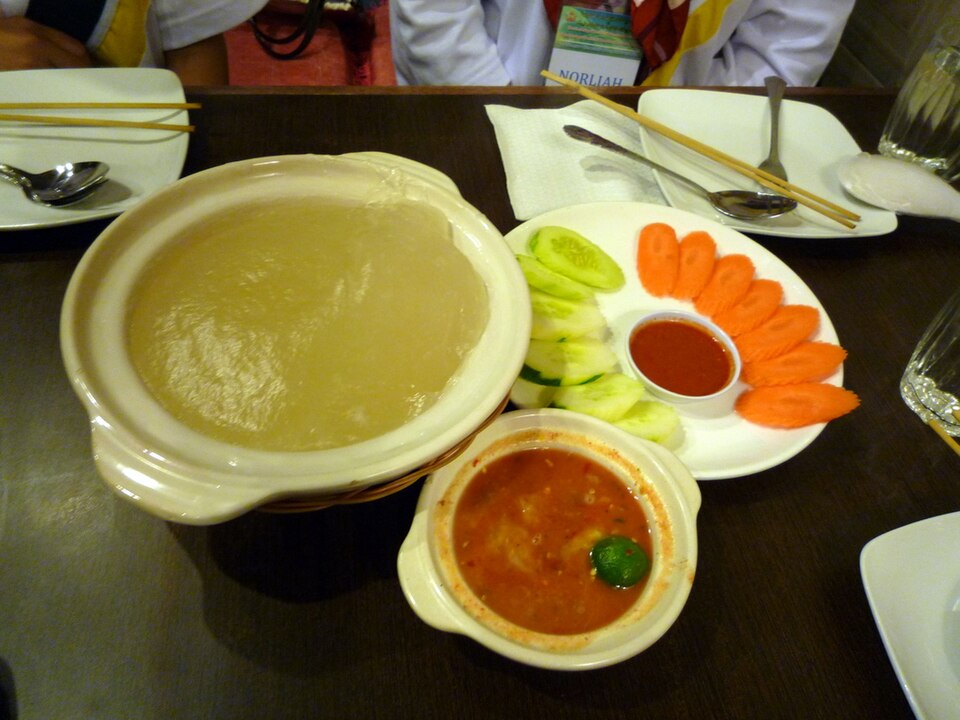
Ambuyat with cacah
 Bruneian · 25 min · 273 kcal
Andhra tomato pachadi
 South Indian · 50 min · 56 kcal · Vegan
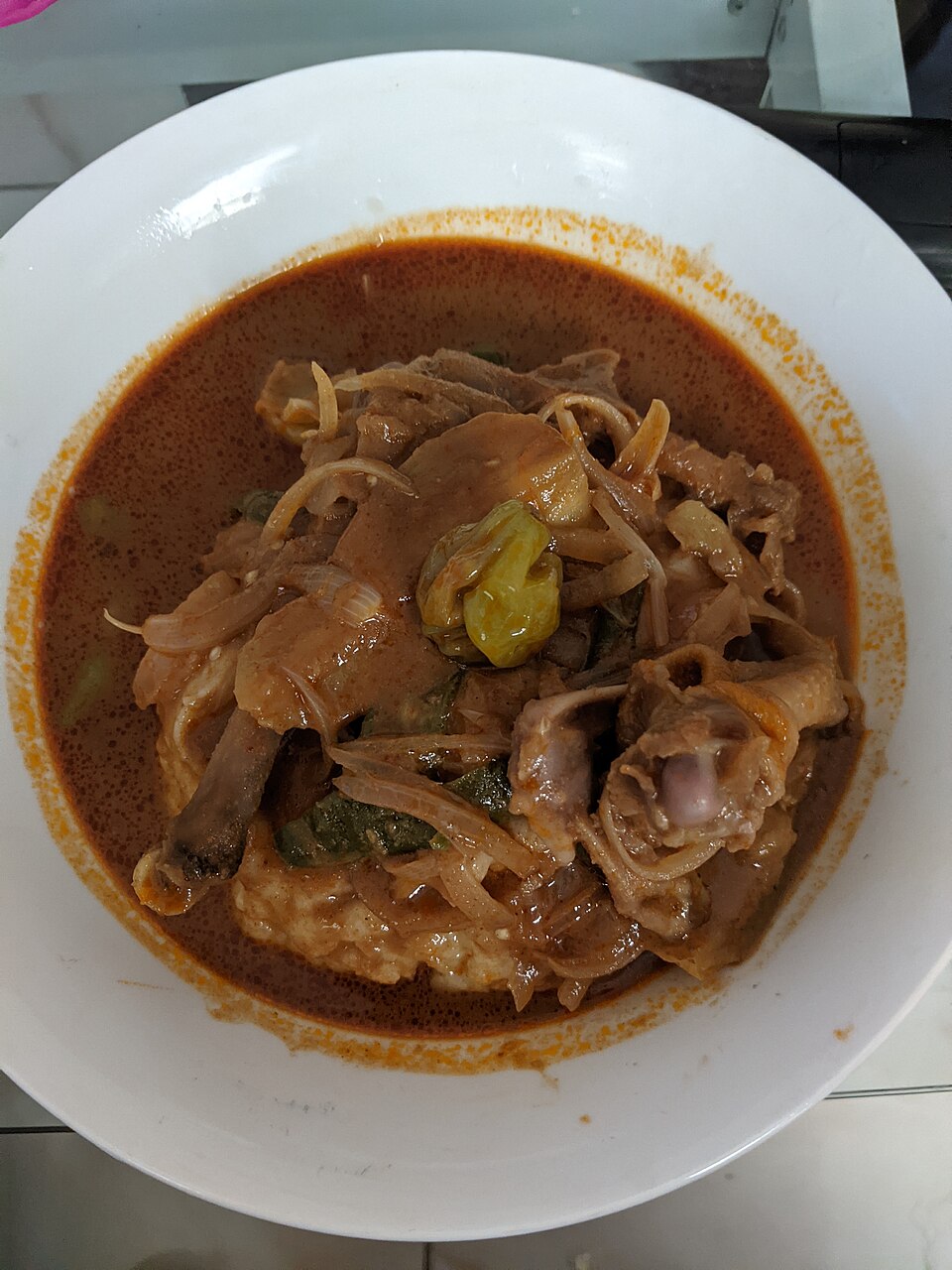
Azi dessi with fufu
 Togolese · 1 h 30 min · 749 kcal
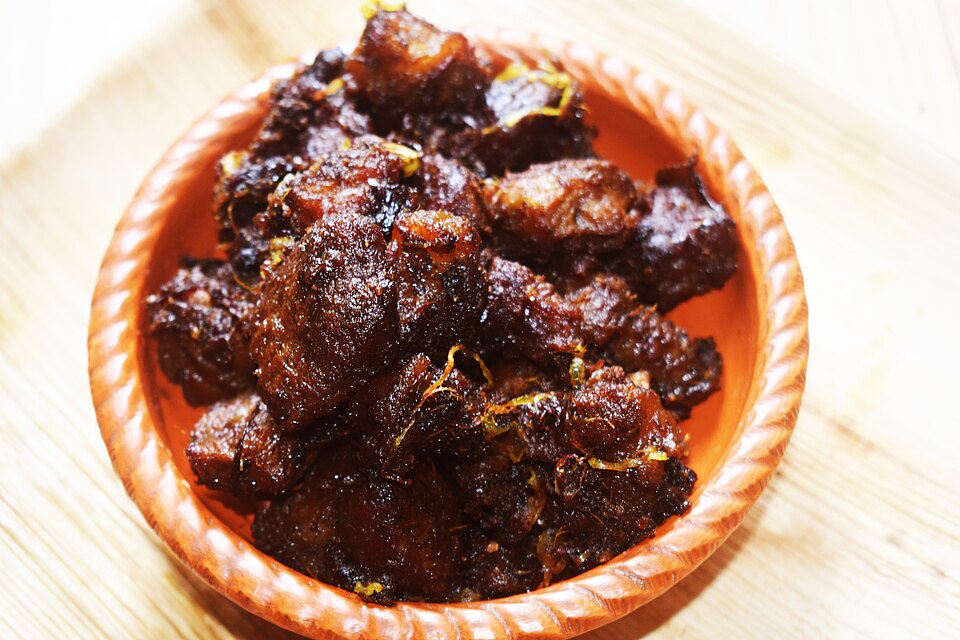
Beef kala bhuna
 Bangladeshi · 2 h 50 min · 438 kcal
Bengali garam masala
Bengali · 15 min · 6 kcal · VeganBhang ki chutney (Kumaoni hemp seed chutney)
Indian · 21 min · 62 kcal · VeganBurmese pork curry
 Burmese · 2 h · 586 kcal
Chermoula
 Moroccan · 15 min · 119 kcal · Vegan
112 more
- Coorg pandi curry · South Indian
- Cuban mojo · Cuban
- Dhonepata bata (Bengali coriander paste) · Bengali
- Doon chetin (Kashmiri walnut chutney) · Indian
- Dukkah with bread and olive oil · Egyptian
- Egyptian dukkah · Egyptian
- Eromba (Manipuri fermented fish and vegetable mash) · Indian
- Espinacas con garbanzos · Spanish
- Ethiopian coffee (jebena buna) · Ethiopian
- Fermented bamboo shoot chutney · Indian
- Fish ambul thiyal · Sri Lankan
- Fish amok · Cambodian
- Fufu (cassava and plantain) · Ghanaian
- Fura da nono · Nigerien
- Gai yang (Thai grilled chicken) · Thai
- Georgian tomato and cucumber salad with walnuts · Georgian
- Golbheda ko achar · Nepalese
- Goma dare (Japanese sesame sauce) · Japanese
- Gongura pachadi (Andhra sorrel-leaf chutney) · South Indian
- Guacamole · Mexican
- Harissa · Tunisian
- Hudut · Belizean
- Kadai masala · Punjabi
- Kadai paneer · Punjabi
- Kaeng jued tao hu moo sap · Thai
- Kai palo · Thai
- Kangkung belacan · Malaysian
- Kharoli (Assamese fermented mustard paste) · Indian
- Kolhapuri kanda-lasun masala · Indian
- Kolhapuri lal thecha (red chilli-garlic thecha) · Indian
- Laban bi toum (garlic yoghurt dip) · Levantine
- Lablabi · Tunisian
- Lao beef larb · Lao
- Larb gai · Thai
- Lobio · Georgian
- Masala doodh · Indian
- Massaman curry paste · Thai
- Massaman curry with beef · Thai
- Milagu rasam · South Indian
- Mofongo · Caribbean
- Mojo picón (Canarian red mojo) · Spanish
- Moo ping (Thai grilled pork skewers) · Thai
- Nam jim jaew · Thai
- Nam jim seafood · Thai
- Nandu rasam · South Indian
- Nasi goreng · Indonesian
- Neer mor · Indian
- Nigerian goat meat pepper soup · Nigerian
- Nom banh chok · Cambodian
- Or lam · Lao
- Pad kra pao gai · Thai
- Pahadi nimbu sana · Indian
- Panang curry paste · Thai
- Panang curry with beef · Thai
- Pernil · Puerto Rican
- Pesto alla genovese · Italian
- Pipirrana · Spanish
- Pol sambol · Sri Lankan
- Poondu rasam · South Indian
- Pounded yam · Nigerian
- Pudina raita (mint raita) · Indian
- Pulihora (Andhra tamarind rice) · South Indian
- Rajasthani garlic chutney (lehsun ki chutney) · Indian
- Recado rojo (Yucatecan achiote paste) · Mexican
- Red zhug (zhug adom) · Yemeni
- Roasted tomato and king chilli chutney (Naga style) · Indian
- Rojak buah · Malaysian
- Romesco sauce · Spanish
- Salsa roja asada · Mexican
- Sambal belacan · Malaysian
- Sambal oelek · Indonesian
- Sauce feuille · Guinean
- Shichimi togarashi · Japanese
- Shorshe maach · Bangladeshi
- Singju · Indian
- Skordalia · Greek
- Sol kadhi · Indian
- Som tam · Thai
- Sop buntut · Indonesian
- Soupe au pistou · French
- Spinach goma-ae · Japanese
- Sri Lankan black pork curry · Sri Lankan
- Sticky rice with jeow mak len · Lao
- Sup kambing · Malaysian
- Tam mak hoong · Lao
- Tangyuan (black sesame rice balls in ginger syrup) · Chinese
- Tapenade (Provençal olive, caper and anchovy spread) · French
- Tempe bacem · Indonesian
- Tereré · Paraguayan
- Thai green curry paste · Thai
- Thai green curry with chicken · Thai
- Thai red curry paste · Thai
- Thai red curry with chicken and bamboo shoots · Thai
- Thai yellow chicken curry · Thai
- Thai yellow curry paste · Thai
- Thecha (Maharashtrian green chilli and garlic relish) · Indian
- Thenga chammanthi (Kerala pounded coconut chutney) · South Indian
- Thiéboudienne · Senegalese
- Tkemali · Georgian
- Tom saep · Thai
- Tomato rasam · South Indian
- Trofie al pesto with potatoes and green beans · Italian
- Turkish walnut tarator · Turkish
- Ulli chammanthi (Kerala shallot chutney) · South Indian
- Urap sayur · Indonesian
- Vada pav · Indian
- Wholegrain mustard · French
- Yam nuea · Thai
- Yam talay · Thai
- Yam woon sen (glass noodle salad) · Thai
- Za'atar · Levantine
- Zhug · Yemeni