French · regional cuisine
Alsatian
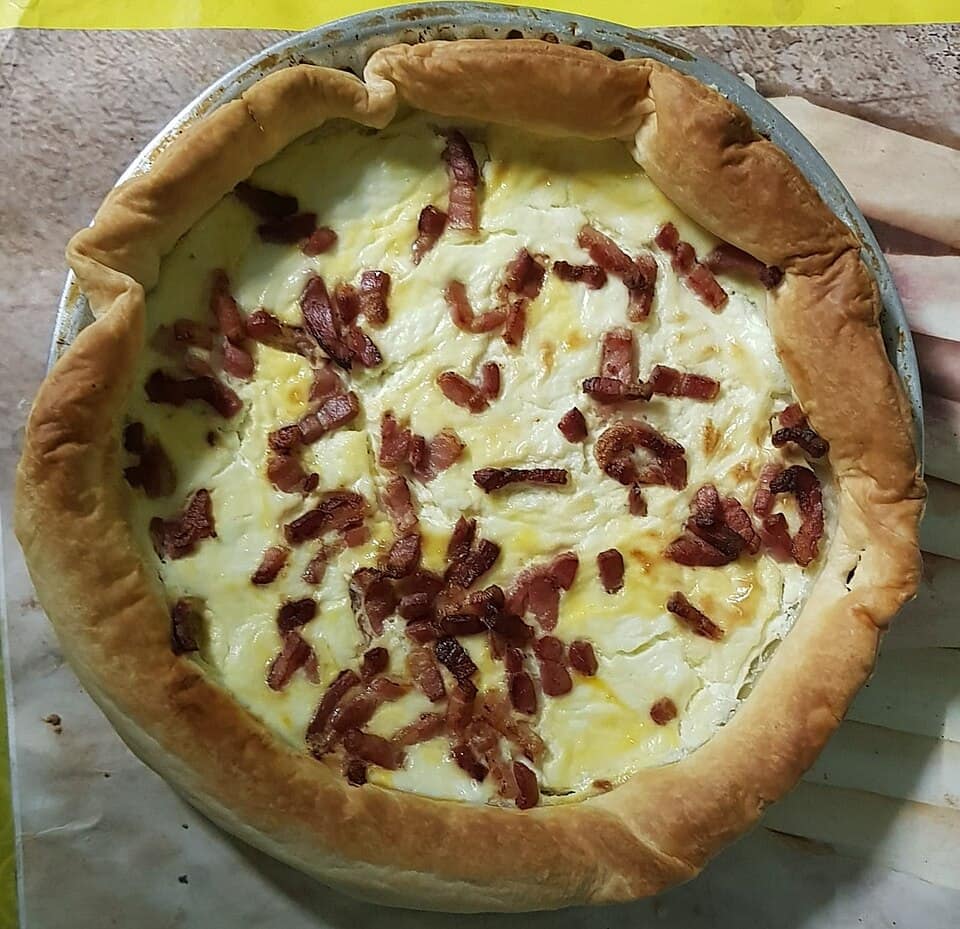
The Franco-Germanic cooking of Alsace: sauerkraut with pork and sausages, tarte flambée, baeckeoffe, kougelhopf and white wines, eaten in winstubs.
Flavour character: Hearty, sour-savoury and smoky: fermented cabbage, cured and smoked pork, cream and onions, juniper and caraway, dry white wine.
History
Alsace changed hands between France and Germany several times between 1648 and 1945, and its cooking and dialect stayed largely Germanic. Strasbourg is traditionally associated with the development of pâté de foie gras in the late 18th century. Choucroute (sauerkraut) reflects the cabbage-fermenting tradition of the Rhine valley, and the region's white wines (Riesling, Gewürztraminer) are used in cooking.
Commonly told; not firmly documented
Geography and influences
The Rhine plain and the slopes of the Vosges mountains: vineyards, cabbage fields, pigs, dairy (Munster cheese) and orchards.
- German and Rhineland cooking
- French haute cuisine
- Alsatian Jewish cooking
Regional variations
- Bas-Rhin (Strasbourg)
- Winstub cooking, foie gras, choucroute.
- Haut-Rhin and the Vosges
- Munster cheese and mountain-farm (ferme-auberge) meals.
Festive and seasonal food
- Bredele biscuits and mannele brioche figures at Christmas and St Nicholas
- Kougelhopf for Sunday breakfast
Signature dishes
Not on the site yet: Choucroute garnie, Baeckeoffe, Kougelhopf, Coq au Riesling, Munster cheese, Bredele (Christmas biscuits)
 French · 20 min · 211 kcal ·
 German · 1 h 30 min · 145 kcal ·