
Seeds
Caraway seeds
Carum carvi
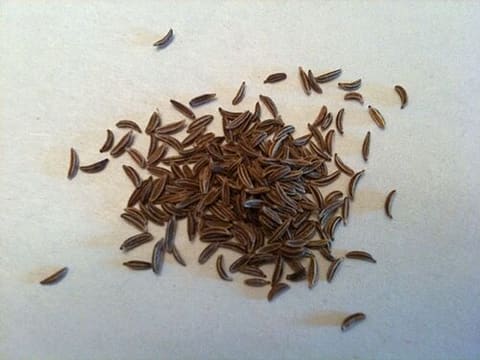
Curved, dark brown seeds with a warm, sweet anise flavour; the taste of rye bread and sauerkraut.
Also called: caraway, caraway seed, kümmel, ground caraway
Around the world: Kümmel (de) · kömény (hu) · kminek (pl) · kummin (sv)
- Anise & liquorice
- Earthy
- Warm & sweet
- No heat
Photo: OttawaAC, via Wikimedia Commons (CC-BY-SA-3.0)
Flavour and aroma
anise-like, dill-like, slightly bitter, warm. Warm, sweet, anise-like.
- Heat
- No heat
- Forms
- whole, ground
How to use it
use raw
Add whole seeds straight to bread dough, sauerkraut, slaws and cheese; they soften during baking or braising.
dry roast · Spice roasting (dry-roasting) technique
For a nuttier flavour, toast in a dry pan over medium-low heat for 1–2 minutes, shaking, until fragrant and a shade darker. Do not let them smoke.
crush · Dry grinding technique
Crush lightly in a mortar before adding to braises, goulash or roast pork so the flavour spreads through the dish.
grind · Dry grinding technique
Grind freshly for harissa and tabil; ground caraway goes flat within weeks.
- Rye bread and soda bread
- Sauerkraut, coleslaw and cabbage dishes
- Goulash and roast pork
- Harissa and Tunisian tabil
- Seed cakes and cheeses
Identifying good quality
Slender, curved, dark brown seeds about 4–6 mm long with five pale ridges. They look like cumin but are darker, smoother and more curved. Good seeds smell sharp and liquorice-like when crushed; dusty or musty ones are stale.
- Not to be confused with Cumin seeds: German 'Kümmel' is caraway; cumin is 'Kreuzkümmel'. Cumin seeds are paler, straighter and hairy-ridged, with a musky, earthy smell rather than caraway's anise note.
- Not to be confused with Fennel seeds: Fennel seeds are larger, greener and sweeter.
- Not to be confused with Dill seed: Dill seeds are flat and oval, not curved.
Origin and history
Origin: Western Asia, Europe and North Africa.. Grown and used: Grown in the Netherlands, Finland, Poland, Germany, Egypt and Canada; used most in Central and Northern Europe and in Tunisia..
Caraway has been cultivated in Europe since at least the Middle Ages and became the defining seasoning of German, Austrian, Czech, Scandinavian and Baltic rye breads, sauerkraut, cabbage and pork dishes. It flavours the liqueur kümmel and many Scandinavian aquavits. In Tunisia it is a core spice, ground into harissa and the tabil blend.
Well documented
In masalas, pastes and sauces
Recipes with caraway seeds
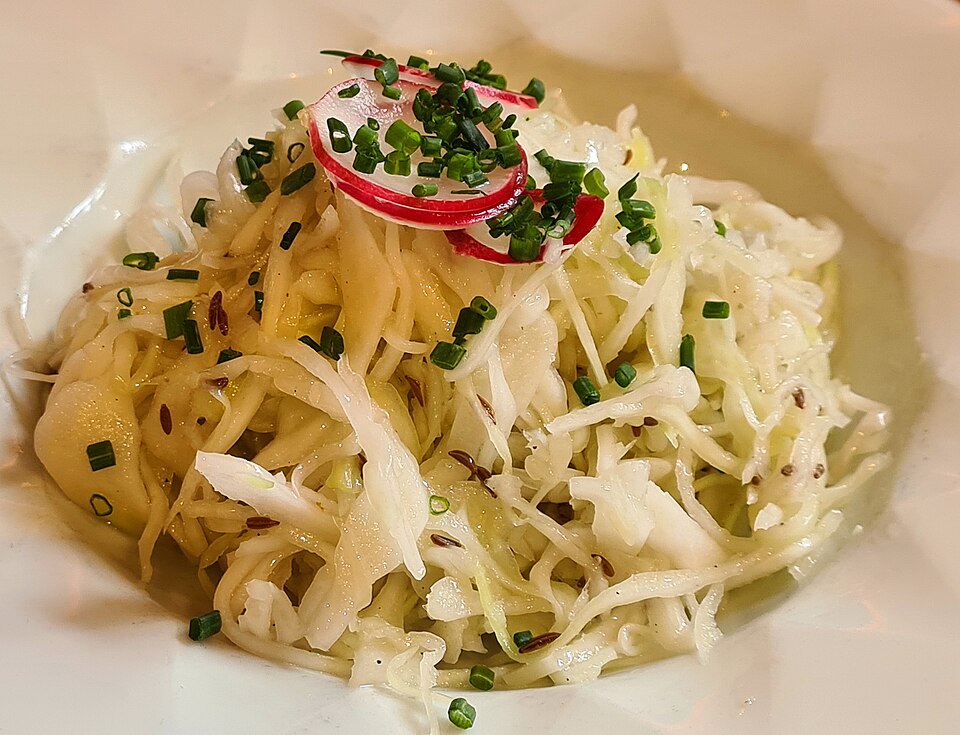
Bayerischer Krautsalat
 German · 58 min · 121 kcal
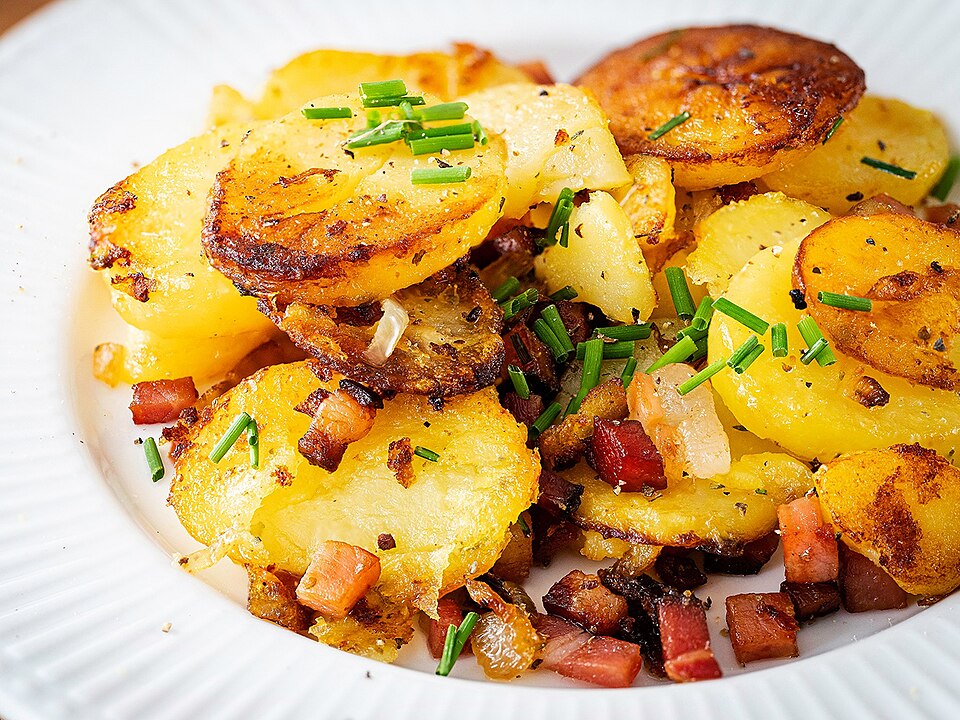
Bratkartoffeln
German · 35 min · 354 kcal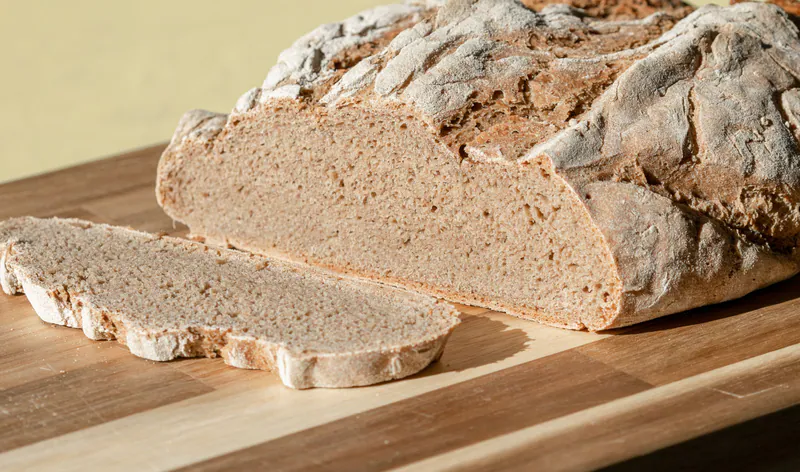
German rye sourdough (Roggenmischbrot)
German · 39 h 20 min · 101 kcal · Vegan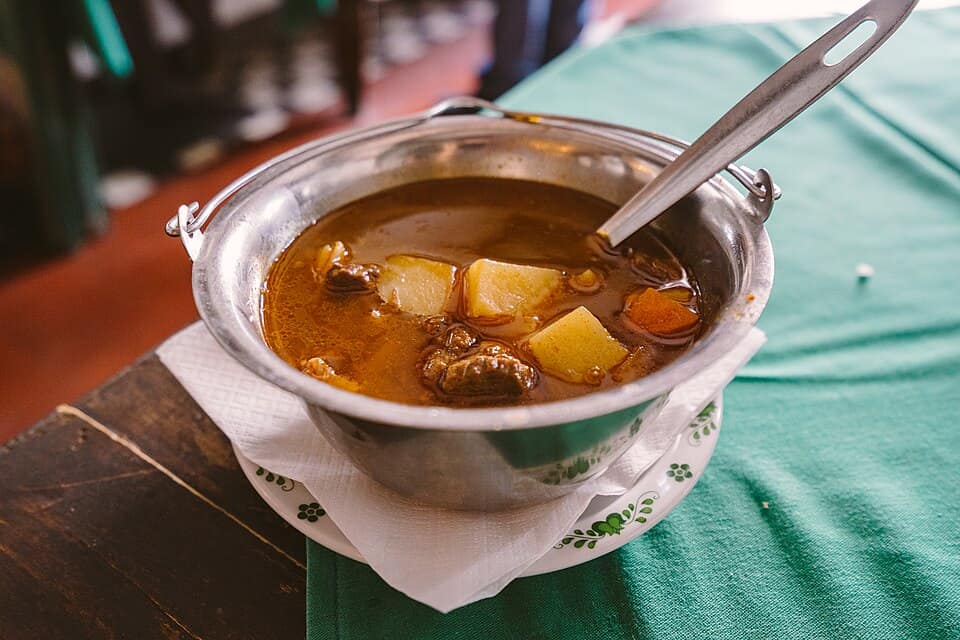
Gulyásleves (Hungarian goulash soup)
 Hungarian · 2 h 20 min · 309 kcal
Harissa
 Tunisian · 48 min · 42 kcal · Vegan
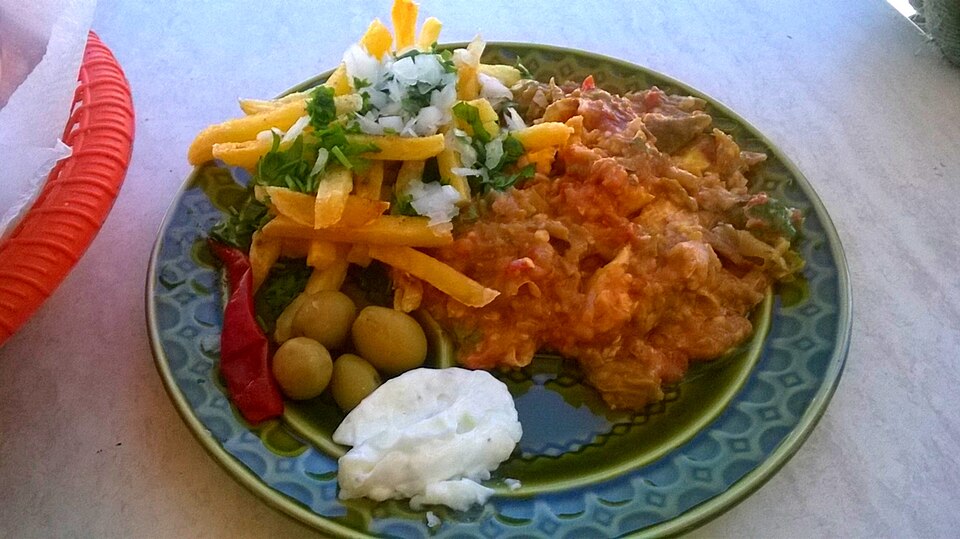
Kafteji
Tunisian · 55 min · 330 kcal · Contains eggKapustnica
 Slovak · 1 h 40 min · 341 kcal
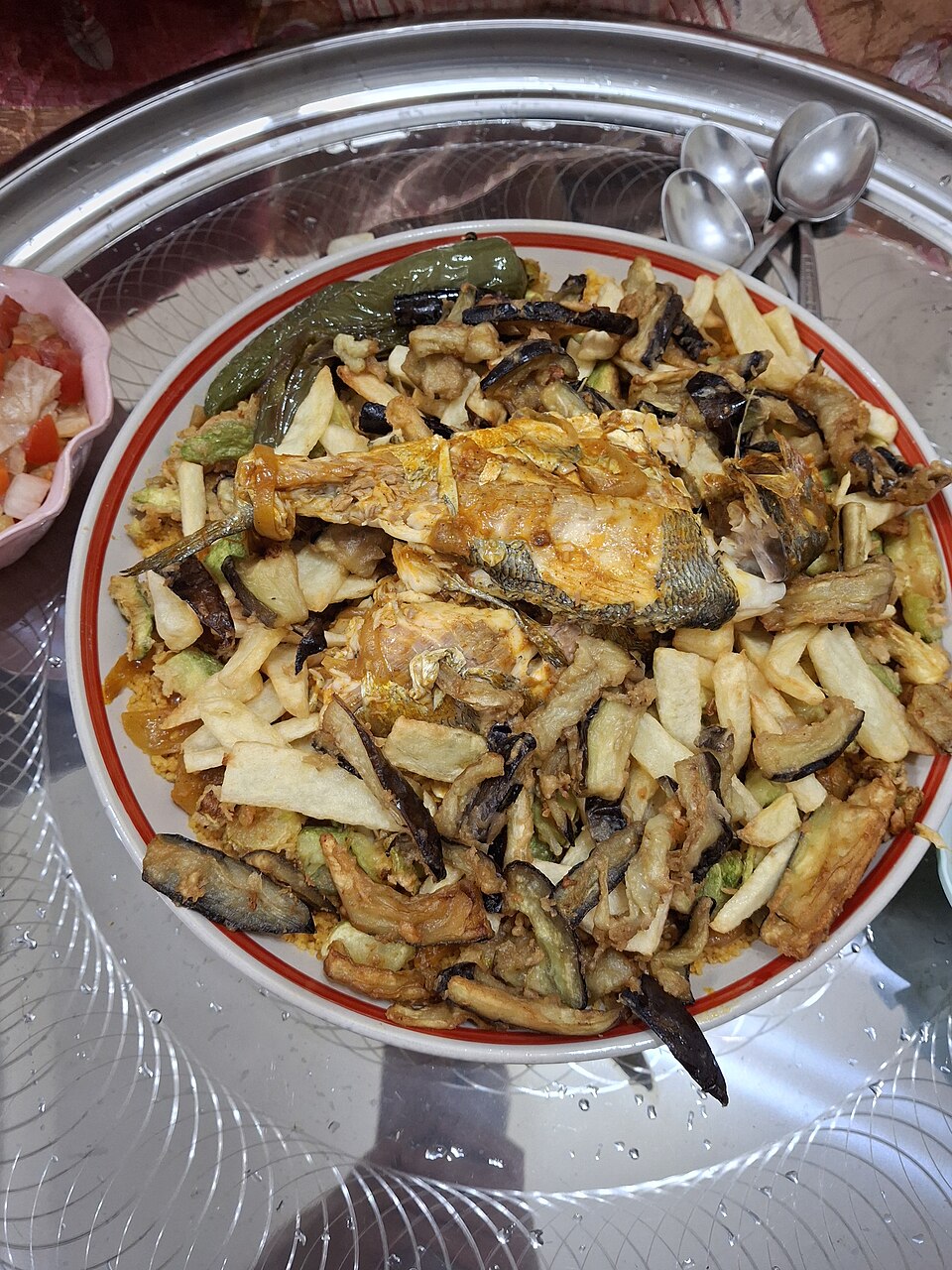
Kosksi bil hout
Tunisian · 1 h 35 min · 593 kcal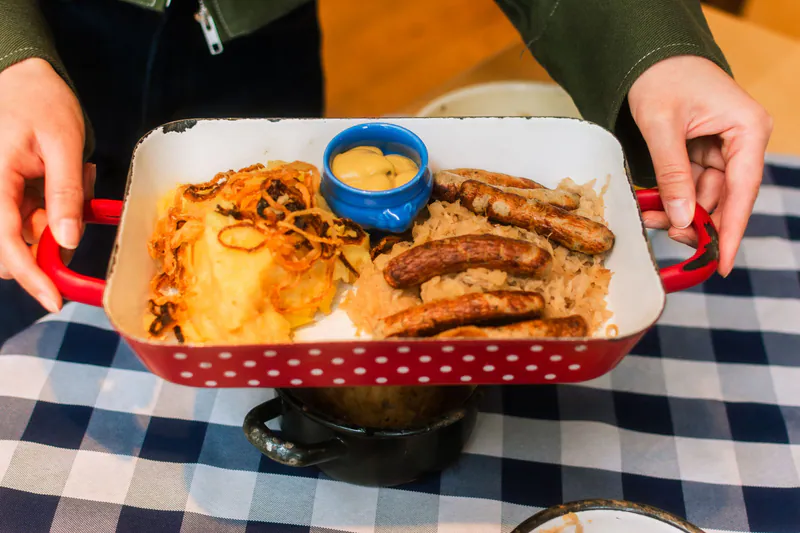
Kranjska klobasa with sauerkraut
 Slovenian · 55 min · 526 kcal
5 more
- Kulajda · Czech
- Salata mechouia · Tunisian
- Sertéspörkölt · Hungarian
- Swedish rye crispbread (knäckebröd) · Swedish
- Vepřo knedlo zelo · Czech