
Vegetables · Pickled & preserved
Sauerkraut
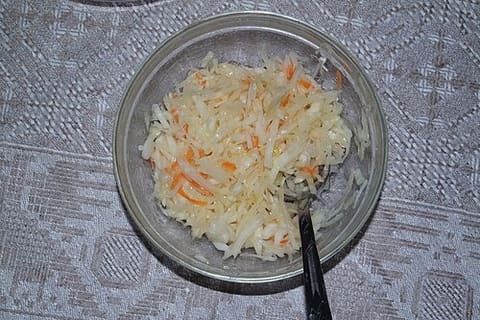
Finely shredded cabbage fermented with salt until sour; served with sausages or cooked into stews.
Also called: kapusta kiszona, fermented cabbage
A kind of cabbage
Photo: Eugene Zelenko, via Wikimedia Commons (CC-BY-SA-4.0)
What it is
Sauerkraut is white cabbage shredded, salted and left to ferment by lactic-acid bacteria, giving a sour, tangy flavour. Raw fermented sauerkraut is sold chilled; pasteurised jars and cans are shelf-stable and milder. It contains no vinegar when traditionally made, unlike pickled cabbage. Kimchi is a spicier Korean relative.
How it’s used
- Served with sausages, pork and dumplings
- Braised into choucroute and bigos
- Simmered in soups (kapustnyak, shchi)
- In Reuben sandwiches
Characteristics
- Taste
- Sour, salty and tangy.
- Texture
- Crisp-tender shreds; soft when braised.
- When cooked
- Rinse to reduce sourness; long braising mellows it.
- Sold as
- fermented, canned
- Cooking uses
- Usually eaten raw, Commonly cooked, Suitable for boiling
Storage
Refrigerated. Refrigerate opened jars and fresh sauerkraut, keeping it under its brine.
Diet, allergens and safety
No major allergens in typical versions.
- Vegetarian
- Vegan
- Dairy-free
- Egg-free
- Gluten-free
- Nut-free
- Soy-free
- Caffeine-free
Nutrition per 100 g
- Energy
- 19 kcal
- Protein
- 0.91 g
- Carbohydrate
- 4.28 g
- Fat
- 0.14 g
- Fibre
- 2.9 g
- Sugars
- 1.78 g
USDA FoodData Central: Sauerkraut, canned, solids and liquids.
Substitutes
Optional — what works if you don’t have it, and how it changes the dish.
- Kimchi — Adds heat and garlic.
Related ingredients
Recipes with sauerkraut
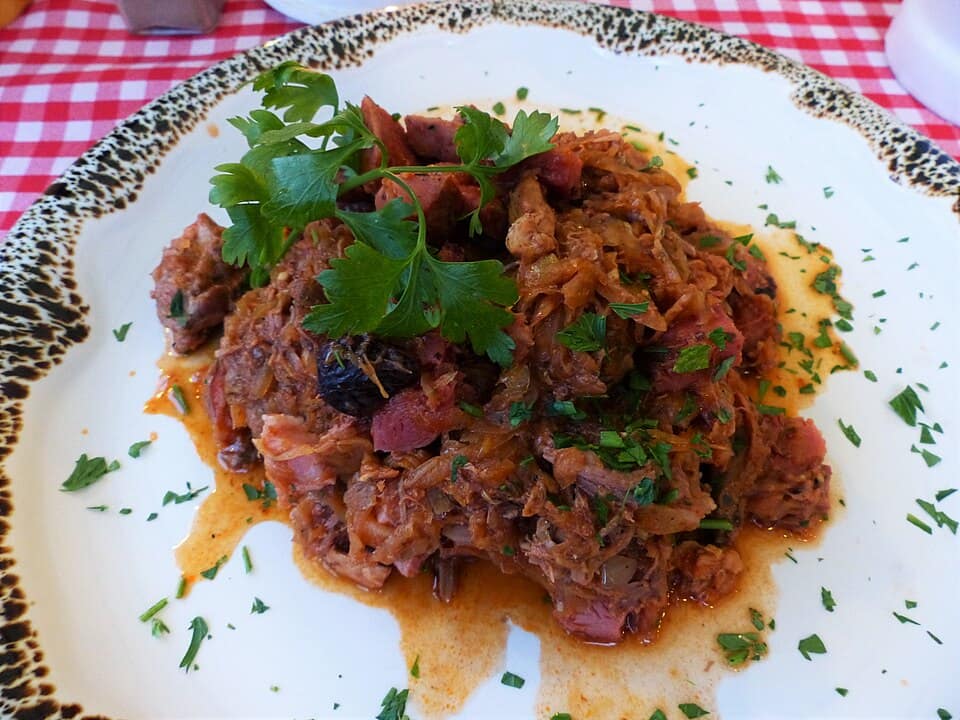
Bigos
 Polish · 2 h 55 min · 353 kcal
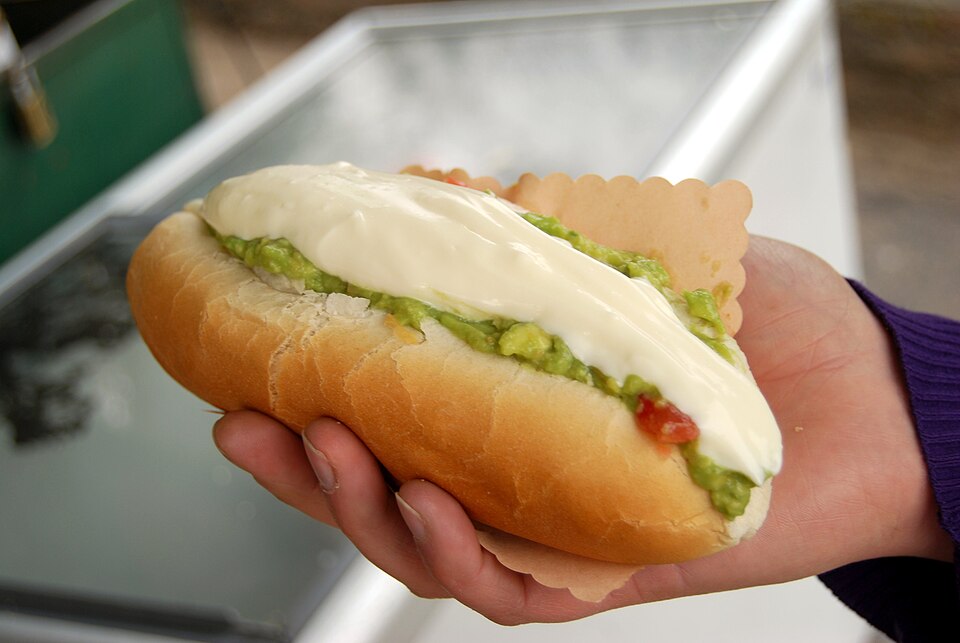
Completo italiano
 Chilean · 18 min · 451 kcal
Jota (sauerkraut and bean stew)
 Slovenian · 1 h 35 min · 346 kcal
Kapustnica
 Slovak · 1 h 40 min · 341 kcal
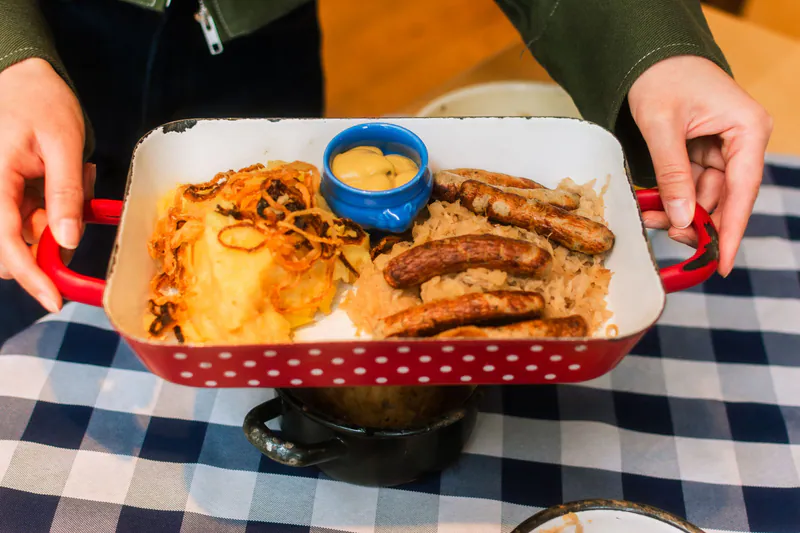
Kranjska klobasa with sauerkraut
Slovenian · 55 min · 526 kcal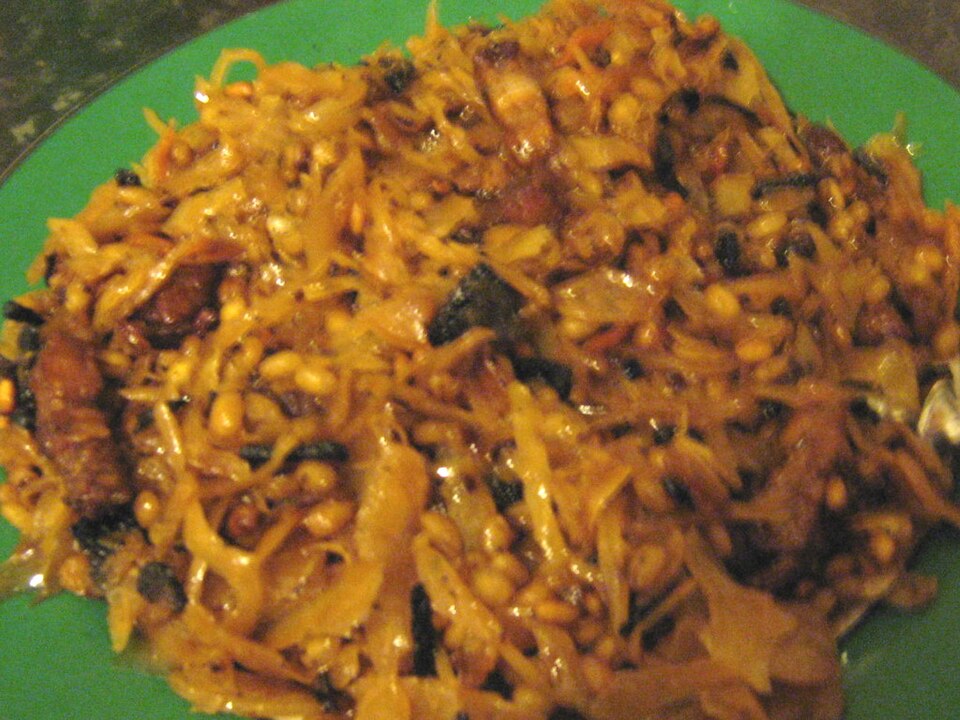
Mulgikapsad
 Estonian · 2 h 15 min · 476 kcal
Sarma (sour cabbage rolls)
 Serbian · 4 h 5 min · 406 kcal
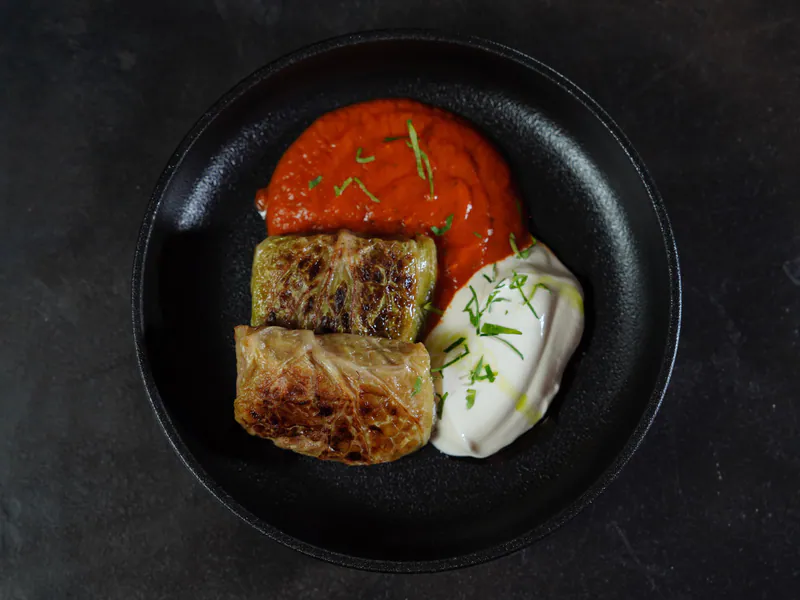
Sarmale
 Romanian · 4 h · 453 kcal
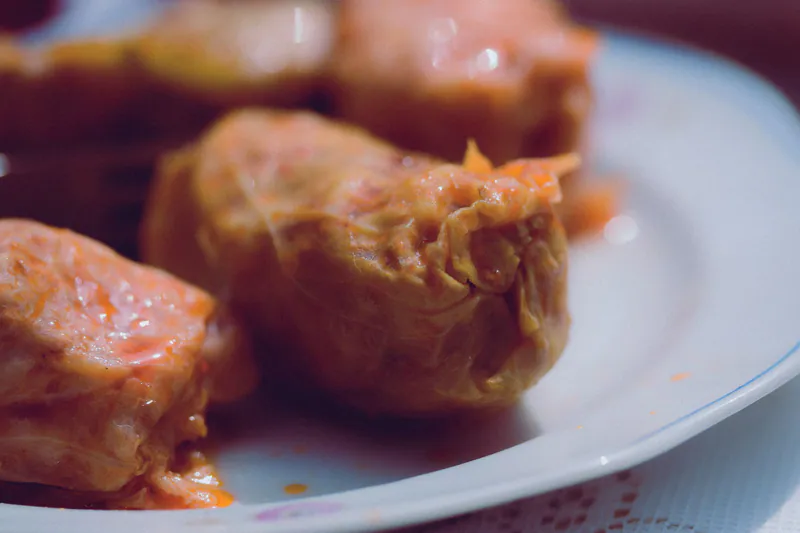
Töltött káposzta
 Hungarian · 3 h · 601 kcal
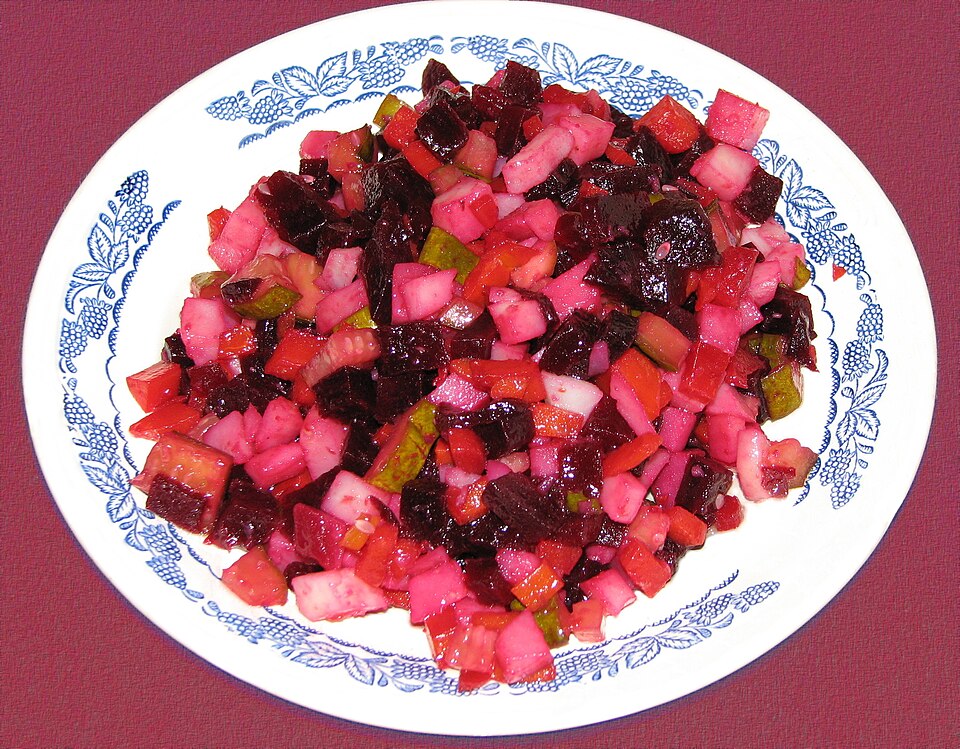
Vinegret
 Russian · 1 h 40 min · 162 kcal · Vegan
More pickled & preserved
Pickled & preserved
Canned tomatoes
Peeled tomatoes packed in juice, whole, chopped or crushed; a reliable base for sauces, soups and stews.
43 recipes
Pickled & preserved
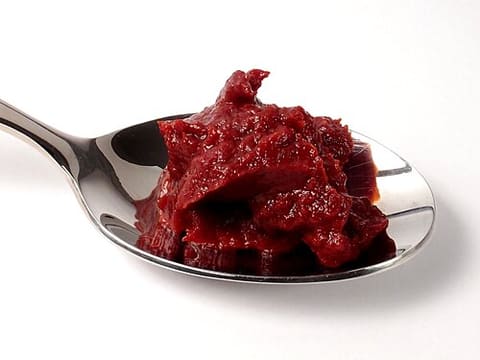
Tomato paste
Thick, concentrated cooked tomato sold in tubes, cans or jars, used by the spoonful for colour and depth.
114 recipes
Pickled & preserved
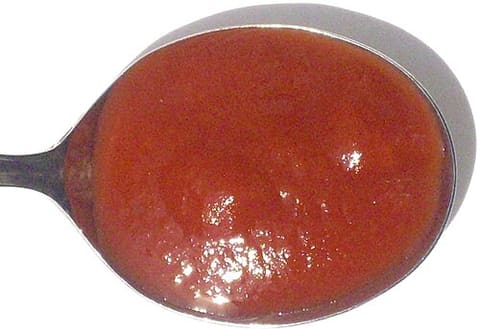
Tomato passata
Smooth, uncooked tomato purée strained of skins and seeds, sold in bottles or cartons as a ready sauce base.
20 recipes
Pickled & preserved
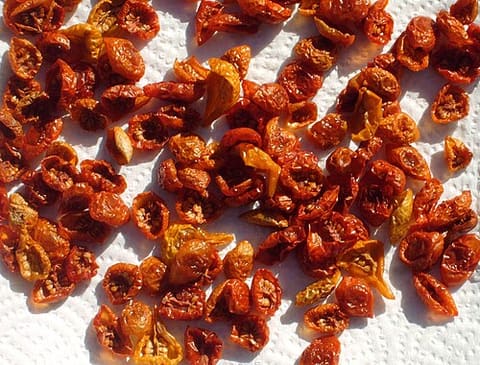
Sun-dried tomatoes
Tomato halves dried until chewy and intensely sweet-savoury, sold dry or packed in oil.
No recipes yet
Pickled & preserved
Roasted red peppers (jarred)
Red peppers roasted, peeled and preserved in jars; soft, smoky and ready for dips, salads and sauces.
5 recipes
Pickled & preserved
Black olives
Cured black or dark olives, such as Kalamata, eaten as a snack and used in salads, pizzas, stews and tapenade.
39 recipes
Pickled & preserved
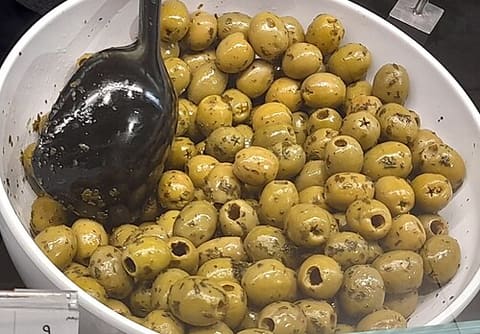
Green olives
Unripe olives cured in brine; firm, tangy and often stuffed with pimiento, garlic or almond.
15 recipes
Pickled & preserved
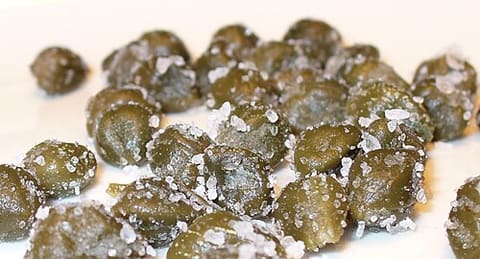
Capers
Small pickled flower buds of the caper bush, adding salty, tangy bursts to sauces, salads and fish.
21 recipes