
Whole spices
Juniper berries
Juniperus communis
Dark blue-purple dried berries with a piney, resinous flavour; crushed for game, sauerkraut and gin.
Also called: juniper, wacholderbeeren
Around the world: Wacholderbeeren (de)
- Resinous & piney
- Citrus & bright
- Herbal & green
- No heat
Flavour and aroma
piney, gin-like, bitter-sweet, resinous. Piney, resinous, bittersweet.
- Heat
- No heat
- Forms
- whole, dried
How to use it
crush · Dry grinding technique
Crush lightly with the flat of a knife or in a mortar just before use: 4–8 berries per kg of meat for marinades, braises and brines.
use raw
Add whole to sauerkraut and pickling brines.
grind · Dry grinding technique
Grind with salt and pepper for a dry rub for venison, duck or pork; the berries are oily, so grind with the salt to stop them clogging.
- Venison, duck and pork dishes
- Sauerkraut and choucroute
- Marinades and brines
- Curing salmon and hams
Identifying good quality
Round, blue-black to purple berry cones, 6–9 mm, often with a dusty bloom and a three-pointed scar at the tip. They should be slightly soft and smell strongly of pine and gin when crushed; hard, shrivelled berries are old.
- Not to be confused with Allspice: Allspice berries are reddish-brown and smell of clove, not pine.
Origin and history
Origin: Throughout the cool and temperate Northern Hemisphere (Juniperus communis).. Grown and used: Wild-harvested in Central and Southern Europe (especially the Balkans and Italy); used in Northern and Central European cooking and in gin..
Juniper has been used in Northern and Central European cooking for centuries, mainly with game, pork and preserved cabbage. Gin takes its name from the Dutch jenever, a juniper-flavoured spirit. In Alsace and Germany juniper is a standard seasoning for sauerkraut (choucroute).
Well documented
Recipes with juniper berries
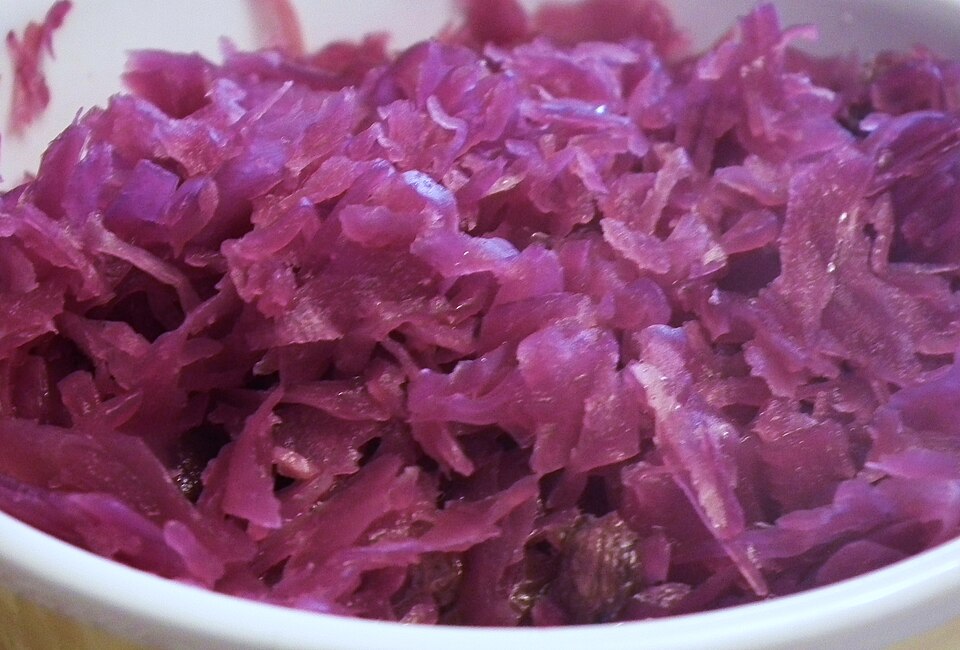
Apfelrotkohl
 German · 1 h 30 min · 145 kcal · Vegetarian
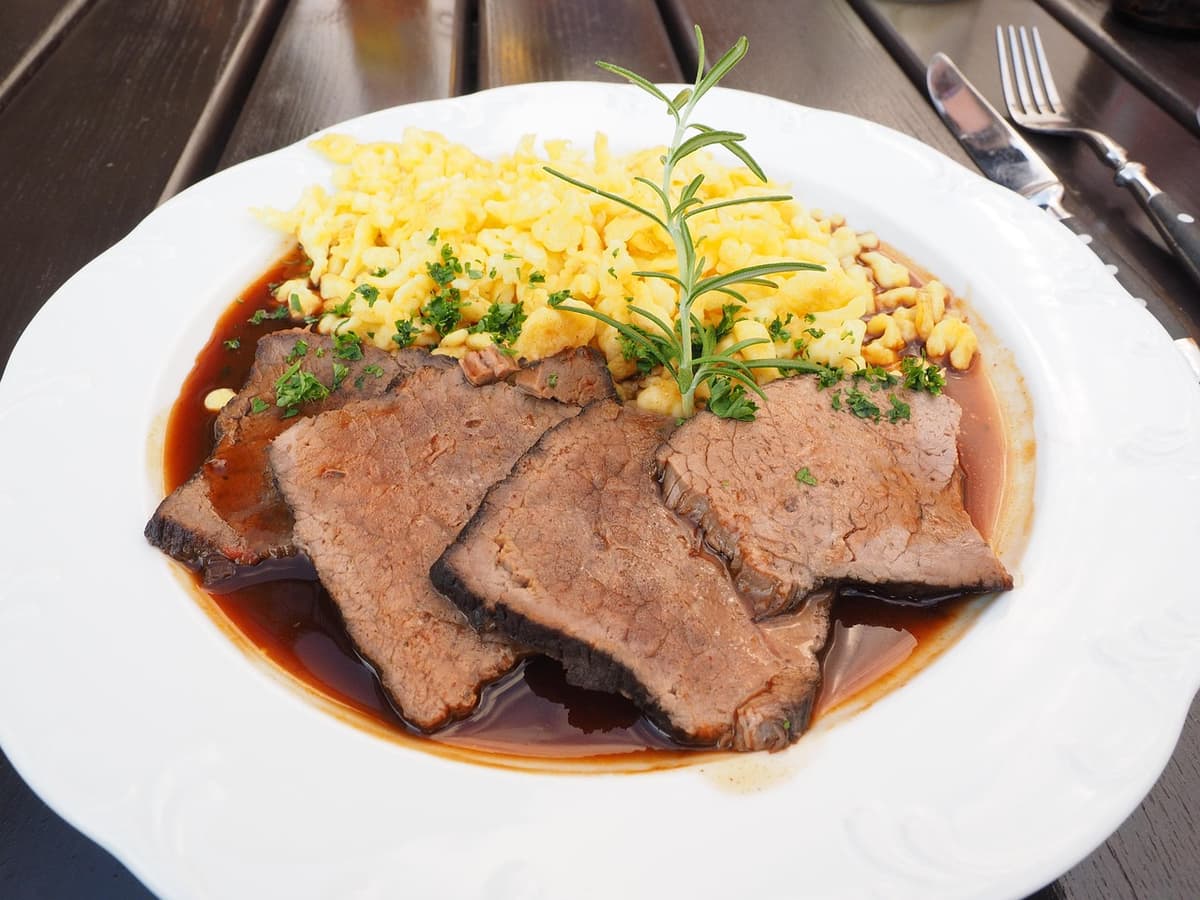
Sauerbraten
German · 3 h 40 min · 441 kcal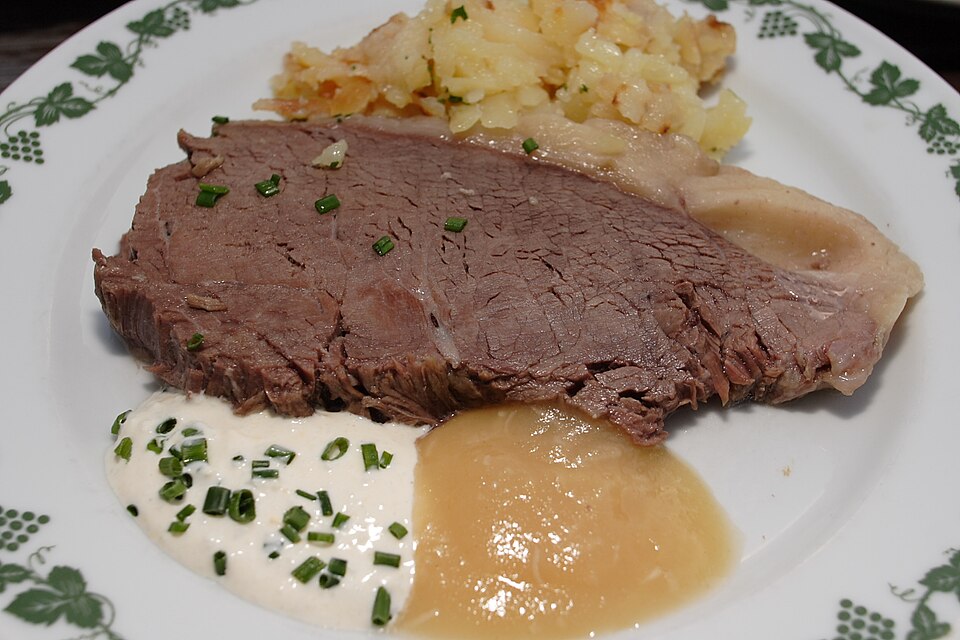
Tafelspitz
 Austrian · 3 h 20 min · 344 kcal