
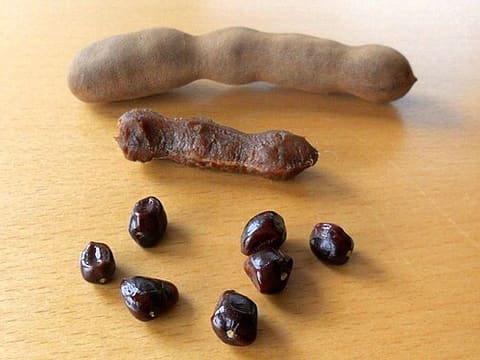
Bark and pods
Tamarind
Tamarindus indica
Sour-sweet pulp from brown tamarind pods; soaked and strained to sour curries, sambar, chutneys and drinks.
Also called: tamarind paste, imli, tamarindo, asam jawa, sampalok
- Fruity & sour
- No heat
Photo: Jungle Rebel, via Wikimedia Commons (CC-BY-SA-3.0)
Flavour and aroma
sour, fruity, date-like, slightly sweet. Tart, sweet and fruity.
- Heat
- No heat
- Forms
- paste, dried, liquid
How to use it
soak
Soak a lime-sized piece (about 20 g) in ½ cup hot water for 15–20 minutes, squeeze and mash, then strain out seeds and fibre.
infuse · Simmering technique
Simmer the pulp in the dish for at least 5–10 minutes to cook out the raw taste; for rasam, boil it with tomatoes and spices before the dal goes in.
- Sours South Indian sambar and rasam
- Base for tamarind chutney (imli) for chaat
- Used in pad thai, Thai sour curries and Indonesian sayur asem
- Made into drinks such as agua de tamarindo
Identifying good quality
Sold as pressed blocks of brown pulp with seeds and fibres, as seedless paste and as concentrate. Good blocks are soft, dark brown, moist and sour-sweet; very dark, hard blocks are old.
- Not to be confused with Kokum: Kokum is a thin dried purple rind with a softer, fruitier sourness.
Origin and history
Origin: Tropical Africa.. Grown and used: Grown across India (the world's largest producer), South-East Asia, Mexico and Africa..
Tamarind reached India in ancient times, long enough ago that it is often thought to be native. It is the main souring agent of South Indian cooking (sambar, rasam, puli kuzhambu), Gujarati dal and many chutneys, and also central to Thai and Mexican cooking.
Commonly told; not firmly documented
In masalas, pastes and sauces
- South Indian tomato chutneySauce5.9 g per batch
- Seeni sambolSauce17.7 g per batch
- Saunth (sweet tamarind-date chutney)Sauce60 g per batch
- Recheado masala (Goan red chilli paste)Sauce15 g per batch
- Peanut chutney (palli pachadi)Sauce5 g per batch
- Kara chutney (Tamil red onion-chilli chutney)Sauce5 g per batch
- Allam pachadi (Andhra ginger chutney)Sauce30 g per batch
- Thenga chammanthi (Kerala pounded coconut chutney)Sauce5 g per batch
- Inji puli (Kerala ginger-tamarind relish)Sauce60 g per batch
- Karnataka chutney pudi (coconut lentil chutney powder)Sauce10 g per batch
- Red coconut chutneySauce3 g per batch
- Vengaya chutney (raw onion chutney)Sauce5 g per batch
- Karuveppilai thogayal (curry leaf chutney)Sauce6 g per batch
- Kothamalli thogayal (coriander chutney)Sauce6 g per batch
- Pudina thogayal (Tamil mint chutney)Sauce6 g per batch
- Andhra tomato pachadiSauce10 g per batch
- Kobbari pachadi (Andhra coconut chutney)Sauce5 g per batch
- Beerakaya pachadi (ridge gourd chutney)Sauce8 g per batch
- Karuveppilai podi (curry leaf powder)Sauce5 g per batch
- Ulli chammanthi (Kerala shallot chutney)Sauce4 g per batch
- Chammanthi podi (Kerala roasted coconut chutney powder)Sauce8 g per batch
- Khajur ambli chutney (Gujarati date-tamarind chutney)Sauce50 g per batch
- Goan green chutney (coconut-coriander chutney)Sauce8 g per batch
- Thai satay peanut sauceSauce20 g per batch
- Homemade brown sauceSauce17.7 g per batch
- Nam jim jaewSauce17.7 g per batch
- Nam prik pao (Thai chilli jam)Sauce35.5 g per batch
- Bumbu kacang (peanut satay sauce)Sauce17.7 g per batch
Recipes with tamarind
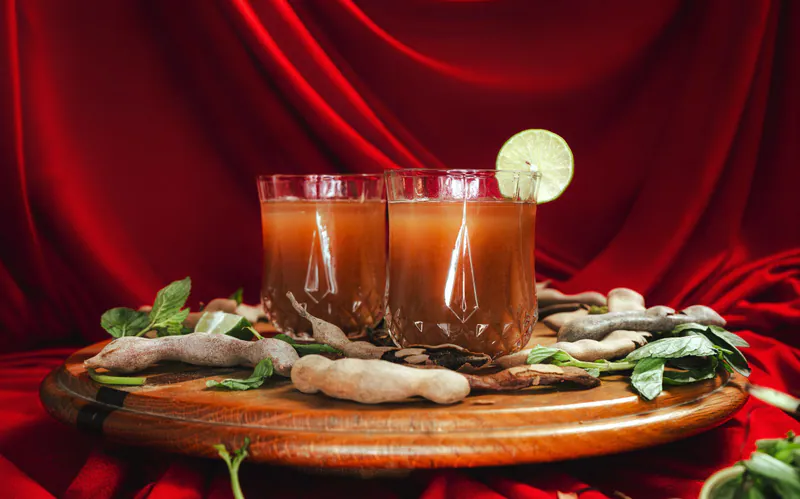
Agua de tamarindo
 Mexican · 1 h 25 min · 125 kcal · Vegan
Allam pachadi (Andhra ginger chutney)
 South Indian · 35 min · 56 kcal · Vegan
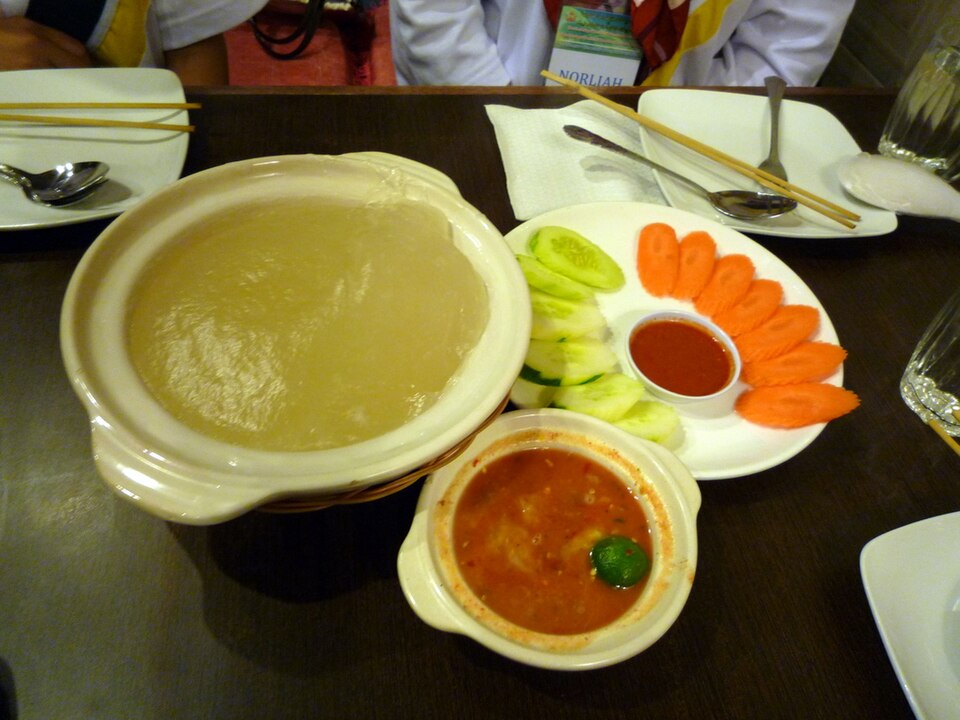
Ambuyat with cacah
 Bruneian · 25 min · 273 kcal
Andhra tomato pachadi
South Indian · 50 min · 56 kcal · Vegan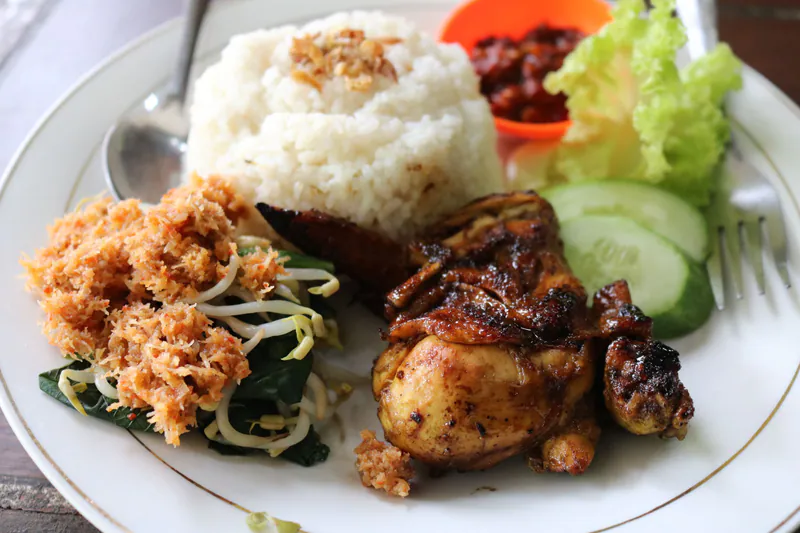
Ayam bakar
 Indonesian · 1 h 15 min · 716 kcal
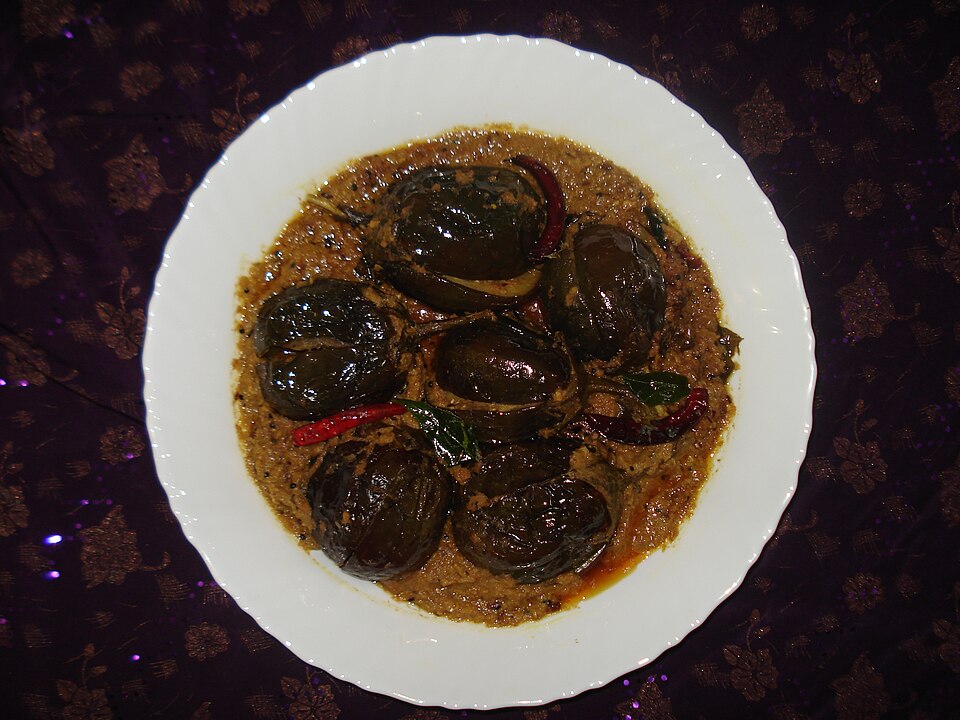
Bagara baingan
Indian · 55 min · 314 kcal · VeganBassaru
South Indian · 55 min · 177 kcal · Vegan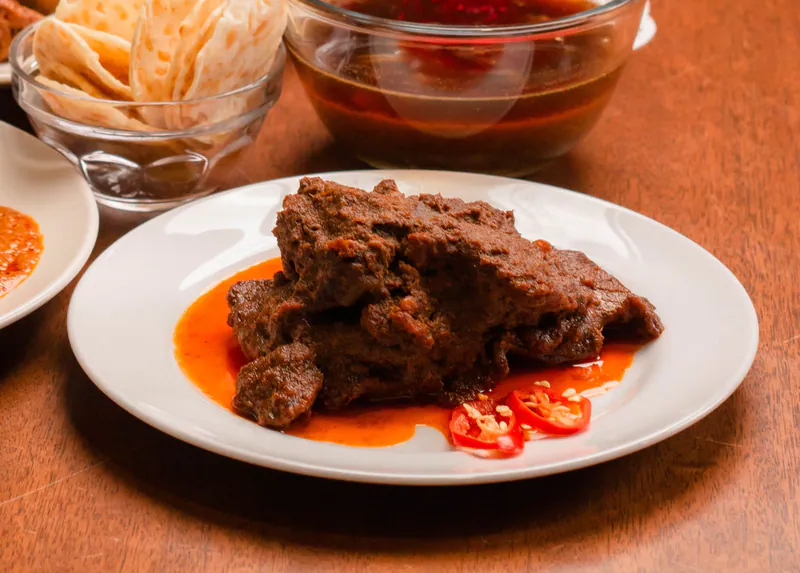
Beef rendang
Indonesian · 4 h · 672 kcalBeerakaya pachadi (ridge gourd chutney)
South Indian · 41 min · 69 kcal · Vegan
71 more
- Bharli vangi · Indian
- Bumbu kacang (peanut satay sauce) · Indonesian
- Canh chua cá · Vietnamese
- Chammanthi podi (Kerala roasted coconut chutney powder) · South Indian
- Chana chaat · Indian
- Chole bhature · Punjabi
- Dahi baray · Pakistani
- Doubles · Trinidadian
- Fuchka · Bangladeshi
- Gado-gado · Indonesian
- Gai yang (Thai grilled chicken) · Thai
- Goan fish curry · Goan
- Goan green chutney (coconut-coriander chutney) · Goan
- Goan prawn curry · Goan
- Gol gappay · Pakistani
- Gulai kambing · Indonesian
- Homemade brown sauce · British
- Hyderabadi dalcha · Indian
- Ikan sabuko · Timorese
- Inji puli (Kerala ginger-tamarind relish) · South Indian
- Jeera rasam · South Indian
- Kara chutney (Tamil red onion-chilli chutney) · South Indian
- Kara kuzhambu · South Indian
- Karnataka chutney pudi (coconut lentil chutney powder) · South Indian
- Karuveppilai podi (curry leaf powder) · South Indian
- Karuveppilai thogayal (curry leaf chutney) · South Indian
- Khajur ambli chutney (Gujarati date-tamarind chutney) · Gujarati
- Kismur · Goan
- Kobbari pachadi (Andhra coconut chutney) · South Indian
- Kori gassi · South Indian
- Kothamalli thogayal (coriander chutney) · South Indian
- Lakshadweep-style tuna curry · South Indian
- Malvani fish curry · Indian
- Masgouf-style grilled carp · Iraqi
- Massaman curry with beef · Thai
- Mchuzi wa samaki · Tanzanian
- Milagu rasam · South Indian
- Mirchi ka salan · Indian
- Misal pav · Indian
- Mishkak · Omani
- Mysore rasam · South Indian
- Nam jim jaew · Thai
- Nam prik pao (Thai chilli jam) · Thai
- Nandu rasam · South Indian
- Nasi katok · Bruneian
- Nasi lemak · Malaysian
- Pad Thai · Thai
- Pappu charu · South Indian
- Peanut chutney (palli pachadi) · South Indian
- Penang assam laksa · Malaysian
- Pineapple rasam · South Indian
- Poondu rasam · South Indian
- Pudina thogayal (Tamil mint chutney) · South Indian
- Pulihora (Andhra tamarind rice) · South Indian
- Recheado masala (Goan red chilli paste) · Goan
- Red coconut chutney · South Indian
- Rojak buah · Malaysian
- Sambar · South Indian
- Saunth (sweet tamarind-date chutney) · Indian
- Seeni sambol · Sri Lankan
- Sinigang na hipon · Filipino
- South Indian tomato chutney · South Indian
- Sri Lankan black pork curry · Sri Lankan
- Tempe bacem · Indonesian
- Thai satay peanut sauce · Thai
- Thenga chammanthi (Kerala pounded coconut chutney) · South Indian
- Thiéboudienne · Senegalese
- Tomato rasam · South Indian
- Ulli chammanthi (Kerala shallot chutney) · South Indian
- Vengaya chutney (raw onion chutney) · South Indian
- Zoom-koom · Burkinabè