
Resins and other aromatics
Asafoetida
Ferula assa-foetida
Pungent dried resin (hing) used by the pinch in hot oil to give dals and vegetables an onion-garlic savouriness.
Also called: hing, heeng
- Pungent & sulphurous
- No heat
Flavour and aroma
sulphurous raw, onion-garlic-like when fried, savoury.
- Heat
- No heat
- Forms
- powder
How to use it
bloom in fat · Tadka (tempering) technique
Add a pinch to hot oil for only 2–5 seconds, just after the mustard or cumin, then add the next ingredient at once. It burns very fast.
soak
Dissolve a pea-sized piece of lump hing in 1 tbsp warm water and add the water to dal or sambar.
- Tadka for dals, sambar and rasam
- Vegetable and lentil dishes
- Pickles
- Pakora and papad doughs
Identifying good quality
Pure hing is a hard, amber to brown resin lump with an overpowering sulphurous smell. Most hing sold is compounded: resin mixed with wheat or rice flour and gum arabic into a yellow or off-white powder. Turmeric-yellow powder is the mildest type.
Origin and history
Origin: Iran and Afghanistan.. Grown and used: Mostly imported into India from Afghanistan, Iran and Uzbekistan; trial cultivation began in Himachal Pradesh in 2020..
Asafoetida (hing) is the dried resin from the roots of Ferula plants. India is the largest consumer, especially in Jain and many Hindu Brahmin kitchens that avoid onion and garlic, where it gives a similar savoury depth.
Well documented
In masalas, pastes and sauces
- Chaat masalaMasala0.5 g per batch
- Sambar powderMasala1 g per batch
- Rasam powderMasala1 g per batch
- Goda masalaMasala1 g per batch
- Malvani masalaMasala0.5 g per batch
- South Indian tomato chutneySauce0.1 g per batch
- Rajasthani garlic chutney (lehsun ki chutney)Sauce0.1 g per batch
- Aam ki launji (sweet-sour raw mango chutney)Sauce0.1 g per batch
- Punjabi mango pickle (aam ka achaar)Sauce0.2 g per batch
- Tadka (tempered ghee with cumin, garlic and chilli)Sauce0.1 g per batch
- Peanut chutney (palli pachadi)Sauce0.1 g per batch
- Molagapodi (idli podi with oil)Sauce0.2 g per batch
- Gongura pachadi (Andhra sorrel-leaf chutney)Sauce0.1 g per batch
- Allam pachadi (Andhra ginger chutney)Sauce0.1 g per batch
- Inji puli (Kerala ginger-tamarind relish)Sauce0.1 g per batch
- Karnataka chutney pudi (coconut lentil chutney powder)Sauce0.2 g per batch
- Red coconut chutneySauce0.1 g per batch
- Green coconut chutneySauce0.1 g per batch
- Pottukadalai chutney (roasted gram chutney)Sauce0.1 g per batch
- Vengaya chutney (raw onion chutney)Sauce0.1 g per batch
- Karuveppilai thogayal (curry leaf chutney)Sauce0.1 g per batch
- Kothamalli thogayal (coriander chutney)Sauce0.1 g per batch
- Pudina thogayal (Tamil mint chutney)Sauce0.1 g per batch
- Andhra tomato pachadiSauce0.1 g per batch
- Kobbari pachadi (Andhra coconut chutney)Sauce0.1 g per batch
- Beerakaya pachadi (ridge gourd chutney)Sauce0.1 g per batch
- Paruppu podi (lentil powder for rice)Sauce0.2 g per batch
- Karuveppilai podi (curry leaf powder)Sauce0.2 g per batch
- Ellu podi (sesame powder)Sauce0.2 g per batch
- Tomato thokkuSauce0.2 g per batch
- Mooli ki chutney (fresh radish chutney)Sauce0.1 g per batch
- Olya naralachi chutney (Maharashtrian fresh coconut chutney)Sauce0.1 g per batch
- Kolhapuri lal thecha (red chilli-garlic thecha)Sauce0.1 g per batch
Recipes with asafoetida
Aam ki launji (sweet-sour raw mango chutney)
 Indian · 40 min · 85 kcal · Vegan
Allam pachadi (Andhra ginger chutney)
South Indian · 35 min · 56 kcal · Vegan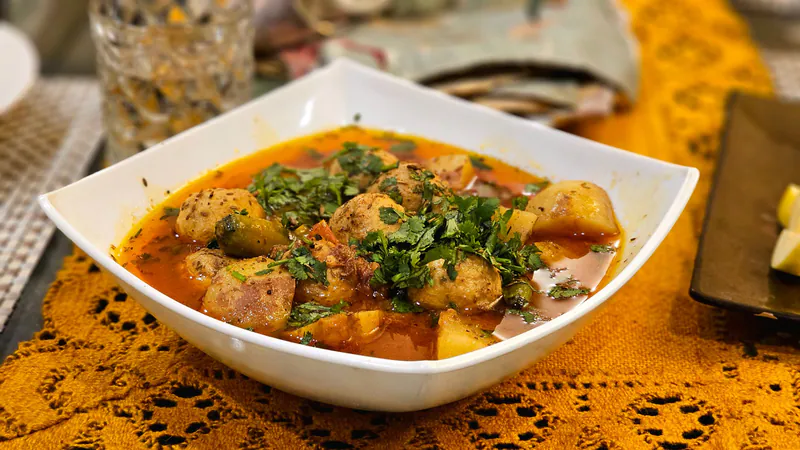
Aloo rasedar
Indian · 35 min · 242 kcal · VeganAndhra tomato pachadi
South Indian · 50 min · 56 kcal · VeganBeerakaya pachadi (ridge gourd chutney)
South Indian · 41 min · 69 kcal · Vegan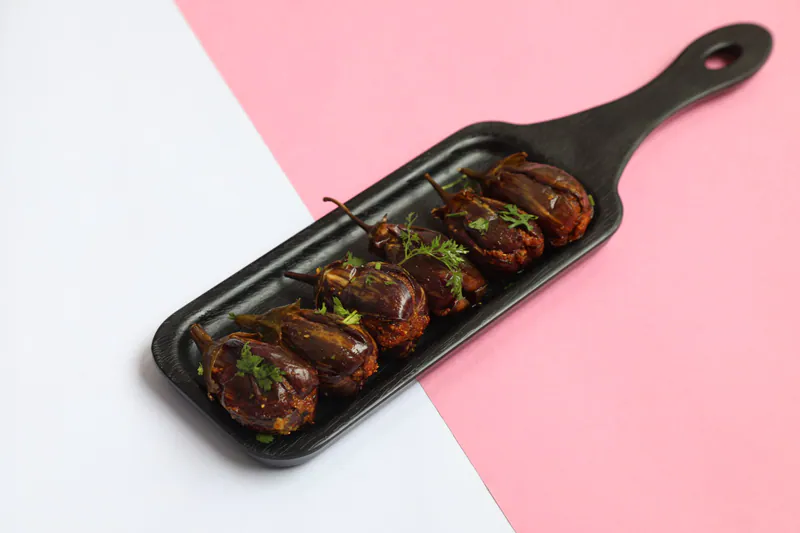
Bharli vangi
Indian · 55 min · 301 kcal · VeganCabbage-carrot sambharo
Gujarati · 15 min · 67 kcal · VeganCarrot kosumalli
South Indian · 1 h 12 min · 94 kcal · VeganChana madra
Indian · 1 h 10 min · 348 kcal · Vegetarian
64 more
- Curd rice · South Indian
- Dal bhat tarkari · Nepalese
- Dal dhokli · Gujarati
- Dal paratha · Indian
- Dal pitha (Bihari rice dumplings) · Indian
- Dal tadka with red lentils · Indian
- Ele kosu kosambari · South Indian
- Ellu podi (sesame powder) · South Indian
- Gajar koshimbir · Indian
- Gatte ki sabzi · Indian
- Gongura pachadi (Andhra sorrel-leaf chutney) · South Indian
- Green coconut chutney · South Indian
- Gujarati dal · Gujarati
- Haryanvi kadhi · Indian
- Hesarubele kosambari · South Indian
- Inji puli (Kerala ginger-tamarind relish) · South Indian
- Jeera rasam · South Indian
- Kadhi pakora · Punjabi
- Kadlebele kosambari · South Indian
- Kafuli · Indian
- Kakdi koshimbir · Indian
- Kara kuzhambu · South Indian
- Karnataka chutney pudi (coconut lentil chutney powder) · South Indian
- Karuveppilai podi (curry leaf powder) · South Indian
- Karuveppilai thogayal (curry leaf chutney) · South Indian
- Kashmiri mutton yakhni · Indian
- Khaman dhokla · Gujarati
- Kobbari pachadi (Andhra coconut chutney) · South Indian
- Kolhapuri lal thecha (red chilli-garlic thecha) · Indian
- Kondakadalai sundal · South Indian
- Kothamalli thogayal (coriander chutney) · South Indian
- Lemon rasam · South Indian
- Lemon rice · South Indian
- Matar paratha · Indian
- Milagu rasam · South Indian
- Molagapodi (idli podi with oil) · South Indian
- Mooli ki chutney (fresh radish chutney) · Indian
- Moong dal khichdi · Indian
- Mysore rasam · South Indian
- Nadru yakhni · Indian
- Neer mor · Indian
- Olya naralachi chutney (Maharashtrian fresh coconut chutney) · Indian
- Osaman · Gujarati
- Papaya sambharo · Gujarati
- Pappu charu · South Indian
- Paruppu podi (lentil powder for rice) · South Indian
- Peanut chutney (palli pachadi) · South Indian
- Pineapple rasam · South Indian
- Poondu rasam · South Indian
- Pottukadalai chutney (roasted gram chutney) · South Indian
- Pudina thogayal (Tamil mint chutney) · South Indian
- Pulihora (Andhra tamarind rice) · South Indian
- Punjabi mango pickle (aam ka achaar) · Punjabi
- Rajasthani garlic chutney (lehsun ki chutney) · Indian
- Red coconut chutney · South Indian
- Rogan josh · Indian
- Sambar · South Indian
- South Indian tomato chutney · South Indian
- Tadka (tempered ghee with cumin, garlic and chilli) · Indian
- Tomato rasam · South Indian
- Tomato saar · Indian
- Tomato thokku · South Indian
- Vada pav · Indian
- Vengaya chutney (raw onion chutney) · South Indian