
Nature's Pantry
Coffee
Also: kaapi (South India) · café · qahwa (Arabic)
Moderate coffee drinking is linked with more benefit than harm in large studies, outside pregnancy.
Overall evidence
Large and consistent but observational evidence for benefits; strong, authoritative evidence on safe amounts.
Several trials or reviews point the same way, but studies are short, small, mixed in quality, mostly observational, or test concentrated forms rather than everyday food.
What it is
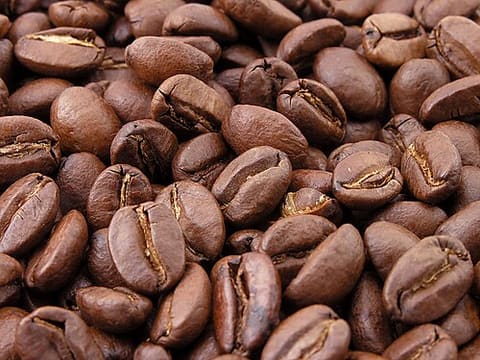
A drink brewed from roasted seeds of Coffea plants, and the world's biggest source of caffeine. It also contains polyphenols such as chlorogenic acids.
Traditional use
Tradition, not evidence: how cultures use it, not proof that it works.
Ethiopia
The coffee ceremony, with beans roasted, ground and brewed in front of guests, is a ritual of hospitality.
South India
Filter kaapi with chicory, frothed between tumbler and dabarah, starts the day.
Arab world
Lightly roasted coffee with cardamom (qahwa) is served to welcome guests.
What the research says
Each claim graded on its own evidence.
Coffee and long-term health
Evidence level: Moderate evidenceAn umbrella review in the BMJ of over 200 meta-analyses found coffee drinking was more often linked with benefit than harm, with the largest associations around three to four cups a day. Almost all of the evidence is observational, so it cannot show cause; the authors do not recommend starting coffee for health.[1]
How much caffeine is generally fine
Evidence level: Strong evidenceEFSA concluded that up to 400 mg of caffeine a day, and single doses up to 200 mg, raise no safety concerns for healthy non-pregnant adults. The FDA cites the same 400 mg figure.[2][3]
In food amounts
The NHS puts a cup of instant coffee at about 100 mg of caffeine; filter and coffee-shop coffee can contain more.
We describe everyday cooking amounts only, never supplement doses.
Safety
- Babies and children
- Caffeinated drinks are not recommended for children under 2, and experts advise against energy drinks for children and teens.[3]
- Pregnancy and breastfeeding
- In pregnancy, keep caffeine below 200 mg a day (NHS and EFSA). The BMJ review found higher intake in pregnancy was associated with low birth weight and preterm birth.[4][2][1]
- General
- Too much caffeine can cause a racing heart, sleep problems, anxiety, jitters, upset stomach and headaches.[3]
If you take regular medicines, are pregnant or breastfeeding, or are cooking for a baby or someone who is unwell, check with a doctor, pharmacist or midwife before using any food or supplement for a health reason.
Sources
- [1] Coffee consumption and health: umbrella review of meta-analyses of multiple health outcomes (Poole et al.) — BMJ, 2017
- [2] Scientific Opinion on the safety of caffeine — European Food Safety Authority (EFSA Journal 13(5):4102), 2015
- [3] Spilling the Beans: How Much Caffeine is Too Much? — US Food and Drug Administration
- [4] Foods to avoid in pregnancy — NHS (UK)
Sources were checked when this entry was written. Research changes; if you spot something out of date, please tell us.
Cook with coffee
- Brewed coffee: buying & storing
- Finely ground coffee: buying & storing
- Instant coffee: buying & storing
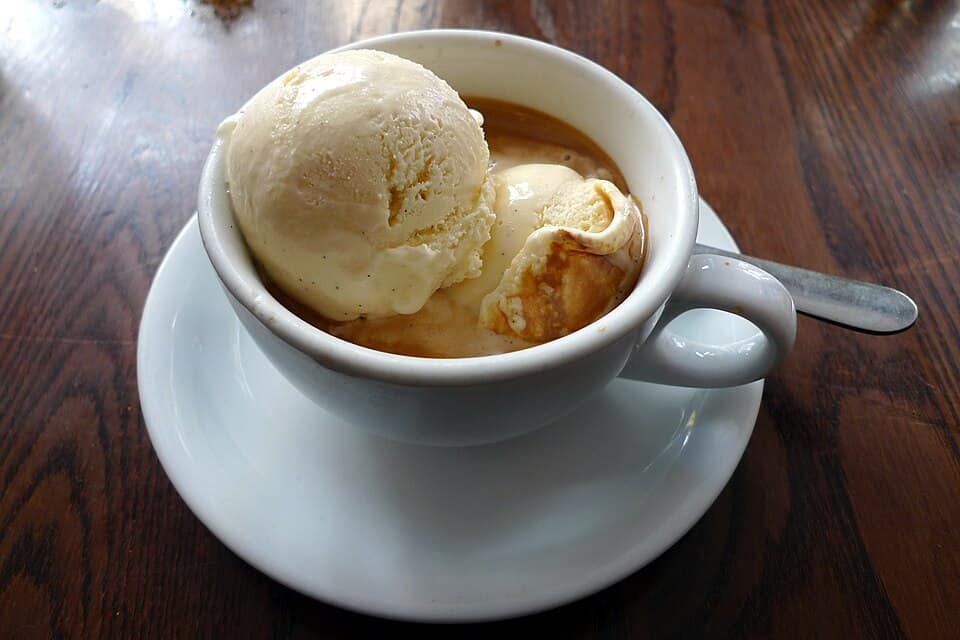
Affogato
 Italian · 5 min · 137 kcal · Vegetarian
Arabic coffee (gahwa)
 Saudi Arabian · 23 min · 12 kcal · Vegan

Blended iced coffee (frappé-style)
International · 5 min · 114 kcal · Vegetarian
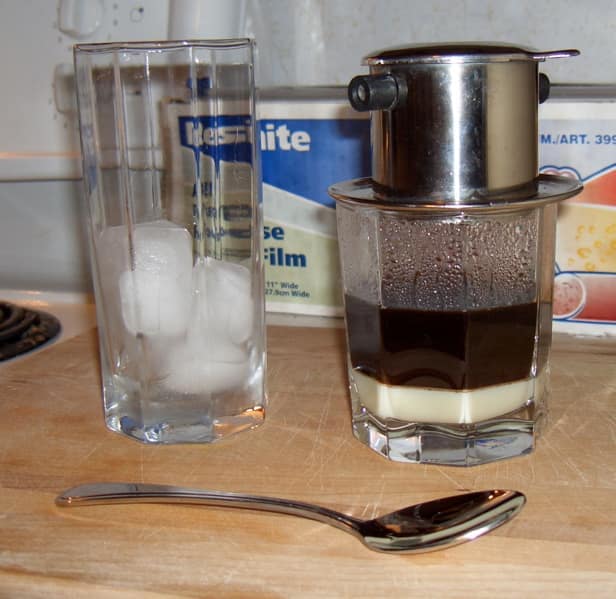
Cà phê sữa đá (Vietnamese iced coffee)
 Vietnamese · 7 min · 136 kcal · Vegetarian
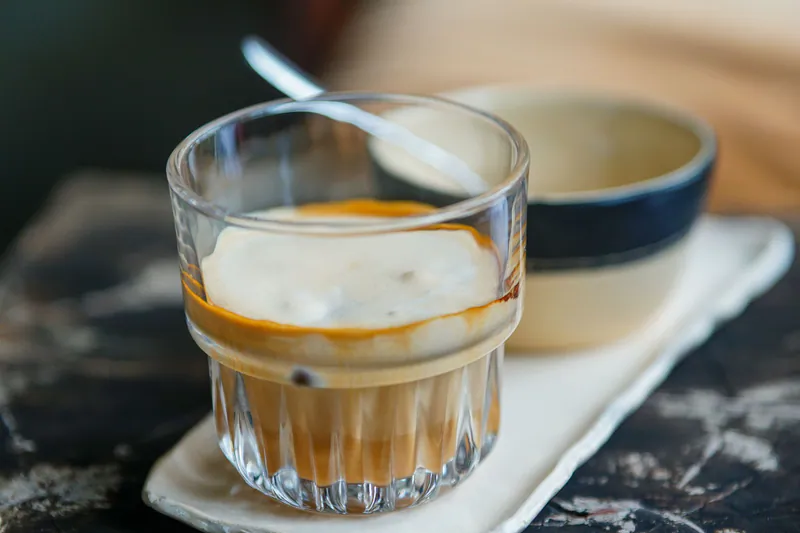
Cà phê trứng
Vietnamese · 10 min · 159 kcal · Contains eggCafé bombón
 Spanish · 3 min · 124 kcal · Vegetarian

Café con leche
Spanish · 6 min · 81 kcal · Vegetarian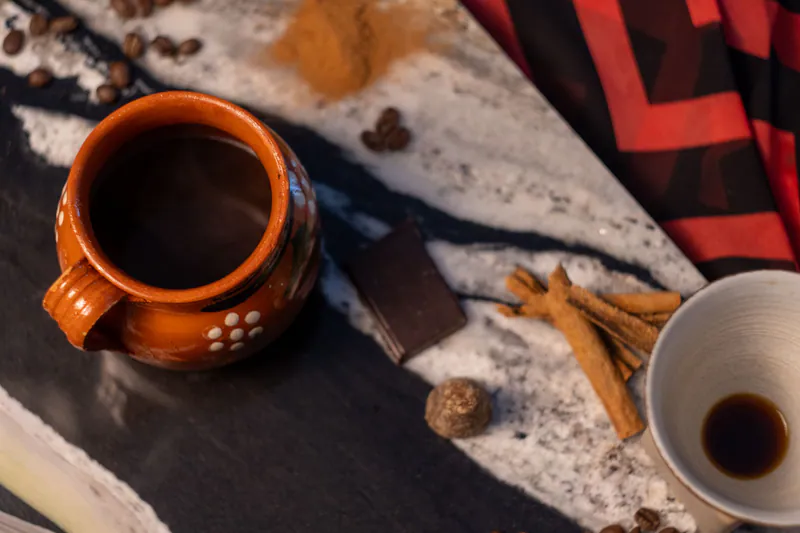
Café de olla
 Mexican · 19 min · 66 kcal · Vegan
Cafecito cubano
 Cuban · 8 min · 41 kcal · Vegan
44 more
- Caffè americano · International
- Caffè latte · Italian
- Caffè macchiato · Italian
- Caffè mocha · International
- Cappuccino · Italian
- Chicory coffee (café au lait style) · Southern US
- Coffee milkshake · American
- Cold brew coffee · International
- Cortado · Spanish
- Dalgona coffee · Korean
- Decaf espresso · Italian
- Decaf latte · International
- Dirty coffee · International
- Einspänner · Austrian
- Espresso (double shot) · Italian
- Espresso tonic · International
- Ethiopian coffee (jebena buna) · Ethiopian
- Flat white · Australian
- French press coffee · International
- Greek frappé · Greek
- Honey cinnamon latte · International
- Iced americano · International
- Iced brown sugar latte · International
- Iced latte · International
- Iced matcha espresso fusion · International
- Iced mocha · International
- Irish coffee (contains alcohol) · Irish
- Japanese iced coffee (flash-brewed) · Japanese
- Kopi tubruk · Indonesian
- Lungo · Italian
- Moka pot coffee · Italian
- Nitro cold brew · American
- Pistachio latte · International
- Pour-over coffee (V60-style) · International
- Ristretto · Italian
- Salted caramel latte · International
- South Indian filter coffee · Indian
- Spanish latte · International
- Tiramisu · Italian
- Turkish coffee · Turkish
- Vegan chocolate cake · International
- Vietnamese coconut coffee (cà phê cốt dừa) · Vietnamese
- Wiener Melange · Austrian
- Yuanyang (coffee with milk tea) · Hong Kong
Showing 9 of 53 recipes.
More from Nature's Pantry
- Green teaEvidence level: Limited or early evidence