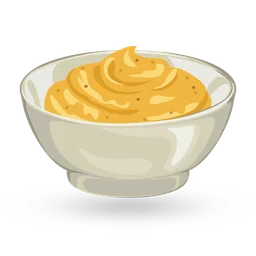
Sichuan's fermented chilli bean paste combines broad beans, salt, chillies and sometimes wheat flour, matured in clay pots and stirred daily for a year or longer. Longer ageing darkens it from bright red to reddish-brown and makes it saltier and hotter.
Chinese soy sauce is a fermented liquid seasoning brewed from soybeans and wheat with brine. Steamed soybeans and roasted wheat are inoculated with mould before brining, a method that grew out of older fermented pastes known as jiàng.
Chinese dark soy sauce is a thick fermented seasoning based on soybeans and roasted wheat, aged far longer than ordinary soy and often sweetened with molasses or sugar. It is used mainly to give cooked dishes a deep brown colour and a savoury-sweet depth.
Chinese light soy sauce is a thin, translucent seasoning brewed from soybeans, roasted wheat, salt and water. It grew out of the liquid drawn off soybean pastes in early imperial times, and its savoury, glutamate-rich flavour made it a staple across East Asia.
PGI · IGPProtected Geographical Indication (locally IGP)Fleur de Sel
Fine crystals of sea salt raked by hand from the surface of salt pans in the Camargue, Provence, at dawn during summer. Moist and crunchy, the salt dissolves slowly on the tongue and is sprinkled over grilled meats, fish and salads as a finishing touch.
Mayonnaise is a cold emulsified sauce of egg yolks and oil, sharpened with lemon juice or vinegar and seasoned. Its modern form is usually credited to French cuisine, though Spain also claims its origin.
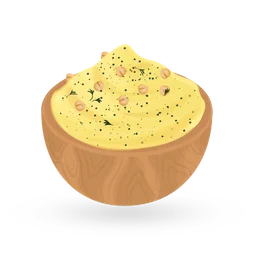
A pale yellow, creamy French mustard made by grinding brown or black mustard seeds with salt and spices. Once tied to the Dijon area, the name now applies to any mustard made to the traditional recipe, and it often accompanies chicken, beef and salmon.
PGI · IGPProtected Geographical Indication (locally IGP)Sea Salt
Hand-raked sea salt from the salt pans of Brittany's Guérande peninsula, sold without additives. The grey coarse salt takes its colour from the clay beds, while white fleur de sel is skimmed from the surface of the pans and used as a delicate finishing salt.
Made in Modena and neighbouring Reggio Emilia, this is the younger, more affordable cousin of the traditional long-aged balsamic. Cooked grape must is matured in wooden barrels until it turns dark and syrupy, balancing caramel sweetness with fruity acidity; it is often drizzled over chunks of Parmesan.
PDO · DOPProtected Designation of Origin (locally DOP)Balsamic Vinegar
The traditional, long-aged balsamic vinegar of Modena starts as pressed grape must, typically Trebbiano and Lambrusco, boiled down to a thick syrup. This is then aged in a series of wooden barrels for at least twelve years, becoming glossy, dark brown and syrupy, with a deep sweet-and-sour flavour.
From Cetara on the Amalfi Coast, this amber fish sauce is made by packing anchovies and salt into wooden barrels and leaving them for months while the liquid seeps out. Intensely savoury, it is typically drizzled over spaghetti with garlic, chilli and parsley.
Indonesian fried shallots: thin slices deep-fried in oil until crisp and golden, giving a savoury, slightly bitter crunch. Kept in airtight jars, they are scattered over dishes such as nasi goreng, satay, bakso, semur and oxtail soup.
Indonesia's sweet soy sauce comes from Java and is thick and syrupy thanks to a large amount of palm sugar. It developed after Chinese settlers introduced soy sauce to the archipelago and local producers adapted it to a sweeter regional taste.
A Balkan relish of roasted red peppers, often with aubergine, garlic and a little hot pepper in proportions that vary by cook; the Macedonian style uses red peppers alone. The name is thought to come from the Turkish word for caviar, and it is spread on bread or served beside grilled meat.
A Bulgarian and North Macedonian relish, part spread and part chutney, based on red peppers, tomatoes, oil, salt, sugar and often cumin. Some versions add aubergine, carrot or garlic, and it is eaten on bread or served alongside grilled meats.
Bright yellow, thick and notably hot, this English condiment combines yellow and brown mustard seeds. It comes ready-made in jars or as a powder that is stirred into cold water before use, and it is used both with meats and as a cooking ingredient.
English sea salt from Maldon, harvested by hand since 1882 by boiling brine over fires until pyramid-shaped flakes form. The flakes resist clumping and taste clean and slightly sweet, which makes it a popular finishing salt for meat, vegetables and butter.
Canadian maple syrup is made by tapping sugar maples between late winter and spring and boiling down the collected sap. Early settlers learned of the trees from Native Americans, and by the 17th century farmers were drilling small holes to gather the sap.
PDOProtected Designation of OriginPreserved Cabbage
Fermented white cabbage from Nošovice and Nižní Lhoty in the Moravian-Silesian region of the Czech Republic. The cabbage grows below the Beskid mountains in a cool, wet climate on acidic clay soils, then is shredded finely and left to undergo lactic fermentation, giving a firm, golden sauerkraut.
Düsseldorf's malty brown mustard is made from brown and yellow mustard seeds blended with unfiltered local spirit vinegar. The method has changed little since the 18th century, and the seeds are still ground with a heavy granite millstone.
A spicy Haitian relish of pickled cabbage, carrots, onions and shallots with hot peppers. It is the usual side for fried meats such as griot pork and tassot beef, or for fried plantains, and it also goes with fish, its heat and sharpness cutting through anything fried.
A smooth paste of fresh ginger and garlic, usually ground in roughly equal amounts with a splash of water, oil or salt. It forms the aromatic starting point for countless Indian curries, gravies and marinades, and cooks often make a big batch to keep in the fridge or freezer.
Kioke shoyu is Japanese soy sauce brewed and aged in large wooden barrels, usually of Japanese cedar, a method that has become uncommon. Microbes living in the old barrels and the brewery help create its layered aroma and deep umami.
A Yucatán pickle of red onions steeped in red wine vinegar with garlic, peppercorns, cumin and oregano, then chilled for at least four hours. The onions absorb the spices, and the pickle is served with seafood and grilled meats or tucked into tacos and sandwiches.
A Peruvian syrup made by melting blocks of chancaca, an unrefined cane sugar, in water. It is usually simmered with orange peel, cinnamon and cloves, sometimes with pineapple rind or sweet potato, to give it extra flavour.
PDO · DOPProtected Designation of Origin (locally DOP)Fleur de Sel
Hand-harvested flower of salt from the Ria Formosa Natural Park near Tavira in the Algarve. Made only from Atlantic seawater by traditional methods, it is gathered fortnightly through the summer months of July, August and September and sold unrefined, without additives.
A thick Romanian plum spread from Topoloveni and nearby villages, made only from fully ripe local dark plums cooked down for a long time. Nothing else is added, not even sugar, and the skins are blended in, giving a glossy, sweet-sour jam.
Original Srbija (Serbian origin mark)Original Srbija (Serbian origin mark)Relish
A Serbian red pepper relish from the Leskovac area, made only from local varieties such as kurtovska kapija. The peppers are flame-roasted, cleaned of seeds and charred skin, minced and slowly fried by hand, and it comes in mild and hot versions.
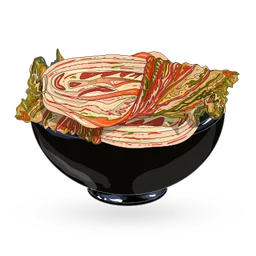
Korea's best-known side dish, kimchi is made from vegetables that are salted in brine and then seasoned with chilli, fish paste, leek, ginger, garlic and sugar before fermenting. The result is spicy, salty, sweet and sour, and it accompanies almost every Korean meal.
A Louisiana condiment based on pungent brown mustard seeds that are only lightly cracked, soaked in white vinegar with salt, roughly ground and left to steep for a long time. Grainy and tangy, it goes into New Orleans rémoulade and po'boy sandwiches.
These are the European Union’s protected food names (the UK and Switzerland run matching schemes). A registered name can only go on products made the registered way — so “Parmigiano Reggiano” on a label is a promise about place and method, not just a style.
PDOProtected Designation of OriginProtected Designation of Origin
Every stage — producing the raw material, processing and preparing it — happens in one defined area, following a registered method. The strongest link between a food and its place.
At least one stage of making the food happens in the named area, and its reputation or character comes from that place. Raw materials may come from elsewhere.
Protects a traditional recipe or method rather than a place: it can be made anywhere, as long as the registered method is followed.
On packs you will often see the local abbreviation instead: DOP (Italy, Spain, Portugal), AOP or AOC (France, Switzerland), IGP for PGI, and wine terms such as DOC and DOCG. We show both. Slow Food Presidia and the Ark of Taste are listed too: they mark endangered traditional foods, not legal name protection.