

Montreal smoked meat
Non-vegetarian
Viande fumée de Montréal
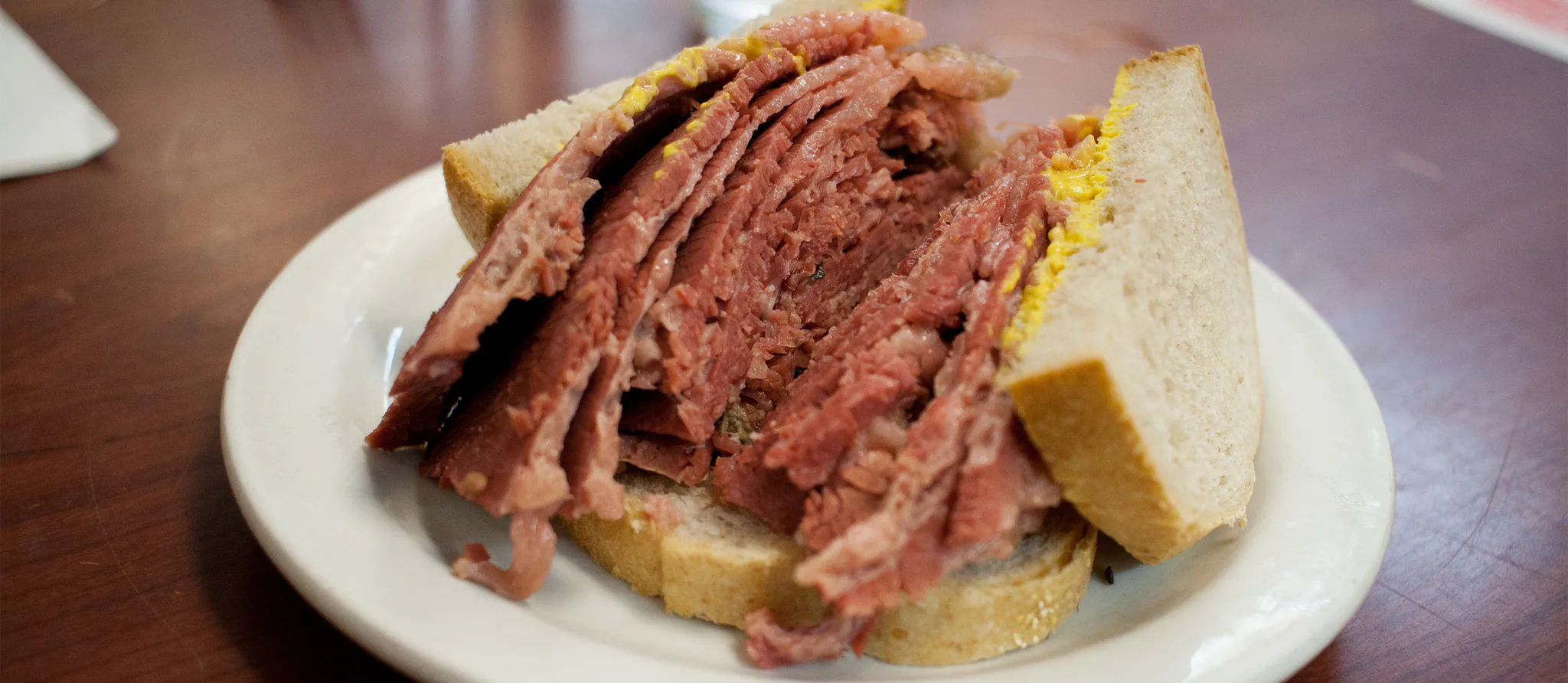
Beef brisket dry-cured for a week with salt, pepper and coriander, crusted with more cracked spice, smoked and then steamed until it is tender enough to cut with a fork. Hand-sliced and piled high on light rye with yellow mustard, it is the deli sandwich Montreal is famous for.
Montreal smoked meat is a Canadian sandwich from Canada, ready in about 9 hours 45 minutes and made with beef brisket, black peppercorns and rye bread. It serves 8 and is rated advanced to cook.
- Prep
- 45 min
- Cook
- 7 h
- Rest
- 2 h
- Total
- 9 h 45 min
- Serves
- 8
- Level
- Advanced
- Calories
- 641
Plus 7–10 days curing in the fridge.
Main ingredients
Ingredients
For the cure
For the spice crust
To serve
Method
Cure
25 minStep 1
Mix all the cure ingredients: salt, curing salt, sugar (opens in a new tab), cracked peppercorns (opens in a new tab) and coriander, mustard seed (opens in a new tab), garlic (opens in a new tab), bay leaf (opens in a new tab), cloves (opens in a new tab) and chilli flakes (opens in a new tab). Rub the mixture into every surface of the brisket (opens in a new tab), put it in a snug food-safe container or large zip bag and refrigerate for 7–10 days, turning it once a day and rubbing the liquid back into the meat.
Food safety: Keep the meat at 0–4 °C for the whole cure and measure the curing salt exactly.
Step 2
Rinse the brisket (opens in a new tab) well and soak it in a large pot of cold water for 2 hours, changing the water once, to draw out excess salt. Fry a thin sliver to taste: if it is still very salty, soak for another hour.
Spice crust
7 h 10 minStep 3
Pat the brisket (opens in a new tab) dry. Mix the crust ingredients and press them firmly all over the meat in a thick, even layer.
- 10 min
Step 4
Smoke the brisket (opens in a new tab) over hardwood (maple, oak or hickory) in a smoker or a covered kettle grill set up for indirect heat at about 110 °C until the centre reaches 70 °C, 4–5 hours.
- 270 min
- 110°C · smoker or indirect grill
- Grill / barbecue (opens in a new tab)
- Food thermometer (opens in a new tab)
No smoker? Roast covered at 120 °C with 1 tbsp smoked paprika added to the crust; the flavour is milder but the texture comes out right after steaming.
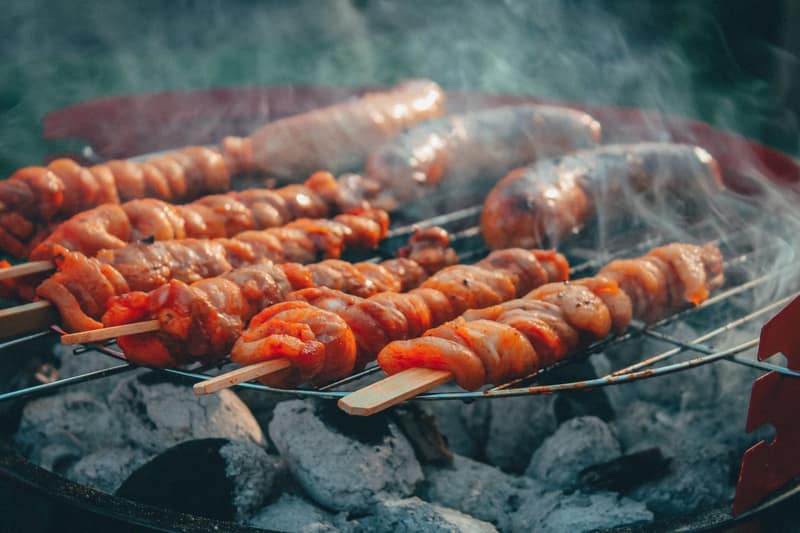
How it looks · Photo: Malte Luk on Pexels Step 5
Set the brisket (opens in a new tab) on a rack over simmering water in a large covered pot (or in a roasting tin of water tented with foil) and steam until a skewer slides in with no resistance and the centre reaches about 93 °C, 2–3 hours. Top up the water as needed.
- 150 min
- medium-low heat
- Stockpot / large pot (opens in a new tab)
- Steamer (opens in a new tab)
- Food thermometer (opens in a new tab)
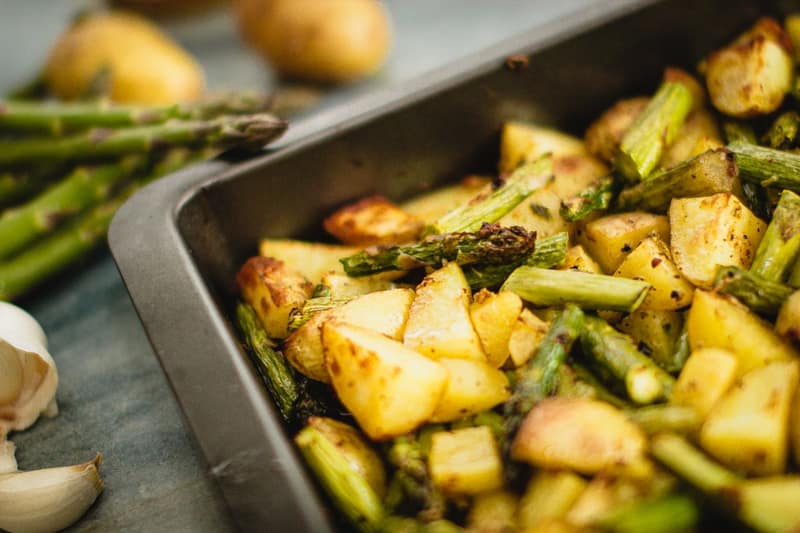
How it looks · Photo: locrifa on Pexels
To serve
10 minStep 6
Slice the hot brisket (opens in a new tab) by hand across the grain about 5 mm thick. Pile about 150 g on a slice of rye spread with yellow mustard (opens in a new tab), top with a second slice and cut in half. Serve with pickles.
Ask your guests whether they want lean, medium or fatty slices — the fattier end of the brisket is the connoisseur's choice.

How it looks · Photo: Willians Huerta on Pexels
At a glance
1 · Cure in a bowl
 Beef brisket
 Salt
- Pink curing salt (Prague powder #1)
 Sugar
 Black peppercorns
 Coriander seeds
 Mustard seeds
 Garlic
 Bay leaves
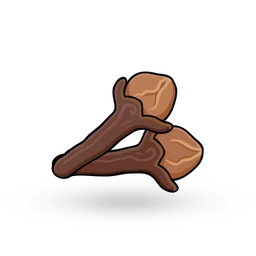 Cloves
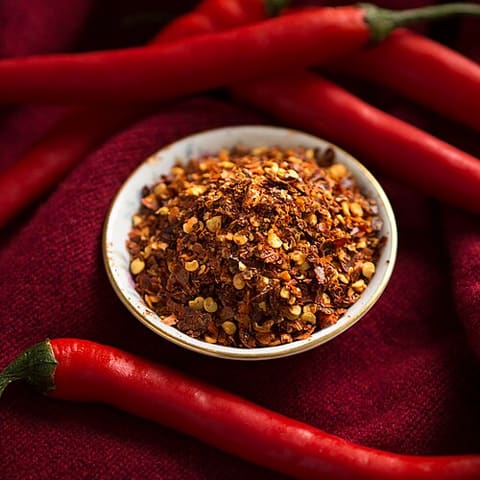 Red chilli flakes
then pat
2 · Spice crust in a bowl
- Black peppercorns
- Coriander seeds
 Paprika
 Garlic powder
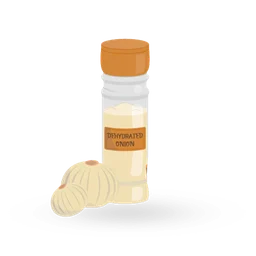 Onion powder
- Dill seed
then slice
3 · To serve in a bowl
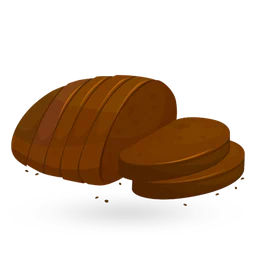 Rye bread
 Prepared mustard
 Dill pickles
About this dish
- Origin
- Montreal, Quebec, Canada · Well documentedBrought to Montreal by Romanian-Jewish immigrants in the early 20th century; Schwartz's on Saint-Laurent Boulevard, opened by Reuben Schwartz in 1928, is the best-known house. It is a cousin of pastrami but uses a peppery dry cure rather than a wet brine and much less sugar.More food from Canada
Canada - Dish
- Lunch · Dinner · Sandwiches · Main courses · Barbecue & smoked
- Cooking method
- Marinated / cured, Smoked, Steamed
- Taste
- smoky, peppery, savoury, salty
- Diet
- Dairy-free · No nut ingredients · High-proteinWorked out from the ingredients. How labels work
All labels
Non-vegetarian · Dairy-free · Egg-free · No nut ingredients · Alcohol-free · Pork-free · High-protein - Good for
- Make-ahead · Freezer-friendly · Batch cooking
- Cook more with
- Beef brisket · Black peppercorns · Rye bread · Prepared mustard · Sugar · Coriander seeds
- Techniques
- Roasting · Smoking · Simmering · Steaming · Marinating
Allergens
- May contain: Milkfrom rye bread
- Contains: Wheatfrom rye bread
- Contains: Glutenfrom rye bread
- May contain: Soyfrom rye bread
- May contain: Sesamefrom rye bread
- Contains: Mustardfrom mustard seeds, prepared mustard, dill pickles
- May contain: Sulphitesfrom prepared mustard
Based on typical versions of these ingredients and not verified allergen-free. Brands differ and cross-contact happens, so always check labels. For severe allergies, follow your clinician’s advice.
Nutrition
641 kcal per serving
Estimated1 serving ≈ 446 g · recipe makes 8
Where the energy comes from
- Protein 46%
- Carbohydrate 29%
- Fat 25%
| Nutrient | Per serving | Per 100 g* |
|---|---|---|
| Energy | 641 kcal | 144 kcal |
| Protein | 75.9 g | 17 g |
| Carbohydrate | 47.3 g | 10.6 g |
| Net carbohydrate | 39 g | 8.7 g |
| Sugars | 8.1 g | 1.8 g |
| Added sugars | 5 g | 1.1 g |
| Fibre | 8.3 g | 1.9 g |
| Fat | 17.9 g | 4 g |
| Saturated fat | 6.4 g | 1.4 g |
| Trans fat | — | — |
| Cholesterol | 200 mg | 45 mg |
| Sodium | 6356 mg | 1425 mg |
| Salt equivalent | 15.9 g | 3.6 g |
Vitamins & minerals per serving
- Potassium
- 1498 mg
- Calcium
- 181 mg
- Iron
- 10.4 mg
- Magnesium
- 129 mg
- Vitamin A (RAE)
- 36 µg
- Vitamin C
- 3 mg
- Vitamin D
- 0.3 µg
- Vitamin B12
- 7.2 µg
- Folate (DFE)
- 114 µg
How these numbers were made
- Calculated from USDA FoodData Central (SR Legacy) per-100 g values and the listed quantities.
- *Per 100 g of combined raw ingredients; the cooked dish may weigh more or less.
- Optional ingredients are not included: dill seed.
- Beef brisket: Beef chuck (raw) used as a stand-in; whole packer brisket has a similar mix of lean and fat, with more fat in the point and less in the flat.
- Pink curing salt (Prague powder #1): Table salt used as a stand-in; curing salt #1 is about 93.75% salt and 6.25% sodium nitrite, used in very small amounts.
- Red chilli flakes: Ground cayenne (FDC 170932) used as a stand-in for dried chilli flakes such as pul biber or Aleppo pepper.
- “—” means the value isn’t known for enough of the ingredients; it is never zero by default.
- Values are estimates for guidance, not for medical dosing. U.S. Department of Agriculture, Agricultural Research Service. FoodData Central, 2019. fdc.nal.usda.gov.
Good to know
Tips
- Cure, smoke and steam ahead, then chill the whole piece; re-steaming it before slicing gives the same result as freshly cooked.
- A whole brisket can be split into two pieces so it fits a home smoker and a pot.
Common mistakes
- Skipping the desalting soak, which leaves the meat too salty to eat.
- Slicing it cold or with the grain — it shreds and turns stringy instead of falling into tender slices.
Serve with
- The classic plate: a smoked meat sandwich, French fries, coleslaw and a sour pickle, with a black cherry soda.
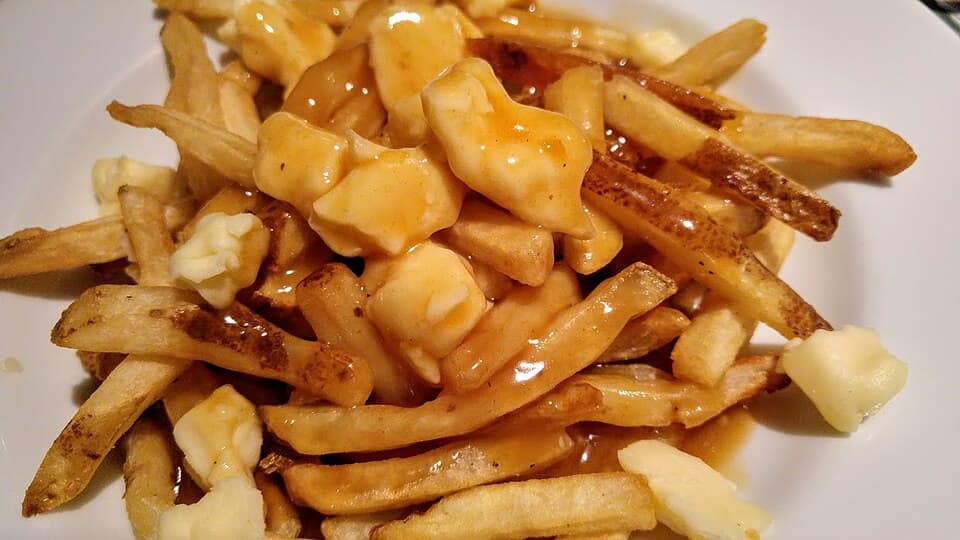
- Pile leftover meat on poutine or into an omelette.
Food safety
- Pink curing salt contains sodium nitrite: weigh it exactly, keep it labelled and out of reach of children, and never use it in place of ordinary salt.
- Keep the meat refrigerated throughout the cure.
Storage
- Keep the cooked brisket whole and wrapped in the fridge for up to 5 days, or freeze large pieces for up to 3 months.
Reheating
- Steam the whole piece or thick slices for 20–30 minutes until hot through; microwaving dries the meat out.
Variations
- Smoked meat poutine: Chopped smoked meat scattered over fries, cheese curds and gravy.
- Oven-and-steam version: The cured, crusted brisket is roasted slowly in a covered tin with smoked paprika, then steamed; no smoker needed.
History
Jewish delis from Eastern Europe brought cured and smoked beef to Montreal; by the 1930s viande fumée had become a city institution, and Schwartz's still cures its meat for about ten days before smoking.
Confidence: Commonly attributed
Original editorial recipe · FriendsPantry editorial · source: TasteAtlas (dish facts) · Not yet independently reviewed · Added
Recipe DNA
How this dish is built
Built from the recipe’s own sections. Each band’s width is its share of the dish by weight. Choose a component to see what it does.
The spice and seasoning backbone
For the spice crust
- Black peppercorns, coarsely cracked4 tbsp · 36 g
- Coriander seeds, coarsely cracked3 tbsp · 17 g
- Paprika1 tbsp · 6.8 g
- Garlic powder1 tbsp · 9.6 g
- Onion powder1 tbsp · 7.4 g
- Dill seed (optional)1 tsp · 2.1 g
Reviews & corrections
Reviews come from signed-in cooks and appear after a moderator checks them. We never show made-up ratings.
You might also like
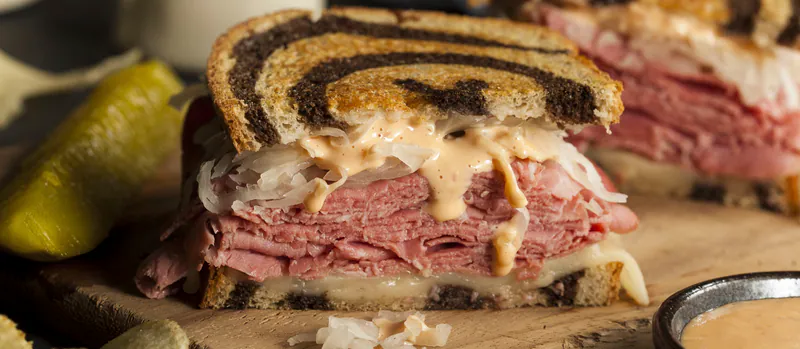
Reuben sandwich
 American · 30 min · 835 kcal
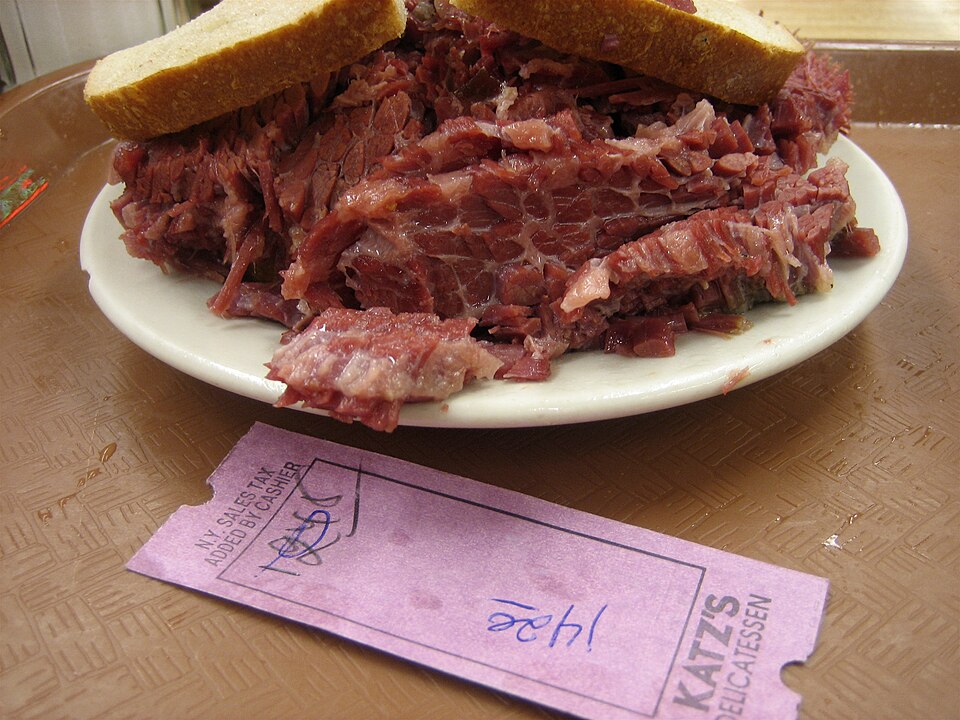
Corned beef sandwich (New York deli style)
American · 10 min · 371 kcal
Creamy Coleslaw
International · 35 min · 107 kcal · Contains egg
St. Louis-style ribs
American · 4 h 5 min · 1761 kcal